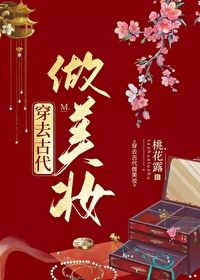
Okay so I need to talk about this one scene because it's genuinely one of those moments where the author just paints a picture and you're immediately transported. You know that feeling when you're reading and suddenly you can smell the osmanthus hair oil and feel the silk? That's this book.
When Madam Luo comes in for her appointment, the whole setup is described like a film set being arranged. Laishun moves a lightweight double-layered screen into place — that's such a specific, practical detail. It's not just "she got her hair done." It's: screen goes up, tray of rouge and face powder and osmanthus hair oil and floral-scented water comes in, a curio shelf is positioned, an old elm table becomes a dressing station, and several fashionable vanity boxes are brought out — some for use, some for sale. The author doesn't just tell us the shop offers hair styling. They show us the entire ritual, the props, the staging. It feels like a period drama where every prop has been researched and placed with care.
And then there's Madam Luo's appearance before the styling — thick lustrous black hair simply coiled at the back, held by a plain silver hairpin, but wearing gold-and-jade earrings, a Hangzhou silk summer blouse, a floral white satin skirt, embroidered platform shoes with upturned toes. The author is telling us everything about her status and personality in one visual sweep. She's comfortable. She's from a scholarly family (as Nie Qinghe notes). She's not trying to show off wealth — she's just living it.
The detail about her hair being so clean and fresh — no dandruff, no oil, no wood ash water — that's worldbuilding too. It tells us about her lifestyle, her servants, her access to clean water and proper washing methods. It's the kind of background detail that makes a fictional world feel like it existed before the story started and will keep existing after it ends.
I also love the price list scene. Nie Qinghe drawing up her menu — hairstyles starting at five coppers, formal styling at fifteen, makeup an additional five — it's such a grounded, businesslike moment. The fact that she includes high-end styles at two hundred coppers "simply to announce her expertise" even though she can't attract that clientele yet? That's such a real entrepreneurial move. It's the kind of thing you see in modern business strategy but placed in a historical setting, and it works because the author treats it with complete seriousness.
The shop itself feels alive. You can hear the second shopkeepers nagging behind closed doors, you can see Laishun moving furniture, you can feel the tension between the old guard and this new girl trying to carve out a space. It's not just a backdrop — it's a living, breathing ecosystem.
And honestly, the fact that the sign outside reads "Cloud-Coiffed Hair and Phoenix Hairpins" — that name alone is so evocative. It sounds like something you'd see in a painting. The whole aesthetic of this world just clicks into place, and I'm here for it.
The visual of Madam Luo walking home after her transformation, her steps lighter, humming a tune, drawing admiring glances from every passerby — that's the kind of scene that stays with you. It's not dramatic in a plot-twist way. It's dramatic in a "this small moment means everything to this character" way. And the author earns it through all the careful worldbuilding that came before.
I keep coming back to the elm table. An old elm table as a dressing station. That's the kind of detail that says "this author knows what they're doing." Not a fancy new table, not a generic prop — an old elm table, worn and familiar, repurposed for this new service. It's humble and practical and somehow perfect. That's the world this story lives in, and I love it.
The screen separating Madam Luo from the public eye is another detail I can't stop thinking about. Privacy in a public shop — that's a luxury service, that's a statement. Nie Qinghe isn't just doing hair. She's creating an experience. And the author makes us feel every layer of that experience through these meticulously rendered scenes.
This book understands that atmosphere isn't just about pretty descriptions. It's about the accumulation of small, specific, sensory details that add up to a world you can step into. And the author does it without ever feeling like they're showing off. It just feels natural, like you're there watching it all unfold.
I don't know how many more times I'll reread the Madam Luo scene, but I know it's going to be more than once. It's that good.
The whole chapter feels like a masterclass in showing, not telling. And I'm just sitting here appreciating the elm table.
Anyway that's my scene breakdown. The worldbuilding in this book is genuinely top-tier, and I'm not even getting into the political intrigue that's clearly building in the background. But that's for another note.