Travel To Another World: I’m The Only One Left - Reviews

Travel To Another World: I’m The Only One Left
+Add to Custom List
Sort
Add review
... Read More
Let me just sit with the sheer STAKES here for a moment. Chen Fann has ONE YEAR. That's it. One year before the system comes back online with whatever upgrades it's been secretly building toward. And in that year, he's supposed to become self-sufficient in a world that's actively becoming more dangerous by the hour. The animals escaped the zoo because a GIANT DEMON shifted in its sleep underground. Think about how casually that sentence lands. A sleeping creature the size of a building stirs, and suddenly the city's zoo is emptied. What happens when it actually WAKES UP? The system says the signs will be earthquakes and cracking earth, but that's barely a warning — that's the thing already happening. And Chen Fann is alone. No team, no mentor, no backup. Just "innate divine power" and a lot of uncertainty. The system explicitly told him firearms won't save him long-term, so he can't even fall back on the tools we'd all reach for. He has to grow stronger the old-fashioned way — through experience, through surviving encounters with things that want to eat him. What makes me genuinely invested is that the author hasn't made this easy. Chen Fann is grateful for his strength, sure, but the text keeps reminding us how fragile he still is. A 400kg sofa he can lift doesn't make him invincible — it makes him slightly less likely to get eaten tonight. Tomorrow? Next week? When the food runs out and he has to venture further? The tension is layered and compounding, and I cannot wait to see how he handles it.
... Read More
The way this story builds its world is so quietly devastating. It doesn't start with epic descriptions of magical kingdoms or dystopian cities. It starts with an empty living room. Chen Fann walks in, and there's this sudden, visceral absence — the ghost of a hug that never comes, the silence where a little sister's voice should be. That's how you establish atmosphere. You make the ordinary feel haunted. But then the world EXPLODES outward from that domestic scene into something cosmic. The Old Sun's Gospel — described as 'the truth of the universe, the beginning of all things, the source of time and space.' A book that exists 'at a different latitude' from human reality. The concept of Another World where transmigration actually happens. These aren't just set pieces tacked onto a story — they're woven into the emotional core. The world-building serves the character's pain. I also love how the system itself creates atmosphere. It's not some majestic oracle — it's glitchy, deconstructing, running on empty, mocking its host's intelligence. It has personality. The idea that this broken system is the only 'eye' that can let a human perceive higher-dimensional truth is such a cool image. A ladder made of broken technology. An artificial guide through realities that were never meant for us. The setting here isn't just 'fantasy world' or 'modern Earth with magic' — it's something weirder, something that lives in the crack between dimensions. What really sells it though is how grounded it stays. Even as the stakes go from 'my sister is gone' to 'I need to read 100,000 books to comprehend the source code of reality,' Chen Fann is still just a guy doing math on his phone, screaming about having to skip meals and sleep for 127 years. The mundane clashing against the metaphysical is where the magic lives.
... Read More
I have mixed feelings about Chen Fann and his whole savior routine. On one hand, the dwarves genuinely needed him - they were being slaughtered, weaponless and terrified. On the other hand, he orchestrated this entire situation to gain their submission. When he drops down from the valley peak and they think a god has descended, you can feel their hope swelling. But that hope is built on a lie. The green devil perspective calling him a 'little bean' and then getting punched? That's satisfying, sure. But what's the cost of this alliance? The dwarves will owe him their lives, and he's completely aware of it. There's something both impressive and deeply unsettling about watching someone play chess with other people's survival.
... Read More
There's something deeply unsettling about the Forest Troll's motivation beyond just 'I want to conquer.' It's not enough to destroy humanity — the troll wants to 'turn the whole world green.' This isn't random villainy, it's ecological extremism taken to its logical endpoint. The Psychedelic Forest isn't just a weapon, it's a replacement ecosystem. Trees replacing cities, vines replacing roads, the forest becoming the dominant life form on Earth. Chen Fann's abilities being tied to the 'spiritual realm' while the troll exists in a physical, regenerative, almost primordial state creates this theme of old vs new, nature vs civilization. And then there's Chirp — a silver dragon, a creature from 'fallen history,' which represents something else entirely. Ancient power that once existed before the current order. The troll fears Chirp not because it's strong but because it represents a different kind of world order, one where dragons still ruled. Every time Chen Fann gets a new ability from a gospel book, he's accessing knowledge from a lost age too. The story keeps asking: what was this world before the trolls? What will it become after? And who gets to decide? The Earth itself constantly expanding is such a great symbol here — the world literally can't contain whatever is growing inside it. Green is spreading because it always has, always will.
... Read More
There's a paragraph early in Chapter 3 that I need to just stop and appreciate because it's genuinely beautiful writing. After everything vanishes, Chen Fann walks out and the text describes how the streets that were previously "full of white flowers and legs that should have been swaying under the sunlight were gone, all of them gone." Can you believe that imagery? White flowers and legs in sunlight—that's such a specific, almost poetic detail and then it's just erased. The contrast between what was there and what isn't is staggering. And then there's this line: "There was not a single person. It was as if he had seen a ghost in broad daylight." I love how the author flips the ghost concept. Usually ghosts are scary because they're hidden in darkness, but here the horror is that there's nothing at all. Not even ghosts. Just empty buildings and sunlight and silence. The scorching sun above his head while the whole world is dead—there's something almost cruel about how normal everything looks except for the absence of people. The opening scene in the kitchen is also deceptively good worldbuilding. A narrow kitchen, Chen Fann wearing an apron, stir-frying green pepper shredded meat and tomato eggs. These tiny domestic details make the emptiness later hit so much harder because we know exactly what kind of world was lost. It wasn't some grand civilization—we're talking about someone cooking dinner for his adopted sister and it being the most important thing in their day. The mundane became precious and we didn't even know it yet. Also, the magazine cover descriptions? "A magic civilization sleeping, a giant frozen in the land of ice, a dragon sleeping in the far east, a wizard sealed within the deep sea." That's not just flavor text—that's the author giving us the entire mythological framework for this new world in three sentences. Efficient worldbuilding without info-dumping.
... Read More
Okay let me just… can we talk about how Chen Fann plays this? He saves the dwarves, lets them think they're safe, builds rapport with the intelligent sage Autodesk, and then BLAM — drops his real intention like it's nothing. "I need you to be good at forging, and I need you to help me build the city." Bro really was like "thanks for not killing me, now work for me." I respect the honesty though. At least he didn't even pretend it was a friendly vacation invitation. And the twist here is that the system already warned him — it told him about the Dragon King being far more powerful than Autodesk realized. So Chen Fann is walking around with this secret knowledge while everyone else is just trying to figure out if potatoes are a trap. The plot keeps layering on these hidden power dynamics. Also, the Dwarf King returning and being "a head taller than the average Dwarf" with strength comparable to a Green Devil? That's a bomb ticking in the background. I'm genuinely curious what happens when Olba finds out his king is coming back and it's not gonna be chill.
... Read More
"A hundred years on Earth is equivalent to five years in the other world." OK so this plot twist absolutely DESTROYED me. Let me just sit with that for a second. Chen Fann thinks he's facing 20 years of waiting — already a nightmare scenario — and then the system casually drops the time dilation bomb and suddenly it's not twenty years, it's ONE HUNDRED. My jaw literally hit the floor. The author builds this entire emotional arc around Chen Fann's dread of being alone, makes us feel every bit of his anxiety about outliving everyone he knows, and then right when we think "okay worst case is two decades" — WHAM. Century of solitude. And the beautiful, awful thing is the system's reasoning is basically bulletproof. It tells him earlier rather than later because in twenty years he'd discover it anyway and it would hurt even more. That's not comforting at all! It's just pragmatically cruel. The plot structure here is so tight — every beat leads to that revelation, and then after the reveal, the story doesn't even try to bounce back with excitement. It just... goes dead silent. Chen Fann becomes a machine. A robot. Reading books mechanically. This is the kind of narrative choice where the author refuses to give us catharsis and I respect the hell out of it. The way the plot then skips forward — "Spring went and autumn came" — like a time-lapse, showing him grinding through years without any emotional resolution... that's brilliant structural storytelling. The author isn't padding this, they're compressing decades into paragraphs and making us feel the weight of that compression. I re-read the entire middle section three times because the emotional devastation keeps accumulating. There's no happy ending foreshadowed here. Just a guy who has become undead, staring at a world turning into a forest.
... Read More
Okay so I need to talk about how the system finally woke up after a whole year and explained everything in one go because honestly this chapter is where the plot mechanics of the entire story became crystal clear to me. Chen Fann had been grinding alone for 365 days with zero firearms and the system just sleeping — no contact, no explanation, nothing. And the payoff when it finally woke up was basically: every single hour of hardship was a deposit into his power account. The twist isn't that he got strong, the twist is that the system was testing whether he could be trusted with real power before handing him anything. If he'd used guns from day one he'd be a fragile human with a fancy rifle. But because he survived on his own two hands? Now he's got abilities literally coded into his body. That's such a clean cause-and-effect structure. And then the system drops this bombshell that if he wants higher-level abilities he needs to hunt extraordinary creatures. Which is essentially the author handing Chen Fann (and us) the next major plot milestone on a silver platter while making it sound like Chen Fann came up with it himself. The only slight issue is the information dump nature of this chapter — a lot of it is the system just explaining things in a very lecture-style format. But it works because the payoff is so satisfying. The author could've just told us "he got stronger" and moved on. Instead they made us watch the entire rulebook of this world get written in real time.
... Read More
The way this chapter moves is actually really clever. It starts with something surprisingly domestic — Chen Fann thinking about expired cooking oil and salt, and how his proficiency saves him. That's it. That's the opening hook. And then within a few paragraphs, we've gone from kitchen science to full-on industrial revolution planning. The transition works because it's all connected. The expired oil leads to the idea of teaching dwarves to extract salt. That leads to planting seeds. That leads to the truck. That leads to the big industrial vision. Each idea naturally spawns the next one, and before you know it, Chen Fann is daydreaming about magic-powered cannons. What I love about the pacing here is that the author doesn't slow down to explain everything. We get these bursts of insight — the magical industrial system idea just appears and Chen Fann gets excited. No lengthy exposition about how it would work, no technical diagrams. Just: "could a magic industrial system be developed?" followed by a rapid-fire list of possibilities. The chapter ends on an action beat with Chen Fann actually setting the plan in motion — pushing that truck toward the dwarves. Perfect structure: start small, dream big, end with movement.
... Read More
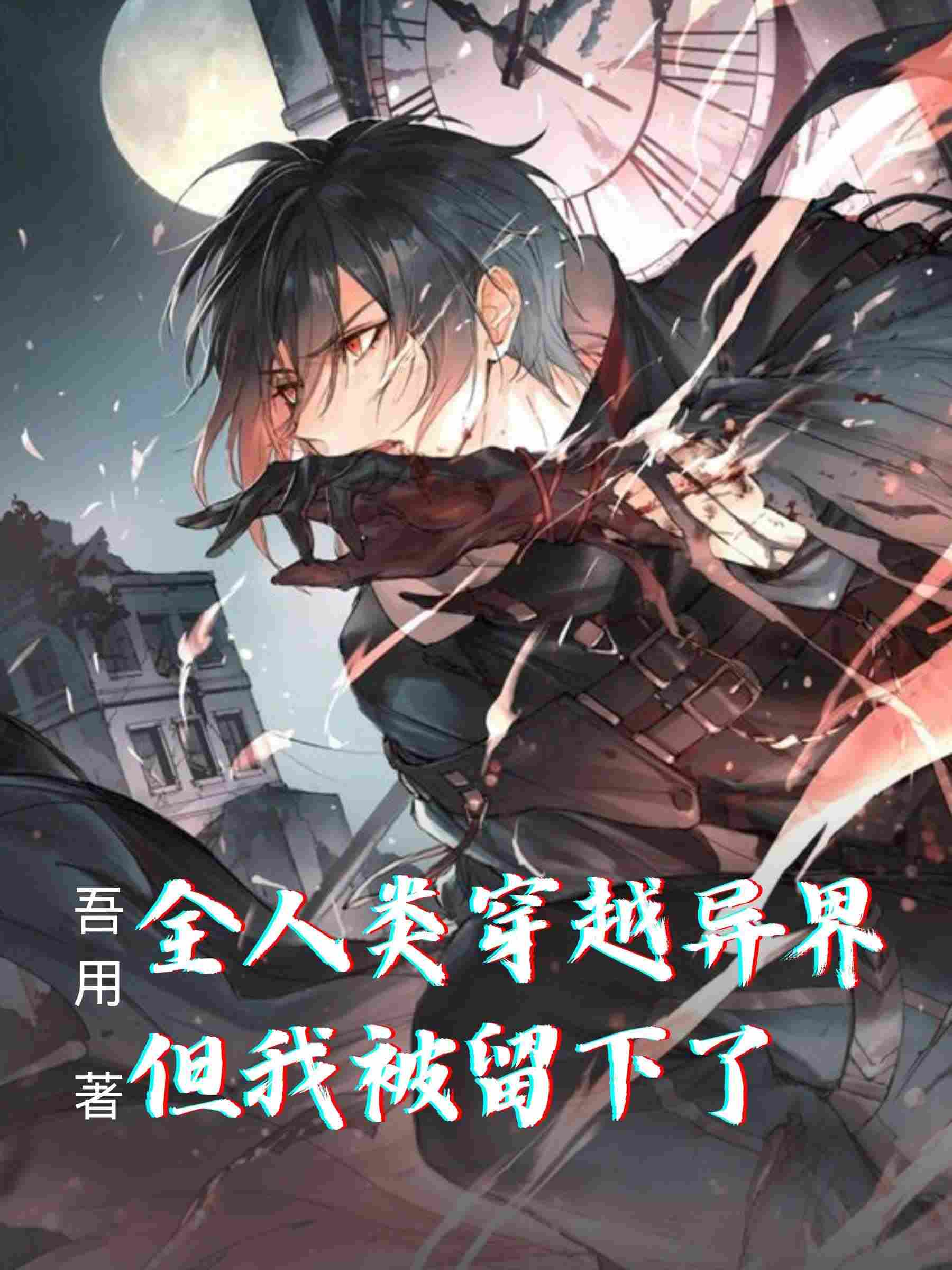
Okay so let me just say it: I read chapters 127 through 130 in one sitting and I have no regrets. The pacing here is absolutely locked in from the first sentence. Chen Fann lands that punch and within paragraphs you've got combat, psychological warfare, aftermath, emotional release, and then—bam—a philosophical confrontation with Olba. Nothing drags. Nothing feels padded. The author knows exactly when to accelerate and when to slow down. Take the fight sequence: it moves fast, almost too fast, which is kind of the point. Chen Fann is demonstrating power, and the narrative mirrors that efficiency. But then after the devils die, the author pulls back and lets us breathe with the dwarves emerging from the cave, the families reuniting, the raw human (and dwarven) emotion of survival. That's where the pacing really shines—it's not just action for action's sake, it's action with consequences and aftermath. And then just when you think the chapter is winding down, Olba walks up and drops the question that reframes everything. The structure here is tight. Every scene transitions smoothly into the next, and the cliffhanger ending with Autodesk noticing Chirp? That's not accidental. The author is building momentum for whatever comes next, and I'm already turning the page.
... Read More
Let's talk stakes for a second, because this chapter just layered them ON TOP of each other and I'm obsessed. On the surface: Chen Fann just killed a Forest Troll. Threat neutralized, right? WRONG. Because immediately after, he lays out the real problem—there are still middle-tier extraordinary creatures recovering from hibernation, upper-tier ones he can't touch yet, and they're only going to GET STRONGER over time. So the clock is ticking. Every day he spends building is a day the threats level up. But the deeper stakes hit harder. He's committed to a SEVENTY-YEAR timeline. Seventy years without seeing another human being, without knowing if Lingling will even recognize him when she returns. And he's doing this knowing he might fail. When he asks the System, "Do you think I'm stupid? Very naive?"—that's not a rhetorical question. He's genuinely uncertain if this dream is worth the cost. The System's response actually raised the stakes MORE: "Regardless of whether you succeed or not, the System will accompany the Host." Translation—this journey matters regardless of outcome. That's beautiful but also TERRIFYING. What if he DOES fail? What if seventy years pass and Lingling comes back to nothing? And there's the physiological cost too. Remember how mentally drained he was after chanting the Old Whispers once? He could barely manage ONE repetition. The Forest Troll was an inferior creature—he's already barely surviving things he should be able to handle. The gap between his current power and his ambition is enormous, and the novel isn't pretending otherwise.
... Read More
Okay, I need to talk about Chen Fann and Lingling because this hit me right in the chest. The moment when he gets home and the living room is empty — that silence is SO loud. He used to complain she was noisy, like, actually whine about it, and now he'd give anything to hear her chirping again. You know that feeling when you take someone for granted and then they're just... gone? It's disgusting, really, how we do that. We push people away with our complaints and then we're left with nothing but the echo of what we had. And then the twist about her. The system basically drops this bomb that his own sister peeked into a book that should've driven humans insane and she didn't just survive it — she THRIVED. 'Unless... she's not a human.' What does that even mean? Is she some kind of transcended being now? Something beyond what Chen Fann understands? It makes everything about their relationship feel... layered in a way I didn't expect. She wasn't just his loud, annoying little sister. She was operating on a completely different wavelength. I keep coming back to that line: 'Humans are unable to pry into the Book of Truth to begin with.' And yet his sister did. Did she do it intentionally? Did she KNOW she could see it? The implication that she might have been chosen or changed by whatever happens in Another World is both terrifying and beautiful, honestly. Chen Fann is now on a collision course with something bigger than his grief, and the person he wanted to apologize to the most is somehow the one who might hold the key to everything. That's cruel writing. I love it.

Leave a comment

You must be logged in to leave comments. or
