Summary

... Read More

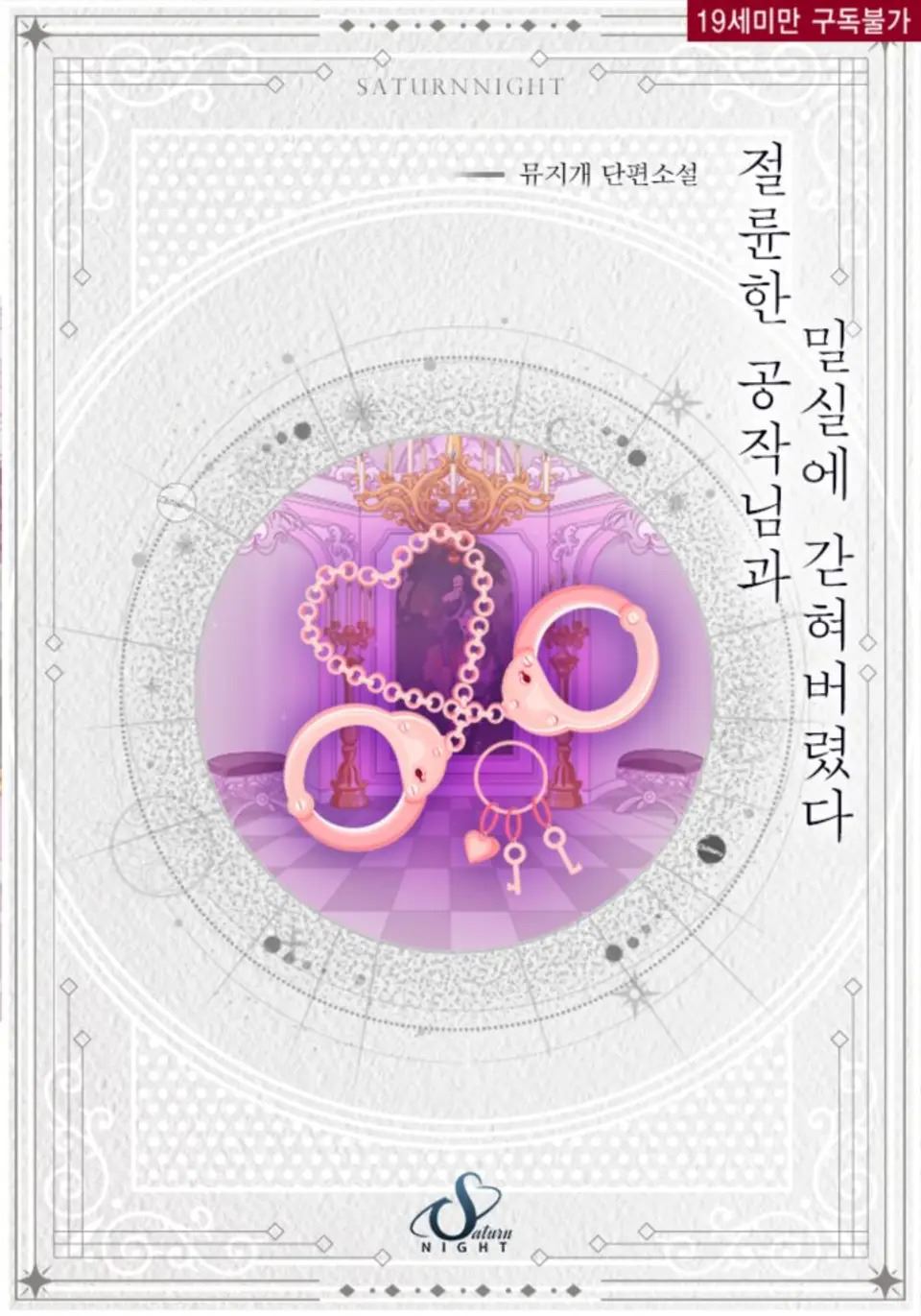
Reyna of Hendrick is a dutiful noblewoman who prefers a quiet life and has resigned herself to an arranged marriage based on practical stability rather than romance. Her routine is shattered when she awakens in an unfamiliar, locked bedroom beside Kadrion Gerard, the youngest and most powerful Duke in the empire. A note reveals that a magical device counts down to zero; if it reaches zero, the sleeping Duke dies. The only way to stop the timer is for Reyna to engage in sexual intercourse with him before the time expires. Lacking any other option and fearing that the Duke’s death would frame her for murder, Reyna attempts to satisfy the condition while he remains under the influence of a potent sleeping potion.

During the first encounter, Reyna experiences intense physical pleasure despite her initial reluctance and guilt. Afterward, she returns to her own home, but the events feel like a vivid dream until she discovers physical evidence confirming they were real. She becomes increasingly anxious about the implications, especially when she learns that the Duchess, who is favored by the Emperor, has long admired the Duke. Later, Reyna encounters Duke Gerard at a chapel and invites him to talk. During their conversation at a coffee shop, she tests his views on intimacy by presenting a hypothetical survival scenario. Gerard reveals that he loves someone deeply and claims he would rather die than have sex with someone he does not love, a statement that leaves Reyna distressed and convinced he remembers nothing of their previous encounter.

The situation escalates when Reyna wakes up trapped in the same room with Duke Gerard for a second time, facing the same magical threat and time limit. This time, Gerard awakens partially during the act. He acknowledges the bizarre circumstances but agrees to cooperate on the condition that he will not be harmed. They complete the act, and Gerard promises secrecy. Following this, Reyna visits Gerard’s residence to warn him about the potential side effects of memory-erasing magic used by their captor, which could cause permanent mental damage. Instead of anger or dismissal, Gerard proposes a solution: since the kidnapper wants them linked, they should formalize that connection through marriage to prevent future memory alteration.

Gerard unexpectedly and swiftly submits a marriage proposal to Count Hendrick, which is accepted. Reyna becomes Duchess Gerard, and the abductions cease. Their marriage is characterized by Gerard’s intense passion and Reyna’s gradual acceptance of their physical bond. Years pass, and they have a son named Diego. While walking in the estate gardens, Diego leads Reyna to a secluded villa that contains a room identical to the one where they were originally trapped. Confronted by this discovery, Reyna accuses Gerard of orchestrating the event. Gerard confesses that he initially attempted to court her through proper social channels but was rejected. Driven by obsession and his subconscious dreams of her, he resorted to the kidnapping as a means to force a connection. He admits that his feelings for her grew during their confinement, leading him to change his initial plan into a proposal for life. The narrative concludes with flashbacks revealing Gerard’s perspective: his fascination with Reyna began at a palace ball where he was captivated by her scent and demeanor, and his subsequent rejections only intensified his resolve to possess her, ultimately driving him to orchestrate the elaborate scheme that bound them together forever.

Latest Release
DateGroupRelease
2026-09-27citrus aurora c11
2026-09-27citrus aurora c10
2026-09-27citrus aurora c9
2026-09-27citrus aurora c8
2026-09-27citrus aurora c7
2026-09-27citrus aurora c6
2026-09-27citrus aurora c5
2026-09-27citrus aurora c4
2026-09-27citrus aurora c3
2026-09-27citrus aurora c2
2026-09-27citrus aurora c1

Community Reviews

Rating(3.9 / 5.0, 33votes)
5 stars
8(24%)
4 stars
15(45%)
3 stars
10(30%)
2 stars
0(0%)
1 stars
0(0%)

Popular reviews

... Read More
"I was that desperate. I didn't want to lose you to another man." I'm still not over this line. Let me just sit with it for a moment. Kadrion basically admits—tears and everything—that his entire scheme, the abduction, the manipulation, the forced proximity—it all came from one place. Fear. Pure, unfiltered terror of losing Reyna to someone else. Lord Wellington walked into the picture and instead of being furious about the insult, Kadrion was just... devastated? Because Reyna was promised to someone else? And he couldn't handle it? "I simply wanted to make a single night with you a lifetime memory…" He was trying to give her an experience she'd never forget. Not even for a relationship. Not even for her consent in the traditional sense. Just one perfect night. And when she chose to save him instead of letting him die? That's when he realized he was done for. "The moment I recognized your body, I became someone who could not live without you." And Reyna's response? "To me, the Duke was like a dream." She liked him too. She always had. But she dismissed it because he was untouchable—a duke, powerful, dangerous. So she gave up quickly. Classic. What kills me is that they both missed each other so badly. She rejected him because she thought he was a dream. He abducted her because he couldn't let her go. Two completely opposite responses to the same feeling. And now here they are, married, with a child, and he's whispering apologies into her skin while she pretends to sleep. "Is it not possible?" he asks, on the verge of tears. And she can't say no. She can't. Because she loves him too. And that's the tragedy and the beauty of it all.
... Read More
Okay can we talk about how the author built this entire male lead without him saying a single word of actual dialogue? He's unconscious the whole time and yet I already have strong opinions about him. Let me explain. Kadrion Gerard is introduced through Reyna's eyes and the description is chef's kiss—flawless white skin, sharply defined features, piercing blue irises even in sleep, golden eyelashes fluttering. He's described as 'the aristocrat's aristocrat, a flower on a cliff.' But what I love is that the text never lets us forget he's dangerous too. The knight incident! A female knight secretly entered his tent and he executed her on the spot. Public didn't blame him—they blamed HER. This man has power, wealth that surpasses the imperial family, and zero tolerance for anyone crossing him. And Reyna? She's fascinating. On paper she's the perfect noble lady—proper, practical, unromantic. She watched her brother's love affair get crushed by her parents and basically decided love is a losing bet. 'After all, she thought their love wouldn't last long.' Ouch. That line hit me because it's so painfully realistic. She's not cynical for no reason—she's been watching people get hurt by optimism. But then she's lying next to this man she barely knows, whose unconscious body is responding to her touch, and she's genuinely caught between duty, survival, and... something else. Because the text specifically notes that while all this is happening, she keeps glancing at his face and thinking he's handsome. The conflict between her pragmatic self-image and her actual human reactions is delicious. [Due to the effects of a powerful sleeping potion, Duke Gerard will remain in a death-like sleep until morning.] — this line actually scared me more than the threat itself. Because it means the person who did this planned for everything. Including the possibility that Gerard might wake up and kill Reyna for touching him. Which makes you wonder—why trap her instead of just letting Gerard handle it? What do they really want?
... Read More
Let me just start by saying: the stakes in this opening are MAXIMUM. We're not talking 'maybe the hero loses their sword' stakes. We're talking 'either perform an intimate act with a sleeping man or watch him die AND get blamed for it' stakes. There is no middle ground. There is no gentle option. The author slammed the door on every safe choice and threw Reyna into the deep end immediately. What makes this work so well is that the external conflict (escape, survive, save Gerard) is perfectly mirrored by internal conflict (her pragmatic worldview vs. her growing physical/emotional responses). Reyna isn't just fighting against a countdown clock—she's fighting against her own philosophy. She believed love was foolish. She believed in arranged stability. She believed in keeping her distance. And now? Now she's pressing her body against a man she barely knows, chasing pleasure she's never experienced, while trying to stay conscious that this is SURVIVAL, not desire. The tension is maintained relentlessly because every moment raises the question: what happens if he wakes up? The text keeps reminding us—'who could be sure?' 'He might have developed a tolerance.' 'If he wakes up now, it would be the worst possible moment.' That uncertainty is psychological torture and I loved every second of it. And the emotional stakes go even deeper when you consider what's at risk for Reyna beyond her life. If she does this—if she crosses this line with Duke Gerard—nothing between them can ever go back to normal. She's not just saving his body. She's about to fundamentally alter the power dynamic between them in a way she can't undo. Whether she survives the night physically or not, she's about to become someone different. 'Duke Gerard thrust his hips up. The pressure from the stretched walls was overwhelming.' This isn't just physical tension anymore. It's the moment the story stops being about escape and starts being about something far more dangerous.
... Read More
The stakes in this chapter went from personal to existential and I am NOT okay. On the surface level, the conflict is straightforward: Reyna wants Gerard to know her, to love her, and he's politely, firmly unavailable. Classic romance tension. But beneath that — oh, beneath that there's a landmine. The external conflict: someone orchestrated this entire encounter. The note, the contraceptive tea, the locked room — this wasn't random. There's a puppeteer behind the scenes, and Reyna is just a piece on the board. If anyone finds out what happened, she faces social ruin. But worse — she faces moral ruin. Because the truth isn't that they fell in love against their wills. The truth is that she took something from a man who would have rather died than give it. The internal conflict is where this chapter really earns its weight. Reyna isn't just dealing with guilt — she's dealing with the horrifying realization that her love may be indistinguishable from violence. She told herself it was necessity, survival, mutual benefit. But Gerard's hypothetical scenario stripped away all her justifications. In his framework, what she did wasn't romantic. It was a violation wrapped in desperation. And yet — the stakes keep rising. Because now there's a second layer: Gerard says he'd be happy if the person he loved did the same thing to him. That's... that's dangerous territory. Is he saying he loves Reyna? Or is he talking about someone else? And if it's someone else, does that mean Reyna's actions were meaningless? Or just misplaced? The suspense isn't about whether they'll end up together anymore. It's about whether Gerard will ever know the truth, and what happens when he does. Because his answer was clear: he would die. The question is whether he'll survive learning that the woman he's been gently kind to is the one who ended up inside him while he couldn't stop it.
... Read More
Okay so let me just say the ending of this chapter? I literally sat there staring at my phone. The whole thing with Kadrion waking up and sensing something is off about Reyna—her breast feels different, she smells like Reyna but something is WRONG—gave me actual chills. And then he notices the mole that wasn't there before, right? In the flash of lightning, it's visible. What the hell is going on?! Is this some kind of body swap? Identity substitution? Twin swap theory?? My brain is running wild. Also love how the Lord Wellington subplot keeps circling back. Remember earlier when Kadrion dismissed him as pathetic but then Bennet drops the real dirt—human hunting, secret sadistic tendencies? That was clearly set up as major ammunition for later. And the article about abduction marriages in the Boardman region? Yeah, that's not just filler. Author is layering all of this together like a puzzle. The structure here is really smart too—we get three distinct narrative beats: Wellington's introduction and quick dismissal, then the reconciliation scene with Reyna, then the midnight return that turns into the intimate scene and finally the shocking reveal. Each section escalates the tension in its own way.
... Read More
Okay, let's talk structure. This batch opens with what feels like a climax—in media res, Kadrion already in the dressing room with the dancer, angry and tense. Then we cut to Diego's magic display, which seems almost peaceful by comparison. The contrast is intentional, and it works. The author takes their time building Reyna's curiosity about the dancers. We follow her from Saint Street shopping with Diego to that evening bath scene—quiet, domestic, normal. It lulls you into thinking this is just a slice-of-life interlude. Then BAM: thunderstorm, Diego transforms Reyna, and suddenly we're back to the tension from the opening. The three-day time skip is clever. It gives us breathing room while also making Reyna's waiting more painful. We feel the days passing with her. The almost-until-eaten dinner, Bennet's gentle reassurance, Reyna watching from the second-floor railing like a ghost in her own home. Kadrion's return is staged perfectly. We watch him enter, we watch Reyna hide, we feel her hesitation. Then the door bursts open and the pacing accelerates dramatically—from quiet resignation to frantic confrontation to emotional collapse in under ten pages. The mirror reveal is a structural masterstroke. Reyna seeing herself as the dancer connects the opening scene to the present moment in a way that's both visual and deeply symbolic. She IS what Kadrion was staring at. She WAS what he wanted. But it's not her—and that's the tragedy. The chapter ends on an uncomfortable note. Kadrion's admission about what happened during the storm is blunt, almost crude in its honesty. After all the romantic tension and emotional buildup, the author drops this raw physical detail and leaves us with Reyna's silent comprehension. No resolution, no clean ending. Just truth, however uncomfortable.
See all reviews

Custom lists

See all custom Lists