Summary

... Read More

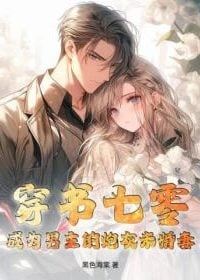
Xu Jiaojiao, a twenty-six-year-old woman from the twenty-first century, finds herself transmigrated into the body of a girl with the same name in a historical novel. In the original story, this girl is the villainess engaged to Xie Zhi, a handsome and intelligent man who is unjustly sent to the countryside due to his family's political troubles. The original Xu Jiaojiao is infatuated with Sheng Jie, a deceitful man who exploits her generosity, while treating her fiancé Xie Zhi with cold indifference. Upon waking up in bed with Xie Zhi, Xu Jiaojiao realizes she has entered the novel just as their relationship is beginning to shift. She quickly assesses her situation, noting that she has no system or special abilities, but she does have knowledge of the plot and a desire to avoid the tragic fate that befalls the original villainess.

The core conflict arises immediately when Xu Jiaojiao’s so-called best friend, Shen Yun, orchestrates a scheme to expose her as unfaithful. Shen Yun, who harbors secret desires for Xie Zhi, gathers a crowd to catch Xu Jiaojiao with Sheng Jie. However, they discover Xu Jiaojiao and Xie Zhi together in bed. Instead of crumbling under the accusations, Xu Jiaojiao uses her modern wit to turn the tables on Shen Yun, exposing her jealousy and manipulative tactics. Xie Zhi, who has long suffered from Xu Jiaojiao’s neglect and favoritism toward Sheng Jie, is stunned by her sudden change in attitude. He sees an opportunity to protect her and solidify their bond, marking a significant turning point in their relationship.

As the story progresses, Xu Jiaojiao fully embraces her new role, deciding to treat Xie Zhi with the love and respect he deserves. She confronts Sheng Jie’s mother, who had previously abused her in the original timeline, and physically defends her family’s honor. This act of defiance earns her the respect of her family and the village. Xu Jiaojiao’s brothers, who were previously disappointed by her behavior, begin to support her again. She also rejects Shen Yun’s attempts to manipulate her, refusing to lend money or give in to emotional blackmail. These actions demonstrate her commitment to living a different life, one where she values her own happiness and the people who truly care for her.

The narrative follows Xu Jiaojiao and Xie Zhi as they prepare for their wedding. They visit the town together, shopping for wedding attire and supplies. During these outings, Xu Jiaojiao’s modern sensibilities and fashion sense stand out, drawing envy and admiration from those around her. She purchases a beautiful wedding dress and other clothing, using her wits to negotiate prices and make the most of their limited resources. Xie Zhi, deeply affected by her affection and attention, becomes increasingly possessive and devoted to her. Their relationship deepens, with Xie Zhi finding comfort in her company and Xu Jiaojiao appreciating his kindness and strength.

Key turning points include Xu Jiaojiao’s public rejection of Sheng Jie and Shen Yun, which cements her new identity in the eyes of the village. She also learns that Xie Zhi’s parents have been reinstated in the city and are sending gifts, indicating that his family’s fortunes are improving. This news brings hope for a better future, as Xie Zhi’s background will no longer be a barrier to their happiness. The story moves toward a resolution where Xu Jiaojiao and Xie Zhi plan to marry and build a life together, leaving behind the pain and manipulation of their past.

The direction of the story shifts from one of tragedy and regret to one of empowerment and romance. Xu Jiaojiao’s modern perspective allows her to navigate the challenges of this era with confidence, while Xie Zhi’s unwavering support provides a stable foundation for their relationship. As they face external pressures from villagers who disapprove of their union and internal struggles from their own pasts, the couple grows stronger together. The narrative concludes with Xu Jiaojiao determined to cherish her second chance, ensuring that she and Xie Zhi live a good life, free from the shadows of the original novel’s dark fate.

Latest Release
DateGroupRelease
2026-08-11shanghai fantasy c94
2026-08-11shanghai fantasy c93
2026-08-11shanghai fantasy c92
2026-08-11shanghai fantasy c91
2026-08-11shanghai fantasy c90
2026-08-11shanghai fantasy c89
2026-08-11shanghai fantasy c88
2026-08-11shanghai fantasy c87
2026-08-11shanghai fantasy c86
2026-08-11shanghai fantasy c85
2026-08-11shanghai fantasy c84
2026-08-11shanghai fantasy c83

Community Reviews

Rating(3.6 / 5.0, 21votes)
5 stars
2(10%)
4 stars
11(52%)
3 stars
6(29%)
2 stars
2(10%)
1 stars
0(0%)

Popular reviews

... Read More
Okay I need to talk about how this author completely subverts the typical revenge-rebirth trope and honestly it made me laugh out loud. So in most of these stories, the female lead goes back in time and immediately starts crushing everyone who wronged her, right? But here, Xu Jiaojiao doesn't even break a sweat. She just... exists. And that's somehow more satisfying than any elaborate revenge plot. The moment on the cart when Shen Yun tries to play the victim and Sheng Jie opens his mouth is pure gold. Xu Jiaojiao literally asks why she'd need his forgiveness. Like, who gave this man the audacity to think he matters at all? And then Xie Zhi straight up punches him. Not a dramatic fight scene, just a quick decisive hit and she pulls him back before it escalates. The plot doesn't need melodrama when the female lead has this much self-awareness. It's refreshing as hell. The author also weaves in the subplot about her brother Xu Chen giving her milk candy, which ties into the original story's tragedy where she steals his army opportunity. That tiny detail about the candy feeling like a hot potato—chef's kiss. It adds emotional weight without derailing the main plot. The shopping trip with Shen Yun tagging along is basically a trap set by the narrative itself, and watching it spring shut when Xie Zhi shuts her down was incredibly satisfying. But here's what I keep wondering: how long can this peaceful setup last? The author is clearly building toward something bigger, and every time I think the drama is over, another thread gets pulled. What happens when the original story's major plot points start colliding with this new timeline? Will Sheng Jie's family push harder? And what about Xie Zhi's past—there's definitely more to unpack there. I'm invested now.
... Read More
This sequence is absolutely brutal in how it escalates. Hongyan's public confrontation is the climax we've been building toward, but the author doesn't let us breathe—immediately pivots to her midnight revenge mission. The structure here is masterful tension: first the catharsis of exposure, then the dread of what she'll do next, then Xu Yan stopping her, then... she kills the old woman anyway. That's not a cliffhanger, that's a detonation. What strikes me is how the plot mirrors real domestic abuse cycles. Hongyan doesn't just snap—she plans it. She puts on makeup first. That detail is horrifying because it shows she's not acting in pure frenzy; she's making a decision, weighing consequences, and choosing anyway. The axe scene with Xu Yan is pure tragedy—she slashes her own wrist to prove she's still human. But then she goes back and does it. The old woman dies before she can even scream. Li Jun blocks the strike, but Hongyan doesn't stop. The chapter ends mid-violence, which is either brilliant or cruel. The subplot of Jiaojiao and Xie Zhi's relationship provides necessary breathing room, but even that gets tense when Xie Zhi watches Hongyan disappear into the night. His silence speaks volumes—he knows he can't stop someone who's already made up their mind. And Jiaojiao's promise to help Hongyan start fresh, to go to Beijing and see Chairman Mao, feels almost naive against what actually happens. The plot doesn't reward hope; it rewards survival.
... Read More
The dialogue here is razor-sharp because it's almost never polite. Li Guoqiang's threats are vulgar and specific: 'a used-up woman defiled by me,' 'worn-out shoe carrying my father's child.' These aren't generic abusers; they're using language as a weapon to strip Hongyan of identity. His smugness when he glances around for validation reveals his need for community complicity. Hongyan's voice is the most distinctive. When she laughs and sobs simultaneously, when she calls herself a heroine bitterly, her dialogue is raw and unfiltered. 'You've never lived my life. How can you tell me to let it go?'—this line has no literary polish, which is exactly why it works. It's the voice of someone who has run out of words for anything but truth. Jiaojiao's dialogue is different—she's articulate, persuasive, almost preachy at times. 'Where there is oppression, there is resistance.' But her voice isn't hollow; it's genuine conviction. When she tells Hongyan she's brave, she means it. The dialogue between these two women is where the story finds its moral center. Xie Zhi speaks little, but when he does, it's commanding. 'I told you not to hit people.' Three words, delivered while stepping on Li Jun's leg. His dialogue is action disguised as speech. Even his silence speaks—watching Hongyan disappear into the night, saying nothing, just watching. The village chief's dialogue is authoritative but brief. He doesn't need to explain; his presence commands obedience. The author uses his dialogue sparingly, which makes it more powerful. What strikes me is how dialogue reveals power dynamics. The abusers speak to dominate; the victims speak to survive; the allies speak to empower. Every line is a negotiation of power.
... Read More
I need to talk about that midnight scene. Hongyan putting on lipstick before going to kill someone. That image has haunted me since I read it. She's not losing her mind—she's composing herself. The vivid red against her pale face, the bitter smile at her reflection. This is a woman who has decided that her life has only one purpose left: making them pay. But then there's Xu Yan catching her arm as she raises the axe. His voice is hoarse, desperate. He's not just stopping a murder; he's trying to save her soul. And Hongyan's response—slashing her own wrist to prove she can still feel—is the most heartbreaking line in this entire sequence. She's not threatening suicide; she's demanding proof of humanity. The blood is her anchor. Xie Zhi and Jiaojiao's scene earlier is so tender it hurts. She leans against him, he carries the ointment despite sweating, she kisses his mouth and says she loves him. These two found each other in a world that tried to break them. Their intimacy isn't just romantic—it's survival. When he says he can't wait to marry her, and she blinks mischievously, it's a moment of pure lightness after heavy darkness. But Hongyan can't access that lightness. She watches Jiaojiao sleep, whispers thanks, and leaves. The friendship between them is real, but Hongyan's path is solitary. She doesn't want to be saved—she wants justice. And when she kills the old woman, there's no satisfaction in the text, only the metallic scent of blood and the horror of what she's become. The emotional arc here doesn't resolve; it fractures.
... Read More
The pacing in these chapters is relentless, and I mean that as both praise and warning. We move from the village square confrontation directly into Jiaojiao and Hongyan's intimate scene, then to the midnight attack, then to murder—all without a breath. The author doesn't let readers recover between emotional beats. The public confrontation scene is structured like a trial. Hongyan speaks, Li Guoqiang threatens, Xie Zhi intervenes, the village chief arrives, the police are called. Each beat raises the stakes until Hongyan declares she wants a divorce. Then Li Guoqiang's response—calling her a used-up woman, mentioning his father's child—shatters any hope of peaceful resolution. The pacing here accelerates; you can feel Hongyan's desperation building with each insult. The nighttime sequence shifts tone completely. The cicadas, the table fan, the warm air—these sensory details create intimacy before the violence. Hongyan's makeup application is slow, deliberate, almost ritualistic. Then the axe swing, caught mid-air. Xu Yan's dialogue is fragmented, urgent. The structure mirrors Hongyan's mental state: controlled exterior, chaotic interior. The ending is where pacing becomes almost cruel. The old woman dies in one sentence. Li Jun blocks the strike. Li Guoqiang wakes up. The chapter cuts off mid-action. This isn't a cliffhanger; it's a continuation of violence that the author refuses to let us witness fully. The reader is left hanging, forced to imagine what happens next. It's effective, but it's also exhausting. The pacing doesn't reward patience—it demands surrender.
... Read More
I need to talk about Guan Zhiman's dialogue because this man is a VILLAIN and I'm here for it. 'Nothing is certain yet. Without a marriage certificate, it doesn't count.' — said while looking at Jiaojiao's neck like he's mentally measuring how his hand would fit around it. This man is absolutely unhinged and the author writes him perfectly. Every line he speaks is wrapped in politeness but laced with something predatory. And then he tosses Jiaojiao a box of candy and says 'Jiaojiao, you're very endearing. I like you.' The way the other three people's expressions change instantly tells you everything. Even Jiaojiao knows this is wrong. She immediately hands the candy back and emphasizes that her husband already bought her plenty. Smart girl. But Xu Bai's dialogue with Guan Zhiman outside? Pure tension. 'That's my sister. Watch yourself.' And Guan Zhiman's response — physically manhandling him against a wall, saying 'you'll have to move back to the dorms' — this is dialogue through action more than words. The power dynamic is clear and it's terrifying. The village women's gossip is also wonderfully voiced. 'Bah! It's because they didn't act like humans. Poor Hong Yan—I wonder what her sentence will be. But honestly, she did the right thing.' This is the voice of a community that has seen too much suffering to be shocked by violence. Their casual tone about a massacre is both horrifying and darkly funny. Hong Yan's line to Xu Yan is deceptively simple: 'Xu Yan, go back and get some sleep. I'm going to sleep too. I can finally have a peaceful night's rest.' After everything she's done, she just wants to sleep. That's the most powerful line in the entire chapter because it's so understated. The author knows exactly how to make dialogue do double duty — saying one thing while meaning another.
See all reviews

Characters

See all characters

Custom lists

See all custom Lists