Summary

... Read More

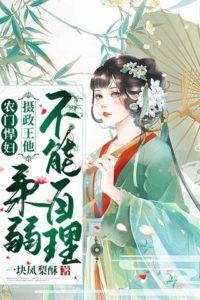
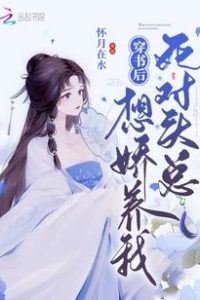
Jiang Youmei, a modern woman obsessed with wealth and career, dies in a car accident after being mocked by colleagues and transmigrates into the body of a twenty-year-old widow in the Great Kang Dynasty. She awakens in a dilapidated mud-brick hut in Xihe Village, suffering from the lingering trauma of the original host. The new body is emaciated and weak, cared for only by her five-year-old son, Lin Nian, known as Xiao Baozi. Despite his young age, the boy is precociously mature, handling all household chores, foraging for food, and comforting his mother, whose mental state had deteriorated after her husband, Lin Dalan, was killed by wolves while hunting. Jiang Youmei realizes she has no hope of returning to her previous life and resolves to survive and prosper for her son’s sake.

The family’s situation is dire. They possess only five mu of land, which they rent out for meager returns, and their savings are nearly exhausted after paying for Jiang Youmei’s recent illness. Through conversations with her mother, Madam Li, and her son, Jiang Youmei learns about the extended Jiang family. Her grandfather, Elder Jiang, disowned the original host six years ago for marrying a man with amnesia, Lin Dalan, who was found injured in the mountains. Although the family has since softened, they remain estranged. The household is large and complex, involving multiple branches, but the immediate focus is on survival. Jiang Youmei’s father, Jiang Dafu, and mother, Madam Li, secretly provide food and support, revealing a strained but caring relationship.

A significant conflict arises when the Great Kang Dynasty faces threats from the northern barbarian state of Liao. The village chief announces a conscription order, requiring one able-bodied man per household aged fifteen to forty. The Jiang family faces a crisis as they cannot afford the twenty taels of silver exemption fee. Various family members are considered, but tensions rise when Young Madam Wei, the wife of the eldest son Jiang Youshu, refuses to let her only son go to war, causing a family uproar. Ultimately, Jiang Youyou, a young scholar and cousin, volunteers to enlist, hoping to secure a clerical position rather than face the front lines. This decision leaves Jiang Youmei’s younger brother, Jiang Youzi, also at risk of being drafted, adding to the family’s anxiety.

With her mother’s visit, Jiang Youmei decides to take charge of her life. She cleans her home, bathes, and reconnects with her son, who is initially shocked by her sudden change in demeanor. She promises him a better future, including education and ample food. Determined to earn money, she explores the surrounding area, discovering the local geography and resources. She attempts to fish in Azure Water Creek, successfully catching a large carp, which provides a much-needed meal. However, she realizes that foraging and fishing alone are insufficient for long-term prosperity.

Jiang Youmei identifies her skills in design and handicrafts as a potential income source. Using the limited fabric saved from her husband’s belongings and a small amount of money borrowed from her son’s emergency savings, she creates modern-style handbags and decorative flowers. She designs oval-shaped handbags with cartoon pig motifs and fabric flowers with lace-like trims, aiming to sell them at the market near the Temple of Divine Aid on Eastern Spirit Mountain. Her son, though frugal and skeptical, supports her efforts. As she works on her crafts, Jiang Youmei feels a renewed sense of purpose, driven by the desire to provide a secure and happy childhood for Xiao Baozi, contrasting sharply with her lonely and materialistic previous life.

Latest Release
DateGroupRelease
2026-08-11shanghai fantasy c40
2026-08-11shanghai fantasy c39
2026-08-11shanghai fantasy c38
2026-08-11shanghai fantasy c37
2026-08-11shanghai fantasy c36
2026-08-11shanghai fantasy c35
2026-08-11shanghai fantasy c34
2026-08-11shanghai fantasy c33
2026-08-11shanghai fantasy c32
2026-08-11shanghai fantasy c31
2026-08-11shanghai fantasy c30
2026-08-11shanghai fantasy c29

Community Reviews

Rating(4 / 5.0, 5votes)
5 stars
2(40%)
4 stars
1(20%)
3 stars
2(40%)
2 stars
0(0%)
1 stars
0(0%)

Popular reviews

... Read More
The military conscription plot is what turns this from a family drama into a genuine survival story, and the stakes escalate faster than I expected. Let me walk through how the author builds this tension. First, the external threat: the Liao state invading during poor harvests, the Emperor wanting to drive them beyond the Jinlian Mountains, conscription of every able-bodied man aged fifteen to forty. Twenty taels of silver to buy exemption. The Jiang family has neither the money nor the land to sell. This isn't abstract politics—it's "give us a son or give us silver." Then the internal conflict: who goes? Old Master Jiang uses process of elimination, and each decision rips through the family. Young Madam Wei's reaction is catastrophic—she doesn't just protest, she attempts suicide. "You don't need your eldest son to divorce me—I'll go die right now!" She jumps into a river. This isn't drama for drama's sake; the stakes are literally life and death, and she's willing to make it about her own pain. But the real twist is Jiang Youyou. He doesn't volunteer openly. He goes secretly to the village chief. His reasoning is pragmatic: as a Tongsheng, he'll likely become a clerk, not a frontline soldier. He might even earn a future through military service. This is a young man calculating risk versus reward while his family falls apart around him. And Jiang Youmei's moment of lucidity comes at the perfect dramatic point. While everyone else is crying and shouting, she offers a logical perspective that actually calms Madam Li down. "Youzi might really become a clerk or an aide—then he wouldn't have to fight on the front lines." The suspense is maintained because we don't know if Jiang Youyou will actually survive. We don't know if Young Madam Wei's hatred will escalate further. We don't know what happens when the household divides. Every character is standing on a precipice, and the author makes us feel every step forward.
... Read More
Okay, so the first half of this text is this sprawling family portrait—generations of the Jiang family, who's studying, who's married, who ran off with a hunter six years ago. It's dense with information but I kept reading because each detail revealed something new about the family dynamics. The Old Master managing the household, Madam Wei's iron grip on the remaining land, the monthly remittances from the third branch living in town. Then—bam—military conscription. The northern barbarians, the Emperor's war plans, the village chief's announcement. The pacing shift is so abrupt it almost feels jarring, but it works because the family setup made us care about who gets sent. When Old Master Jiang starts eliminating candidates one by one, my heart was racing. Jiang Dafu—too old. Jiang Dache—too many kids. Jiang Youshan—exempt as a xiucai. Jiang Youyou—the family's last hope for academic revival. And then Young Madam Wei's meltdown! The scene where she rolls on the ground crying about how her son is being sacrificed while the third branch gets preferential treatment—it's chaotic and loud and absolutely exhausting to read, which is exactly the point. You feel the household tearing apart. The resolution with Jiang Youyou secretly enlisting is perfect pacing. Just when you think it can't get more complicated, he volunteers. And then Young Madam Wei's reaction—"Why is it that when my son had to go, no silver was offered, but now for someone else, you're willing to pay?"—the tension doesn't release, it compresses. Jiang Daxue falls ill. Madam Li weeps. And through it all, Jiang Youmei is quietly figuring out how to strike flint stones. The contrast between the family's public crisis and her private moment of transformation is masterful storytelling.
... Read More
The opening section about the Jiang family's academic achievements is such a vivid worldbuilding moment disguised as exposition. Let me tell you about the Flowing Feast celebration—three days, firecrackers echoing, the entire village treating it like a grand festival. This is how you show the weight of social mobility in a rural Chinese setting without lecturing the reader. But what really stuck with me is the Donghe Village rivalry. "Since then, Donghe villagers believed their feng shui was far superior to Xihe's—how else could they produce a literary star? Even young men from Donghe found it easier to secure marriages." This is genius. A whole village's sense of superiority built on one guy passing an exam. And now Xihe Village has their moment of revenge through Jiang Youshan. The author paints this entire social ecosystem in just a few paragraphs—marriage markets, feng shui beliefs, village pride. It feels lived-in and real. The contrast between the celebration and what follows is brutal. Jiang Youshan exhausts himself and becomes bedridden for two years. Old Master Jiang falls ill too. The very thing that brought glory also brought ruin. And then six years later, Jiang Youmei runs off with a memory-loss hunter and gets disowned. The family's highs and lows are so interconnected. I also love the domestic scenes—the empty water vat, Madam Li making three trips to fetch water, the nearly extinguished fire where Jiang Youmei roasts sweet potatoes. These tiny details make the world feel tangible. You can smell the corn porridge. You can feel the calluses on Nian'er's hands. The author doesn't need grand descriptions; the specificity does all the work.
... Read More
I need to talk about this moment where Jiang Youmei washes her son's hands and just completely loses it. The text says something like: "They were small and slender, barely larger than a chicken's feet, with a layer of hard calluses on the palms. The grime took a while to wash off, and her heart ached unbearably, tears streaming down her cheeks." This is the kind of detail that hits you right in the chest. A twelve-year-old boy whose hands look like an old laborer's because he's been doing adult work his entire life. And Jiang Youmei—this woman who was apparently as tough as iron in her past life—can't hold back the tears. Not because she's weak, but because she finally sees what this child has been through. What I love is how the author handles her transformation. She doesn't just announce she's cured and move on. She shows it through actions—leveling the yard, cooking, bathing, putting sweet potatoes in the fire. And Nian'er's reaction! "M-M-Mother, wh-what are you d-doing?" He's genuinely confused, almost scared. His whole world has been this mother who was lost in grief, and now she's suddenly... present. This is such a delicate moment of rebuilding a relationship from scratch. And Madam Li! The way she notices the change and asks "Meizi, has your illness healed?"—that mother's intuition is so real. She goes from weeping to grinning so fast. The emotional whiplash of a mother who thought she'd lost her daughter forever and then suddenly gets her back. I swear I was emotional over a woman making corn porridge. The whole family dynamic is fascinating too. Young Madam Wei is absolutely insufferable—rolling on the ground, wailing about how her son is being sacrificed while the third branch's kid gets spared. And Madam Li's internal monologue about her? "That damned woman, why doesn't she just die?" Chilling and hilarious at the same time. This family is a minefield and I'm here for it.
... Read More
There's this one line that keeps haunting me: "Oh! The water vat's empty. Well, your father last fetched water days ago." The empty water vat is such a perfect symbol for the original host's mental state—neglected, dried up, running on empty. And then Jiang Youmei steps in and fills it. Not dramatically, not with a speech, but by simply picking up the shoulder pole and doing what needed to be done. The water vat being empty wasn't just an inconvenience; it was evidence of a life falling apart. And the sweet potatoes! She places four small sweet potatoes into the nearly extinguished fire. The corn porridge is thin, won't keep them full. She needs calories. She needs strength. This is survival thinking—practical, urgent, unromantic. But there's something deeply poetic about roasting sweet potatoes in dying embers while a war looms over her family. The theme of sacrifice runs through everything. Jiang Youyou sacrificing his academic future. Jiang Dafu offering to go in his brother's place. Young Madam Wei sacrificing her dignity in a public tantrum. Jiang Youmei sacrificing her anonymity—revealing herself as lucid at a moment when the family is most fragile. Each character is making choices about what they're willing to give up. And then there's the original host's story—saving a man with memory loss, marrying him, becoming a widow after less than a year. The text says: "Pitiable people often have detestable aspects." This is the theme right here. The original host was tragic, yes, but she also abandoned her son. Jiang Youmei has to reckon with both the pity and the criticism, and still choose to care for this child. The recurring motif of education as both glory and burden is everywhere. Jiang Youshan's xiucai degree brought honor but also physical ruin. Jiang Youyou's tongsheng status was supposed to save the family but now might get him killed in war. The very system that elevates the family is the one that demands their sons' lives.
See all reviews

Characters

See all characters

Custom lists

See all custom Lists