Summary

... Read More

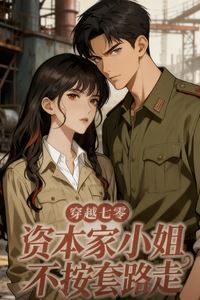
Lu Qingran was a successful department store manager in modern times who died in a car accident and transmigrated into the body of a fifteen-year-old peasant girl with the same name in the Yong'an Dynasty. The original owner was the daughter of Lu Dayong and his first wife, Li Taohua, who died in childbirth. After her mother's death, Lu Dayong remarried Yao, who brought her own daughter, Wang Zhaodi, renamed Lu Qingqing. The new stepmother and stepsister mistreated the original Lu Qingran, forcing her to live in a woodshed and do all the labor while being starved and bullied. The family had accepted a bride price from the impoverished Yan family for Lu Qingqing’s marriage, but when Lu Qingqing refused to go, the family forced Lu Qingran to take her place. Upon waking in the new body, Lu Qingran learned of her dire situation and negotiated a deal with her family: she would marry into the Yan family only if they signed a document severing all familial ties with her. The Lu family, eager to be rid of her and keep the money, agreed immediately. Before the wedding, Lu Qingran discovered she had brought her entire modern department store with her into the past, which functioned as a secret space she could enter and exit at will. The store contained stocked goods, food, and even a fully furnished apartment on the seventh floor that matched her own modern home, providing her with an invaluable resource for survival and prosperity.

Lu Qingran married Yan Zihao, known as Dalang, the eldest son of the Yan family, who had been expelled from the main clan and lived in poverty with his parents and four younger siblings. Despite the Yan family’s extreme poverty, Yan Zihao was kind, respectful, and hardworking. He carried Lu Qingran to their new home and promised her a monogamous lifetime partnership, which deeply moved her. The couple began their life together with mutual respect and care. Yan Zihao’s family, though poor, was warm and loving. Lu Qingran quickly integrated into the household, helping with chores and earning the affection of her husband and his siblings. She used her knowledge and the resources from her secret space to improve their living conditions, starting with finding ginseng in the mountains and selling it for a significant sum of silver in town. This windfall allowed her to buy food, clothing, and other necessities, drastically improving the Yan family’s diet and quality of life.

The Yan family’s newfound prosperity did not go unnoticed. Yan Zihao’s third uncle, Yan Laosan, and the old matriarch of the main Yan family, who had expelled them, began to cause trouble. Yan Laosan insulted Lu Qingran at the village well, prompting Yan Zihao to beat him severely. The old matriarch and Zhao Shi, Yan Laosan’s wife, came to the Yan household to demand justice and insult the family, but Yan Zihao stood his ground, refusing to submit to their unreasonable demands. The village chief intervened, siding with the Yan family since Yan Laosan had provoked the violence. This conflict highlighted the tension between the Yan branch and the main clan, as well as the greed of relatives who saw the family’s improved fortune. Lu Qingran remained calm and composed, supporting her husband while navigating the complex social dynamics of the village.

As the story progresses, Lu Qingran continues to use her modern knowledge and the department store space to benefit her family. She identifies edible wild mushrooms in the mountains, teaching her family how to forage safely, which provides additional food and potential income. Her relationship with Yan Zihao deepens, evolving from a marriage of convenience into genuine affection and partnership. Yan Zihao, in turn, becomes more protective and devoted, ensuring Lu Qingran is treated with respect within the family and community. The narrative follows their efforts to build a stable and prosperous life despite the challenges posed by poverty, family conflict, and the harsh realities of ancient rural society. Lu Qingran’s strategic mind and resourcefulness allow her to overcome obstacles, while Yan Zihao’s integrity and hard work provide a solid foundation for their future. The story sets the stage for further developments as the Yan family seeks to establish themselves independently and potentially reclaim their dignity from the main clan.

Novel Items

More
Event
A truck slammed into Lu Qingran's car at 6 p.m., crushing the front of the car. She suffered a head wound with blood running from her forehead, lost consciousness, and transmigrated to the Yong'an Dynasty.
Item
The betrothal gift (bride price) given by the Yan family to the Lu family for Lu Qingqing's marriage arrangement. The Lu family refused to return it and decided to send Lu Qingran instead.
Event
Lu Qingqing was originally betrothed to Yan Dalang, the eldest son of the poor Yan family. When she refused and attempted suicide, the Lu family decided to force Lu Qingran to marry in her place to avoid returning the bride price.
Event
Lu Qingran's condition for agreeing to marry into the Yan family: she demanded to sever all ties with the Lu family and have nothing to do with them anymore. Old Master Lu agreed to this condition.
Event
Lu Chengfu, the village chief, was invited by Lu Eryong to mediate the discussion about Lu Qingran severing ties and marrying into the Yan family. He warned Lu Dayong that once ties are severed, the Lu family will not benefit if Lu Qingran prospers.
Document
A legal document cutting ties between Chen Guiying and her mother and brother. It has Madam Chen's fingerprint on it with the village head and secretary as witnesses. There are three copies - one for Chen Guiying, one for Madam Chen, and one presumably for records.
Latest Release
DateGroupRelease
2026-08-11shanghai fantasy c68
2026-08-11shanghai fantasy c67
2026-08-11shanghai fantasy c66
2026-08-11shanghai fantasy c65
2026-08-11shanghai fantasy c64
2026-08-11shanghai fantasy c63
2026-08-11shanghai fantasy c62
2026-08-11shanghai fantasy c61
2026-08-11shanghai fantasy c60
2026-08-11shanghai fantasy c59
2026-08-11shanghai fantasy c58
2026-08-11shanghai fantasy c57

Community Reviews

Rating(3.8 / 5.0, 27votes)
5 stars
5(19%)
4 stars
12(44%)
3 stars
10(37%)
2 stars
0(0%)
1 stars
0(0%)

Popular reviews

... Read More
'We must prepare, husband!' — Yan Mother, probably while simultaneously losing her mind internally Let's talk about stakes because this author knows how to make you sweat without breaking a sweat. The central conflict here is external—a drought that's slowly suffocating the village—but the real tension comes from the information asymmetry. Lu Qingran knows what's coming. Yan Zihao is starting to suspect. The rest of the village? They're just anxious but not yet terrified. This creates this incredible dramatic pressure because we, the readers, are watching a train wreck in slow motion and we can't look away. What makes the stakes feel real is that they're incremental. It's not 'the river dried up today.' It's 'the water level dropped a little, and now I dropped a bucket and it didn't hit water where it usually would.' That's how droughts work. That's how disasters work. And the author captures that perfectly. The internal conflict for Lu Qingran is also fascinating. She has a space full of supplies. She could solve everyone's problems right now if she wanted to. But she can't reveal her secret, so she has to work within the constraints of the normal world—buying fabric, storing grain, preparing quietly. That limitation creates tension every time she has to pretend she doesn't know something. And the family's conflict with the old Yan relatives? That's a secondary but important thread. The uncle scolding Yan Ziyi for helping 'strangers' instead of blood family, Yan Father's firm refusal to be pulled back in. This isn't just about drought—it's about the family holding together while external pressures mount. If they fracture internally, the drought wins either way. The ending of this sequence leaves me with one burning question: when the crisis hits full force, how long can Lu Qingran keep her space secret before someone finds out?
... Read More
'Freshly cooked, they were soft and glutinous. Combined with the sweet aroma of red dates, Lu Qingran enjoyed them immensely, eating two in a row before stopping.' I need to talk about this scene because the author really understood the assignment. It's the Dragon Boat Festival, the village is on the edge of a drought crisis, and yet here we are making zongzi. That contrast is everything. The imagery throughout these chapters is so vivid. The riverside crowded with villagers chatting loudly about the weather—that's such a specific, lived-in detail. You can almost hear the heat shimmering off the ground. The twins with 'round faces red from the sun, foreheads dotted with sweat, and eyes fixed on the road home'—I can see this like a film frame. It's adorable and aching at the same time. And the food descriptions! Honey mint water that 'feels warm in the mouth but cool as you swallow.' Sweet potato millet porridge with honeyed sweet potatoes. Cold bamboo shoot salad, cold fern salad, spicy stir-fried meat. The author isn't just worldbuilding through landscapes—they're worldbuilding through taste and smell, which is so much more immersive. The fabric store scene is another standout. The owner's regret when he says 'one more day in the sun, then store it tomorrow'—you can feel his shrewdness. He's calculating, he's negotiating, and Lu Qingran walks in and solves his problem. The detail about cotton yellowing over time and being sold cheaply to farmers next winter? That's the kind of worldbuilding detail that makes you believe this economy actually functions. The village itself feels alive. Some families have too much land and can't keep up, their lips get blistered. Children as young as seven or eight digging for wild vegetables. This isn't a backdrop—it's a character that's slowly becoming an antagonist.
... Read More
'The weather is scorching, there's drought, war, tens of thousands of people fleeing in chaos.' This single sentence in Lu Qingran's head went from background detail to full-blown horror in one chapter. The author does this incredible thing where the world feels alive and independent of the characters—it's not just a setting, it's almost a character itself. The opening market scene is so vivid I could smell the braised offal. The 5-wen stall fee, the oil paper, the bamboo skewers, the copper coins jingling in the money pouch—these tiny material details ground the story in a specific time and place. And then there's the river scene where villagers are fetching water because it's been over two months without rain. The crops turning yellow, the elderly staying indoors, the heat so oppressive it feels like everything will be baked dry. This isn't just 'it's hot'—it's a slow-building dread that something terrible is coming. The nightmare vision itself is cinematic. Black-faced warriors in armor, blood dripping from weapons, bodies of men women and children scattered across the ground. Lu Qingran feeling like she's part of the scene, breathing faster, shouting 'Run! Run, hurry!'—the author makes you feel her panic viscerally. And then the cut back to the quiet bedroom, Yan Zihao's warm hand on her back, the contrast between the apocalyptic vision and the peaceful reality is devastating. The worldbuilding here isn't exposition dumps—it's layered into action, dialogue, and sensory detail.
... Read More
Okay so let's talk about Yan Zihao because this guy is quietly the most interesting character in this whole setup and I need to unpack why. On the surface he's this stoic, hardworking ancient Chinese husband type. But the details keep catching me off guard. Remember when Lu Qingran falls asleep in the chair after their town trip? He doesn't just leave her there. He carries her to bed. Like, literally picks her up and puts her on the mattress. And then he sits back down at the desk to read his book while she sleeps. That's such a specific kind of tenderness—it's not dramatic or overt, it's just... there. Practical care. Then there's the literacy thing. When Lu Qingran asks to learn to read, Yan Zihao immediately agrees. But here's what got me: the narration tells us he actually noticed from her expression that she probably already knows how to read. He pretends not to notice. He plays along. That's either incredibly perceptive or incredibly gentle, maybe both. He's giving her an out, letting her save face while still helping her. That's a man who pays attention. And the candied hawthorn scene! She offers him a bite, he sees the bite marks and eats from the same spot. They both think it's too sour but they share it anyway. Little moments like this where they're just... figuring each other out. Building something. But what really struck me is how the power dynamic shifts. She's the one who proposes going up the mountain. She's the one who finds the ginseng. She's the one driving their economic escape. Meanwhile Yan Zihao is just... following along, trusting her. That's a relationship where both people are contributing in different ways, and honestly that's way more interesting than the typical ancient romance setup where the guy does everything. I'm genuinely invested in how this partnership evolves. They're not just husband and wife by arrangement anymore. They're becoming a team. And I have so many questions about what happens next when the full extent of her secrets comes to light.
... Read More
Let me just say this: the pacing in these chapters is absolutely masterful. We go from a detailed market sales scene—five wen per scoop, bargaining with customers, the Shen household stewardess showing up—to a drought that's been building for weeks, to a nightmare vision of mass death and war, to a full confession about crossing worlds, all in roughly the same amount of reading time. And somehow it doesn't feel rushed at all. The author uses what I can only describe as 'domestic escalation.' Every scene starts small and personal—the offal business, buying cloth, the twins falling asleep on the cart—and then quietly opens up to reveal something much bigger. The drought isn't mentioned until chapter 50, but once it appears, it recontextualizes everything. The warmth of the family meals, the peace of the village, the simple joy of earning sixty taels of silver—it all becomes fragile, temporary, precious. The chapter structure itself is interesting. It moves from morning (selling offal) to afternoon (shopping, cart ride) to evening (family dinner, the talk) to night (the nightmare, the confession). This daily rhythm gives the story a comforting cadence before the nightmare shatters it. And that final line—'I don't know what the original Lu Qingran was like'—is a perfect cliffhanger. It's not a dramatic 'and then something exploded' cliffhanger. It's a quiet, character-driven moment that makes you immediately want to read the next chapter.
... Read More
This chapter has a really satisfying rhythm to it. Let me break it down because the structure is actually quite clever. Act One: The Transaction. We open with the money count—two five-tael pieces, four one-tael pieces, remainder in copper. Heavy pouch, unreal feeling. They go to town, buy rice and meat, and the whole sequence moves efficiently. No dragging, no filler. Just the practical business of turning ginseng into sustenance. Act Two: The Journey Home. The ox cart scene serves multiple purposes—it's character development (Lu Qingran's sharp tongue when provoked), worldbuilding (the social dynamics of rural transport), and romance (the shoulder lean, the public claim of 'husband'). The pacing here is slower, more atmospheric, letting us breathe after the business of Act One. Act Three: The Return. Evening arrival, the waiting parents, the simple dinner, the bedroom scene. This is where the chapter gets intimate and quiet. The pillow moment, the conversation about their relationship, the decision to sleep in each other's arms—it's a perfect emotional crescendo. Act Four: The Morning After. Waking up in his arms, the candy subplot, the field work, the family breakfast. The pacing picks back up, returning to the communal rhythm of village life. The candy distribution scene is almost comedic in its warmth, providing a light counterpoint to the serious bedroom conversation the night before. The chapter ends on a gentle cliffhanger—Yan Zihao asking about the candy's origin, Lu Qingran's space reveal looming. It's not a huge cliffhanger, but it's enough to make you want to keep reading. What I appreciate most is how the author varies the pacing. Some scenes are quick and functional (buying rice, eating dinner), others are lingering and atmospheric (the ox cart ride, the bedroom conversation). The transitions are smooth—time markers like 'that day,' 'breakfast had already finished,' 'nearly the end of the Chen hour' keep us oriented without feeling like chapter breaks within a chapter. The only minor critique: the field work scene feels slightly rushed compared to the domestic scenes, but that's a small note in an otherwise well-structured chapter.
See all reviews

Characters

See all characters

Custom lists

Oops…There is nothing here.