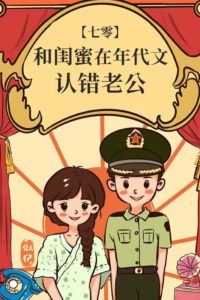
Lin Wan, a thirty-year-old woman from the twenty-first century, transmigrates into the body of an eighteen-year-old girl in Beijing, March 1969. The original Lin Wan was the neglected second daughter of a working-class family, forced to perform all household labor while her father and older brother received preferential treatment. Her parents had already signed her up to be sent down to the countryside as an educated youth, a fate she accepted with resignation before her fever claimed her life. Upon waking, Lin Wan assesses her dire situation: she is invisible, malnourished, and facing a future of manual labor in an unknown location. Determined to survive and thrive, she decides to take control of her destiny rather than passively accepting her family's arrangements.
Lin Wan secretly takes one hundred yuan and a portion of the family's ration coupons from their savings, leaving a note claiming it as payment for eighteen years of unpaid labor. She then volunteers at the neighborhood committee, strategically requesting assignment to Heilongjiang Province in the Northeast, a region she knows well from her previous life. Her enthusiasm and knowledge of the area convince the clerk to prioritize her application. She departs for the Northeast on a six-day train journey, arriving in Harbin before being transported by tractor to Xiangyang Production Team in Shuanghe County. The village is cleaner and more prosperous than she expected, with decent housing and a heated kang bed provided for the educated youths.
Her first day of farm work is brutal. Digging frozen corn stubble leaves her hands blistered and her body aching, earning her only seven work points, worth a mere fifty-six cents. Lin Wan quickly realizes that manual labor alone will not allow her to live well; she needs a strategic advantage. She observes the local power structure and identifies Lu Zhanye, the quiet, capable younger son of the production team leader. Lu Zhanye, in turn, notices Lin Wan’s resilience and clear-mindedness, deciding she is suitable for marriage despite her city background. Their paths cross when he proposes a direct partnership: he will provide a stable home, financial security, and respect, while she agrees to stay in the countryside and build a life with him.
Lin Wan accepts the proposal, negotiating terms that include no bride price and separate living quarters to ensure her independence. They register their marriage in town, where Lu Zhanye reveals his involvement in the black market, trading factory-second goods through a contact named Brother Ma. He shares his earnings with her and hands over control of the household finances, establishing a foundation of trust. The wedding is simple, held on the fifteenth day of the third lunar month, with Lu Zhanye’s family preparing a new house and fresh bedding for the couple. Lin Wan moves into her own home, leaving the educated youth dormitory behind.
As she settles into her new role, Lin Wan navigates village gossip and the complexities of rural life in 1969. She maintains a calm exterior while internally planning her future, leveraging her modern knowledge and Lu Zhanye’s connections to improve her circumstances. The story concludes with Lin Wan no longer the powerless girl she was, but a woman with a home, a partner, and the agency to shape her own fate in the vast black soil of the Northeast.
| Date | Group | Release |
|---|---|---|
| 2026-08-11 | shanghai fantasy | c113 |
| 2026-08-11 | shanghai fantasy | c112 |
| 2026-08-11 | shanghai fantasy | c111 |
| 2026-08-11 | shanghai fantasy | c110 |
| 2026-08-11 | shanghai fantasy | c109 |
| 2026-08-11 | shanghai fantasy | c108 |
| 2026-08-11 | shanghai fantasy | c107 |
| 2026-08-11 | shanghai fantasy | c106 |
| 2026-08-11 | shanghai fantasy | c105 |
| 2026-08-11 | shanghai fantasy | c104 |
| 2026-08-11 | shanghai fantasy | c103 |
| 2026-08-11 | shanghai fantasy | c102 |