Transmigrating to the '70s: The Delicate Cannon Fodder's Reversal
+Add to Custom List
Genres:
Novel Info
  • Author:
  • 是禅
  • Status:Ongoing

Summary

... Read More

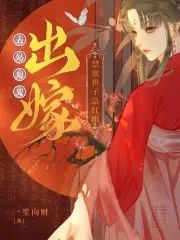
Li Lezhi, a woman from the twenty-fifth century, transmigrates into the body of a seventeen-year-old girl in 1973, a parallel world resembling her own. Upon awakening, she realizes she has inhabited the body of a cannon fodder character from a novel she previously read, destined to suffer a tragic fate after her family is destroyed by political persecution. The original owner, spoiled and timid, died of a fever after high school graduation, leaving Li Lezhi to navigate a dangerous era where her father is a professor and her mother comes from a wealthy family that has already donated its assets and immigrated overseas. Li Lezhi resolves to survive and protect her loving parents, who are unaware that they will soon be sent to the countryside for re-education due to malicious reports.

Recognizing that the novel’s heroine, Shen Yueyue, is also reborn and will soon discover a spiritual spring space hidden in a jade pendant, Li Lezhi races against time. She visits a recycling station and successfully claims the pendant before Shen Yueyue can find it, binding the space to her own bloodline. The space contains a vast plot of fertile land, a healing spring, and an ancient hall with medicinal pills. With this advantage secured, Li Lezhi prepares for the impending disaster. She learns that her parents are planning to sever ties with her to protect her from the coming storm, but she insists on signing up as an educated youth to be sent to the same village, Qingshan Village, where they will be exiled. She secretly stores her family’s valuables, including gold bars and cash, within her space, ensuring their safety from the Red Guards who are already conducting searches.

As Li Lezhi departs for the countryside, she encounters Shen Yueyue and her stepsister, Shen Ruoruo, on the same train. The journey is fraught with tension as Shen Yueyue attempts to manipulate those around her, portraying herself as a victim while secretly harboring malice toward Li Lezhi. Upon arrival at Qingshan Village, the new educated youths face harsh conditions and skeptical villagers. Li Lezhi quickly adapts, using her spiritual spring water to maintain her health and strength while others struggle. She navigates the social dynamics of the dormitory, where Shen Yueyue tries to isolate her by highlighting her wealth and privileged background. Li Lezhi counters these attacks with sharp wit and political correctness, refusing to be bullied.

The core conflict intensifies as Li Lezhi chooses lighter work, cutting pig grass in the mountains, to avoid the grueling field labor. This decision allows her to forage for wild game and herbs, which she stores in her space, giving her a significant nutritional advantage. Meanwhile, Shen Yueyue schemes to win the affection of Zhou Junling, the novel’s male lead, who is also assigned to the village. Li Lezhi remains indifferent to the romantic entanglements, focusing instead on securing a separate living space and preparing for her parents' arrival. The story follows her strategic efforts to build a secure life in the countryside, leveraging her secret space to thrive while the original plot’s tragic events are altered by her presence and foresight.

Latest Release
DateGroupRelease
2026-08-11shanghai fantasy c56
2026-08-11shanghai fantasy c55
2026-08-11shanghai fantasy c54
2026-08-11shanghai fantasy c53
2026-08-11shanghai fantasy c52
2026-08-11shanghai fantasy c51
2026-08-11shanghai fantasy c50
2026-08-11shanghai fantasy c49
2026-08-11shanghai fantasy c48
2026-08-11shanghai fantasy c47
2026-08-11shanghai fantasy c46
2026-08-11shanghai fantasy c45

Community Reviews

Rating(4.3 / 5.0, 3votes)
5 stars
1(33%)
4 stars
2(67%)
3 stars
0(0%)
2 stars
0(0%)
1 stars
0(0%)

Popular reviews

... Read More
The dialogue in these chapters is absolutely delicious. Every conversation is a mini power struggle and I am here for it. Let me start with Li Lezhi and Captain Xu — on the surface it's all polite pleasantries, right? "Captain Xu, you really have experience and think of everything." But read between the lines and it's pure strategy. She's buttering him up because she needs to survive here. The way she deflects his attempt to return the seven yuan by suggesting he exchange it for goods instead — that's not naive, that's calculated generosity. She needs allies and she knows it. Then there's the Shen Yueyue confrontation, and oh my god. Li Lezhi's line about packing food for Shen Yueyue's stepsister is one of the most elegant verbal jabs I've ever read. She does it in front of everyone, wrapped in fake kindness — "Since you care about her health, after the meal I can pack some for her." Shen Yueyue literally can't respond without looking like the villain. And Li Lezhi follows up with "She's your family, so injured or unwell, she needs care" — that extra little sting? Chef's kiss. The youth station residents' dialogue is also great. Ruan Zhaodi's sourness comes through in every line she says. "Ah! Li Zhiqing really knows how to run a household. Look at this house—it's so grand. Must have cost a fortune" — that's not admiration, that's envy dressed up as compliment. And Zhao Guoqiang's flattery toward Captain Xu when the villagers arrive: "We thought since everyone is a youth sent to the countryside, coming early might help Li Zhiqing with some chores" — he's clearly trying to position himself as useful, and it's transparent. Captain Xu's voice stands out too. His brief exchange with his wife about locking the door before he leaves — "You don't need to wait for me to go to bed. Just lock the door for me" — it's practical, authoritative, and tells you everything about his character in two lines. He's a man who gets things done. The narrative voice itself is warm but observant, never preachy. It lets the characters reveal themselves through what they say and don't say.
... Read More
There are so many layers to unpack here and I can't stop thinking about the symbolism. Let me start with the house itself — it's not just shelter, it's autonomy. In a world where every aspect of life is controlled by the brigade, the work points system, the collective dormitory, Li Lezhi building her own house is a radical act of self-determination. The fact that she has a kitchen, a bedroom, a firewood room — these are the basic units of a private life, and she's claiming them for herself. The toilet with two planks over a pit is crude, but it's still hers. She doesn't have to queue with thirty other people anymore. Then there's her secret space. I mean, obviously the space itself is the biggest symbol — it represents everything she's hiding, her true power, her connection to a different world. But think about how it functions narratively too: it's literally an inner world within the outer world, just like her double life. She appears as a modest sent-down youth while carrying cured meat, wild chicken, and spring water in a pocket dimension. The space is her secret self, her hidden strength, her private rebellion. The meal is another loaded symbol. Ten meat dishes in a time of scarcity — this is abundance weaponized through generosity. She's not just feeding people; she's buying loyalty, creating obligation, establishing herself as someone valuable to the community. But it's also genuine care. She wants to treat the workers well because she knows she'll be living among them for years. The feast is both strategy and sincerity, and that duality is what makes it so interesting. And the parents in the firewood room — that's heartbreaking symbolism. Her father, a former intellectual or professional, reduced to sleeping in a storage room for firewood. The reversal of roles where the daughter now has the space and security while her parents are the ones surviving in the margins. When she whispers "Dad..." through the wall, it's not just an emotional moment — it's the collision of two worlds, the secret she's built crashing into the family she left behind.
... Read More
Okay so I have to talk about the cattle shed scene because it genuinely gave me chills. The whole setup is just — it's past eight, Li Lezhi is waiting in the dark near the Qingshan Mountains, and the author describes this mud-walled, thatched-roof shed where only a handful of people survive the harsh northern winters. You can literally feel the cold and isolation just from reading it. The fact that so few sent-down youths made it through those first winters adds this heavy, suffocating atmosphere to the whole setting. It's not just background — it's a character in itself, this unforgiving landscape that keeps people alive or kills them. And then there's her new house. I love how the author contrasts the two spaces. Her little house with the bedroom, kitchen, firewood room, and that outdoor toilet with two planks over a pit — it's humble but it's hers. The privacy alone is described as a huge deal. Remember how the text says she always needed courage to use the youth station toilet? That single detail tells you everything about her living conditions before. The house is a sanctuary. The housewarming dinner scene is another gem — ten meat dishes and only two vegetables, the aroma hitting everyone the moment they walked in. The author paints this picture of rural simplicity mixed with sudden extravagance that feels almost dreamlike. "This feast is like a New Year's celebration" — Aunt Xu literally says it. In a time when most people are eating one meal a day, this spread is almost absurd. The visual of everyone scrambling for food while Li Lezhi quietly sips soup in the corner is so vivid I could see it as a film scene. The night walk to the cattle shed is probably my favorite atmospheric moment. Moonlit path, no flashlight, her eyes unusually sharp from drinking spring water. The darkness around the shed, the quiet, the fear of being caught. It all builds this tense, intimate mood that makes you hold your breath when she finally whispers "Dad..." — I actually got goosebumps.
See all reviews

Characters

See all characters

Custom lists

See all custom Lists