Summary

... Read More

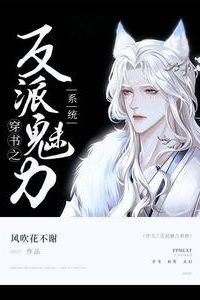
Jun Zhu, an ordinary man from reality, finds himself transmigrated into the body of Jiu Qing, a powerful and notorious celestial fox demon within a cultivation novel. Upon awakening in the Valley of a Hundred Demons, he discovers he is bound to a Villain’s Charisma System that demands he raise his character’s charisma score to one thousand and achieve a fulfilling ending to earn his return home. Refusing the system initially, he learns that failure means permanent death in this world, forcing him to comply with the mission. His primary objective is to infiltrate the life of Lu Yunzou, the novel’s protagonist, and become his closest confidant to alter the tragic fate destined for him. Lu Yunzou, currently a young cultivator recovering from severe injuries after being betrayed by his sect and pushed off Soul-Severing Cliff, is the key to Jun Zhu’s survival and success.

Jun Zhu locates the unconscious Lu Yunzou at the base of the cliff and brings him to a secluded cave to recover. Despite his cold demeanor and reluctance to engage emotionally, Jun Zhu tends to Lu Yunzou’s wounds and retrieves his stolen jade pendant from the attackers who had pursued him. As Lu Yunzou regains his strength, Jun Zhu attempts to build a rapport with him, carefully navigating the protagonist’s guarded nature. Lu Yunzou, grateful for the rescue but wary of further betrayal, remains distant. Jun Zhu recognizes that earning true trust will take time and resolves to proceed cautiously, avoiding any actions that might appear manipulative or overly deliberate. During this period, Jun Zhu also struggles with his new fox instincts, finding himself inexplicably drawn to chasing small animals, a trait that contrasts sharply with his human consciousness and the dignified image he wishes to maintain.

Their fragile peace is shattered when Mo Yao, a powerful and sadistic snake demon who harbors a deep hatred for Jiu Qing, tracks Jun Zhu down. Mo Yao confronts Jun Zhu in the Tuomi Mountains, engaging him in a fierce battle that leaves Jun Zhu severely injured. Unable to defeat Mo Yao, Jun Zhu is captured and forced to wear a magical collar that marks him as a prisoner. Mo Yao treats Jun Zhu with cruel humiliation, viewing him as a pet rather than an equal, and takes him to an inn in Feiyan City. While held captive in fox form, Jun Zhu escapes his room only to collide with Qi Hanshui, a gentle Taoist cultivator who intervenes when Murong Feixue, the daughter of Wan Jian Mountain’s sect master, attempts to capture the fox. Qi Hanshui’s kindness prompts Jun Zhu to offer a drop of his essence blood to heal the cultivator’s injuries before returning to Mo Yao, an act that subtly shifts Mo Yao’s perception of him.

The encounter with Qi Hanshui introduces a new variable into Jun Zhu’s mission. Murong Feixue, offended by the interruption and the injury to her subordinates, confronts Mo Yao, unaware of his true identity and power. Jun Zhu, observing the tension, realizes the complexity of the social dynamics around him. He remains under Mo Yao’s control but continues to plot his next moves, balancing the need to survive his captor’s wrath with the long-term goal of befriending Lu Yunzou. The story concludes with Jun Zhu navigating these dangerous relationships, aware that his path to altering the protagonist’s fate is fraught with peril from both human cultivators and demonic foes.

Latest Release
DateGroupRelease
2026-08-11shanghai fantasy c11
2026-08-11shanghai fantasy c10
2026-08-11shanghai fantasy c9
2026-08-11shanghai fantasy c8
2026-08-11shanghai fantasy c7
2026-08-11shanghai fantasy c6
2026-08-11shanghai fantasy c5
2026-08-11shanghai fantasy c4
2026-08-11shanghai fantasy c3
2026-08-11shanghai fantasy c2
2026-08-11shanghai fantasy c1

Community Reviews

Rating(3.9 / 5.0, 22votes)
5 stars
8(36%)
4 stars
4(18%)
3 stars
9(41%)
2 stars
1(5%)
1 stars
0(0%)

Popular reviews

... Read More
This chapter is a masterclass in how to build tension without doing anything dramatic. Think about it—there's no fight scene, no explosion, no dramatic reveal. Just a confrontation. A woman blocking a man's path, a cold look, and internal panic. And yet I was leaning forward the entire time. The author starts with dialogue that drops us right into the conflict—'just leave after injuring someone from Wan Jian Mountain?'—no setup, no context, just in medias res. Then we get this quick exposition dump about Murong Feixue's status, which serves double duty: it tells us who she is AND it makes us understand exactly what she's about to lose. The pacing of her realization is perfectly calibrated. First she's angry, then she's humiliated, then she's terrified. Each beat gets shorter, more urgent, until Mo Yao finally speaks and the whole thing collapses into that single image of her swallowing hard. The Jun Zhu interlude in the middle is genius too—it's a brief pause in the tension that actually heightens it, because now we're wondering about Lu Yunzhou and what Jun Zhu left behind, and then BAM we're back to the confrontation with even more weight. The chapter ends on 'Steeling herself, she forced herself to speak' which is such a perfect cliffhanger. She's about to say something, and we have to turn the page. No drama, no fireworks. Just pure, controlled tension.
... Read More
Okay, let's be real — the transmigration-into-a-villain body setup is about as fresh as it gets these days. I've read a dozen variations of this. But what's actually interesting here is how the plot is laying out its pieces. We get the system binding, the mission parameters (raise charisma to 1,000 and become the protagonist's closest friend), and then immediately — within the first few chapters — the author starts layering in complications. The pursuer showing up almost immediately after Jun Zhu saves Lu Yunzou? That's not lazy writing, that's smart pacing. The author doesn't let the protagonist have a quiet moment before throwing another problem at him. The structure so far follows a clear three-beat: establish the predicament, execute the first mission step (save the protagonist), then introduce the next threat. It's efficient. Maybe a little too efficient — I wouldn't mind more breathing room between plot points. But the coherence is there. Every scene advances either the mission or the external conflict, and nothing feels wasted. What I'm curious about: the system's insistence on making Jun Zhu the "most captivating villain" while his actual personality is just... a guy who wants to go home. That tension between the system's expectations and Jun Zhu's genuine personality is where the plot's real engine lives. Will Jun Zhu accidentally become a good villain by being himself, or will the system's interference create the very villainy it claims to want to avoid? That's the question keeping me turning pages.
... Read More
The opening description of the Valley of a Hundred Demons is genuinely atmospheric. Moonlight obscurred by thick clouds, then suddenly breaking through — that's not just setting, that's mood. The author uses the environment to mirror Jun Zhu's own disorientation. One moment everything is dark and eerie, the next a full moon reveals an almost ethereal beauty. It's a visual metaphor for his situation: he's in a dangerous world that also happens to be gorgeous. And then there's Soul-Severing Cliff. "The bottom of the cliff, untouched by sunlight year-round, was bitterly cold, an eerie chill seeping into the bones of anyone who dared step into its depths." That line does so much work. It establishes danger, isolation, and the physical reality of this world in one sentence. I can feel that cold. I can imagine standing at the edge looking down. The cave itself is sparse — stone walls, a fire, a stone platform — but it works because it's functional. This isn't a palace or a grand cultivation sect. It's a temporary shelter, and that temporariness adds to the intimacy of the scene. Two injured men, one fire, one roasted pheasant. The world outside doesn't matter in that moment. What I appreciate most is how the author doesn't over-describe. The Tuomi Mountains, Feiyan City, the Da Sheng Dynasty — we get just enough geographic and political context to orient ourselves without getting bogged down in exposition. The world feels lived-in because it's presented through action and observation, not information dumps.
... Read More
"There's no need to trouble you further — I can handle it myself." That line from Lu Yunzou hit me in a weird way. It's not just pride — it's the voice of someone who has been betrayed before and doesn't trust anyone offering help. And Jun Zhu? He gets it. Not because he's experienced betrayal, but because he's reading the blueprint of this person's entire tragic arc. He knows what's coming. He knows Lu Yunzou will lose his brother, his mentor, his faith in the world. And yet here he is, trying to be kind anyway. The dynamic between them is fascinating because it's built on asymmetric knowledge. Jun Zhu knows everything about Lu Yunzou's past and future. Lu Yunzou knows... well, he knows Jun Zhu saved his life and that's it. That imbalance creates this weird intimacy. Jun Zhu is essentially performing friendship while genuinely not knowing how to be a fox or cook or resist chasing pheasants. And Lu Yunzou is slowly, carefully, letting someone in despite every instinct telling him not to. The scene where Jun Zhu retrieves the jade pendant is everything. He could have ignored it. He could have said "it's probably gone" and moved on. Instead, he goes back into danger, confronts the people who threw Lu Yunzou off a cliff, and brings it back. And when he does, Lu Yunzou's reaction — that single word "thank you" delivered like it costs him something — that's the moment the relationship actually starts. Not the rescue. The pendant.
... Read More
The stakes in this story operate on three levels and they're all pressing simultaneously. Level one: Jun Zhu's personal survival. He transmigrated into a body he doesn't understand with a system he didn't ask for. If he fails the mission, he dies in this world. That's the baseline stakes — simple, clear, existential. Level two: the external threat. Mo Yao is already hunting him. Three thugs just threw Lu Yunzou off a cliff over a jade pendant, and they're clearly not the end of the line. The system mentions that Jiu Qing (this body's original owner) had enemies everywhere. Jun Zhu inherited a target on his back along with the body. The chase scene at the end — the palm strike, the evasion, the flight toward Feiyan City — that's not setup for later. That's immediate, active danger. Level three: the emotional stakes, and this is where it gets really good. Lu Yunzou is about to lose his brother. His mentor will betray him. His soul jade will be stolen. Jun Zhu knows all of this. The tension isn't just whether he can complete his mission — it's whether he can prevent or mitigate a tragedy he's seen coming. Every moment of peace between them is borrowed time. "With their level of skill? They couldn't trouble me even if they tried." — Jun Zhu says this casually, but the reader knows better. The thugs were already dangerous enough to send Lu Yunzou falling off a cliff. Mo Yao is clearly on another level entirely. The gap between Jun Zhu's confidence and the actual threat is where the suspense lives. He's flying toward a city full of powerful cultivators with someone right behind him, and he's not even sure he can trust his own instincts. That's a great place to end a batch.
... Read More
Straight as a blade. That's how the text describes Mo Yao's posture, and I can't stop thinking about that image. A blade doesn't negotiate. A blade doesn't care about your title or your father's mountain or the admiration of a thousand people. It just is. And then there's the chill deep in her bones—bones being the hardest, most permanent part of the body, the structure everything else hangs on. The author is stacking these images of coldness and rigidity against Murong Feixue's entire identity, which is built on warmth, admiration, social connection. Her prestige is relational—it exists because other people acknowledge it. Mo Yao's power is intrinsic—it exists regardless of who's watching. That's the real conflict here, I think. Not sect politics or personal grudges, but two fundamentally different kinds of power colliding. The inn guests coming out to watch adds another layer—this is all performance, all of it. Murong Feixue's humiliation is public, which makes it worse, but it also means her power was always performative too. She only existed in the eyes of others. When Mo Yao looks at her and sees nothing, the whole structure collapses. 'Who would dare to harm her?' The question hangs there like an accusation. The answer, apparently, is anyone who doesn't need her. Which makes you wonder what Jun Zhu sees when he looks at Mo Yao. Does he see a blade, or does he see someone he once knew before all this ice set in?
See all reviews

Characters

See all characters

Custom lists

See all custom Lists