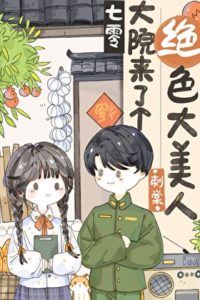
Transmigrated to the ’70s: My Fortune from Time-Traveling Red Envelopes
+Add to Custom List
Genres:
Novel Info

Summary

... Read More

Lan Ling, a geology graduate student, dies after being struck by a falling rock during a mountain survey. She awakens in 1970, transmigrated into the body of a fifteen-year-old girl with the same name in a poor farming family in Pingyang County. The original owner died from choking on a chicken bone, an accident that occurred because the family rarely ate meat. Lan Ling inherits a large, multi-generational household of fifteen people living in four old houses. Despite the era’s severe resource shortages and the family’s poverty, she is doted on by her parents and siblings. She discovers she possesses the original owner’s superhuman strength and a voracious appetite.

Shortly after waking, Lan Ling finds her modern iPhone has traveled with her. The device connects to her best friend, Yu Feifei, in the present day through a special chat application. The phone grants Lan Ling access to an infinite storage space that freezes time, allowing her to preserve items indefinitely. Additionally, the app allows her to send and receive physical goods through virtual red envelopes, limited to three transfers per day. Yu Feifei, an aspiring actress struggling financially, becomes Lan Ling’s lifeline, sending her food, clothing, and other necessities from the modern era. In return, Lan Ling sends back valuable collectibles, including a rare 1970s banknote that Yu Feifei sells for nearly two hundred thousand yuan.

Recognizing the extreme scarcity of the 1970s, Lan Ling begins trading modern goods for cash and ration tickets. She travels to the county town, selling high-quality rice and peanut oil to local residents who are desperate for better food. She quickly accumulates a significant amount of money and valuable tickets, which she hides in her storage space. With her family’s immediate survival secured, she plans her long-term future. Determined to gain independence and avoid the chaotic political environment, she decides to become a truck driver, a profession that offers high pay, social status, and the opportunity to travel.

Lan Ling studies car repair manuals sent by Yu Feifei and practices her driving skills. She disguises herself as a man using makeup and props to navigate the black market, where she sells more goods and acquires gold jewelry. Her ultimate goal is to secure a position at the county logistics station. When a truck breaks down at the station, Lan Ling intervenes, diagnosing and fixing the fuel line issue in front of the deputy station manager, Wei Chuanrong. She then demonstrates her exceptional driving skills by maneuvering the large truck with ease, impressing the staff and management.

Impressed by her technical knowledge and physical strength, Wei Chuanrong hires Lan Ling as a driver despite her gender and youth. She is assigned to short-distance routes initially, with the promise of getting her own truck once she proves herself. Lan Ling moves into a dormitory at the logistics station and begins her new career. She continues to support her family secretly, providing them with food and money while building her own life. Her actions also extend to helping persecuted intellectuals in the village, whom she aids anonymously out of a sense of conscience. The story follows her navigation of this difficult era, balancing her modern knowledge with the constraints of the past while building a secure future for herself and her loved ones.

Latest Release
DateGroupRelease
2026-08-11shanghai fantasy c1

Community Reviews

Rating(4.4 / 5.0, 10votes)
5 stars
5(50%)
4 stars
4(40%)
3 stars
1(10%)
2 stars
0(0%)
1 stars
0(0%)

Popular reviews

... Read More
Okay I need to think out loud about this because something about the chainsaw detail has been bothering me in the best way. On the surface, it's just a funny scene about a friend sending weird self-defense equipment. But I think it's actually saying something deeper about this story and about Lan Ling herself. The chainsaw represents self-reliance in its most extreme form. Lan Ling is a woman entering a male-dominated profession in a rural, underdeveloped setting where danger is real and help is far away. The chainsaw—brutal, loud, indiscriminate—is the ultimate symbol of her ability to protect herself. No man can come near her with that thing running. It levels the playing field in the most visceral way possible. But here's what I find really interesting: the chainsaw is pink with flowers. It's domesticated violence. The weapon is disguised as something cute, something harmless. I think this mirrors Lan Ling's own position in the story. She's small and thin, she looks unassuming, but she's actually incredibly capable. The world underestimates her constantly, and that's her advantage. The lavender-scented pajamas work the same way. They're soft, domestic, feminine—yet they're part of her survival kit for a dangerous job. The boundary between comfort and preparation is blurred. She doesn't have to choose between being a woman and being a truck driver. Even the food preparation has symbolic weight. Thirty servings of each dish, the pickles from her mom, the ability to barter with villagers for cooking pots—it's all about self-sufficiency. The recurring motif is: Lan Ling prepares, and preparation is power. In a world where she could easily be vulnerable, she builds her own armor out of practical items. "The answer is a chainsaw, girl!"—this line isn't just funny. It's a declaration of independence. Yu Feifei isn't just sending a weapon; she's sending the message that Lan Ling deserves to feel safe, and she should never apologize for arming herself.
... Read More
I need to talk about this opening moment because it genuinely made my day. Lan Ling gets a message from her best friend Yu Feifei with red envelopes and the offer of black goat meat and black pork. Yu Feifei is out filming in the mountains, running around getting her supplies, and she's thinking about Lan Ling the whole time. The text says Lan Ling "felt bad about making Yu Feifei run around with her film crew and also worry about getting her all these supplies." That's it. That's the whole friendship. No dramatic confessions, no grand gestures—just a friend who knows you need something and goes out of her way to get it. And Lan Ling's joy at receiving it feels real because we've already established she needs these things to exchange for treasures in her mission. The friendship isn't separate from her goals; it's woven into them. Then there's the candy scene later. She uses White Rabbit candies as social currency to win over her neighbors. It's practical, yes, but there's also genuine warmth in it. She's a young woman alone in a new place, and she chooses connection over isolation. She knocks on doors, introduces herself, smiles. The residents all greet her with kind words—even if some are just performing politeness, she still shows up and does the work. I also loved the quiet moment at the restaurant where she eats four ounces of rice with braised pork and crucian carp soup. A family watches her and mutters "glutton" and "spendthrift," and she just smiles and keeps walking. She doesn't need their approval. She earned that meal. There's something deeply satisfying about a character who knows her worth and doesn't flinch at other people's judgments.
... Read More
There's something really vivid about the driving sequences in this text that I can't quite put my finger on. It's not just description—it's the accumulation of small, specific details that make the world feel lived-in and real. The opening scene with the food delivery is a perfect example. Thirty servings of each dish—minced pork with eggplant, stir-fried pork with peppers, spicy chicken giblets, stir-fried beef, dry-pot bullfrog. Beer duck. Pickles. The author could have just said 'she got lots of food,' but instead we get this inventory-style list that somehow makes it feel even more real. Like, this is what actual survival looks like: calories, variety, preservation. Thirty servings of each flavor means she could eat differently for a hundred days. That's not just worldbuilding; that's logistics. Then there's Old Wang's advice about mountain people: "When they're desperate, they'll come down and try to stop your truck. You have to size up the number of people. If there's a lot, show them the cargo. As long as it's not food, they'll let you go if you give them a few bucks." This is the kind of detail that makes you believe in this world. It's not generic 'dangerous mountains' stuff—it's specific, practical, and culturally grounded. The distinction between dealing with many versus few is the kind of wisdom you only get from experience. The desolate scenery as she leaves the county is also worth noting: "The towns of this era were undeveloped, with weeds and trees growing everywhere." It's a brief description but it sets the tone perfectly. This is a rural, underdeveloped landscape where a truck driver is both vulnerable and powerful—vulnerable because help is far away, powerful because the truck is her domain. And the camping gear from Yu Feifei—the tent, sleeping bag, entrenching tool, mosquito repellent—all professional grade. These details matter because they tell us this is a world where preparation is survival, and Lan Ling is taking it seriously.
... Read More
Let me just start by saying: the pacing in these chapters is absolutely flawless and I need the author to write a masterclass on it. The chapter opens with Lan Ling wrapping up paperwork at the circulation station and county government—brief, functional, establishes she's making progress on her official cover. Then immediately pivots to Yu Feifei's message, which does double duty: it gives us emotional warmth AND sets up the meat she'll need for black market trades. Nothing is wasted. Then she changes into her disguise and hits the black market. The pig head scene with the jade bracelet woman is tense but quick—she spots the bracelet, makes the trade, feels a flicker of guilt that vanishes when she realizes the woman has no idea what she's holding. This is efficient storytelling: we get world-building (jade is valuable), character (Lan Ling knows geology), and plot (she acquires a treasure) all in one exchange. Ma Dekui's introduction follows naturally—someone who's been watching her, which raises the stakes slightly but doesn't derail the scene. The deal for the bicycle ticket happens smoothly, and then we transition to the department store. The bike purchase is detailed but never drags because we feel her carefulness (checking the bike, buying a lock, hiding it in the stairwell). The dorm manager scene and neighbor visits feel like a breath of fresh air after the black market tension—same goal (establishing herself), different tone. The chapter ends with her eating at a restaurant and walking into the sunset. It's a perfect button—grounded, sensory, and quietly powerful. The author never rushes the important moments and never lingers on the unimportant ones.
... Read More
Okay so let me just say this out loud: Lan Ling is honestly one of the most socially intelligent protagonists I've ever encountered in this genre. Like, the way she handles EVERY interaction is chef's kiss. First, the black market scene with Ma Dekui—she doesn't just blunder through, she assesses him, plays along, and turns a potential threat into a business partnership. She even drops a fake name ("Linzi") and he doesn't question it because everyone in that world wears disguises. That's world-building through character behavior, people. And then there's the dorm manager scene. She brings milk candies as a housewarming gift, not just to him but to every neighbor on the fourth floor. This isn't naive kindness—she explicitly thinks through WHY she's doing it: "a good neighbor is better than a distant relative." She's building a defense network. She knows that in this era, someone could sabotage her stove or block her hallway, and she'd have to deal with it alone. She's an orphan who learned early that no one's coming to clean up her messes. The line that got me most was: "Growth may not always come with compromise, but for ordinary people, you have to be willing to humble yourself in front of life." That's not just a character note—that's the entire thesis of her personality. She's smooth, adaptable, calculating, and genuinely warm all at once. The fact that she can switch from haggling over a jade bracelet to being genuinely sweet with the dorm manager without it feeling like two different people? That's excellent writing.
... Read More
Okay so I need to talk about the Old Liu subplot because honestly it was such a nice detour from the main driving storyline. The whole situation with his trainee's family showing up at his house, causing scenes at the hospital, and then the trainee trying to basically buy the job—what a mess. I was genuinely invested in seeing how this would resolve, and the author didn't disappoint. The station chief's decision to just cut them all loose and give Lan Ling the truck was such a clean move. No drama, no negotiation, just: you're causing problems, you're gone. And Lan Ling? She didn't even have to fight for it. She just existed and was competent, and that was enough. I love that about this story—her success isn't built on schemes or manipulation, it's built on actually being good at what she does. "That wouldn't have happened. Actually, if you hadn't come, Old Liu wouldn't have lost his job." This line from Old Wang really hit me. It reframed the whole thing. Lan Ling wasn't just a replacement driver—she was the reason the station chief had the courage to make the right call. She was the catalyst. That's actually really clever plotting because it makes her presence matter in a way that goes beyond just filling a seat. And the detail about Old Liu's trainee and his whole family getting taken away by police? Perfect consequences. Seven days in jail, social disgrace, never being able to hold their heads up again. The author didn't shy away from showing that unreasonable behavior has real costs. I appreciated that. It wasn't a Disney ending where everyone learns a lesson and hugs it out. Some people just get taken away. The only thing I'd say is that the transition from the Old Liu drama straight into Lan Ling getting her long-haul assignment felt a tiny bit rushed. Like, we go from 'family in jail' to 'packing for Nan Province' pretty quickly. But I guess that's just how life goes—problems resolve and new ones appear. No time to dwell.
See all reviews

Characters

See all characters

Custom lists

See all custom Lists