Summary

... Read More

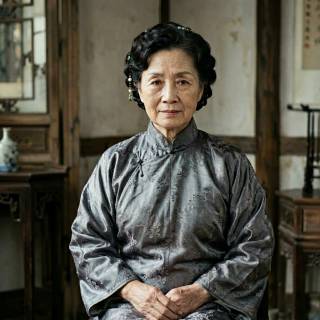
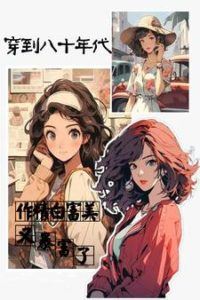
Xu Leshu, a wealthy and beautiful woman from modern Beijing, dies of a sudden heart attack while sleeping in her luxurious villa. Her body is cremated by her neglectful father, but her consciousness is transported back to 1984, inhabiting the body of an eighteen-year-old girl with the same name. This original Xu Leshu is the favored granddaughter of the matriarch, Old Mrs. Xu, living in a cramped staff dormitory in Jiangyuan City. The family is large and financially strained, with Xu Leshu’s father, Xu Weiguo, working as a maintenance worker and her mother, Ma Jinmei, earning a modest salary as a textile factory worker. Despite being the most pampered child, the original Xu Leshu has a volatile temper and a history of conflict with her neighbor, Chen Meihong. The story begins with Xu Leshu waking up in a hospital bed after being pushed down a flight of stairs by Chen Meihong. The original owner had died from a head injury after Chen Meihong refused to help her or call for assistance, leaving her to bleed out until a neighbor discovered her. Xu Leshu, now possessing the memories and personality of the original girl, decides to seek justice and revenge.

Old Mrs. Xu, furious at the negligence and the assault, confronts the Chen family. A chaotic scene ensues in the hallway, involving physical altercations between the mothers and the children. Xu Leshu, though weak, insists on confronting Chen Meihong directly. She cleverly traps Chen Meihong in a lie regarding her alibi. Chen Meihong claims she was at home all day, but Xu Leshu produces two young witnesses, the children of neighbor Li Xiaofen, who testify that they heard Chen Meihong arguing with Xu Leshu and saw her push the girl down the stairs. Faced with irrefutable witness testimony, Chen Meihong’s facade crumbles. She breaks down, revealing her deep-seated resentment toward her own family, who favored her brothers and forced her into endless housework while giving Xu Leshu everything. Chen Meihong admits she pushed Xu Leshu over a trivial debt of five yuan, a sum she could not borrow from her own mother. The confrontation ends with Chen Meihong being forced to sign a settlement agreement, paying 500 yuan and 50 kilograms of food coupons, and agreeing to leave Jiangyuan City permanently.

After recovering from her injuries, Xu Leshu discovers she is bound to a "Struggle System," a digital interface that appeared after she crushed a mysterious brown pill. The system informs her that she is dead in her original timeline and cannot return. Her only option is to complete a series of tasks to earn one billion yuan within twenty years, or face death. The first task is to get into university. Recognizing the absurdity of the goal in 1984, Xu Leshu initially threatens the system but eventually accepts her reality. She realizes she has a beginner’s gift pack containing points and items, including a low-cost clothing design book. Understanding the economic landscape of the early reform era, she decides to start a small business. She asks her mother to bring home fabric scraps from the textile factory and begins making hairbands and hairpins to sell. Her mother, Ma Jinmei, initially objects, fearing accusations of speculation, but Xu Leshu points out the changing laws and the success of local individual business owners. The story concludes with Xu Leshu setting up her stall, determined to build her fortune and navigate the complexities of her new life in 1980s China.

Latest Release
DateGroupRelease
2026-08-11shanghai fantasy c53
2026-08-11shanghai fantasy c52
2026-08-11shanghai fantasy c51
2026-08-11shanghai fantasy c50
2026-08-11shanghai fantasy c49
2026-08-11shanghai fantasy c48
2026-08-11shanghai fantasy c47
2026-08-11shanghai fantasy c46
2026-08-11shanghai fantasy c45
2026-08-11shanghai fantasy c44
2026-08-11shanghai fantasy c43
2026-08-11shanghai fantasy c42

Community Reviews

Rating(4.4 / 5.0, 8votes)
5 stars
5(63%)
4 stars
1(13%)
3 stars
2(25%)
2 stars
0(0%)
1 stars
0(0%)

Popular reviews

... Read More
I need a minute. The chicken leg scene. Let me just — the grandmother bringing her the chicken with the drumstick on top, insisting she eat it, and then at dinner the MOTHER tries to give THAT drumstick to the brother. Ma Jinmei's face when her own daughter looks at her and says 'Mom was indifferent to my injury. Even though I was seriously injured, she let me go home the next day. As a result, I fell into a coma again.' That line hit me like a truck. It's so calm, so measured, and it cuts deeper than any screaming match ever could. And the grandmother's reaction — 'If it weren't for you, my daughter wouldn't have to stay in the hospital for so long' — she's not even denying it, she's just calling her daughter short-sighted. The mother's embarrassment, the father's half-hearted defense of the grandmother, the brother who quietly says 'I like eating chicken wings' because he knows he's not the favorite — it's all so painfully real. What stayed with me though was the little brother Shitou. He gave the chicken wing BACK to his sister. 'Second sister, you eat it, I'll just eat the chicken nuggets.' He knew. He always knew where he stood, and even so, he tried to give her what he could. And then there's the grandmother, who genuinely dotes on Xiaoshu — 'Our daughter has suffered a lot, she has lost a lot of weight, she needs to eat more to make up for it.' She's the only adult in this house who seems to actually SEE her. The contrast between the grandmother's fierce protection and the mother's quiet neglect is devastating. I kept wanting to shake the mother and also understand her — is it just traditional son-preference, or is there something deeper? Either way, Xiaoshu's quiet dignity in the face of it all made me want to hug her through the page.
... Read More
Let me be clear about the stakes here because they just escalated massively. On the surface, the conflict is domestic — a girl injured, a mother who favored her son, a grandmother who's furious, a sister who bullied her. But underneath all of that is this terrifying revelation: Xu Leshu is a transmigrator who died in her original world. The system literally shows her — a picture of her frowning in pain, dying before she could even move her hands. And now she's in someone else's body in what seems like a different era entirely. The stakes just went from 'will she reconcile with her family' to 'what is this system and what does it want from me.' The scene where she crushes the brown pill and threatens to file a complaint against the system is both hilarious and deeply threatening — she's not someone who takes things lying down. 'What do you think I should report?' she asks, and the system immediately gets defensive. That dynamic is electric. Meanwhile, the family conflict isn't resolved either — the mother is still guilty but unchanged, the father is passive, the brother is caught in the middle. And that Chen Erya character? She's still out there, having threatened a child and bullied Xiaoshu. The author is stacking conflicts on top of each other like a house of cards, and I'm terrified and excited to see which one falls first. What really raises the stakes is the uncertainty — we don't know the rules of this world, we don't know what the system can do, and we don't know if the original owner's enemies still pose a threat. Every scene now has double meaning: a dinner table conversation is also a power struggle between a transmigrator and a family that doesn't know she's not really their daughter anymore.
... Read More
Okay, I need to talk about Chen Meihong for a second because this girl is so complicated and honestly kind of heartbreaking even though she did something terrible. Let me start with this line: "We are both second daughters, but why does Xu Leshu get unconditional love from her family, while I have to do endless housework all day long?" That right there? That is the entire thesis of her character. She wasn't born evil. She was made bitter by a family that used her as free labor while spoiling everyone else. The clothes she wore were hand-me-downs from her second uncle's eldest daughter. She only had two pairs of shoes her mother made for her. She ate cold rice and pickles while her brothers got meat. And then Xu Leshu, this girl who had everything, showed her kindness—leftover food, calling her a friend—and Chen Meihong couldn't process it. She interpreted it as pity. She called it "giving alms to a dog." And that's what broke my heart. Xu Leshu genuinely thought they were best friends. She saved food specifically for Chen Meihong. She even gave her a dollar for soda money. And Chen Meihong? She resented every single act of kindness because it reminded her of the gap between them. When she asked to borrow five dollars and was refused, something in her snapped. Not because she needed five dollars desperately—though the blackmail thing is real—but because she felt rejected by the one person who was supposed to be on her side. The moment she pushed Xu Leshu down the stairs and then didn't help her, that's when I knew this friendship was truly dead. And the fact that she kept lying even after the kids testified? That's pride. That's shame. That's a girl who would rather destroy everything than admit she was wrong. "You black-hearted person"—Old Lady Xu's words hit hard because they're true, but they're also a symptom. Chen Meihong wasn't always like this. Her family made her like this.
... Read More
Old Lady Xu is hands down the best character in this book and I am not even being dramatic. Her dialogue is SO distinct — she speaks in short, sharp bursts that carry maximum emotional weight. 'You, as a mother, can't see that there's still gauze on your daughter's head. I bought this chicken specifically to nourish her body.' That's not just dialogue, that's a verbal slap. And then later when her daughter-in-law hesitates about giving away two pounds of meat: 'Mom, this is a life-saving grace. Isn't my life worth these two pounds of meat?' The way Xu Leshu delivers that line — calm, almost conversational, but absolutely devastating — is masterful writing. The author lets the words do the work instead of having anyone scream or cry. Even the system's dialogue has personality. When Xu Leshu threatens to file an after-sales complaint, the system goes from formal '[Yes, host...]' to flustered '[You... you have a vicious mind. When have I ever been so indolent?]' It's funny, it's charming, and it completely shifts the tone. The children's voices are also well-drawn — Shitou's quiet 'I heard it. I eat chicken wings. I like eating chicken wings' says everything about his place in the family without a single narrator intrusion. And Xiaoyu's innocent 'Erya sister is a bad sister' delivered with that shy smile — the author doesn't need to explain that the sister is the villain, the child's words do it naturally. The dialogue throughout this section feels lived-in and authentic, like eavesdropping on a real family. No one speaks in paragraphs, no one delivers monologues. Everyone interrupts, deflects, or says exactly what they mean in the fewest words possible. That's skilled writing.
... Read More
I need to talk about the stakes here because on the surface this is about five dollars and a pushed-down-stairs incident, but underneath it's about everything. Let me start with the question that haunted me: why did Chen Meihong push Xu Leshu? Five dollars. That's the official answer. But the real answer is way darker. Chen Meihong was being blackmailed by gangsters who threatened to destroy her and strip her naked on the street. She asked her own mother for five dollars and was refused without even being asked what it was for. So she turned to her so-called best friend. And when Xu Leshu said she only had one dollar, something in Chen Meihong broke. The conflict escalates so perfectly. First it's the two grandmothers screaming at each other—Mrs. Chen denying everything, Old Lady Xu demanding justice. Then Xu Leshu, smart and calm, asks the right question: who can testify that Chen Meihong was home all day? And that's when the whole thing collapses. The neighbors confirm she only went out once. The kids saw everything. Chen Meihong has no evidence, no alibi, no escape. But the real stakes aren't legal—they're emotional. What Chen Meihong stands to lose is everything: her friendship, her family's approval, her dignity. And what Xu Leshu stands to lose is her trust in people. The most tense moment for me wasn't the push itself—it was when Chen Meihong sat on the ground and started confessing everything: the hand-me-downs, the cold rice, the resentment, the blackmail. She could have stayed silent. She could have kept lying. But she chose to lay bare every wound, and in doing so, she destroyed herself completely. "You didn't tell your family when you encountered problems, and you blamed them for doing something like this." That line from Old Lady Xu hit like a hammer. The conflict wasn't just between two girls—it was between a girl who had support and a girl who had nothing, and the gap between them was wider than any staircase.
... Read More
Okay so I need to talk about this ending because my jaw literally dropped. Up until chapter 27 I was fully invested in this domestic family drama — the injured girl, the favoritism, the neighbor gratitude visits, all very grounded, very slice-of-life. And then BOOM, a brown pill appears out of thin air and suddenly we have a SYSTEM. A literal transmigration system. The protagonist didn't just wake up in a new body — she was DEAD. Had a heart attack while sleeping, and this 'Struggle System No. 007' pulled her soul into this world. The narrative pivot from 'family reconciliation story' to 'isekai/transmigration thriller' in the last few paragraphs is absolutely wild. I was not ready for that. What I found really clever though is how the author seeded this — the original owner's memories being referenced, the sense that something was 'off' about her past behavior, the way the text mentions 'the original owner' as if there's already an established framework. The plot structure here is doing double duty: it's wrapping up the immediate conflict (the injury, the family dynamics, the thank-you visits) while simultaneously opening up a whole new mystery about who this system is, why it chose her, and what 'struggle' actually means in this context. The fact that the system has a shopping mall with whitening pills, beautifying pills, and... let's just say 'specialty' pills is both hilarious and deeply unsettling. Is this a comedy? A drama? A revenge story? I have zero idea and I am HERE for it.
See all reviews

Characters

See all characters

Custom lists

See all custom Lists