Summary

... Read More

Xu Di, a forty-four-year-old woman suffering from late-stage breast cancer, lies dying in a Beijing hospital in August 2024. Her life had been defined by a regrettable choice made in her youth: rejecting a soldier from her village in favor of Li Kai, a civil servant who proved to be an emotionally absent and useless husband. For decades, Xu Di endured a lonely marriage, raising her son Li Haoyu alone while managing the household and her deteriorating health. As her heart finally gave out, her last thought was a bitter wish that she had chosen the soldier, longing for a life where her husband’s absence would have been a mercy rather than a constant source of frustration.

Simultaneously, in the Celestial Realm, the Lotus Fairy observes her subordinate, the Lotus Jade Maiden, completing her mortal tribulation. The Jade Maiden had been punished to descend to Earth after breaking a glass lamp, spending seventeen years in the body of a teenage girl named Xu Di. Just as the mortal Xu Di’s heart stops, the Jade Maiden, unwilling to leave her loving adoptive family behind, intervenes to save the girl’s life. This act creates a spiritual vacancy, allowing the soul of the forty-four-year-old Xu Di from 2024 to inhabit the seventeen-year-old body in 1970. The Jade Maiden’s consciousness retreats, leaving only a faint connection that will fade in three days.

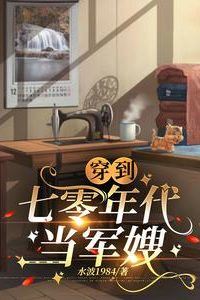
Xu Di awakens in a hospital ward in 1970, initially confused by the sudden shift in time and reality. She quickly realizes she has traveled back to the era of the planned economy, specifically August 1970 in Beijing. The original owner of the body, also named Xu Di, had drowned while saving a young boy named Liang Ankang from a lake. Xu Di’s new family is a loving, working-class household at the Red Star Machinery Factory. Her father is a skilled fitter, her mother a canteen cook, and she has a supportive older brother, sister-in-law, and younger brother. Unlike her previous life, this family offers genuine warmth and care, with no favoritism toward sons over daughters.

As she recovers, Xu Di discovers she has retained a supernatural advantage from her past life as the Lotus Jade Maiden: a spatial dimension located in the sole of her foot. This space contains fertile black soil and possesses preservation capabilities, though it lacks advanced features like spirit springs or automated systems. Recognizing the potential utility of this space in an era of scarcity, Xu Di begins to experiment with it. She visits her grandparents in the countryside to collect various vegetable and grain seeds, smuggling them into her space to begin cultivation. She also discovers that time flows differently within the space, allowing her to work for extended periods while only minutes pass in the real world.

The narrative shifts to Xu Di’s strategic planning for her new life. Having experienced the hardships of rural labor and the limitations of a loveless marriage, she resolves to secure her independence. She aims to obtain a stable urban job to avoid being sent to the countryside as an educated youth, a fate that befell her older sister. Xu Di also reflects on the family of the boy she saved, the Liang family, who express deep gratitude and offer to repay her kindness. Her mother encourages maintaining this connection, hoping it might provide future employment opportunities for Xu Di.

Xu Di returns to school, navigating the social dynamics of 1970s China with the wisdom of a middle-aged woman. She befriends her deskmate, Yang Dani, and subtly warns her against the romanticized notion of going to the countryside, having witnessed the harsh realities of rural life in her previous timeline. Xu Di dedicates herself to studying, understanding that the restoration of the college entrance exam may eventually occur, offering a path to higher education and a better future. She balances her academic responsibilities with her secret cultivation in the spatial dimension, planting seeds that grow in the fertile black soil.

Throughout these early chapters, Xu Di grapples with the emotional weight of her second chance. She mourns the loss of her son from her previous life but finds solace in the loving family she now has. Her primary conflict is internal: overcoming the trauma of her past regrets and learning to live authentically without harboring resentment. She resolves to build a life of wealth and leisure, potentially choosing a partner who is often away, mirroring the soldier she once rejected but now idealizes. The story establishes her determination to use her future knowledge and supernatural space to secure a comfortable existence, avoiding the pitfalls that defined her previous years.

Latest Release
DateGroupRelease
2026-08-11shanghai fantasy c200
2026-08-11shanghai fantasy c199
2026-08-11shanghai fantasy c198
2026-08-11shanghai fantasy c197
2026-08-11shanghai fantasy c196
2026-08-11shanghai fantasy c195
2026-08-11shanghai fantasy c194
2026-08-11shanghai fantasy c193
2026-08-11shanghai fantasy c192
2026-08-11shanghai fantasy c191
2026-08-11shanghai fantasy c190
2026-08-11shanghai fantasy c189

Community Reviews

Rating(4 / 5.0, 17votes)
5 stars
3(18%)
4 stars
11(65%)
3 stars
3(18%)
2 stars
0(0%)
1 stars
0(0%)

Popular reviews

... Read More
There's this one line that keeps bouncing around in my head: "Secrets were only secrets if you were the only one who knew them, if a second person knew, it wasn't a secret anymore." That's Xu Di at her most vulnerable, laying out her entire philosophy in one sentence. She's guarding this space—a literal magical space—because it's the one thing that's entirely hers in a life where everything else is controlled, rationed, monitored. But then she gives eggs and chives to Grandma Qian and the Liang family without telling them where they came from, and I think she's testing the boundaries of that rule. Can she share without revealing? Can she let people in without losing what makes her special? And then there's the family dinner scene. Her mother says she's sorry Xu Di is tired, and the narrative immediately undercuts it with "A perfect misunderstanding!" because Xu Di was actually snoring from exhaustion after making 46 yuan in a day. That little comedic beat is so human—it's the gap between what people think is happening and what's actually happening, and it's funny but also kind of sad. Xu Di's family loves her, but they don't know her. They don't know she's building something. They think she's just working a temporary shift. There's a loneliness to that that the author doesn't dwell on but I felt it anyway. The scene with Wang Lan at the Liang apartment was sweet in a different way. This woman pulls Xu Di into her home, feeds her, treats her like family almost immediately. And Xu Di, who's been so guarded, just... lets herself be warm back. It's a small exchange but it matters. These relationships are her anchor in a world that's constantly threatening to pull her under.
... Read More
I keep coming back to the seeds. Xu Di isn't just collecting vegetables — she's collecting seeds. Tomato seeds, chive seeds, rice, wheat, corn. Every single one goes into her space. Seeds are literally the beginning of everything — they represent potential, the future, the ability to grow something from nothing. In a time when people were being sent to the countryside and jobs were分配的 (allocated), seeds are the ultimate symbol of self-determination. She's gathering the raw materials for a life she controls. And then there's the space itself — this black soil that preserves things and seems to have its own time flow. It's almost like a womb, a safe place where she can experiment and plan without the world watching. The line "The road ahead was long, no need to rush, take it one step at a time, she wouldn't rush anymore in this life" hit me hard. This is a woman who died young in her previous life and now has a second chance. Every seed she plants is a promise to herself that she's going to survive this time.
... Read More
Okay so I need to talk about Xu Di's mom because she is NOT a one-note character. Like, on the surface she just wants her kid to visit Aunt Wang with vegetables, right? Sounds like basic social courtesy. But then she drops the bomb: "you'll graduate next year, we need to consider many options for your job." BOOM. Everything clicks. This is the 1970s China setting where jobs are iron rice bowls you can pass to your kids, and if you don't have connections, you get sent to the countryside. Xu Di's mom is literally building a social network for her daughter's survival. And the craziest part? Xu Di GETS IT. She's a reincarnated adult in a teenage body — she's seen this exact scenario before. She could've pushed back, but she doesn't. She just says okay and goes deliver the vegetables. That moment where she thinks about how wealthy families who save someone usually just buy them off once and for all? That's her past life experience talking. She's not naive. She's playing the long game and she knows it. The relationship between these two women — mother and daughter — it's not just sweet family bonding, it's a quiet alliance against a system that wants to crush them both.
... Read More
I'm not gonna lie, the conversation between Xu Di and Wang Lan (that's Xu Di's mom) made me actually soft. Wang Lan opens up about how she only has Liang Bo, how he's been sick since birth, how she's afraid he won't survive. And Xu Di—she's seventeen physically but her mind is a middle-aged woman who lived through all of this before. She knows exactly what's coming. Li Kai (the dad) is going to complain the kid is noisy and sick, she's going to rush to the hospital alone, stay up all night watching his breathing. And she can only say, "It'll be fine when he gets older." The helplessness in that moment—she's sitting right there, listening to her future self's worries being spoken by someone else, and she can't warn anyone. But you know what's beautiful? Wang Lan feels it too. She thinks Xu Di is "more like an adult who had experienced a lot." She doesn't know WHY, but she trusts her. And Grandma Qian! She brings a net bag of food AND chocolate. That's basically a fortune in the 1970s. Xu Di feels guilty about being rash earlier and decides to return the favor next time. These small moments of human warmth—this is what keeps me coming back. It's not all danger and survival. The family courtyard dynamics are also interesting. Xu's eldest sister-in-law says thank you to EVERYONE, even Xu Jun. That's rare in a multi-generational household where everyone just assumes help is owed. Respect goes both ways.
... Read More
I need to talk about the emotional texture of this book because it's surprisingly tender. There's this one moment where Xu Di hides in her space after being chased, changes her clothes, fixes her braids, and then—she just sits there and eats a tomato. Right out of the ground, no washing, just bites into it and the juice fills her mouth. She also has those almond cookies from the grocery counter. A bite of cookie, a bite of tomato. Her stomach is half full and she's safe for five minutes. That's it. That's the scene. No drama, no conflict, just a girl finding a moment of peace in a world that wants to catch her. And it made me emotional in the weirdest way. Because you know what she's running from. You know the red armbands are still out there. But in that space, even for a moment, she gets to just BE. The ginger water scene before bed also got me—she forces it down pinching her nose, sweats under thick quilts, and still wakes up with a stuffy nose. She's seventeen but she's living like someone twice her age who knows what pneumonia meant in the 1970s. "Pneumonia could be fatal"—she says it so casually, like she's remembering a fact from a history book, but she's remembering her OWN history. The scene where she plays with her nephew Anan and carries him to his mom, and the sister-in-law thanks her properly—there's this warmth there too. Family love isn't grand gestures in this book, it's quiet. It's making sure someone says thank you.
... Read More
I keep thinking about that lotus-shaped mark on Xu Di's foot. The author spends this whole sequence of her checking herself - arms, wrists, face, neck, collarbone - like she's searching for something she read about in novels, and then she finds it on the SOLE of her foot. The most unlikely place. And the backstory? The Lotus Jade Maiden cultivated a patch of wasteland in the Nine Heavens because she believed if lotus flowers could grow there, vegetables could too. She was punished for breaking a glass lamp while on duty, and sealed that tiny piece of land into Xu Di's sole. There's something deeply symbolic about a goddess who believed in growing vegetables in heaven because she saw potential where others saw impossibility. And now that belief is literally embedded in Xu Di's body, waiting to be awakened. The space is small - about two mu, a fraction of what she hoped for. But the text says "People should learn to be content, it's better to have something than nothing." That's not just plot exposition, that's the thesis statement of the whole novel I think. The 1970s setting amplifies this - scarcity everywhere, ration coupons for everything, yet the space exists. A tiny patch of black soil that could potentially grow something where nothing else can. Also the biscuit tin full of money hidden from her parents? That's Xu Di's own private space before she even discovers the magical one. Two layers of hidden treasure, one physical and one supernatural, both representing her secret path to a different future.
See all reviews

Characters

See all characters

Custom lists

See all custom Lists