Summary

... Read More
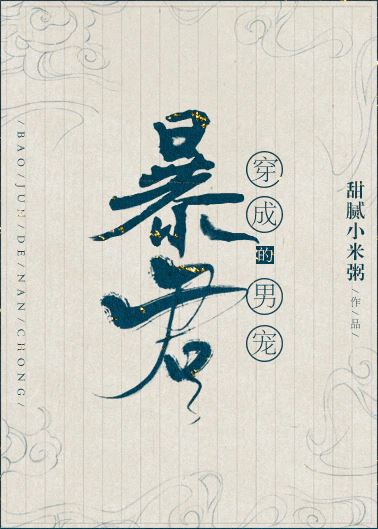
Wen Chi was a screenwriter working in Beijing who spent two days and nights reading a danmei novel three times to prepare for an adaptation project. Exhausted, he fell asleep and transmigrated into the book, inhabiting the body of Wen Chi, a minor cannon fodder character. The original owner was the second son of Assistant Minister of Rites, Wen Changqing, born to a concubine whose family had been implicated in embezzlement. Unfavored and neglected, the original Wen Chi lived a miserable life before dying of illness. Wen Liang, the legitimate eldest son and the novel’s protagonist, possessed a “system” that allowed him to alter fate. When Wen Liang wished to escape his arranged marriage to the disabled Crown Prince Shi Ye, the system caused rumors to spread that the Crown Prince had tortured people for five years. To save his son from the dangerous alliance, Wen Changqing forced Wen Chi to take his brother’s place.Wen Chi learned that in this world, men with a red mole between their eyebrows could bear children, a trait shared by both him and the protagonist. Terrified of his impending marriage to the cruel and disfigured Crown Prince, Wen Chi nevertheless attempted to resist his father. His plea was met with violence and he was forced into the wedding. On his wedding night, he was left alone in the Bamboo Flute Residence, only for Shi Ye to appear hours later. The Crown Prince, whose face was scarred by fire, grabbed Wen Chi’s chin and strangled him, testing whether he was afraid of death. Wen Chi begged for his life and declared his submission, which intrigued Shi Ye enough to spare him. However, the Crown Prince made it clear that Wen Chi’s life now belonged to him.Life in the East Palace proved perilous. Shi Ye was paranoid and violent, eliminating any perceived threats. Yue Shan, a new consort who tried to use Wen Chi as a tool to gain the Crown Prince’s attention, was executed by Shi Ye in front of Wen Chi. The Crown Prince then accused Wen Chi of being unprepared and forced him to eat tea leaves that might have been poisoned to prove he was not a threat. When Wen Chi complied without hesitation, Shi Ye found his lack of fear amusing and ordered him to come to the study daily to eat with him. Wen Chi also encountered Zhao Yun, another consort who was jealous of the attention Shi Ye paid to Wen Chi; Zhao Yun was later beaten to death by the Crown Prince’s men after being discovered hiding hair pins on his person, suggesting assassination intent.Trapped in the palace, Wen Chi sought to survive by keeping a low profile. He spent his time baking fruit cream cakes with his maids, Ruo Fang and Ruo Tao, attempting to create something unfamiliar in this era. Ping An, a eunuch assigned to him, encouraged Wen Chi to fight for the Crown Prince’s favor, but Wen Chi refused to engage in palace intrigue, knowing his own limitations. Instead, he focused on maintaining his health and waiting for an opportunity to leave. Despite his desire to remain invisible, Shi Ye continued to single him out, dragging him into the political turmoil surrounding the succession dispute between the Crown Prince and the Fourth Prince, Shi Jin. Wen Chi realized that his modern perspective and knowledge of the plot might be the only advantage he had, but surviving the Crown Prince’s whims remained his immediate and constant danger.

Latest Release
DateGroupRelease
2026-09-26knoxt c219
2026-09-26knoxt c218
2026-09-26knoxt c217
2026-09-26knoxt c216
2026-09-26knoxt c215
2026-09-26knoxt c214
2026-09-26knoxt c213
2026-09-26knoxt c212
2026-09-26knoxt c211
2026-09-26knoxt c210
2026-09-26knoxt c209
2026-09-26knoxt c208

Community Reviews

Rating(4 / 5.0, 396votes)
5 stars
140(35%)
4 stars
128(32%)
3 stars
127(32%)
2 stars
1(0%)
1 stars
0(0%)

Popular reviews

... Read More
The stakes in these chapters are THROUGH THE ROOF and the author doesn't let up for a single second. Let me count: (1) Officials want Shi Ye to step down and install the Fourth Prince instead — political stakes. (2) The Jiang mansion is allegedly blowing 'pillow wind' to the Emperor — betrayal within betrayal. (3) Some random young man from the harem tries to sneak in and gets TORTURED TO DEATH — personal stakes. (4) There were TWENTY poisoned needles on that corpse — an assassination attempt on Shi Ye himself. And (5) Wen Chi is standing right there, forced to witness ALL of it, caught between a ruthless Crown Prince and a conspiracy that could kill him too. What kills me is how fast it all escalates. One minute Wen Chi is just sitting nervously on a couch, the next there's a BLOODY CORPSE being dragged across the floor and someone almost poisoned the Crown Prince. And Shi Ye's line — 'Do you know why Bengong took that woman's life?' — wait, WHAT woman? I need answers and I need them NOW.
... Read More
Let me just say this upfront: the tension in these chapters is UNNECESSARY. I mean that in the best way possible. Every scene feels like a wire pulled to its breaking point and I cannot look away. Wen Chi has a dagger scratch on his neck. He's hiding it. He's lying about how serious it is. And Shi Ye KNOWS he's lying but doesn't call him out directly — instead he just stares at him with those "gradually gloomy eyes" until Wen Chi practically buries his face in his chest. The power dynamic here is so thick you could cut it with a knife. Who's protecting whom? Who's being protected? Who holds the cards? Then there's the external threat. Someone took Wen Chi hostage. The fourth prince hasn't rescued him yet. Shi Ye came racing across three days of travel in a day and a half. This isn't just personal drama — people are being captured, injured, killed. The stakes have escalated from "oh no bad things might happen" to "something terrible already happened and now the crown prince is personally involved." And Zuo Zhi! Sweet, suffering Zuo Zhi, standing outside the door hearing Wen Chi sob about not wanting human blood, caught between respecting privacy and being deeply concerned. She's the audience surrogate here — watching, trying to understand what on earth makes a timid coward worth this level of protection from someone who supposedly hates traveling. The suspense isn't just about whether Wen Chi will be safe next. It's about what the fourth prince is doing. What happened to Wen Chi that he's so terrified. Why Shi Ye's reaction to Wen Chi's injury is simultaneously gentle and terrifying. Every conflict layer peels back to reveal another one underneath. I am HERE for it.
... Read More
Okay so I need to talk about this scene because it is the most perfectly constructed social minefield I have ever read. Wen Chi gets dragged into a tea banquet by Zhang Cai Hui — nice gesture on her part, truly — but what he walks into is this whole room of powerful young masters who are already circling him like sharks. And then Young Master Li asks him to show his painting. The tension! The dread! Wen Chi is holding a stolen scroll from the crown prince's study and everyone expects him to be some cultured genius because the HE spends time with him. Of course he has to bluff. Of course he opens the tube. And what do we get? A chicken. A literal chicken that he claims is a phoenix. The plot device here is absolutely brilliant because it does three things at once: it establishes Wen Chi's complete helplessness in high-society settings, it creates an immediate rivalry with Young Master Li who becomes this recurring thorn in his side, and it gives Zhang Cai Hui a moment to actually defend him with that half-jar sloshes line. But the real genius is what happens after the laugh. Everyone is waiting for Wen Chi to explode or run away, and instead he just stands there blushing and trying not to slap Li. The author could have made this a humiliating defeat, but instead it sets up this entire dynamic where Wen Chi's cowardice becomes his survival strategy. He endures. He plays along. He doesn't fight back. And I think that's exactly why this plot works so well — it's not about him winning the room, it's about him surviving it. What happens next though? Does Young Master Li remember this humiliation forever? Does the crown prince find out his stolen painting was displayed as a joke? I need to know.
... Read More
I keep coming back to the imagery of Jinzhou itself and what it's doing symbolically beneath the plot. This isn't just a setting — it's a character, and possibly THE most important character in these chapters. The author makes a direct, almost jarring comparison: 'If the capital city is prosperous and lively, then the city of Jinzhou is dilapidated and old.' This isn't subtle worldbuilding; this is the author holding up a mirror and saying LOOK AT WHAT HAPPENS WHEN POWER MOVES ELSEWHERE. Jinzhou exists in the shadow of the capital, and its decay is a direct consequence of that relationship. The city that once mattered is now a ghost town, its streets filling not with merchants and citizens but with the abandoned. And the beggars — they're everywhere. 'More beggars than pedestrians.' This image is repeated almost obsessively: people lying on the roadside in various postures, women holding children, scrambling to surround the caravan. What are these people symbolizing? They're the human cost of whatever political machinery brought Wen Chi here. They're the ones who got left behind when the empire decided its resources elsewhere. Their desperation isn't incidental — it's the thesis statement of the entire disaster arc. Even the governor's residence carries symbolic weight. 'Far from being as nice as Wen Chi had imagined, not half as nice as Wen Chi's [home]' and 'the courtyard assigned to Wen Chi is far less than the courtyard where Wen Chi lived in Wen's mansion before.' The downgrade in living conditions mirrors the downgrade in the city's fortunes — and it grounds the abstract 'disaster' in something tangible, personal, embodied. Then there's the painting Hua Zi Zang is admiring. Art hanging in a crumbling hall while the world outside starves? That's symbolism so thick you could cut it with a knife. It suggests a civilization that still clings to beauty and refinement even as it's being consumed — or perhaps a denial of reality, a refusal to look away from what's beautiful while what's real bleeds outside the frame. The recurring motif of watching and being watched — beggars staring at the caravan, guards scolding, Hua Zi Zang casting sideways glances, Wen Chi noticing everything — creates an atmosphere where no one is truly private, where observation itself becomes a form of power and vulnerability simultaneously.
... Read More
So this chapter starts with Wen Chi already compromised—something has clearly been done to him, his mind and body are out of control—and instead of slow-burning tension, the author just THROWS us into the deep end. There is no preamble, no warning. One moment he is biting Shi Ye's chin like a confused cat, the next he is being pinned down, and then suddenly it is all tears and kicking and regret. The pacing is deliberately chaotic here, mirroring Wen Chi's own disorientation. You are not supposed to feel comfortable. That is the point. And then just when you think the chapter is going to explode into full dramatic confrontation, Shi Ye stops. He stops. He gets up, throws a robe at him, and says "I will send you back." Like nothing happened. The reader is left sitting there going WHAT JUST HAPPENED and that is absolute masterclass in pacing. The cliffhanger ending with Wen Chi collapsing in pain and trying to hide it is the perfect button. You cannot NOT turn the page. The author understands that the most powerful tension is not in the violent peaks but in the quiet moments after—the silence after the kick, the coldness in Shi Ye's voice, the physical consequence that arrives too late. This chapter is a pressure cooker and I am still shaking.
... Read More
Okay so this entire sequence is genuinely clever when you think about it. Wen Chi isn't just some dumb transmigrator reacting to events — he's actively manipulating the plot because he KNOWS how it goes. Remember that moment where he deliberately cuts in on his father's meeting with Yin Shangshu? On paper, it looks like reckless behavior. But then you realize: he already knows Yin Shangshu is secretly a foodie who loves sweets, and he knows exactly what will make that minister soft toward the Wen family. He even thought about whether stealing Wen Liang's future cake-delivery moment would disrupt the plot, but decided the stakes were too high to care. That self-awareness about being inside a story? That's not background detail, that's the whole engine driving this scene. And here's the thing that really got me — Wen Changqing is desperately trying to maintain control of the situation, yelling at servants, forcing smiles at Yin Shangshu, while Wen Chi just... walks in, offers tea, and completely derails his father's carefully laid plans. It's a parent-child power dynamic flipped on its head, and it's delicious to watch. The locust plague subplot mentioned in passing also sticks with me — Yin Shangshu claiming the credit isn't his, saying it's temporary and making him feel ashamed. Is that genuine humility or another layer of performance? The text leaves it ambiguous, which means I can't trust a single word coming out of that minister's mouth.
See all reviews

Custom lists

See all custom Lists