Summary

... Read More

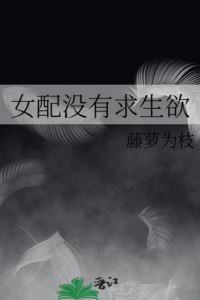
Nangong Xi, a top special agent from Hua Country with SSS+ ranking from M Country, was betrayed and killed by her teammate. Upon regaining consciousness, she discovers she has transmigrated into the body of Gong Xiaohua, a 15-year-old female prison guard in the Dayi Dynasty. The original owner had been severely injured in an assault within the Ministry of Justice dungeon and suffered amnesia. Nangong Xi adapts to her new identity, recognizing the brutal reality of feudal imprisonment and the violent world she now inhabits.

Living with her adoptive family—the Gong household—Nangong Xi learns that her father is a prison chief, her mother’s Li family has generational ties to the justice system, and her younger brother Gong Xiaonan is a temporary catcher. Determined to survive and uncover the truth behind her past life’s betrayal, she sets two goals: achieving literacy and losing weight. With the help of her little uncle Li Zichen, a companion reader in the prestigious Qin residence, she begins studying characters while navigating the rigid class structures of the capital city.

As Nangong Xi settles into her role as a prison guard, she witnesses the harsh realities of the dungeon system, including torture devices and water dungeons. She encounters Sister Fang, a colleague who helps her adjust, and faces mockery from male guards who comment on her appearance and rumored ambitions toward Staff Officer Li. Despite these challenges, she maintains her composure, drawing on her special agent training to handle confrontations with calculated restraint.

A significant turning point occurs when Nangong Xi confronts the Qin residence gatekeeper after he insults her. She slaps him and defends herself when he attempts to kick her, displaying her combat skills. This incident draws the attention of Qin Chuyuan, the Fifth Young Master of the Qin family, who observes the situation from his carriage. Recognizing her potential, Qin Chuyuan later grants permission for her to study at the residence under Li Zichen’s supervision, though his mother Madam Sun demands to inspect her first.

The confrontation with the Qin family highlights the social barriers Nangong Xi faces. When Qin Chuhan, the sixth miss, mocks her appearance, Nangong Xi retorts sharply, refusing to submit to their condescension. Qin Chuyuan intervenes, protecting her from further humiliation and demonstrating his appreciation for her courage. This encounter establishes a complex relationship between Nangong Xi and the powerful Qin family, setting the stage for future developments.

As the story progresses, Nangong Xi prepares for the upcoming Wrestling Tournament, a nationwide martial arts competition that offers significant rewards for top performers. The tournament represents an opportunity for her to rise above her current status and potentially uncover connections to her past life. Meanwhile, she continues her studies and adjusts to life in the Dayi Dynasty, balancing her modern mindset with the constraints of ancient society.

The narrative establishes themes of identity, social mobility, and survival in a hostile environment. Nangong Xi’s dual existence—as a modern special agent trapped in an ancient body—creates tension between her current circumstances and her ultimate goals. Her relationships with the Gong family, Li Zichen, and the Qin family form the foundation for her journey in this new world, where every interaction carries potential danger and opportunity.

Latest Release
DateGroupRelease
2026-09-26akknovel c174
2026-09-26akknovel c173
2026-09-26akknovel c172
2026-09-26akknovel c171
2026-09-26akknovel c170
2026-09-26akknovel c169
2026-09-26akknovel c168
2026-09-26akknovel c167
2026-09-26akknovel c166
2026-09-26akknovel c165
2026-09-26akknovel c164
2026-09-26akknovel c163

Community Reviews

Rating(3.9 / 5.0, 53votes)
5 stars
17(32%)
4 stars
16(30%)
3 stars
19(36%)
2 stars
1(2%)
1 stars
0(0%)

Popular reviews

... Read More
I did not expect to fall in love with a middle-aged woman screaming at a prison chief while dragging his shirt. But here I am. Madam Gong. Oh she's something. In maybe fifteen lines of dialogue she goes from weeping hysterically to threatening marriage, to physically shoving an older man aside, to barking orders at prison guards like they're puppies. And the guards just... stand there. Baffled. One of them is literally thinking about how Xiao Hua's "towering physique" and "thick waist and wide hips" make the word "beautiful" in Madam Gong's mouth deeply ironic, and they ALL keep their distance from this woman. It's hilarious and it says so much about power dynamics in this small prison community. Then there's Old Man Gong, who walks in with stubble and a sturdy build and immediately switches to a gentle register: "Hua'er, tell your dad, were you scared? Don't be afraid, we're already home, no one can hurt you again." And you see the contrast right? His wife will murder a man for looking at his daughter wrong. He will make her tea and hold her hand. And the dynamic between them is... weirdly sweet? Like they've got this decades-long marriage where she's the loud aggressive one and he's the quiet stabilizer, and it WORKS. I want to know their backstory. The text mentions she was "gentle and lovable" before marrying Old Man Gong, and the guards speculate he consumed some "bewitching potion" to find her. That's a fun little worldbuilding detail that also tells you something about how this society views marriage and women. Then there's the brother, Xiao Nan Gong, who just runs out "like wind" to get the doctor. Two sentences. But he's got a name, a function, a movement. I think he's going to matter later, probably the sibling-banter route. And Nangong Xi herself as the intruder in this family? She's an orphan, twenty-six, no memory of parental love, and she just got DUMPED into a household where someone will tear off a man's face for her. I can already feel the culture shock of her internal monologue clashing with these very loud, very physical expressions of care. The way Madam Gong shakes her unconscious body and screams "If you leave, your mom will have to follow you" is doing more emotional work than any soft-spoken grandmother scene I've read all year. No notes. Absolutely no notes.
... Read More
Okay so I just need to talk about Li Zichen because this guy is doing a LOT with his fists in this chapter. Like, the woman tells her niece 'you're uneducated and ignorant' and he's literally pulling her behind him, bowing, groveling, all of it, while his hands are clenched so tight I'm pretty sure there's bruising forming. And she's just... standing there. Not fawning. Not smiling. Just... present. And that contrast is doing something to me. He's this low-ranking guy who got permission from the master to tutor her, and the moment she steps into Fuyun Courtyard, the power dynamic shifts so violently you can feel the floor tilt under his feet. He becomes her escort, her shield, her apology. 'This servant has brought my niece.' Servant. That word. Not 'a relative.' Not 'my niece.' A servant bringing a servant's relative to pay respects. I actually needed to put the phone down for a second when I read that. But here's the thing that makes me care more than I expected: she breaks free of his grip. She shakes it off. Not in a dramatic way, just... practical. Like, 'uncle, let go, I've got this.' And she delivers the 'people ugly on the inside are uglier' line while he's still bowing. I think he didn't even expect her to talk back. The whole chapter shifts in two sentences from 'protect the little girl' to 'wait, the little girl is a twenty-six-year-old special agent who did not sign up for this.' And then the Gong family dinner scene. Gong Xiaonan complaining about pocket money. 'Even a hundred silver wouldn't be enough for all your antics.' The Dad scolding him in front of everyone, and Xiaonan just... swallowing it. 'He was the neglected child.' That one sentence from the narrator made me feel genuinely sad. He's going to go borrow money from his sister later. Not to buy ink. Just because she's the one Mom gave actual silver to. That tiny detail. The favoritism baked into every single meal. I kept thinking about what he must feel every single day being told 'no good things at all' by his own father while his sister gets rouge and powder money with a smile. I don't know if the author plans to circle back to him or if he's just set dressing, but if he IS set dressing, that's actually cruel. Does anyone else think the Li Zichen / Xiaohua dynamic is going to get genuinely weird once they're doing study sessions behind closed doors? Because right now he's the protector and she's the charge, but she's literally a special agent. She saw the Madam try to have her 'disciplined' and thought 'I could have stretched my muscles.' STRETCHED HER MUSCLES. Uncle is probably thinking 'I need to shield her from these people' and she's thinking 'I was hoping to punch someone instead of sitting politely.' I need them in the same room arguing about who's protecting whom.
... Read More
I'll be honest—the opening is a bit of a slog. Waking up, getting examined, drinking medicine, falling back asleep. It's functional but not thrilling. But then Chapter 3 hits and the pace shifts in a really smart way. Instead of more medical drama, we get a slice-of-life scene that actually does the heavy lifting: world-building through daily routine. The pomegranate tree, the stone table, the siblings going off to work while the mom runs errands—it's quiet, but it's not boring because every detail carries information. And the structure of dropping big revelations in the middle of casual conversation is clever. The mom mentions the marriage arrangements and the wrestling tournament in the same breath like it's no big deal, which somehow makes both feel more ominous. The only thing that slightly dragged was the exposition about the inheritance system for prison guards. It was necessary but it read a bit like a textbook insertion. Still, the author knows when to pull back, and that's what keeps me reading.
... Read More
Okay so I was not expecting the plot structure to click for me this early in the book. I mean, the amnesia/transmigration setup is like, the most overused trope in this genre, right? Every other chapter you open a novel and the girl poofs into a body and can't read and goes 'wtf.' But what actually made me stay here is that the author kept pulling thread after thread without resolving any of them. Like, Dad Gong keeps the prison chief job for his uncle who supposedly went to serve the Qin family years ago, but he never told anyone. That's a sitting-bomb subplot that just... sits there. And then you've got Gong Xiaonan being sent to the prefect's office 'to gain experience,' which is obviously a placeholder until Uncle comes back and the whole family hierarchy shifts. I keep thinking, when does Uncle Li show up? What does that actually do to the family's political position? Because right now they're this tiny little unit in Wuyi Alley scraping by, but the uncle connection to the Qin household could flip everything. And the worldbuilding plot points are sneaky. You get this whole 'five dynasties at peace but Da Wei has been raiding everyone for decades' dump, and I thought, okay, fine, standard setup. But then you realize she's specifically in the culturally-strong-militarily-weak country. That's not just flavor, that's tension waiting to detonate. If Da Wei pushes, what happens to a commoner family whose entire survival depends on a government prison job? The court protects its employees during disasters, sure, but what about a full invasion? I'm not saying I trust the author to pull that off yet, but the way it's planted makes me want to keep reading to see if it pays off. The one thing that bugged me though is the cooking situation. 'Iron was controlled by the state so they used clay pots and basically boiled everything with salt.' She's a modern person who misses spice and wok-flavored food and she's in a world where you literally can't make a decent meal. I get it as worldbuilding texture, but it also feels like the author is padding the daily-life chapters because the actual plot hasn't kicked in yet. We're still in the 'she learned twenty characters and got a reward' phase. The real story is supposed to start when things go wrong, and I'm waiting for that wrongness to hit.
... Read More
"Uncle Tao and the young servants brought the meals and placed them on the small table on the couch, three dishes and one soup. They set up the meals nicely." And I'm supposed to be bored. I'm supposed to skip ahead. But the author just... sits with this. Lets the meal happen. Lets Uncle Tao wash his hands, lets the young servant leave, lets Uncle Tao stay because he's reading the room. And you realize the pacing here isn't about plot momentum, it's about establishing that this household runs on TINY social rituals and the author is saying "pay attention to the tiny things because the tiny things are where the power actually lives." The scene transitions are so smooth they're almost suspicious. Li Zichen leaves, bumps into Uncle Tao in the hallway, exchanges greetings, goes downstairs. Twenty seconds of screen time but it tells you the residence is dense with people in transit, everyone has their lane, everyone knows everyone's schedule. Then the next beat is Uncle Tao mentioning Madam Sun's inquiry about the back door incident, and the PLOT actually spikes—because now Qin Chuyuan has to go manage his mother, and the entire family hierarchy dump hits you mid-meal. I think the author is deliberately using the domestic lull to make the family structure reveal land with more weight. If they'd just told you "Qin Chuyuan's father is the Crown Prince's tutor and his mother is strict" upfront it would be exposition. But sandwiching it between "he ate slowly" and "he walked to Fuyun Courtyard" makes you FEEL the weight of that genealogy the way you'd feel it walking into a family dinner where everyone already knows the gossip. The pacing is slow but it's not lazy. It's the slow of a period drama establishing its rules before the first real argument breaks out. I will admit chapters 20-22 of this batch made me want to skip, then chapter 23's family hall scene made me respect the author for making me earn the reveal. The back door incident is a coiled spring and the dinner scene is the release where you don't realize the tension was in the ROOM and not the PLOT yet.
... Read More
I want to talk about the prison. Not the physical one, obviously, but what it's representing here and how the book sets it up. Nangong Xi was the top agent in her country. Trusted. Loyal. And her own teammate, the person she'd probably worked alongside for years, just... stabs her. "Why?" she asks. And the answer is: "I'm sorry. Actually I am the top level SSS+ special agent from M Country you all have been looking for." So the betrayal isn't personal. It's identity. He wasn't who he said he was. The whole team was a lie. And then she's thrown into a place where she IS a prisoner, or at least the body she's in is treated like one. A guard who got "taken away" and "silenced." The word "silenced" is doing a lot of thematic work right there. She was silenced physically, yes, but also: her identity is erased. She's not Nangong Xi anymore. She's Xiao Hua. She's "the prisoner who got kicked down the stairs." She has no voice in this new context. No one knows what she actually is. And the prison guards literally gossip about her while she's lying there half-conscious, assembling clues from fragments. She's the object of their discussion, not a participant. That's a nice structural echo of the betrayal. In her old life, the team-mate defined her by killing her. In her new life, the guards define her by the injury. She can't opt in. She just gets sorted. The other thing that kept poking at me: the "table missing a corner." I initially read it as poverty, but sitting with it, it feels more like... adaptation. This family doesn't have new stuff. They make do. The guard frame she's stuck in is also "made do." She's not graceful, she's not built for this. She's a 26-year-old special agent in a broad-hipped, towering body that the guards find embarrassing. She has to work with what she's got. And Madam Gong's love is the one thing that refuses to accommodate. It's too much, too physical, too loud. It doesn't fit in the small wooden room with the broken table. It BARRS in. And Nangong Xi, who spent her whole life in controlled, professional environments, gets buried under it. I think the whole arc of this book is going to be about whether she can let the world be messy and too-big instead of operating in tight, calculated parameters. The M Country agent who killed her wanted control. The new world is chaos. And the bitter medicine, the creaky door, the "missing corner" table are all small acts of acceptance. You live with what you've got. You drink the bitter stuff. You don't get to choose the room. I'm not sure if I'm overthinking it. I'm probably overthinking it. But the "silenced" line keeps echoing. What else in this world is going to silence her, and what's going to give her voice back?
See all reviews

Custom lists

See all custom Lists