Transmigrated: The Husband I Picked Up is Five and a Half
+Add to Custom List
Genres:
Novel Info

Summary

... Read More

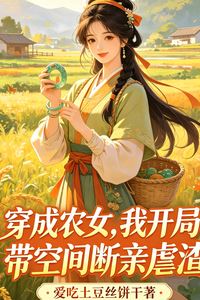
Cao Xi transmigrated into the body of an eight-year-old girl in a war-torn world, surviving a devastating earthquake that claimed her original family. With no resources and only a desperate will to live, she set her sights on the capital, believing the emperor’s presence offered the best chance for survival. During her journey with a group of refugees, she discovered a five-year-old boy named Qin Zhao in a pile of corpses. Despite his young age, Qin Zhao possessed a sharp tongue, a chatterbox personality, and an unsettling maturity, often quoting his deceased teacher and challenging Cao Xi’s patience. Initially reluctant, Cao Xi found herself unable to abandon the determined child, nicknaming him the "Stubborn Little Donkey" for his tenacity. Their bond formed through shared hardship, as they navigated starvation, exhaustion, and the dangers of the road together.

As they traveled, Cao Xi struggled to provide for both of them, scavenging for wild vegetables and berries while Qin Zhao endured physical pain without complaint. His feet became severely injured from walking barefoot in worn-out shoes, yet he refused to slow down, fearing abandonment. Cao Xi’s protective instincts grew stronger, and she made a decisive choice to divert from their path to the capital, settling instead in the nearby Qizhou City to find stability. Upon arrival, they were initially barred from entering, forcing them to take shelter in a dilapidated Temple of the Earth God. There, they encountered a group of young beggars led by a clever boy named Li Feng. Tensions flared when the beggars accused Cao Xi and Qin Zhao of stealing their territory, leading to a physical altercation. Cao Xi, driven by the need to protect her food and her companion, fought ruthlessly, using a stone to defend them against the older children.

The conflict resolved into an uneasy truce, with Li Feng proposing an exchange: the newcomers could stay in the temple if they contributed to the group’s survival. Cao Xi agreed, using her modern knowledge to teach the children how to cook wild vegetables and bones into nutritious meals. She also took on the role of the group’s primary beggar, learning to navigate the city’s social hierarchies to secure food and copper coins. Her efforts were not just for survival but specifically aimed at buying medicine for Qin Zhao’s healing feet. Qin Zhao, though initially resistant to sharing their meager resources, gradually accepted the group dynamic, though he remained fiercely possessive of Cao Xi, reacting with jealousy when others showed her attention.

As their situation stabilized, Cao Xi sought ways to improve their economic standing. She noticed Qin Zhao’s longing for simple pleasures, such as sugar paintings, and decided to capitalize on the upcoming temple fair. Using their savings, she purchased sugar and wild hawthorn berries to create candied hawthorn, a novel treat for the locals. Li Feng joined the venture by weaving grass animals to sell alongside the sweets. The temple fair proved successful, with Cao Xi’s marketing savvy and Qin Zhao’s charming demeanor attracting customers. The earnings allowed them to buy better food and supplies, marking a significant turning point from mere survival to a semblance of prosperity.

Throughout these events, the relationship between Cao Xi and Qin Zhao deepened. Cao Xi, retaining the mindset of an adult from a previous life, balanced maternal care with playful teasing, often provoking flustered reactions from the propriety-obsessed boy. Qin Zhao, in turn, displayed a growing dependency on Cao Xi, viewing her as his sole anchor in a chaotic world. His intelligence and quick learning abilities became apparent as he assisted in their business ventures and defended their interests with fierce loyalty. The story establishes a foundation of mutual reliance, with Cao Xi providing guidance and protection while Qin Zhao offers companionship and unwavering support. Their journey from desperate refugees to small-time entrepreneurs in Qizhou City sets the stage for future challenges and opportunities in this unfamiliar world.

Latest Release
DateGroupRelease
2026-08-11shanghai fantasy c32
2026-08-11shanghai fantasy c31
2026-08-11shanghai fantasy c30
2026-08-11shanghai fantasy c29
2026-08-11shanghai fantasy c28
2026-08-11shanghai fantasy c27
2026-08-11shanghai fantasy c26
2026-08-11shanghai fantasy c25
2026-08-11shanghai fantasy c24
2026-08-11shanghai fantasy c23
2026-08-11shanghai fantasy c22
2026-08-11shanghai fantasy c21

Community Reviews

Rating(3.8 / 5.0, 29votes)
5 stars
9(31%)
4 stars
10(34%)
3 stars
4(14%)
2 stars
6(21%)
1 stars
0(0%)

Popular reviews

... Read More
What I love about the conflict structure in this batch is how the stakes operate on multiple levels simultaneously, and they keep escalating in ways that feel organic rather than manufactured. On the most immediate level, there's physical danger. Cao Xi gets kicked in the stomach in the market. Qin Zhao is described as 'too good-looking' and at risk of being abducted by human traffickers—Cao Xi literally rubs ash on his face to protect him. These aren't abstract threats; they're daily realities for these kids. The author doesn't sensationalize them, which makes them hit even harder because they're presented as mundane. Then there's the social conflict—the beggars vs. everyone else dynamic. The market woman who kicks Cao Xi, the sugar painting vendor who threatens them, the general contempt these children face from every direction. But the more interesting conflict is internal: Li Feng's decision to leave the group. This isn't a villain or a disaster—it's a perfectly reasonable choice by a growing boy—and that's what makes it so tense. The stakes here are emotional: if Li Feng leaves, does the group fall apart? Can the younger kids survive without him? The author also introduces economic stakes through the sugar painting and candied hawthorn plans. Thirty wen for sugar isn't nothing when you're a beggar. The temple fair represents both opportunity and risk—what if they fail? What if nobody buys their candied hawthorn? These small economic stakes feel enormous when you're a child with nothing. And underlying all of it is the tension between hope and despair. Every small victory—three copper coins, two eggs, a successful sugar painting—is fought against a backdrop of constant threat. That's what makes you care so deeply about whether these kids make it.
... Read More
The dialogue in this text is one of those things you don't always notice until it's done really well, and it's done really well here. Each character has a distinct voice, and more importantly, their dialogue reveals their personality without any exposition needed. Qin Zhao's voice is immediately recognizable. His line 'Don't waste money. Our money is meant to buy a big house' when Cao Xi suggests buying a sugar painting—that's such a specific, character-revealing statement. He's not just being frugal; he's operating with a long-term survival mindset that's almost adult-level strategic. And later, 'This candy was specially made for me by Cao Xi, so I can't give it to you'—the way he justifies not sharing is both adorable and deeply telling of a kid who's learned that everything must be earned and protected. Cao Xi's dialogue has a different texture. She's warmer, more playful, but there's an underlying sharpness. When she tells the vendor 'Whether we can afford it or not is up to me, not you,' that's not just defiance—it's a complete rejection of the power dynamic he's trying to impose. And her flattery of the midwife is so natural, so effortlessly charming, that you believe this character could talk her way out of almost anything. The midwife's dialogue is sparse but effective. Her shift from dismissive ('Go beg somewhere else') to generous ('Here, take these') is communicated entirely through her words, not narration. And Li Feng's quiet 'I can't keep begging for food. Thirteen is already half an adult' carries so much weight in its simplicity.
... Read More
I need to talk about the osmanthus cake scene because honestly I'm still not over it. Cao Xi saves this pastry for Qin Zhao—she specifically set it aside, meaning she was thinking about him the whole day—and when he gets it, what does he do? He breaks it in half. Just like that. No hesitation, no 'I'm not hungry,' just an immediate fifty-fifty split because of course he would share his only treat with her. And then the author drops this line: 'What was originally half a cake, now seemed even smaller after being broken in two—almost just a bite-sized portion.' That's it. That's the whole emotional payload of their relationship right there. Two kids who have nothing, and the first thing they do is divide what little they have equally. But the moment that actually wrecked me was later, when they're eating the clay-baked eggs. Qin Zhao is devouring his while constantly glancing at Cao Xi like he's making sure she's getting enough. He's a child himself—probably around ten or eleven—and he's been starving all day, saving his multigrain pancake for when she comes back. When she asks if he's eaten, he lies and says he had wild vegetables. The audacity of this kid to deceive someone who's literally feeding him because he doesn't want her to feel bad. Then there's the lollipop moment with Xiao Rui. Qin Zhao turns his back and refuses to share his thirty-wen treasure. It's almost funny, but it's also heartbreaking when you think about it—he's never had anything that was truly his, and now that he does, of course he's going to guard it with his life.
... Read More
Okay, can we just talk about this scene where they sneak into the city? Because it is SO cinematic. Li Feng pressing his ear to the wall, pulling a wooden basin out of the bushes, the rope tied to both sides—this is not something I expected from a beggar story but it works so well. The image of Da Yong and Da Zhuang sitting in a basin being pulled through shallow water while Cao Xi is last, swaying dangerously, almost tipping over... I could literally see this as a film. The author really knows how to make a survival scene feel tense and visual without any dramatic music or anything. Just pure, practical ingenuity. And then the contrast—after all that tension, they're waiting in a narrow alley until noon because 'begging too early brings bad luck.' The worldbuilding is so grounded. This isn't a fantasy world with magic; it's a world where every decision is about survival, where even the timing of your begging is governed by superstition and social rules. The beggars have territories. You step on someone else's patch and you get beaten. This is a whole society built on the margins, with its own economy, its own hierarchy, its own unspoken laws. I love it.
... Read More
Let's talk about Qin Zhao because this kid has SOME issues and they are delicious. First of all, the opening scene where Cao Xi says 'What's the problem with me kissing my own little brother? I didn't kiss you.' and Li Feng is just SHOCKED. I died. But then Qin Zhao's reaction to Li Feng joking about wanting to be Cao Xi's brother—immediately standing up despite his injured foot, pushing Li Feng, 'Get lost. Who said you could be her brother? Who do you think you are?' This kid is NOT sharing. He's territorial in the cutest and most aggressive way possible. And Cao Xi has to mediate. She's like 'he's just a kid with a strong sense of possession, don't take it to heart.' Meanwhile Li Feng is genuinely hurt because he actually WANTED an older sister like her. The triangle here is so interesting—Li Feng admires Cao Xi, Qin Zhao fiercely guards his place beside her, and Cao Xi is just trying to keep everyone fed and alive. But there's also this moment where Li Feng says 'I really envy him' referring to Qin Zhao having a sister who cares for him. That hit different. It shows that Li Feng's loneliness runs deep and it makes his bond with the group feel more complicated. He's not just surviving with them; he's clinging to them because he has nobody else.
... Read More
The way Cao Xi talks to different people is honestly a masterclass in character voice. With Qin Zhao she's warm and playful—'Qin Zhao is so smart'—but with the scholar she goes full performance mode. 'You must be a fairy. Only a fairy could be this beautiful.' She's basically treating each person like a customer and tailoring her approach. And the scholar's reaction? She's 'completely captivated by the young lady's beauty, completely forgetting about her purpose of begging.' This kid is improvising in real time and it's working. Then she goes to the pharmacy and gets thrown out for being 'filthy,' but at Limin Medicine Hall, the assistant is impressed she can read and treats her with basic human decency. The dialogue here does so much heavy lifting—it tells us about the world's class structure, about who deserves kindness and who doesn't, all through casual conversation. Li Feng's voice is also distinct. He's the sarcastic one, the one who sneers at Cao Xi being 'so troublesome' but then genuinely praises her cooking. His jokes about wanting to be her brother feel like he's testing boundaries, seeing how much closeness he can get away with. And Qin Zhao? His dialogue is short, sharp, defensive. 'Get lost.' 'Sorry, Brother Li Feng.' He doesn't have the social skills to navigate adult interactions, which is why his bond with Cao Xi is so vital—he only opens up to her.
See all reviews

Characters

See all characters

Custom lists

See all custom Lists