Summary

... Read More

Song Huan, a modern woman who died a gruesome death, transmigrates into the world of the novel My Husband Wields Supreme Power. She inhabits the body of Song Huan, the insignificant first wife of the villain Pei Yan, who originally died on her wedding night from poisoning. Upon arrival, Song Huan finds herself in the bridal chamber moments before assassins attack. A malfunctioning System grants her only thirty minutes of life value, forcing her into a desperate survival scenario. Pei Yan, a cold and ruthless Marquis with a history of violence, initially orders her death but spares her when she displays unexpected fearlessness. She is wounded in the neck but survives, only to be revived by the System after her soul is temporarily ejected. The System reveals that she has three rebirth attempts and must complete missions to gain life value and affection points from Pei Yan to survive.

Song Huan wakes up ten days later in the Marquis Manor, recovering from her neck wound. She discovers that the System is unreliable and often offline, leaving her to navigate the dangerous political and social landscape of the Pei household on her own. Her primary goal is to increase Pei Yan's affection toward her, as each percentage point grants her fusion rate with the host body and life value. However, Pei Yan is deeply suspicious and hostile toward women, having been traumatized by past betrayals and violence. He views Song Huan as a scheming woman who promised to kill herself to help him destroy her own family, a promise she made before her transmigration. Despite his cold demeanor, he allows her to remain in the manor, though he keeps her at arm's length.

The core conflict arises from Song Huan's need to survive while dealing with Pei Yan's volatile nature and the lingering threats from her original family. Her mother and stepsister, who abused her in the original story, have come to the manor under the guise of concern but are actually plotting against her. Song Huan uses her knowledge of the novel's plot and her modern skills to outmaneuver them. She cooks meals for Pei Yan, hoping to win his favor, and tends to his wounds after he returns from battle injured. These interactions create a complex dynamic where Pei Yan is simultaneously intrigued and suspicious of her changed behavior.

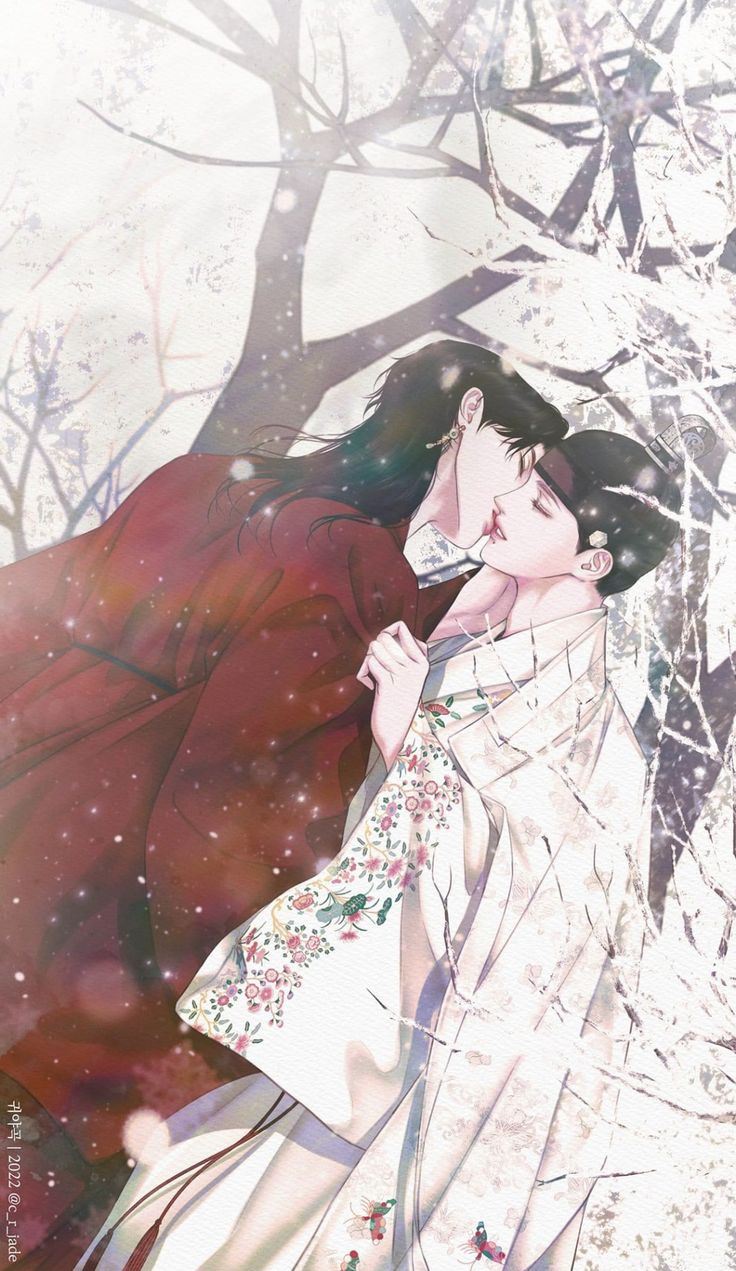
A key turning point occurs when Song Huan kisses Pei Yan to complete a System mission, which unexpectedly raises his affection points and allows her to access the original host's memories. She learns that the original Song Huan had indeed plotted with Pei Yan to kill her father and stepmother, but she did not intend to die herself. The assassins who attacked on the wedding night were likely sent by the Song family or their allies, not Pei Yan. Song Huan realizes that she must clear her name and survive the immediate threats while trying to build a genuine connection with Pei Yan. She also discovers that Pei Yan is being targeted by Princess Shangjia, who desires him as a wife, adding another layer of political intrigue to her situation.

As the story progresses, Song Huan continues to balance her survival tasks with the growing tension between her and Pei Yan. She uses her cooking and medical skills to gain his trust, while also investigating the truth behind the original Song Huan's death and the assassination attempt. The System provides occasional guidance, but Song Huan must rely on her own wit and courage to navigate the dangers of the Marquis Manor. Her relationship with Pei Yan evolves from one of mutual suspicion to a tentative alliance, as they both face external threats from the imperial court and rival factions. Song Huan's ultimate goal is to survive and perhaps find a way back to her own world, but she becomes increasingly invested in Pei Yan's fate and the secrets of the novel's plot.

Latest Release
DateGroupRelease
2026-08-11shanghai fantasy c74
2026-08-11shanghai fantasy c73
2026-08-11shanghai fantasy c72
2026-08-11shanghai fantasy c71
2026-08-11shanghai fantasy c70
2026-08-11shanghai fantasy c69
2026-08-11shanghai fantasy c68
2026-08-11shanghai fantasy c67
2026-08-11shanghai fantasy c66
2026-08-11shanghai fantasy c65
2026-08-11shanghai fantasy c64
2026-08-11shanghai fantasy c63

Community Reviews

Rating(4.3 / 5.0, 10votes)
5 stars
6(60%)
4 stars
1(10%)
3 stars
3(30%)
2 stars
0(0%)
1 stars
0(0%)

Popular reviews

... Read More
The scars on Pei Yan's body are the most obvious symbol here, but I want to talk about what they represent beyond just 'he's been through a lot.' They're physical evidence of a life lived in service to others—ten years on the battlefield, no favor, no recognition, just wounds. And Song Huan seeing them is the moment she stops seeing him as a task or a system objective and starts seeing him as a person. But here's the thing—the bandage she ties on his arm is also a symbol, and I think it's the more interesting one. She ties it neatly at first, he calls it ugly. She ties it into an intentionally ugly knot, and he nods approvingly. This is their entire relationship in miniature: she tries to do things properly, he rejects perfection, she gives him something ugly and real, and he accepts it. The ugly knot is more honest than the neat one because it's made of compromise. And then there's the life value system itself. Thirty days for the truth about the original host's death. She has 143 days now after the kiss, which means she could pay nearly a quarter of her remaining life to know what happened. That's a thematic choice—the system quantifies everything, even truth and love. How much of yourself are you willing to spend to know something? The original Song Huan died and this woman is living in her body, and the cost of knowing why is measured in days of existence. That's heavy. The copper brazier scene is also symbolically rich in its own way. She's taking something meant for warmth and turning it into something for sustenance. Survival through improvisation. That's basically her entire approach to this world—taking what's given and making it work.
... Read More
Okay so let me just... what. The favorability system jumped from -15 to +36 overnight and Song Huan's just standing there in her head like 'did I sleepwalk into a murder?' I love this girl's panic. But seriously, the plot mechanics here are doing SO much heavy lifting. Pei Yan's favorability goes +36, then +28, then +39 in rapid succession and Song Huan is just... what did I do? The book itself seems confused too because it literally has the author's note saying 'Song Huan: I totally treat money like dirt! (Not really!)' which is basically the narrative winking at us. The real plot twist though is Qin Chengyu. He shows up claiming to be Huan'er's uncle but clearly he's been watching her, clearly he has connections, and Pei Yan knows it. That whole exchange where Qin Chengyu says 'the Qin and Shen families were close for generations' while Pei Yan is internally sneering? Chef's kiss. The power dynamics in that room are insane. Three people all performing for each other, and the only one who doesn't know she's acting is Qin Huai standing outside like a confused potato. And then the dowry reveal—Baoyun Street. The entire most prosperous street in the capital handed to a girl who literally just wanted to survive. The plot is setting her up for something huge and I'm here for it. But also... why is Pei Yan's favorability going UP when she acts like she doesn't care about money? That's a character detail I need to understand before I can trust the plot direction.
... Read More
Let's talk about how this author controls the engine. Chapter 17 starts with Qin Chengyu's POV—mysterious, calculating, probing. Then Chapter 18 drops us into Song Huan's morning panic with the system upgrade, the favorability confusion, the sprint to Mingsong Hall. Then Chapter 19 is the study scene where everything explodes economically. Three chapters, three完全不同的 tones, and they flow into each other like water. The pacing choice I want to highlight: the favorability system. Normally in these novels, the system is background noise. Here it's actively creating tension—Song Huan checking it before entering the room, the lag during upgrade, the numbers climbing. It's a modern narrative device in a historical setting and it works because it gives us INTERNAL stakes alongside the EXTERNAL ones. We know exactly how much danger she's in at any moment, which is terrifying. The cliffhanger structure is also clever. Each chapter ends on a note of rising uncertainty: Qin Huai confused about Pei Yan, Song Huan wondering if she sleep-killed someone, Song Huan realizing she now has to MANAGE an entire street of shops. The author never lets us settle. And the transition from the assassination attempt (mentioned in passing but looming) to the dowry reveal—what could be more dangerous than someone trying to kill you? Apparently, inheriting wealth. That's the kind of escalation that keeps you scrolling.
... Read More
The stakes in this story keep escalating and I am physically unable to look away. Let me just lay it out: on her wedding day, someone attempted assassination. Song Huan was hurt. Pei Yan's response? 'Thankfully her life isn't in danger, or else...' The trailing off is MORE threatening than any explicit threat. This man is capable of murder and he's telling her he's holding back. And she's supposed to trust him. But then the stakes shift from survival to something almost worse—economic responsibility. Qin Chengyu hands her an entire street and says 'manage this.' Song Huan has zero business experience. She's a woman who grew up in the inner courtyard, married to a man who might be a psychopath, suddenly expected to run capital's most valuable commercial property. The pressure is suffocating and she's putting on a brave face while internally screaming. The internal conflict is just as sharp. She's a transmigrator occupying someone else's body, dealing with that person's mother's legacy, trying to navigate a marriage where the favorability system says things are going well but her instincts are SIRENING. The system says +36, +28, +39—but is that real affection or just Pei Yan performing for Qin Chengyu? If she misreads the situation, the cost isn't just emotional. In this world, being on the wrong side of Pei Yan gets you killed. And someone already tried.
... Read More
I'm not even going to pretend this scene isn't my favorite. Song Huan, half-asleep and hungry, decides to turn the copper brazier into a makeshift hot plate. She and Jin Yue and Jin Le basically invent a new way to warm food and I was sitting there like 'yes, this is exactly the kind of domestic chaos I signed up for.' The contrast between the two spaces in this batch is everything. You've got Ming Song Hall—crimson robes, imperial decrees, eunuchs with attitude problems, the whole formal court atmosphere—and then you've got the recuperation ward, which is basically just three women trying to figure out how to eat without starving. The fact that these two worlds exist in the same story and Song Huan shuttles between them without missing a beat is remarkable. Pei Yan in his crimson robe with his pale face is such a striking visual. The author keeps doing this thing where they describe him looking almost inhuman—jade-like, ghostly—and it reinforces that he's this carved-out warrior figure who doesn't quite belong in the domestic sphere. And yet here he is, letting Song Huan change his dressing and complaining about her knots like a normal grumpy husband. The palace send-off banquet setup at the end is also great worldbuilding. You can feel the weight of imperial politics pressing in. The eunuch's mockery, the mention of Princess Shangjia's anger, the oral order from the Empress—it all paints this picture of a court where every interaction is a power play. Song Huan navigating all of this in what amounts to her pajamas is both terrifying and hilarious. And the detail about Chen Ji examining the wound? That's a small worldbuilding moment but it tells us so much. There's a medical system here, trained practitioners, a manor network. This isn't just a generic ancient China setting—it has infrastructure.
... Read More
Let me just say: the moment that eunuch started mocking Song Huan's status, I was ready to throw my phone across the room. 'A month ago, Princess Shangjia was furious when she heard you'd arranged a marriage with the Song family girl.' This is the kind of passive-aggressive court politics that makes my blood boil. But Song Huan's response? Chef's kiss. 'Your words are inappropriate. That sounds less like praise for me and more like an insult to Princess Shangjia.' She turned his own words against him in real time, and the eunuch just... froze. He couldn't even respond. And then she dropped the nuclear option: 'My husband doesn't kneel, so I won't kneel either.' The stakes here are enormous and the author makes it clear without spelling it out. If Song Huan had knelt, she'd have established a hierarchy that would haunt her forever. If she'd refused outright without the Pei Yan justification, she'd be defying the emperor's representative. But by anchoring her defiance in Pei Yan's imperial privilege, she creates a loophole that even a scheming eunuch can't touch. And Pei Yan's silence during all of this? That's the real tension. He could have spoken up. He had the power to protect her. But he didn't. He let her save herself, and the system literally showed +15 favorability for watching her do it. Is that trust? Is that manipulation? Or is it something in between? The palace banquet at the end raises the stakes again. The Empress wants them there. Princess Shangjia is already hostile. And Song Huan—still recovering from her own situation—has to walk into that lion's den. Every scene is escalating, and I am NOT ready for what happens next.
See all reviews

Characters

See all characters

Custom lists

See all custom Lists