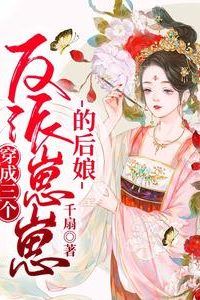
Transmigrated into the Stepmother of Three Little Villains
Novel Info
  • Author:
  • 千扇
  • Status:Ongoing

Summary

... Read More

Bai Lu, a modern agricultural bureau employee, is killed in a landslide while on a rural inspection trip. She awakens in the body of a sixteen-year-old girl in the Southern Tang Kingdom, who had just attempted suicide by drowning after being sold by her gambler father to a widowed hunter named Su Jingchen. The original Bai Lu was distraught over becoming a stepmother to three young children at such a young age. Bai Lu, facing the reality of transmigration, decides to accept her new life since returning home would mean facing abuse from her biological family. She finds herself in a thatched hut with Su Jingchen, a tall but impoverished man who is deeply in debt after paying eight taels of silver for her. Despite the dire financial situation and the presence of three children—Su Wenhao, Su Wenyu, and Su Yunxing—Bai Lu resolves to survive and improve their living conditions.

Upon settling in, Bai Lu discovers she possesses a "2nd Generation Farming System" that rewards her with points for completing household chores and manual labor. These points can be exchanged for seeds, recipes, and agricultural guides. Realizing the immediate threat of starvation, she uses her points to acquire sweet potato seeds, which she hides and later cooks for the family, introducing a new food source that delights the children. Bai Lu also identifies her lack of practical farming experience as a weakness and begins to apply her modern agricultural knowledge to their small plot of land. She plants long bean seeds and tends to the household with a pragmatic approach, establishing a routine that includes cleaning, cooking, and caring for the children, who gradually accept her as their mother.

The family's financial situation begins to change when Bai Lu ventures into the mountains to gather wild herbs. Using her knowledge from her previous life, she identifies valuable panax notoginseng and digs it up. Simultaneously, Su Jingchen discovers a nest of wild boar piglets and brings them home. Bai Lu convinces him to keep two of the piglets to raise for future profit rather than selling them immediately as suckling pigs. The couple travels to the nearby Anping Town to sell their goods. Bai Lu takes the lead in negotiations, selling the notoginseng to the Hall of Hundred Herbs for 600 coins and successfully bypassing the usual middleman to sell a wild boar directly to a restaurant chef for 800 coins. This direct sale earns them significantly more money than they would have received from the regular supplier, Li Sheng.

Throughout these events, Bai Lu navigates the social dynamics of the village, dealing with gossiping neighbors and establishing a rapport with helpful figures like Aunt Lin and Zhao Laosan. She also addresses the educational needs of the eldest son, Su Wenhao, promising to send him to school once they have sufficient funds. The narrative highlights the growing partnership between Bai Lu and Su Jingchen, who evolves from a silent, shy hunter into a supportive husband who respects his wife's decisions. As they accumulate their first real savings, the family moves from the brink of starvation toward a more stable existence, with Bai Lu planning to expand their agricultural output and secure a better future for herself and the children.

Latest Release
DateGroupRelease
2026-08-11shanghai fantasy c68
2026-08-11shanghai fantasy c67
2026-08-11shanghai fantasy c66
2026-08-11shanghai fantasy c65
2026-08-11shanghai fantasy c64
2026-08-11shanghai fantasy c63
2026-08-11shanghai fantasy c62
2026-08-11shanghai fantasy c61
2026-08-11shanghai fantasy c60
2026-08-11shanghai fantasy c59
2026-08-11shanghai fantasy c58
2026-08-11shanghai fantasy c57

Community Reviews

Rating(4.3 / 5.0, 4votes)
5 stars
2(50%)
4 stars
1(25%)
3 stars
1(25%)
2 stars
0(0%)
1 stars
0(0%)

Popular reviews

... Read More
The pacing in this section is honestly wild. We go from a quiet domestic morning scene—steaming sweet potatoes, peeling bird eggs, the kids eating—to Bai Lu having an existential crisis about poverty and shelter in the span of two paragraphs, and then she's just... climbing a mountain to dig up medicinal herbs. Like, one minute she's patting a little girl's head and telling her to eat slowly, the next she's doing a full inventory of her problems: food, clothing, shelter, and the terrifying outhouse situation. And she resolves it all by grabbing a shovel and heading into the wilderness. There's no slow build-up, no "I should probably prepare more." She just goes. The chapter transitions are what really sell it though. Chapter 6 ends with Su Jingchen smiling to himself in the courtyard, and Chapter 7 opens with Bai Lu already up at dawn, checking her system points. The author doesn't waste time on filler—every scene pushes the survival plot forward. But here's what I noticed: the mountain sequence has this great rhythm. She climbs, gets tired, sits down, keeps going, finds nothing, veers off path, then BAM—panax notoginseng. The tension of "will she find anything?" is maintained through her physical exhaustion and the growing desperation. And then Su Jingchen showing up right as she's about to get spooked by a bush rustling? Perfect cliffhanger timing. The author knows exactly when to cut.
... Read More
Can we just take a moment for the dialogue in this section because some of it is genuinely funny? The kids' voices are so distinct. Su Wenhao says "Now that Dad has Mom, we're just weeds" and I nearly fell off my chair. That's a CHILD saying that with complete deadpan delivery. But what's impressive is that the author doesn't overdo it—every line feels earned. Bai Lu's dialogue has this practical, no-nonsense quality that matches her personality. When she tells Su Jingchen about the trial marriage, she's direct but not rude. When she talks to the kids, she's warm but firm. And Su Jingchen? His lines are short and measured. "If there's any heavy work, leave it for me to do when I get back." That's it. Three sentences in the entire section that carry so much weight. The narration also has a great voice—dry and observant without being pretentious. "This woman had only been their mother for less than two days, he could tell she genuinely cared for them." That's the narrator winking at us. And then there's Bai Lu's internal monologue when she's yelling at the system: "It's all because of that damn system!" The contrast between her composed external dialogue and her chaotic internal thoughts is chef's kiss. Also, the translation handles the Chinese idioms well—"Live off the land near mountains, live off the water near rivers" sounds natural in English while keeping that folk wisdom vibe.
... Read More
Okay so I need to talk about this scene where Bai Lu just straight-up proposes a trial period to Su Jingchen like they're signing a business contract. I laughed out loud. "We got married without any emotional foundation. I was thinking we should first... adjust to each other." ADJUST? She's treating marriage like a software update! But then Su Jingchen's reaction is what made me actually sit up—instead of being offended or angry, he just... considers it. "What if it doesn't work out?" And her response: "I'll earn eight taels of silver to repay you, and you'll let me go." This woman is not playing around. She's got an exit strategy for her own marriage. That's either the most pragmatic thing I've ever read or the most terrifying, depending on how you look at it. And the fact that he agrees? That's the plot twist right there. In any other novel, the male lead would be furious. But Su Jingchen ends up sitting in the courtyard until late at night, replaying her words, smiling faintly. He's intrigued. The story is setting up this slow-burn arrangement marriage where both characters are genuinely trying to figure each other out instead of the usual forced proximity nonsense. I love it.
... Read More
I need to talk about how the author makes you CARE about a woman digging up plants. Like, the stakes here are genuinely high and the author never lets you forget it. Bai Lu nearly starved to death the day before. She's wearing patched clothes that stink. She's sleeping on bamboo poles because the children need the bed. Every single problem is survival-level. And when she heads into the mountain, the tension isn't about some dramatic villain or life-or-death battle—it's about whether she'll find anything worth selling or whether she'll come back empty-handed and the family goes hungry again. That's actually more stressful because it's REAL. The moment she spots those panax notoginseng plants and bursts out laughing? I felt that. But then the author ramps it up immediately—she's so engrossed that she doesn't hear the bushes rustling, she's terrified it's a snake or tiger, and then Su Jingchen taps her shoulder and she literally falls to the ground screaming. The physical comedy is great but underneath it is this real anxiety: she's alone in the mountains, she's vulnerable, and the last thing she needs is to get hurt when her family depends on her. And Su Jingchen chasing after her because he's worried? That's the stakes hitting on an emotional level too. What does she stand to lose? Not just money, but her position in this family, her ability to protect these kids, her hard-won progress. The author makes you feel every ounce of it.
See all reviews

Characters

See all characters

Custom lists

See all custom Lists