Transmigrated into the Notorious Supporting Female Character - Reviews

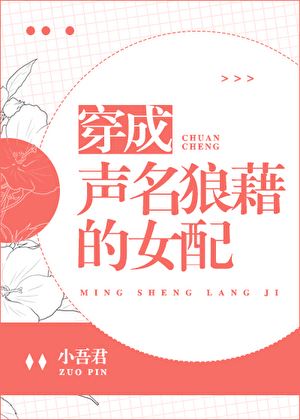
Transmigrated into the Notorious Supporting Female Character
+Add to Custom List
Sort
Add review
... Read More
What strikes me most about these chapters is how the author builds a theme around visibility and invisibility — who sees what, who knows what, and what happens when those truths collide. The photo is the central symbol here. It exists in multiple states simultaneously: an accidental selfie between friends, a piece of evidence of queer intimacy, gossip ammunition, and for Gu Shanxue, an unanswerable question made visual. That red streak on Que Yining's face is like a brand — it marks her publicly without her knowing, and the person who cares most about her has to confront it through a screen while pretending nothing has changed. Then there's the phone itself, passed between characters like a torch of uncomfortable truth. Cheng Yijia hands it over willingly, then regrets it immediately. Gu Shanxue reads everything and returns it without acknowledgment. The chat history full of insults exists in the same device as the photo that could destroy someone's reputation. Both are equally dangerous. Both are easily deleted. The final image — Gu Shanxue alone on a balcony, the phone screen going dark on its own, unable to process the collision of her friend's visible life and her own hidden feelings — this is the novel's thesis statement right here. Everything is connected. Everyone is watching. And the silence between what's said and what's felt is where the real story lives.
... Read More
Okay so this is going to sound weird but the moment that wrecked me was when Que Yining hands Zhang Shiyu a blue tin of lip balm. That's it. That's the note. Here's this woman who has just transmigrated into someone else's body, who's building a company from scratch, who's dealing with her family's emotional expectations, and she still notices that her overworked secretary has chapped lips and gives her something about it. Not a bonus. Not a promotion. Just “look how chapped your lips are, make sure you rest.” And Zhang Shiyu's fatigue literally dissipated. I read that three times. There's something so tender about it — she's not performing kindness, she's just genuinely seeing people. Meanwhile her father is crying happy tears on the phone about her agreeing to one dinner, and she's over here building a game studio and moisturizing her employees' lips. The emotional architecture of this character is immaculate. She's not cold despite her calculation; she's careful and the care shows up in tiny ways that matter more than grand gestures ever could.
... Read More
Let me paint the picture for you because the atmosphere in this chapter is *chef's kiss*. We start in a private room with alcohol covering the table. It's already a bad sign. The lighting, the cramped space, the hierarchy of men circling around a woman who doesn't belong there — it's set up like a trap. But Que Yining walks into it anyway, and that's where it gets fascinating. She doesn't enter as a victim. She enters as someone who knows what the room looks like because she's been here before in another life. The dice cups themselves become these almost ritualistic objects. Que Yining weighing the cup, casually shaking it twice while Wang Ruiyuan repeats his shakes — the contrast in their movements tells you everything about their states of mind. One is performing mastery; the other is desperately trying to maintain the illusion of control. "The mixed alcohol was like a bomb, its surface shimmering under the lights." This line. Just — look at that. The author treats the drink like an explosive device. Which it is, metaphorically speaking, because that's what's about to detonate in Wang Ruiyuan. And then the photography scene. Que Yining directing men to pose Wang Ruiyuan, making sure no faces are shown. The clinical precision of it — taking three quick photos, gesturing them to leave — this isn't chaotic rage. It's cold, calculated documentation. The room transforms from a drinking den into a crime scene without anyone else even realizing it. The transition from that high-energy private room to Gu Shanxue's quiet study at 10:30 PM with her reading documents — the contrast in atmospheres is brutal. From noise to silence, from chaos to order, from violence to tenderness. Both scenes are perfectly constructed.
... Read More
Underneath all the social maneuvering, this chapter is really about one question: what happens to relationships when profit enters the room? Que Yining opens our eyes to this immediately—"Although her memories predisposed her to believe this man was very good to the original owner, Que Yining just felt something was off. It wasn't that she was inherently suspicious of human nature, but when profit was at stake, all relationships had to be carefully re-evaluated." That's the thesis statement for the entire novel, isn't it? The concept of the "original owner" keeps floating through the narrative like a ghost, reminding us that identity itself might be borrowed, that loyalty to someone who isn't you is always conditional. And then there's the phoenix symbolism—Que Yining's direct hit at Gu Qianqian about being a wild chicken rather than a phoenix cuts to the heart of this story's obsession with origin and transformation. Can you actually change where you come from? Or are you always just a wild chicken pretending? The Zhuazhou ceremony adds another layer: the baby crawling toward objects that represent future wealth and status, while guests project their hopes onto random choices. Even Gu Qianqian's name becomes symbolic—she carries the Gu family name but is the daughter of a mistress, making her both inside and outside the family's legitimacy. And Que Yining's decision not to place any items for the ceremony is telling—she refuses to participate in the ritual of hoping for predetermined outcomes when she knows the game is rigged.
... Read More
There's this one moment in the middle of all the plotting and phone conversations where the author just… stops. Que Yining looks out her window and it's winter. The trees are bare branches. Silent stillness. She opens the window, lets the cold wind in, and goes to get coffee from Butler Chen. It's such a small thing but it gave me chills. Like, after all this calculating about what to wear and where to go and how to maneuver herself into Gu Shanxue's orbit, there's this quiet beat where she's just a person in a cold room thinking about her next move. The world feels incredibly specific too. Xiang Qing Waterside Pavilion — the name alone tells you everything about these people. They don't go to regular restaurants. Their gatherings happen at places with poetic names on upper floors behind closed doors. And Bian Ji'an's whole background — younger brother, inherited nothing, responsible for "enjoying a carefree life while the family's influence does the rest" — that single description tells you so much about how this society works without any exposition dump. "This era wasn't lacking in opportunities. As long as things were managed properly and backed by capital, there would surely be considerable returns." That's Que Yining looking at her surroundings and seeing it differently than the original owner ever did. The original owner spent money on gifts for a boy who returned them. Que Yining is doing market research on a computer until her eyes strain. Different priorities completely reshape how a character sees the same world.
... Read More
There are so many layers to unpack in this passage and I want to focus on the symbolism because the author really went hard. The word "borrow" comes up repeatedly in the Que Yining and Gu Shanxue conversation. "Consider it something I'm borrowing from you." But nothing is actually being borrowed—it's an elaborate framing device. Que Yining is giving Gu Shanxue a company, yet she frames it as a transaction, as if she's protecting both of them from having to acknowledge the emotional weight of what's happening. If it's borrowed, it's not a gift. If it's not a gift, maybe they don't have to define what it means. That's Que Yining protecting herself as much as she's manipulating the situation. Then there's the whirlpool metaphor. Gu Shanxue's past self knew Que Yining was like a whirlpool, best kept at a safe distance. Yet she stepped in. The imagery here is perfect because a whirlpool doesn't ask permission—it pulls you in regardless of your intentions. And Gu Shanxue acknowledges she's still "resisting being completely drawn in." She hasn't drowned yet, but she's already underwater. The New Year's setting is deeply symbolic too. It's a time of endings and beginnings, of renewal and reflection. Gu Shanxue's old year is marked by loss—her mother is gone, her family dynamics are fractured. But Que Yining brings something new into her life, something dangerous and intoxicating. The firecrackers and fireworks in the background represent the chaos and celebration of transformation. And that last image—the mist on the cold windowpane, Que Yining watching her own reflection, red lips curved into a smile—feels like a portrait of someone standing at the threshold of something irreversible. She won the battle. She has the company. She has Gu Shanxue's trust. But what does it all cost? The story seems to be asking: can you build something real on foundations of manipulation and vengeance? Or does everything eventually become what it was built upon?
... Read More
I need to talk about how these characters actually sound, because the dialogue here is doing SO much heavy lifting. Take this exchange: Que Yining: 'If you don't go, I won't go either.' Gu Shanxue: 'Then I won't go.' That's it. That's the whole conversation. But read it again. Que Yining is literally saying 'my plans revolve around whether you're going.' And Gu Shanxue — who supposedly doesn't want to get close — responds by reorganizing her entire schedule. The subtext is Screaming. Neither character says what they actually mean, and that's exactly why it works. Then there's Gu Shanxue's line: 'Among friends, this is as it should be.' After Que Yining says something genuinely sweet and vulnerable. That deflection! That's a character who has built walls and is terrified of them coming down. But she's slipping, and we hear it in every careful word. Xie Yanhuai's voice is totally different — he's louder, more expressive, willing to admit he's nervous. 'Huai Ge, is this reliable?' and then later he's gesturing excitedly. The author gives him a distinct cadence that makes you hear him in your head. His dialogue feels like someone who talks with his hands, which is honestly perfect for a programmer who's about to get his big break. The narration itself has this dry, observant quality that I'm obsessed with. Lines like 'Que Yining's tactics always came one after another, always giving others choices and then making her own choices based on theirs' — that's not just narration, that's a thesis statement about who this character is. And the humor! 'Can we start work tomorrow?' Lin Jingyu asking like he's been scam'd — that made me laugh out loud. The author knows when to let the dialogue breathe and when to land a joke.
... Read More
The pacing here is absolutely ruthless in the best way. You start with Zhang Shiyu's hair getting caught on Que Yining's button—small, intimate, seemingly harmless. Then you cut to Gu Shanxue upstairs, drunk and already predisposed to misinterpretation. The author doesn't give you any relief between these two perspectives. By the time Que Yining spots Gu Shanxue walking away, you're already invested in the fallout. Then the chase sequence—Que Yining calling after her, the assistant quietly observing, the whole lobby moment with the lanterns—all compressed into what feels like five minutes of real time but reads like an entire scene. And then the car ride? That's where the pacing really pays off. Short exchanges, loaded silences, the slow reveal that Que Yining doesn't have a license. The author could've resolved this whole thing in one chapter but instead stretches every awkward second. I wanted to throw my phone across the room but I kept reading anyway.
... Read More
I need everyone to understand what just happened in that restroom scene because I am NOT okay. Que Yining walks out of the bathroom after committing a crime, totally unbothered, and Qiao Yuchu is just... there. Her ride-or-die. The friendship between these two feels so natural and lived-in — no elaborate exposition needed, just two girls who genuinely enjoy watching the world burn together. But then Gu Shanxue appears and WHOLE THING shifts. She hears Que Yining call her 'an exquisite beauty' and instead of being flattered or offended, she just... brushes past like nothing happened. Like she's used to people underestimating her and doesn't have time for any of it. And Que Yining? She SMILES. Not a polite smile, not a scheming smile — just a genuine, almost childlike smile at seeing someone who actually *sees* her. The mirror moment where she winks at her own reflection while thinking about Gu Shanxue's face? That's the kind of detail that makes my heart do backflips. There's this enormous, unspoken pull between them and we've only seen two scenes together and I'm already writing fanfiction in my head. Also can we talk about how Que Yining保护的动机 isn't some grand romantic gesture? It's just... she noticed someone being cruel and decided to intervene. That's the kind of care that actually matters.
... Read More
Can we talk about how good Qiao Yuchu's dialogue is here? The woman talks like a human tabloid. 'Little White Lotus herself is just an illegitimate child who can't make it to the big stage. After staying in a golden cage for ten years, she thinks she's a phoenix.' That's not just exposition—that's a FULL personality radiating through every word. She's salty, observant, and genuinely excited for drama. You can hear her leaning into the phone like she's about to spill the tea. And Que Yining's responses? Almost none. Just 'Her sister?' and later some brief exchanges. Which is honestly brilliant characterization—she's gathered, minimal, and let OTHER people talk. That silence becomes its own voice. Even the attendants and driver have distinct voices. Wang Lu's internal grumbling ('perhaps the young lady was in a bad mood today and wasn't her usual self') versus his outward compliance ('Alright, okay'). The club attendant's practiced courtesy ('your makeup looks especially beautiful today, and your perfume smells wonderful') is deliciously hollow, and Que Yining's noncommittal response shuts him down without any confrontation. And Gu Qianqian's line—'Yining Jiejie seems to be in a good mood'—delivered with that fake sweetness while wearing white and looking like a delicate flower? The dialogue does SO much work here. Every character speaks like they have a purpose, and the ones who say the least often reveal the most.
... Read More
There are three scenes in this batch that genuinely felt like film frames. The first one is the blurry fragmented memory sequence: the glass shattered, the blood that belongs to Fu Wenjing, the original owner arriving to find him unconscious. It's described in this hazy, disjointed way—fleeting, blurry images—which makes it feel like a flashback you're struggling to piece together. You can basically see the panic, the confusion, the physical evidence of violence everywhere. Then there's the contrast of Que Yining lying in bed at two in the morning, unable to sleep, doing research on her phone with the cold hotel light illuminating her face. The transition from emotional intensity to quiet investigation is so well paced. And the final image of Que Yining touching Gu Shanxue's cheek, noticing the dried line of blood hidden under hair and concealer—this small intimate gesture packed more visual weight than any action scene. The world feels lived-in too. The couple's double bed at the hotel, Zhang Shiyu driving, the company growing from a workshop to something established, the casual mention of concept art studios outsourcing. It all grounds the drama in a tangible reality. It doesn't feel like a generic romance setting—it has texture.
... Read More
The dialogue in this passage is doing SO much heavy lifting and I need to unpack it. Qiao Yuchu when she's drunk is absolutely hilarious and devastating at the same time. "Then are you annoyed? Gu Shanxue seems very hard to woo. She's so cold and icy. Let alone sleeping together, I bet you two haven't even kissed." This is the kind of thing that only comes out when someone's inhibitions are lowered, and it's either the most honest observation in the book or the most accidentally accurate. Either way it works perfectly because it's framed as an accusation directed at Que Yining while actually revealing everything about Gu Shanxue's emotional armor. Que Yining's responses throughout are these tiny masterclasses in deflection. When asked about Gu Shanxue she just goes silent. No explanation, no denial, just silence. And then the pivot to "You can't rush things" which is advice she's clearly giving herself as much as her friend. The subtext is dripping off every exchange. Meanwhile Gu Shanxue barely speaks at all in her scenes and that's the point. "Phone." Two words. "Be careful what you say and do." Another two-word warning. Her dialogue is minimal because her power is in restraint. She doesn't need to perform anger — the coldness does the work for her. This contrast in dialogue styles between the two central characters is exactly why their dynamic works so well.

Leave a comment

You must be logged in to leave comments. or
