Transmigrated into the Notorious Supporting Female Character - Reviews

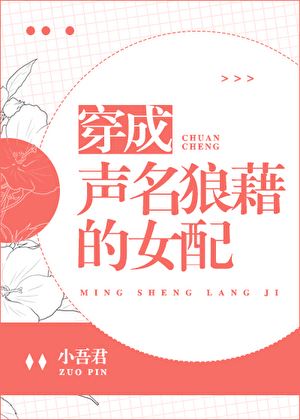
Transmigrated into the Notorious Supporting Female Character
+Add to Custom List
Sort
Add review
... Read More
"Perhaps because Que Yining acted so naturally, with an air of 'I'm the best in the world,' the strange thoughts that had arisen in Qiao Yuchu's mind were dispelled again." THIS sentence. This single sentence tells us EVERYTHING about their friendship. Qiao Yuchu notices when Que Yining is fake. She always has. But she also CHOOSES not to press it, because apparently knowing your best friend is crumbling inside is less important than keeping the peace. That's either profound loyalty or profound avoidance—I can't decide which hurts more. And Que Yining's relationship with Gu Shanxue is the elephant in every room. Years of obsession. The change in her that started when Gu Shanxue came back. The way her gaze "darkened" when she looked past Qiao Yuchu toward whoever was on the other side of that glass door. You don't write that without meaning it. This woman is a volcano wearing a smile. Then there's Qiao Yuchu and the girl from Chun Chao—which is this whole tangled mess of savior complex, rejection, and something that looks a lot like grief dressed up as annoyance. "How did it end up like this?" she asks, and I think she's asking about the girl, but she's also asking about herself. I need to know what happens when these three dynamics finally crash into each other.
... Read More
I keep coming back to one image from this chapter: the see-through clothing. It's not just a funny misunderstanding plot device — it's THE symbol of everything happening between these two women. Transparency. Exposure. The things we try to hide becoming visible. Gu Shanxue literally cannot see what she's trying not to see, and the water makes everything worse by revealing more the deeper she sits in it. This is such a perfect metaphor for the emotional state of someone who is attracted to someone else and desperately trying to pretend it isn't happening. You can hide your face. You can look at the stones. But the truth is right there, visible to everyone, including yourself. There's also the steam — that beautiful, swirling veil between them. Steam both conceals and reveals. It blurs edges and softens boundaries. It's the physical manifestation of that暧昧 (ambiguous space) between friendship and something more. They're surrounded by it. They breathe it in. It's in everything. And the hot spring itself — traditionally a place of cleansing, of stripping away, of communal vulnerability. You go in naked. You can't pretend when you're in hot water with someone. Social masks dissolve. And Que Yining seems to understand this intuitively while Gu Shanxue is still trying to hold onto hers. Even the grape has symbolism — small, sweet, offered hand to mouth. Intimacy as nourishment. The sweetness that lingers after the moment has passed. "The sweetness lingered in her mouth" — that's not just taste. That's memory forming in real time.
... Read More
Can we talk about the atmosphere in this passage? 'Exquisite red lanterns hung, their flames flickering in the icy cold'—this line hit me like a freight train. It's not just decoration, it's literally the emotional temperature of the whole scene. Warm light, cold air, two people who want to be close but keep maintaining distance. And the indoor heating making Gu Shanxue's vision blurry while she's drinking—there's this thick, heavy air to the whole restaurant that mirrors how suffocated she feels inside. The contrast between the upstairs (where Gu Shanxue is isolated, watching from above, almost like a ghost) and downstairs (where Que Yining is alive and touching another person) is visually stunning. I could absolutely see this as a film scene. The lantern light catching Que Yining's porcelain skin and the turtleneck making her look smaller and more vulnerable—it's all so cinematic.
... Read More
This is the most quietly devastating passage in the entire chapter. The zhuazhou ceremony is happening right outside while Que Yining and Gu Shanxue are in the guest room, completely disconnected from it. And when they emerge, they hear about Old Chen's granddaughter picking the jade gourd that Fu Wenjing placed there. The author makes this moment feel like a domino falling in slow motion. That jade gourd was Gu Shanxue's childhood amulet. Her mother gave it to Fu Wenjing during an exchange between the two families. In the original story, this object would have triggered a memory, established a friendship, set everything on its canonical path. But now? Gu Shanxue forgot about it entirely. She hears the name 'Fu Wenjing' and feels absolutely nothing. The plot isn't just changing—it's ERASING itself from the inside out, and the characters don't even know they're watching it happen. The atmosphere in these scenes is so carefully calibrated. There's the cramped guest room with its central heating that still can't warm the moment between two women who are simultaneously close and infinitely distant. There's the banquet hall buzzing with guests celebrating a baby's ceremony, completely unaware that history is being rewritten. And there's Que Yining sitting alone in a coffee shop, scrolling through a blank social media feed, plotting her next move. Three spaces, three moods, all orbiting the same gravitational center of impending change.
... Read More
I need to talk about the emotional weight of Que Yining's final moments before the fire takes her. The text says: "Before Que Yining closed her eyes, her mind was filled with the image of that unchangeable sea of fire, and her parents and younger siblings who had perished in it. It was over." Just two sentences. That's it. And yet it hit me like a truck. This woman spent twenty years preparing for this single night. She didn't care about surviving. She was ready to join her family in death. The line "You should have burned me to death with you twenty years ago. Isn't this perfect? Making up for it now" is devastating because it reveals that her revenge wasn't just about justice — it was about finally being able to face her dead family without the people who killed them still breathing. I also got genuinely moved by the detail that the fire took ten lives total — her parents, her newborn siblings, and everyone else in that house. Ten. And she was the only one who lived. The isolation of that survivor's guilt must have been crushing for two decades. When she says this life was "seemingly magnificent but actually crawling with filth," it's not just about the stolen company. It's about living in a world where the people who murdered her family were living comfortably while she carried that pain alone. And then the rebirth happens and I literally gasped out loud. All that pain, all that careful planning, and she gets a DO-OVER? My heart was racing.
... Read More
Let me re-read the opening line one more time because it keeps coming back to me: 'She could only work harder to be qualified to stand shoulder to shoulder with Gu Shanxue.' Shoulder to shoulder. Not below her. Not chasing her. Shoulder to shoulder. This is the real conflict of this entire story arc and it's been simmering since way before this chapter. Que Yining isn't building a game company for the money or the fame — she's building it so she can finally exist in the same space as the person she admires. That's the stake. That's what she stands to lose if she fails. Every late night at the studio, every push for perfection, every decision to release early rather than wait — it all connects back to this. And the irony? She succeeds. The game is a hit. Internal test numbers are through the roof. Chu Meng's stream viewership is climbing. The publication number application is already in progress. And what does she do first? She calls Gu Shanxue. The external conflict (will the game succeed?) was never really the question. The story already told us she'd make it. The real tension was always internal — will Que Yining ever feel like she's worthy? Will Gu Shanxue ever stop running? Those are the questions keeping me up at night, not whether the open beta will perform well.
... Read More
Okay so let me just say this straight up: the scene where Jiang Xiaowan puts her hand on Que Yining and Gu Shanxue WATCHES from the bed—it is NOT a small moment. The text literally says her smile vanished and her grip on the blanket tightened. She didn't say anything out loud but internally she's like... fine. It's normal. I don't need to care. AND YET her nails dig into her flesh. This is not a person who is okay. This is a person actively suffocating something in themselves. And then later when Jiang Xiaowan says 'I did it for Ningning's sake' with that extra-affectionate tone, Gu Shanxue's frown DEEPENS. The layering here is unreal. We've got three people orbiting each other—Gu Shanxue who's hurt but pretending she isn't, Jiang Xiaowan who is visibly flirtatious and enjoying it, and Que Yining who is... where is Que Yining in all of this? She's pouring water. She's being polite. She's the calm center around which everyone else is having a full emotional meltdown silently. I need to know what happens next because this triangle is about to explode and I am NOT ready.
... Read More
Okay so this whole sequence had me sitting on the edge of my seat, and not just because of the dice game at the end. What I love about this part is how Que Yining operates in two completely different spheres and makes both work for her. First, you have the refined dinner with Gu Shanxue — super polite, calculated, every word measured. Then BAM, she transitions to Chun Chao where Bian Ji'an is rolling dice and Wang Ruiyuan is being a jerk. The contrast is *chef's kiss*. And that transition moment when she tells Gu Shanxue she has another engagement? I love how the author uses the phone ringing as a beat — Qiao Yuchu calling, Wang Ruiyuan already there. It's like Que Yining's whole life is a perfectly choreographed dance and she never misses a step. The Chun Chao setting itself is doing heavy narrative lifting too. It's where they first met, and she sends Gu Shanxue there. Is this intentional? Probably. Does it show that Gu Shanxue occupies space in Que Yining's mind even during her off-hours with friends? Absolutely. What really got me was the dice game setup. Que Yining doesn't just sit and watch — she steps in, proposes the rules, and immediately puts Wang Ruiyuan on the back foot. She's playing a different kind of game here, one where she controls the terms. And Bian Ji'an winking at her like 'let's make this interesting' tells me this group dynamic is way more layered than it first appears. I keep wondering what Qiao Yuchu meant when she said Wang Ruiyuan is only putting on a brave front for Gu Qianqian. Who is Gu Qianqian and why does she matter to all of this? The author is stacking little breadcrumbs and I am HERE FOR IT.
... Read More
On the surface, what's the actual conflict here? Someone posted an unflattering photo with a snide caption and Que Yining wants to get revenge at a drinking party. That's it. That's the event. But the chapter makes you feel the weight of it because we understand what's really at stake. Wang Ruiyuan isn't just some random rich kid being petty—he's part of a social circle that has already rejected Que Yining, and his provocation is another attempt to push her down. The chapter acknowledges this directly: Qiao Yuchu says 'you really went easy on him that day' and Que Yining's response shows she's aware that next time could escalate beyond physical violence. There's also the deeper stake of her new assistant, Zhang Shiyu, who just got hired and will be navigating this toxic social environment. Que Yining warns her about her reputation before the drama even hits, which is protective in a roundabout way. And then there's the personal conflict underneath everything—Que Yining choosing to handle this intelligently rather than with brute force, which shows growth. The stakes aren't life-or-death but they feel deeply personal, and the author knows how to make that matter.
... Read More
I need to talk about this ending because it absolutely wrecked me. You've got Que Yining, this terrifyingly competent woman who just completely dismantled her enemy in a dice game, and the moment she's sobering up, she forgets where she lives. The alcohol hits her tolerance and suddenly she's not the predator anymore — she's this confused person murmuring someone's name like a prayer. "Gu Shanxue…" Three little characters and a whole novel's worth of subtext. Qiao Yuchu's reaction is everything. "Damn, forgetting friends when you see a pretty face, huh?" She's joking but she's also not wrong. The way Que Yining's world narrows down to just that one name when she's at her most vulnerable — that's not just friendship. That's devotion. Or something that could become devotion if the story gives it room to breathe. And Gu Shanxue receiving this call at 10:30 PM from an unsaved number, still in her study doing paperwork, and immediately agreeing to come pick up a drunk person — there's care there. Real, unexamined care. She doesn't hesitate. She doesn't ask how much. She just comes. The whole chapter is built on this emotional whiplash: humiliation → power fantasy → catastrophic success → intimate vulnerability. It's like the author wanted to give us the catharsis of revenge but then quietly pulled the rug out and said "but loneliness still exists." I kept waiting for some dramatic confession or romantic tension between Que Yining and Gu Shanxue but the text keeps it simmering under the surface instead. And honestly? That's more powerful. The unsaid things between them feel heavier than any words could be.
... Read More
I keep thinking about this one detail — when Yining explains why she used a wine bottle instead of her hands. "She didn't even want her hands to touch things she didn't want to touch. Slapping someone would be giving them too much credit." That's not just a tactical choice. That's philosophy. There's this whole layer beneath the surface of these chapters about what it means to inhabit a life that isn't yours. The original owner of this body — the one who was taller, louder, more confrontational — she's essentially been erased. Yining is living in her skin, wearing her clothes, dealing with her family, but she operates by completely different rules. The wardrobe scene is practically a metaphor for this. She's going through the original owner's stuff, judging the aesthetic, wanting to pack things away. She's curating a new identity from the remnants of the old one. And the height difference — 1.65 versus 1.5 — it's such a small physical detail but it keeps echoing. Yining is smaller, yet she dominates every room she walks into. Madam Wang comes in firing but leaves shrinking. That inversion is the whole point, isn't it? Power doesn't come from physical presence or social position. It comes from composure. From knowing when to speak and when to stay silent. Then there's the whole Gu Qianqian thread — the girl who strings men along, who makes Wang Ruiyuan fight her battles. Yining calls her out not just for being manipulative but for performing inadequacy: "I'm not even worthy to carry his shoes." It's this deeply cynical observation about how some people weaponize self-deprecation. And Yining's disgust feels personal — she's an outsider herself, someone who has to navigate a world that already has scripts written for her, and she REFUSES to play along with the fake modesty act. The mother-daughter moment at the end is quietly devastating too. You Lanqing feeding her fruit, saying "don't resort to violence next time, okay? Fighting will hurt our baby's hands" — this is the original owner's mother, showing affection in her own clumsy way, and Yining can't quite receive it. She nods and says okay but she can't bring herself to call her Mom. The love is real but the distance is absolute. What is that, if not the central tragedy of this whole setup?
... Read More
I need to talk about the ending of this chapter because OH MY GOD. The way Que Yining calls Gu Shanxue right after the game's success. Let me be real with you — Que Yining isn't even that excited about the game itself. The text literally says so. But when she shares it with Gu Shanxue, suddenly it becomes double the joy. That's not romance advice from a book, that's actual human behavior and it hit me hard. And then Gu Shanxue's side? She's been trying SO HARD to keep her distance. The narration says she told herself she was retreating to a safe distance, hiding her feelings under the guise of caring for a friend. Like, girl, we see you. We ALL see you. And then ONE call from Que Yining melts every wall she built. The line about the little bird fluttering in her heart and landing gently, unsteadily — it's so delicate and so devastating because you can feel both characters wanting each other while also being afraid to reach out. She pressed the phone tighter to her ear though. She pressed it tighter. That's the whole relationship in one gesture. I keep thinking about how this book handles their dynamic — it's not dramatic confessions or dramatic conflicts. It's this slow, quiet ache of two people who clearly care but don't know how to be honest about it. Every time I read a scene like this I want to shake both of them.

Leave a comment

You must be logged in to leave comments. or
