Summary

... Read More

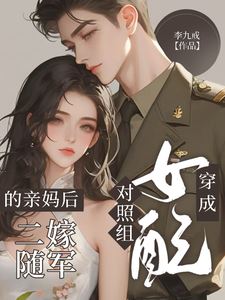
Lin Zhilan, a chief physician in traditional Chinese medicine from the modern era, dies in a car accident and transmigrates into the body of a woman with the same name in the 1968 setting of the novel "The 80s Prosperous Little Wife." She inhabits the body of Zhou Chen’s widow, a background character and mother of the story’s tragic female supporting cast. Upon waking, she finds herself in a room with Su Lang, a military officer who was also drugged by a third party. Unlike the original plot where the drugged woman’s desperate attempts led to a forced marriage and subsequent suicide, Lin Zhilan uses her medical knowledge to resist the drug’s effects by biting her tongue. She manages to return home to her three-year-old daughter, Linlin, while Su Lang leaves behind a note promising to take responsibility upon his return.

Lin Zhilan discovers she has inherited a magical spatial dimension containing a spiritual spring and vast land, which she uses to cultivate medicinal herbs and grow food, significantly improving her living conditions. The core conflict arises immediately as her mother-in-law, Wang Guifen, and her brother-in-law, Zhou Jianmin, attempt to exploit her. Wang Guifen wants to force Lin Zhilan into a remarriage to collect a bride price and monopolize Zhou Chen’s pension, while Zhou Jianmin harbors illicit desires for his sister-in-law and was responsible for drugging her at the wedding banquet. Lin Zhilan refuses to be a victim, confronting Wang Guifen over the division of household assets and Zhou Chen’s money. She successfully retrieves her dowry and claims her rightful share of the pension with the help of Chen Jin, the local commune leader.

A key turning point occurs when Lin Zhilan confronts the threat posed by Zhao Ermao, a local ruffian who tries to harass her, and later sets a trap for Zhou Jianmin. Using dried datura flowers, she intoxicates Zhou Jianmin when he attempts to sneak into her home and dislocates his joints as punishment, effectively neutralizing the internal threat from her in-laws. Her actions shift the village’s perception of her from a timid widow to a formidable opponent. Meanwhile, Chen Jin and his wife develop a fondness for Lin Zhilan and Linlin, offering to become their godparents and providing a potential protective alliance in the hostile village environment.

The narrative follows Lin Zhilan’s efforts to build a secure life for herself and her daughter. She identifies wild ginseng and agarwood in the mountains, using her space to cultivate high-value medicinal herbs that she can trade for resources. Her decision to distance herself from the novel’s original female lead’s family, specifically Song Fang and her husband Zhou Jianjun, is driven by a desire to avoid the negative fate associated with the protagonist’s halo. As she establishes her independence through herbal collecting and trade, she also navigates the romantic interest shown by Xiao Liu, Chen Jin’s subordinate, while maintaining her focus on survival and raising Linlin away from the bullying and rumors that destroyed the original character.

Throughout these early chapters, the story establishes a trajectory where Lin Zhilan leverages her future knowledge and medical expertise to survive the hardships of the era. She systematically dismantles the power structures that oppressed the original host, reclaiming her dignity and property. The presence of Su Lang, who is unaware of her location but remains a looming figure from their shared night, adds an undercurrent of future complexity. Lin Zhilan’s primary goal remains securing a safe future for Linlin, using the spiritual space to overcome scarcity while strategically managing the dangerous dynamics within Zhoujia Village.

Latest Release
DateGroupRelease
2026-09-26akknovel c402
2026-09-26akknovel c401
2026-09-26akknovel c400
2026-09-26akknovel c399
2026-09-26akknovel c398
2026-09-26akknovel c397
2026-09-26akknovel c396
2026-09-26akknovel c395
2026-09-26akknovel c394
2026-09-26akknovel c393
2026-09-26akknovel c392
2026-09-26akknovel c391

Community Reviews

Rating(0 / 5.0, 47votes)
5 stars
0(0%)
4 stars
0(0%)
3 stars
0(0%)
2 stars
0(0%)
1 stars
0(0%)

Popular reviews

... Read More
"I warned you before that if you came looking for me again, I would settle the score with you properly." And you KNOW that line is coming because the previous chapter set it up, but the way it actually lands in public, in front of the village, with a matchmaker already cowering behind Wang Guifen? The pacing decision to delay that payoff until we're deep in the scene rather than opening on it? Masterful. I was not prepared for how much adrenaline this single village-street sequence packs into maybe eight hundred lines of text. There's not a single transition cut, no "the next day" or "later that afternoon." It's one continuous camera shot. Lin Zhilan at the door. Wang Guifen stumbling. The crowd laughing. Jianjun's mother peeking. Song Fang entering. Wang Guifen wailing. Song Fang exiting. Zhou Jianmin appearing from nowhere. The door closing. Zhou Jianmin lingering. The door closing again. And then the NIGHT scene, datura, fire, waiting. It's all one breath and the author refuses to give you one to catch up on. I started reading this batch around two in the morning and I genuinely cannot remember when I was supposed to stop. The tension building works because every character who enters the scene raises the stakes by one increment. It's not "oh a new conflict" it's "oh this person is going to make the existing conflict uglier." And the datura reveal at the very end is placed perfectly. You just finished the daytime humiliation sequence, your brain is in a "phew, crisis averted" mode, and then: "The datura flowers she had picked on the mountain earlier had already been dried thoroughly by her." Whiplash. You go from social comedy to murder-plot in one paragraph. And I want the next chapter immediately. Do not sleep on this. I am begging you. The pacing in this batch is doing something to my circadian rhythm and I refuse to apologize for it.
... Read More
I need to talk about the Linlin moments because wow. The original owner of this body loved her daughter, sure, but Lin Zhilan? She goes full 'I'm never been this physically affectionate and I don't care who sees it' energy. There's this one moment where she finds the wild ginseng, dumps it in her space, then turns around, picks up her daughter, and just plants a kiss on her cheek saying 'Good baby, you're mommy's great little helper!' And Linlin's reaction — she shyly buries her face in her mother's embrace — I literally had to put the phone down for a second. Because this child had never experienced that kind of open, joyful affection from her mother before. She's conditioned herself to be quiet, to not cry, to not take up space. And Lin Zhilan is actively, intentionally rewriting that programming one kiss at a time. The author also doesn't shy away from showing us how broken this family system is. Wang Guifen calling a three-year-old a jinx because she cries? That's generational trauma right there. Linlin's silence when she's scared isn't innocence — it's survival. And Lin Zhilan recognizing that and deciding to guide her through it slowly? That's the emotional core of this entire story. It's not just about making money or surviving in 1968 China. It's about a mother who actually SEEES her child and refuses to let the world grind her spirit down. Every time Linlin points something out — the berries, the birds — and Lin Zhilan responds with genuine warmth instead of dismissal, it hits differently. Because we know what this child has been through. We know that for three years, her father was barely present, her grandmother treated her like bad luck, and now her mother is learning how to be present too. The CP energy is basically nonexistent right now but honestly? The mother-daughter bond is the main relationship and it's carrying so much emotional weight. I'm not crying, you're crying.
... Read More
One line and I was sold: "If only your brother were still here. He could warm my bed at night, and you could also come over and sit for a while." She said it softly. Deliberately softened. The text says she "deliberately softened her voice" and that's the key word. DELIBERATELY. She is performing innocence while delivering a line so loaded with innuendo that Zhou Jianmin's "heart itch[es] like claws scratching at his soul." And then she closes the door. And then he leans against it. And she says, "In broad daylight, it's not good for us to be alone together. If someone sees us, they'll gossip." It's not a rejection. It's a leash. She's telling him the rules of the game while making him think he's in control. "Then... Sister-in-law, I'll come see you tonight." He thinks he's won. He's walking away planning. And she's already picked the datura. The dialogue in this section has zero wasted words. Every line is either establishing power, testing boundaries, or setting a trap. And Wang Guifen's speech pattern is its own thing. She can't finish a sentence. "I... I was just..." Stammering. Then when she finally gets volume, it's pure name-calling: "You jinx, you bringer of bad luck, you shameless slut!" And the matchmaker is there for NOTHING but to be background furniture. "For thousands of years, the words used to curse women were mostly the same old routine. It was just slut-shaming." That narrator line is doing so much work. It contextualizes every single curse word in the book as systemic, generational, recycled. And then Lin Zhilan's voice cuts through it all with cold arithmetic. No emotion. Just numbers. 48 times 12 times 3. The contrast between Wang Guifen's emotional wailing and Lin Zhilan's spreadsheet energy is genuinely hilarious and also deeply satisfying. I keep rereading the chicken soup bit too. "That day, the original owner went to Zhou Jianjun's house to help. She worked all day without even a sip of water, and it was Wang Guifen who brought her a bowl of chicken soup." And the implication is that the soup was drugged. The kindness was the weapon. The dialogue doesn't say it outright. It just says "Thinking about it now, Wang Guifen wasn't that kind-hearted unless someone else had instructed her." And we're left to fill in the horror. That's good writing. That's the kind of restraint that makes the whole thing land harder.
... Read More
"In the dead of night, all was silent, with only the moonlight illuminating the road. Zhou Jianmin hopped forward, and with every jump, the wounds on his back hurt as if they were tearing apart." I have been trying to process this image since I read it and I cannot stop seeing it. It's like a scene from a war movie directed by someone with a deeply twisted sense of humor. The contrast between the romantic imagery—moonlight, silence, the midnight road—and the grotesque reality of a grown man hopping like an injured frog is absolutely brutal in the best way. The sensory details throughout this section are what make it work. The pungent odor of the stink bomb. The sound of Zhou Jianmin's muffled screams into the rag. The visual of Lin Zhilan leaning against the doorframe watching him suffer like she's enjoying a fireworks display. The almost-casual detail about manure—"it was only because she found manure disgusting, otherwise Lin Zhilan would have borrowed a trick from Wang Xifeng and splashed it all over him." This woman is a poet of revenge and she knows her literary references. And then the contrast cuts to Little Linlin sleeping through her mother's violent evening, only frowning slightly at the wailing before grabbing her collar and falling back asleep. The domestic stillness surrounding absolute chaos—that's where the atmosphere really clicks into place. This world feels lived-in and real, not some polished fantasy village. The ox cart ride the next day, the five-cent fare, the dime for the child—these small details ground everything in a specific time and place without ever feeling like exposition.
... Read More
Okay so this section absolutely slaps when it comes to Lin Zhilan turning things around. First off, the setup with Wu Li bullying the original owner — making her wash clothes, calling the good quilt "garbage" — that's the kind of detail that makes you just FUME. And then Lin Zhilan walks out with a suitcase and TWO CHICKENS. Just casually taking back what's hers. That scene where she stands at the door with chickens in each hand and drops the bomb about Zhou Chen's money being close to a thousand and the house being built with it? Chef's kiss. It's not dramatic yelling or anything — she just states facts like it's no big deal. And the way Wang Guifen is like "you're not Lin Zhilan" because the former one was basically a doormat who cried at everything? That's a fantastic character shift moment. The plot doesn't drag here at all — it moves from oppression to action to consequences in like three scenes. She trades the quilt for rice, gets chickens, secures her work points with the village secretary, and feeds her daughter spiritual water-enhanced rice. Every move has a purpose. No filler. Even the bit where she goes back to the Zhou house FOR THE CHICKENS despite already leaving shows she's not just running away — she's strategically cleaning house. I genuinely had to stop and appreciate how clean this plotting is.
... Read More
I need to talk about Old Man Zhou. Not because he does anything dramatic—he literally does nothing, which is the whole point. Wang Guifen is flailing on the ground, slapping her thighs, screaming 'this jinx of a mother and daughter cursed my son to death,' and Old Man Zhou? Not a word. Chen Jin actually narrates it: 'Old Man Zhou hadn't said a single word, as if he were invisible.' And then Chen Jin 'glanced at him, knowing that this was Old Man Zhou's tacit approval.' I thought about this for like ten minutes after finishing. He's not approving of Wang Guifen's behavior specifically. He's approving that Lin Zhilan leaves with her share. He's been watching his son's wife and his grandson being slowly strangled in his own house, and the only thing he can do is... not object when she walks out the door. That's the entire character arc in one paragraph and I'm genuinely upset about it. Then there's Chen Jin himself. He's not a saint figure, he's a bureaucrat with a soldier's spine. 'Do you know this is state property!' — he picks up the inkpad she knocked off the table, blows the dirt off, and just... keeps going. No speech. No moralizing. Just procedure. And the way the village women latch onto him immediately—'Are you married?'—it shows how rare a man who simply does the right thing is in this village. They're not even impressed. They're just... suspicious. 'You are so good to Lin Zhilan.' Ugh. And Xiao Liu. This kid who smokes boxed cigarettes because his dad runs a textile factory. He looks at Lin Zhilan once and says 'I'll raise the child as my own' like it's nothing. Then his parents lock him up at work the next day. I love that he's too young for this. He doesn't understand that 'you don't mind' is not the same as 'your household structure can absorb this.' The contrast between his ease and her entrapment is doing all the emotional work without anyone saying it out loud.
See all reviews

Custom lists

See all custom Lists