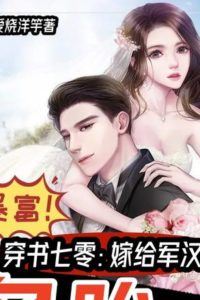
“Transmigrated into the 70s: Married a Soldier and Had Multiple Babies”
+Add to Custom List
Genres:
Novel Info

Summary

... Read More

Wu Xiuxiu is a twenty-five-year-old woman from a rural background who has recently lost her job in a struggling economy. Her family life is fractured; her father remarried a widow who mistreats Wu Xiuxiu and favors her own son. Fleeing an arrangement to be sold to an older man, Wu Xiuxiu lives alone in a cramped apartment, surviving on meager savings. Her life changes drastically when she discovers a golden ring featuring a chicken motif. Upon picking it up, she is transported to a mysterious space where she meets Shiji, a stone chicken who identifies itself as a half-immortal guardian spirit. Shiji reveals that Wu Xiuxiu is destined to die the following day and transmigrate to the 1970s. To prepare for this transition, Shiji transforms into a golden chicken that lays valuable gold nuggets, providing Wu Xiuxiu with the capital to stockpile essential supplies. Wu Xiuxiu sells the gold for two hundred million yuan and spends the remainder of her time purchasing vast quantities of food, clothing, and vehicles, storing them all in her spatial dimension before her scheduled death.

Wu Xiuxiu dies after being struck by lightning and wakes up in a hospital bed in 1972. She inherits the body of a seventeen-year-old girl with the same name, who had attempted to avoid being sent to the countryside to work by deliberately exposing herself to a rainstorm, resulting in a fatal high fever. The new Wu Xiuxiu learns that her family, consisting of her mother Ding Hongjuan, her older brother Wu Zhipeng, and her kind sister-in-law Dong Xiaoye, is loving and supportive, a stark contrast to her previous life. However, she faces a critical conflict: government policy mandates that families with more than one child must send a member to the countryside. As the only eligible unmarried woman, Wu Xiuxiu is targeted for relocation. Her family desperately seeks a way to save her, and Dong Xiaoye proposes arranging a marriage to exempt Wu Xiuxiu from the quota. Wu Xiuxiu, aware from her previous life as a reader of period novels that she has transmigrated into a story where a character with her name suffers a tragic fate involving rape and death in the countryside, is determined to avoid this outcome at all costs.

To secure her future and gain financial independence, Wu Xiuxiu begins selling goods from her space at a local black market. She discovers that eggs are in extremely high demand due to severe scarcity. Selling her stockpiled eggs at a premium price, she quickly accumulates a small fortune, gaining a sense of security she never had before. During one of her trips to the market, she encounters a burly man named Brother Jiang, who becomes a regular customer for her eggs. Upon returning to the hospital, Wu Xiuxiu learns that a celebrated battle hero, Captain Jiang, has been critically injured and requires an urgent transfusion of rare Rh-negative blood. The hospital lacks sufficient supplies, and doctors are searching desperately for a donor. Wu Xiuxiu discovers that the body she now inhabits also possesses Rh-negative blood, making her the only available match in the facility.

Despite the medical risks to her own health, as she is still recovering from a near-fatal fever, Wu Xiuxiu agrees to donate blood to save Captain Jiang. This decision marks a significant turning point, connecting her to the military hero whose fate may intersect with her own. The novel explores her navigation of the difficult social and economic landscape of the 1970s, her use of future knowledge and spatial abilities to thrive, and her efforts to rewrite the tragic destiny associated with her name in the original narrative. Her actions in the hospital set the stage for future developments involving her relationship with Captain Jiang and her ultimate goal of securing a safe and happy life in this new era.

Latest Release
DateGroupRelease
2026-08-11shanghai fantasy c12
2026-08-11shanghai fantasy c11
2026-08-11shanghai fantasy c10
2026-08-11shanghai fantasy c9
2026-08-11shanghai fantasy c8
2026-08-11shanghai fantasy c7
2026-08-11shanghai fantasy c6
2026-08-11shanghai fantasy c5
2026-08-11shanghai fantasy c4
2026-08-11shanghai fantasy c3
2026-08-11shanghai fantasy c2
2026-08-11shanghai fantasy c1

Community Reviews

Rating(3.5 / 5.0, 21votes)
5 stars
4(19%)
4 stars
7(33%)
3 stars
6(29%)
2 stars
4(19%)
1 stars
0(0%)

Popular reviews

... Read More
There's a lot happening beneath the surface of this confrontation, and the symbolism of Yu Manman as a 'viper' isn't just a passing comparison—it's the core thesis of the whole arc. The original Wu Xiuxiu was naive to the point of self-destruction, sharing her money, her food, her trust, and being rewarded with betrayal. That's not just bad friendship; it's a commentary on how vulnerability is exploited in tight-knit communities where everyone watches everyone. The rain itself is symbolic, I think. Getting caught in the storm was supposed to be Wu Xiuxiu's downfall—a fever, a hospital stay, weakness. But instead, it becomes the catalyst for her transformation. The original body died (metaphorically or literally) in that rain, and something new emerged. Wu Xiuxiu comes out of the hospital not sick and fragile, but sharper, colder, more dangerous. The rain didn't break her; it baptized her. And then there's the steel mill as a symbol of Yu Manman's own trap. She's trapped by poverty, by a cruel mother, by the expectation that her earnings support her brothers. Her resentment toward Wu Xiuxiu isn't just jealousy—it's the bitterness of someone who works herself to death while watching someone else live comfortably without trying. The text makes it clear: Yu Manman earns thirty-one yuan a month and gets nothing. Wu Xiuxiu gets five yuan in pocket money and shares it freely. The injustice fuels the venom. The deeper question this story is asking is: what happens when the victim stops being a victim? Wu Xiuxiu's revenge isn't just about getting even—it's about reclaiming agency in a world that kept taking everything from her.
... Read More
Okay so let me just say — the moment Wu Xiuxiu realized Captain Jiang was the SAME face from her spring dream? CHILLS. Absolute chills. I literally gasped out loud. The way the author built that reveal was so smart: first she sees him on the hospital bed, thinks his face is familiar, then BOOM — the voice in her head, the memory flooding back, the naked dream man merging with the blood-stained Captain Jiang. That's not just a twist, that's a full narrative gut-punch. It recontextualizes EVERYTHING about her transmigration. Was this fate? A sign? Or is the spiritual spring connecting her to this world in ways she doesn't yet understand? And then the Zhou Lin confrontation at the end — what a perfect cliffhanger. She shows up blocking their path like some kind of bureaucratic villain, already knowing their lies, already having checked with Dr. Liu. The original Wu Xiuxiu was driven to suicide by this exact pressure, and now our protagonist is standing right where her predecessor fell. The tension is unbearable. She can't tell Zhou Lin the truth, she can't go to the countryside (we know what happens there), and this woman has literally beaten people to force them onto trains. What does she do? I NEED the next chapter. The Fang Min subplot was a nice breather though — gave us world-building about the social dynamics without adding more pressure. But honestly, it also highlighted how toxic certain family relationships are, which makes Wu Xiuxiu's situation even more isolating. She's saving a man she barely knows while her own family is entangled with drama queens and manipulative relatives.
... Read More
There's so much layered meaning in these chapters that most readers probably skim over. Let me highlight a few things. First — the blood donation. Wu Xiuxiu is literally giving her life force to save Captain Jiang, and the spiritual spring is what allows her to survive it. This creates a beautiful symbolic loop: the spring sustains her, she sustains him, and now their fates are literally connected through blood. The dream from her transmigration day wasn't just erotic fantasy — it was foreshadowing. Her subconscious already knew he mattered. The spiritual spring seems to be more than just a healing tool; it's a narrative device that's weaving her deeper into this world's fate. Then there's Zhou Lin and the countryside program, which is honestly the story's most potent symbol. The countryside represents escape from death — or does it? The original Wu Xiuxiu chose hospitalization and rain over the countryside, and it KILLED her. But we also know from the genre conventions that the countryside is where the real story happens, where the protagonist will grow and find power. So Zhou Lin isn't just a bureaucratic villain — she's the instrument of fate, forcing Wu Xiuxiu toward the very path she's trying to avoid. The irony is delicious and terrifying. Fang Min is worth discussing too. She's a walking symbol of toxic comparison culture — always measuring her life against others, never satisfied, destroying everyone around her through emotional manipulation. The author seems to be contrasting her with Wu Xiuxiu: one woman destroys herself through desperation, another through envy. Both are trapped by systems that give them no real power. Wu Xiuxiu's awareness of this makes her dangerous in a way Fang Min never was.
... Read More
I have to talk about the setting choices here because they're doing SO much work. The courtyard confrontation scene feels like a stage—everyone's gathered, the aunts and grandmothers are the audience, and Wu Xiuxiu is center stage delivering her performance. The visual of Mrs. Chang pointing and shouting, Aunt Shen trembling with rage, the whole neighborhood drawn in like it's a spectator sport—that's vividly cinematic. You can SEE this. But then the steel mill detail hits different. Yu Manman working at a steel mill? In 1970s China? That's such a specific, grounded detail. The text tells us it's hard, dangerous work—rolling mills, inspecting quality, loading raw materials—and that women rarely work there. Yet she's doing it because her father died and her mother forced her to take his place. The salary of thirty-one yuan and two cents, all handed over to her mother, not a penny for herself. This isn't just worldbuilding, this is social commentary woven into the scenery. The contrast between Wu Xiuxiu being pampered with delicious food by her sister-in-law and mother versus Yu Manman never getting to eat meat or eggs is devastating in its simplicity. One girl is fed like a lady; the other is starved like a servant. The steel mill becomes this symbol of Yu Manman's entrapment—she works herself to exhaustion, faints, and uses it as an excuse to take a leave. The setting isn't just backdrop; it's the engine of her resentment and her downward spiral.
... Read More
I need to talk about this dream reveal because WOW. Wu Xiuxiu's reaction was so human — first she's just staring at this handsome guy barely clinging to life, then the memory hits her and her WHOLE WORLD shifts. The fact that he appeared in her dream THE SAME DAY she transmigrated? That's not coincidence, that's narrative destiny screaming at us. And it was a SPRING dream, which adds this whole layer of awkwardness and vulnerability to their connection. She's blushing and confused while lying next to him donating blood, thinking about how he looked in her dream while he's literally fighting for his life. The contrast is both ridiculous and deeply touching. But here's what got me — when she was lying beside him saying 'Captain Jiang, come on, hold on,' even though he was unconscious and couldn't hear her. That moment was so pure. She didn't know WHY he was in her dream, she didn't understand the connection, but she still wanted to save him. That's not calculated romance, that's instinct. She said 'we were destined' and honestly? I felt that. The author didn't make it cheesy or over-the-top, just this quiet moment of a woman talking to a dying stranger like he matters. And he DOES matter now because she just gave him blood. The family dynamics were sweet too — Ding Hongjuan and Dong Xiaoye staying up all night worried, the way they played along with her 'severe illness' act against Zhou Lin. Even though they scolded her for risking her life, their love was obvious. But I'm mostly here for the Jiang/Xiuxiu thing and I have SO MANY QUESTIONS. What happens when he wakes up and finds out she saved him? Will he remember her? Will he know about the dream? I'm already emotionally invested and we haven't even had a proper conversation between them yet.
... Read More
The pacing in this section is absolutely vicious and I love it. We go from the courtyard confrontation—Wu Xiuxiu calling out Mrs. Chang, the rumor accusation, the demand for evidence—to walking out of the alley and bumping into Yu Manman herself, all in what feels like one breathless sequence. No filler, no dragging. The author doesn't waste a single moment. The structure here is basically: accusation → escalation → confrontation → climax. And it hits each beat cleanly. Wu Xiuxiu demands evidence, Mrs. Chang names Yu Manman, Wu Xiuxiu immediately pivots to 'let's go find her,' and then—plot twist—they run right into Yu Manman on her way back. It's almost too convenient, but in a way that feels earned because the narrative has been building toward this collision. What really controls the tension though is Wu Xiuxiu's internal monologue. Every time she's about to speak, we get a flash of her calculating what's going to happen next. She's always three steps ahead, and that creates this delicious dramatic irony—the other characters think they're ambushing Wu Xiuxiu, but she's the one setting the trap. The slap at the end is the release valve after all that pressure building, and it lands perfectly because we've been waiting for Yu Manman to get exposed the whole time. If there's any critique, it's that the transition from courtyard to street to encountering Yu Manman happens almost too smoothly. But honestly, I'd rather have that than a dragged-out sequence.
See all reviews

Characters

See all characters

Custom lists

See all custom Lists