Summary

... Read More

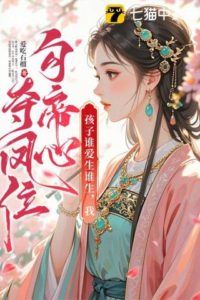
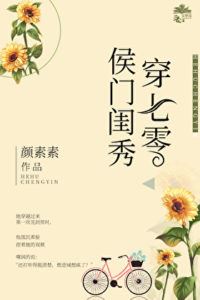
Lin Jiayi, a young woman from modern times, is forcibly transmigrated into a novel titled "Educated Youth in the '70s: A Brilliant Life Begins," written by her real-life love rival, Yao Qingqing. In the book, Lin Jiayi is cast as a tragic cannon fodder character who suffers abuse from her stepmother and stepsister before being exiled to the barren Northwest, where she ultimately meets a grim fate. Upon waking in the body of the twelve-year-old Lin Jiayi, she finds herself in the middle of a physical altercation with Yao Qingqing, who is attempting to frame her for the assault. Instead of submitting to the victim role prescribed by the novel, Lin Jiayi fights back, knocking Yao Qingqing unconscious and exposing her own bruises to the gathered neighbors. Her dramatic performance, combined with the intervention of the Women's Federation and local police, forces her stepmother, Yang Xueqin, to reveal the truth about her status as an unpaid nanny rather than a legal wife. This public exposure strips Yang Xueqin and Yao Qingqing of their power, leading to their eviction from the family home.

Lin Jiayi’s father, Lin Dong, returns home unexpectedly, having been reborn with memories of a previous life where he failed to protect his daughter. In his past life, Lin Jiayi was ruined by village thugs and died in despair, a tragedy Lin Dong attributes to his own negligence and the manipulations of his mother and Yang Xueqin. Armed with foreknowledge, Lin Dong severs ties with his own mother, Zhang Yun, and threatens her abusive second son into submission. He and Lin Jiayi form an alliance, combining her knowledge of the novel’s plot with his military connections and resources. Lin Dong secures a position at the Public Security Bureau and arranges for Lin Jiayi to take her mother’s former job at a hospital, selling the position to raise capital for her move to the countryside. Meanwhile, Lin Jiayi discovers a spatial treasure hidden within a wooden carving left by her late mother, which allows her to store goods and accelerate crop growth, providing her with a significant advantage in the harsh environment ahead.

As the scheduled date for the educated youth movement approaches, Lin Dong ensures that Yao Qingqing is assigned to the same remote village in the Northeast as Lin Jiayi, stripping the rival of any opportunity to remain in the city. Lin Jiayi departs Beijing with an abundance of supplies, including food, clothing, and seeds, all of which she stores in her spatial dimension. During the train journey, she befriends Tang Tang and her brother Tang Ming, while maintaining a hostile but controlled distance from Yao Qingqing. Upon arrival at Longfeng Commune, Lin Jiayi is picked up by Fang Tianze, a retired soldier and family friend who has been tasked with ensuring her safety. Unlike Yao Qingqing, who is assigned to the communal educated youth quarters, Lin Jiayi rents a house in Fang Tianze’s family home, isolating herself from the scheming dynamics of the other youths.

The story shifts focus to Lin Jiayi’s adaptation to rural life in the 1970s. She navigates the complex social hierarchy of the village, using her wit and resources to gain the favor of local residents while avoiding the traps set by Yao Qingqing. The narrative establishes a clear contrast between the two rivals: Yao Qingqing relies on her novelistic "heroine" status and manipulative tactics, while Lin Jiayi leverages her modern mindset, financial backing, and supernatural spatial abilities. Lin Dong’s new position in the Public Security Bureau provides a protective umbrella, allowing Lin Jiayi to operate with a degree of freedom unavailable to typical educated youths. The plot sets the stage for a prolonged conflict in the countryside, where Lin Jiayi intends to not only survive but thrive, systematically dismantling Yao Qingqing’s plans and rewriting her own destiny away from the tragic ending imposed by her rival’s fiction.

Novel Items

More
Book
The novel written by Lin Jiayi's love rival that serves as the setting for the story. In this book, Lin Jiayi is a cannon fodder character destined for a tragic fate, while Yao Qingqing is the heroine. The rival wrote this story as revenge, giving the heroine her own name and crafting a miserable fate for the character sharing Lin Jiayi's name.
Property
A small box containing cash and tickets that Yang Xueqin reluctantly handed over as all the property left in the house. This was the money Lin Dong had sent for his daughter, which Yang Xueqin had been keeping as her private stash. Lin Dong checked the amount and found it matched more or less before placing it in his bag.
Event
Yu Yan's soul transmigrated from the modern world into the body of a bird-type sub-beastman after he collapsed from a dull chest pain while working late at night in the hospital emergency department.
Artwork
Jiang Sesè's painting that was identical in composition, color palette, and brushstrokes to Lu Zhenzhu's Metamorphosis. Jiang Sesè claimed it as her original work and used Gu Group sponsorship for its solo exhibition.
Treasure
A treasure left by Lin Jiayi's mother. When Lin Jiayi dripped her blood onto it, she was transported into a secret space. In the original book plot, Yao Qingqing had stolen this treasure and used it to live a prosperous life.
Treasure
Qin Nian's hidden ability/space that she uses to check the time. She needs to be careful not to expose it by frequently accessing it in public.
Latest Release
DateGroupRelease
2026-08-11shanghai fantasy c4
2026-08-11shanghai fantasy c3
2026-08-11shanghai fantasy c2
2026-08-11shanghai fantasy c1

Community Reviews

Rating(4 / 5.0, 25votes)
5 stars
9(36%)
4 stars
8(32%)
3 stars
8(32%)
2 stars
0(0%)
1 stars
0(0%)

Popular reviews

... Read More
So the whole premise is this love rival who couldn't beat Lin Jiayi in real life, so she wrote a book where she gets revenge by making the protagonist suffer. That's petty on a whole new level, right? But I keep coming back to this idea of *narrative control* and what it means to be a character in someone else's story. Yao Qingqing didn't just write a story—she stole Lin Jiayi's name and gave it to her own villainous version. She took the heroine's name too. It's like she wanted to erase Lin Jiayi entirely and replace her with herself in every possible way. That's not just revenge; that's identity annihilation. And the fact that Lin Jiayi transmigrates into this book and immediately reclaims her name, her body, her story—it's this beautiful act of defiance. She's not just surviving; she's rewriting the script. Then there's the whole rebirth angle with Lin Dong. In the original story, he never came home. He never knew what happened to his daughter. He died grieving and angry, and his property went to the very people who destroyed his family. But now he's alive, he's present, and he's fighting. The book is basically asking: what happens when the characters become aware of their own narrative? What happens when the victim stops being a victim and starts writing back? The martyr father angle is also loaded with meaning. Lin Jiayi's mother died saving lives, and the community treats her daughter's suffering as a betrayal of that sacrifice. 'Fengyun was a martyr—we can't let a martyr's child be mistreated!' The dead mother's legacy becomes the living daughter's shield. There's something deeply ironic about that—her mother's death, which should have been tragic, becomes the very thing that protects her. The story keeps flipping suffering into power, and I'm here for it.
... Read More
On the surface, this is a revenge story. Get the bad guys, win the plot, live happily ever after. But I keep coming back to something deeper underneath: the theme of accountability. Both Lin Jiayi and Lin Dong died and came back, and their rebirth isn't just about changing outcomes—it's about making amends for past failures. Lin Dong's entire arc is about a father who failed his daughter and now has a chance to do better. He doesn't just want to save her; he wants to be the dad he should have been. The wooden carving from his deceased wife is a powerful symbol here—it's a tangible connection to the past, to love lost, to the family that was broken. When Lin Jiayi tests it with her blood and vanishes, it's almost like the artifact is acknowledging her as the rightful heir, the daughter who will restore what was lost. The space itself is symbolic in a way I hadn't expected. It's not some opulent fantasy world—it's practical, functional, voice-controlled. It reflects the values of the story: survival through preparation, power through knowledge, success through hard work (even if Yao Qingqing hated farming and rigged the system to avoid it). The contrast between Lin Jiayi's practical space and whatever Yao Qingqing's version would be says everything about character. Then there's the money. Three thousand yuan in cash, ration coupons for everything from sugar to cloth to grain. In this era, money wasn't just currency—it was freedom, security, the ability to survive relocation. When Lin Jiayi counts it and grins, it's not greed; it's the relief of someone who knows exactly how hard the countryside will be and now has the tools to face it. The material details aren't just worldbuilding—they're symbols of preparedness versus vulnerability. And the old lady—Lin Dong's mother—represents the toxic family structures that these rebirth stories so often dismantle. Lin Jiayi's blunt advice to "get rid of her quickly before she ruins our future" isn't just plot convenience; it's a rejection of the idea that family authority is sacred when it's actually destructive. The story is saying: blood doesn't guarantee loyalty, and second chances mean you get to choose who deserves your trust.
... Read More
Okay so can we just talk about Fang Tianze for a second because THIS MAN is a whole vibe and I am obsessed. The guy is literally running away from Lin Jiayi like she's chasing him with a knife. He accepts her twelve yuan, turns around, and 'quickly walked off, leaving only a curt Alright.' Then the narration drops the absolute gem: 'What Lin Jiayi didn't know was—she was that wolf.' I literally screamed. A wolf. She's the wolf and he's the prey who doesn't even realize it. And then the whole ox cart scene—spreading that cloth on the seat because his mom said her pretty dress shouldn't get dirty, face turning slightly red. The man is a walking tomato. He's trying SO HARD to be proper and distant but everything he does screams 'I am flustered and I don't know what to do with myself.'
... Read More
The atmosphere in this book is *insane*. Like, I could literally feel the stuffy summer heat in that first paragraph—'a room without air conditioning felt unbearably stuffy'—and suddenly I'm sweating just reading it. The author doesn't over-describe, which is smart. They drop just enough sensory details to make you feel like you're actually there in this military compound, and then they let the dialogue and action carry the scene. What I love most is how the setting itself becomes a weapon. Lin Jiayi knows exactly what she's doing when she runs out into the courtyard. She doesn't just cry—she positions herself. She knows that in a community like this, where everyone watches everyone else's business, the neighbors are her army. And they are! The way the old ladies immediately take her side—'Fengyun was a martyr—we can't let a martyr's child be mistreated!'—this is such a specific, grounded detail about 1970s Chinese society. The military compound isn't just background; it's a whole social ecosystem with its own rules, hierarchies, and grudges. That neighbor who hates Yang Xueqin because she caught her seducing her husband? That's not random. That's worldbuilding through character history, and it's brilliant. The visual of Lin Dong walking in with two large military duffle bags, sharp gaze locked on the stepmother, is so cinematic. You can see the whole scene like a movie frame. And then the contrast—Lin Jiayi in her tattered clothes, bruises exposed, standing in the courtyard while the neighbors close in around her like a protective wall. It's got this almost painterly quality to it. The author really understands how to use physical space to tell the story.
... Read More
Let me just say this upfront: I devoured these chapters in one sitting and I'm not even mad about it. The pacing here is tight as a drum. We go from emotional revelation to plot setup to action to shopping spree to breakfast scene and it all flows without feeling rushed or dragged out. That's harder than it sounds. The structure works because each chapter has a clear purpose. Chapter 4 is the emotional core—rebirth confirmation, father-daughter reunion, space activation. It's heavy but it doesn't linger too long on any single beat. The crying scene gets its moment, then they move on to business. Chapter 5 is pure momentum—Lin Dong registering Yao Qingqing, Lin Jiayi's shopping spree, the breakfast scene that shows their new normal. Chapter 6 continues the shopping and sets up the next moves. No filler. No chapter that exists just to pad word count. What I appreciate most is how the author handles the transition from emotional scenes to practical scenes. After Lin Dong's breakdown, they don't stay in that headspace—they pivot to discussing job offers and revenge plans. It feels realistic. Grieving people don't stay grieving forever; they find ways to keep moving. The breakfast scene after all that tension is a perfect pressure release. "Dad, you're amazing! How did you know that's my favorite breakfast?" This is the kind of domestic moment that makes the high-stakes revenge plot feel grounded. The cliffhanger elements are subtle but effective. Yao Qingqing being sent to the same village as Lin Jiayi? That's a ticking bomb. The manager's sister-in-law being connected to the Public Security Bureau? That's a loose thread. And Lin Jiayi's line about rewriting the plot herself—"Didn't she always say she was my good sister? Well, good sisters are supposed to share blessings together!"—that's a promise of future conflict that has me locked in. The author knows exactly when to tighten the screw and when to let the reader catch their breath.
... Read More
I have to laugh every time I reread the space activation scene because the author completely subverts every expectation. You know the trope—protagonist touches a mysterious artifact, there's this gorgeous description of crystalline waterfalls and spirit trees and golden light, and they're like "WOW a treasure world." Here? Lin Jiayi expects something grand and gets: "A patch of dark soil, another fenced patch of dark soil, and a single well." That's it. That's the space. I literally said out loud "that's it?" to my phone. And then the handkerchief descends from the sky like some kind of divine instruction manual. The reveal that it's voice-controlled and Yao Qingqing—our supposed heroine—was apparently so lazy she designed a space that required zero physical labor? The author's joke about Yao Qingqing being a "lazy heroine—totally unqualified" had me cackling. It's such a specific, funny detail that tells us everything about this world's power system: spaces aren't about grandeur, they're about practicality, and apparently about the personality of whoever created them. But the worldbuilding outside the space is where it gets really interesting. The military compound setting feels lived-in. You've got neighbors gossiping, kids making noise in the courtyard, the sense that everyone knows everyone's business. The supply and marketing cooperative scene is a masterclass in period detail—the ration coupons, the coveted shop assistant jobs, the way the manager's sister-in-law can flex connections and intimidate people. When Lin Jiayi waves that hundred yuan note and the assistant's face goes dark, you can practically feel the economic tension of the era. Money wasn't just money; it was status, power, survival. The state-owned restaurant scene is another gem. Just a simple lunch break that establishes the food culture, the social dynamics of eating alone in public, the canteen lady's amusement at this girl wolfing down braised pork and meat buns. It's these small sensory details—the porridge still warm in her space, the smell of the restaurant, the weight of the delivered goods—that make this world feel tangible rather than just a backdrop for revenge plotting.
See all reviews

Characters

See all characters

Custom lists

See all custom Lists