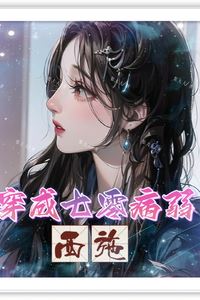
Transmigrated into the '70s as a Delicate Beauty
Novel Info

Summary

... Read More

Wen Qinghe was a wealthy heiress who lost her grandfather and only family member shortly after finishing college. To avoid attracting opportunists, she concealed her immense fortune during her three years at Beijing University, living a modest life and dating Mu Anche, a finance student who appeared gentle and devoted. However, she discovered him kissing a middle-aged woman and learned he had been using her for her money while secretly planning to marry a richer woman. When she confronted him, he revealed his true colors, calling her vain for hiding her wealth while expecting him to support her. She broke up with him and left in a Rolls-Royce, shocking him as he realized he had lost a billionaire heiress. Heartbroken and drinking alone, she fell into a deep sleep and transmigrated into the body of another Wen Qinghe in 1975, a sickly girl being sent down to the countryside during the Cultural Revolution.

The original owner of the body had died from congenital heart disease on the way to the Hongxing Brigade. Wen Qinghe found herself in a crowded train carriage, surrounded by refugees heading to rural labor camps. She met Liu Meihua, another educated youth, and learned she was in 1975. Upon arriving at the brigade, she was assigned to live in a dilapidated dormitory with other educated youths. Due to her frail health, she was given lighter work weeding a small plot of land. Yan Xiao, a tall, dark-skinned, and fierce-looking village man known for hunting wolves, was assigned to help her. Despite his intimidating appearance, he was gentle and protective, doing her weeding work while she rested and bringing her wild blueberries and other fruits from the mountains.

Wen Qinghe discovered she had a spatial ability linked to a mole on her finger. She could enter a white void containing a giant hourglass, where time seemed to stand still and food could be preserved. Over time, the space began to show signs of growth, with a tree appearing after absorbing moonlight. She also found that the original owner's soul had transferred into her, asking her to live freely and make her father happy. Wen Qinghe learned that the original owner's father was a professor sent to a labor farm, grieving his daughter's death. She decided to live well in this new life, using her spatial ability to store food and improve her health.

As she settled into rural life, Wen Qinghe relied on Yan Xiao's help for physical labor while she managed the household and cooking. Tang Lingling, a senior educated youth, took pity on her and helped her learn to cook, while also ensuring the others did not burden Wen Qinghe with chores. The educated youths began bringing her meat and fish from Yan Xiao's hunts, improving their diet and their attitude toward her. Wen Qinghe paid Yan Xiao for his help, but he insisted on doing more than his share, driven by a growing protectiveness and affection for her.

Yan Xiao sought out an old traditional doctor to treat Wen Qinghe's heart condition, offering his life savings and searching the mountains for century-old ginseng. After weeks of searching, he found a hundred-year ginseng root and convinced the reclusive doctor to visit the educated youth spot. However, upon his return, he found Wen Qinghe unconscious and in critical condition. The doctor examined her and determined that with proper treatment and the ginseng, her life could be extended significantly. Wen Qinghe's journey in this new era was just beginning, as she navigated the challenges of rural life, her health, and her growing relationship with Yan Xiao, while holding onto the hope of one day returning to her own time.

The story follows Wen Qinghe's adaptation to 1970s China, her reliance on Yan Xiao's strength and kindness, and her discovery of the spatial ability that may help her survive and thrive. Her past betrayal by Mu Anche contrasts with Yan Xiao's genuine care, setting the stage for a romance built on mutual support. The spatial element provides her with a unique advantage in a time of scarcity, allowing her to preserve food and potentially heal her chronic illness. As she integrates into the Hongxing Brigade community, she balances her modern sensibilities with the harsh realities of the era, finding purpose in making the original owner's father proud and building a new life with Yan Xiao by her side.

Novel Items

More
Vehicle
A luxury car belonging to Wen Qinghe's family, parked by the roadside near the villa district. A young man in a suit served as the driver, bowing ninety degrees to Wen Qinghe and respectfully opening the rear door. Mu Anche was astonished to see Wen Qinghe departing in this car, revealing her true wealthy status.
Medicine
A small bottle found in the military satchel belonging to the original Wen Qinghe. The label read 'One pill daily.' The original owner had congenital heart disease and took these pills. When the transmigrated Wen Qinghe swallowed one, her frantic heartbeat eased though the heaviness in her chest lingered.
Accessory
A satchel belonging to the original Wen Qinghe, found under her while she was on the carriage. It contained an ID card, a certificate approving her for the down-to-the-countryside program, several sets of comfortable cotton clothing, money (twenty-six big unity bills and some mao notes), ration coupons, and a small bottle of heart medicine.
Document
Documents found in the military satchel confirming the original Wen Qinghe's identity and her approval for the down-to-the-countryside program. They confirmed she was sent to the Hongxing Brigade and was a native of the capital city, the same as the transmigrated Wen Qinghe.
Materials
Coupons An Ruoyan needed for purchases but did not have, likely taken by Shi Meijiao for shopping. She bought some at the black market.
Consumable
Wen Qinghe drank expensive wine on her balcony after discovering Mu Anche's infidelity. Several emptied bottles lay on the floor. Her drinking led to her transmigration. She later resolved to ask Grandpa Butler to seal up the wine cabinet as she could no longer drink alcohol.
Latest Release
DateGroupRelease
2026-08-11shanghai fantasy c24
2026-08-11shanghai fantasy c23
2026-08-11shanghai fantasy c22
2026-08-11shanghai fantasy c21
2026-08-11shanghai fantasy c20
2026-08-11shanghai fantasy c19
2026-08-11shanghai fantasy c18
2026-08-11shanghai fantasy c17
2026-08-11shanghai fantasy c16
2026-08-11shanghai fantasy c15
2026-08-11shanghai fantasy c14
2026-08-11shanghai fantasy c13

Community Reviews

Rating(4.1 / 5.0, 25votes)
5 stars
11(44%)
4 stars
6(24%)
3 stars
8(32%)
2 stars
0(0%)
1 stars
0(0%)

Popular reviews

... Read More
Let me just say this upfront: the stakes in this story went from zero to one hundred faster than I could blink and I am NOT okay. In chapter one, the conflict is personal and intimate—a cheating boyfriend, a broken trust, the humiliation of being called vain. It's relatable, it's painful, but it's contained. Then Wen Qinghe transmigrates and suddenly the stakes are existential. She's in a new body with congenital heart disease, in 1975 China, in a refugee carriage full of strangers, with no family, no resources, and no idea how to survive. The author does something really smart here: she makes the physical stakes mirror the emotional ones. Wen Qinghe's heart is literally failing while her old life's heartbreak is still fresh. Every time she feels that heaviness in her chest, every time the heartbeat goes frantic, the reader is reminded that this isn't just drama—it's survival. The little bottle that says "One pill daily" is doing so much narrative work. It's a ticking clock. And the suspense is maintained brilliantly because we don't know where the original Wen Qinghe went. Is she alive? Is she at the brigade? What happened to her? The author drops just enough hints to keep us hooked without giving anything away. What really raises the stakes though is the setting itself. This is 1975 China during the sent-down youth movement. The coarse hemp clothes, the sallow faces, the struggle to even eat—this isn't a romanticized historical backdrop. It's a harsh reality that our protagonist, who spent her life in a Beijing villa, has to navigate. The contrast between her past and present life makes every challenge feel real and immediate. I'm already invested in whether she'll make it through the day, let alone the story.
... Read More
Okay, the dialogue in this text is genuinely funny and I need to highlight some moments because the author has a real sense of humor woven into the narration. First, Dr. Ling Huaqing's internal monologue: 'Not yet, yet you dragged me here so anxiously…' The man is clearly thinking 'you're wasting my time' but saying nothing. That's classic—showing character through what's NOT said. And then his reaction to Yan Xiao complaining about 'only twenty years'? 'Ling Huaqing nearly fainted from anger at his words.' This old doctor is side-eyeing so hard I could feel it. Butter Grandpa's dialogue is peak comedy. 'Did Miss have some adventure and become a Sleeping Beauty?' and then immediately shooting Doctor Jiang Zhou a glare that basically says 'this quack couldn't diagnose a sleeping beauty if he tried.' The butler's voice is distinct—warm, protective, slightly dramatic. You can hear him. Wen Qinghe's internal voice is where the real comedy lives. 'Wen Qinghe: !!!!!!!!!!!' 'Wen Qinghe: Don't look at me. I don't know either.' 'Wen Qinghe: Nonsense, my golden thigh is thick enough. To me, money is just a string of numbers~' This is such a modern, self-aware narrative voice. She's commenting on her own situation with the energy of someone who's seen too many web novels. And the salesgirls' internal thoughts? 'Rich lady, let us cling to your thigh!' 'But… with Miss Wen only having two legs, perhaps there wouldn't be enough space for them all to cling.' THE AUDACITY of these salesgirls. I love them.
... Read More
Okay so let me just say this — Yan Xiao is absolutely unhinged and I am HERE for it. Like, he hands over twelve thousand yuan like it's pocket change, calls it "not much," then gets jealous over a guy who brought osmanthus cakes and proceeds to beat him unconscious, strip him naked, and dump him in front of someone's door at dawn. This man operates on a completely different wavelength. The scene where he wakes up Fang Min half-naked in front of Widow Zhang's house? Chef's kiss. The villagers think he's a hooligan, he wets himself from terror, and Yan Xiao is out there waiting until midnight like a silent guardian angel with a violent streak. He even brought ointment for Wen Qinghe's swollen lips afterward. The contrast is insane — tender one second, murderous the next. But honestly, what made me sit up was how his jealousy manifests. He doesn't just get mad — he ELIMINATES the threat. And then he covers it up so thoroughly that Fang Min has to deal with the consequences alone. That's not just possessive, that's strategic. The man planned this out. And Wen Qinghe? She just... accepts it? She's like "huh, weird but okay" and goes back to sleep. I respect her energy. She's clearly been through enough to not be phased by a man who knocks people out for looking at her wrong.
... Read More
Okay, I need to talk about this entire section because the pacing is absolutely insane. Wen Qinghe goes from buying out clothes at midnight to snatching every breakfast bun in Beijing to loading a warehouse full of medicine, and it just... flows? Like, the author doesn't let you breathe but in a good way? Every scene has a clear purpose and builds on the last. She buys clothes → realizes entertainment is needed → buys electronics → gets hungry → buys out snack street → buys breakfast → gets medicine → transmigration countdown kicks in again. It's this beautiful chain of problem-solution-problem-solution that kept me flipping pages like crazy. The only moment I wanted to skip was the will-writing part, honestly. It felt a tiny bit heavy compared to everything else, but then again, it shows she's taking this seriously. And that ending? Waking up to Yan Xiao and the old doctor AND the whole 'so many people watching her sleep' bit? Chef's kiss. The plot doesn't just move forward, it pivots. One minute she's a supply-collecting queen in modern Beijing, next she's in a thatched-roof room with a mysterious doctor and a boy who clearly has feelings. What happens next???
... Read More
The pacing in this batch is absolutely wild and I have to appreciate how the author switches gears without losing the reader. You start in a dimly lit traditional medicine room with an old doctor, acupuncture needles, the tension of a girl's life hanging in the balance—it's serious, it's slow, it's deliberate. And then—BAM—you're in Wen Qinghe's modern bedroom and she's been asleep for a month. The transition is jarring in the best way. Then the pacing accelerates. She discovers the hourglass, sees the countdown, immediately starts making lists. The supply list section is actually incredible pacing—the author just dumps this massive inventory on the reader and somehow it works. It's not boring, it's thrilling because every item represents survival. Rice, flour, oil, water, toilets, generators, radios, watches... each one is a tiny victory against the unknown era she's about to enter. And then the shopping spree chapter? Pure adrenaline. She's driving her Maserati at midnight, buying up entire stocks of lipstick, foundation, lingerie—'money is just a string of numbers' energy. The pacing here is fast, almost manic, which perfectly captures her mindset. She's indulging before the storm. She's living in the present because the future is uncertain. The chapter breaks themselves are well-timed too. Each one ends on a note that makes you want to keep going. The hourglass countdown, the procurement order, the midnight shopping—these are all mini-cliffhangers that compound into momentum.
... Read More
I need to talk about the opening chapter because honestly it wrecked me in a weird way. Not because of the breakup itself—I mean, yeah, the betrayal is painful—but because of how the author portrays grief. Wen Qinghe lost her grandfather two months before all this, and she's still carrying that weight. The grandfather who endured his illness in silence so she wouldn't be distracted during the college entrance exam. That detail alone made my chest tight. So she's already grieving, already hollowed out, and then Mu Anche—who was supposed to be her light after losing her only family—turns out to be a snake. The author writes: "She did not turn on the lights, letting the cold moonlight spill over her body." Just that single image. Cold moonlight. Alone. Drinking on the balcony. It's so quiet and so devastating. And then she quotes Su Shi—"Should not bear resentment—why then is the moon ever full when people are apart?" I literally had to pause because that line captures everything. The moon is perfect and round and beautiful, and it has the audacity to be so perfect while she's falling apart. That's the kind of emotional precision that makes this book work. But here's the thing that really got me: she's grateful she never went beyond holding hands with him. Not because she's prudish, but because the alternative—being murdered for her money, like in those movies—makes the clean break feel almost like a relief. There's this strange bittersweetness to her pain. She's hurt, but she's also smart enough to know she dodged a bullet. The emotional complexity here is not basic at all.
See all reviews

Characters

See all characters

Custom lists

Oops…There is nothing here.