Summary

... Read More

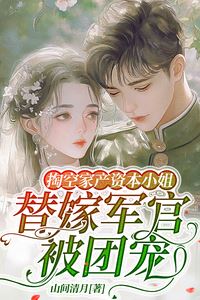
Xu Zhili, a hardened survivor from a brutal apocalypse, dies when her base is destroyed by the betrayal of Gu Cheng and Lin Wei. In her final moments, her consciousness merges with that of Lin Zhili, a sixteen-year-old girl drowning in a freezing river in 1960s China. Lin Zhili was pushed into the water by her stepsister, Lin Wanwan, who sought to steal her job at the machinery factory and eliminate her as an obstacle. Xu Zhili awakens in Lin Zhili’s frail body, retaining her apocalyptic combat instincts, mental space, and cold, ruthless mindset. She immediately defends herself against her stepmother, Zhang Jiumei, and confronts Lin Wanwan, revealing that she is no longer the timid victim the family abused.

The Lin family is a nest of deceit and cruelty. Lin Zhili’s biological father, Lin Jinguo, had reported her mother, Xu Nuoyan, to the authorities to advance his own career, leading to Xu Nuoyan’s exile to the Great Northern Wilderness. Lin Jinguo then married Zhang Jiumei, who brought her daughter Lin Wanwan into the home. For years, the family exploited Lin Zhili, treating her as a servant while favoring Lin Wanwan. Xu Zhili, now inhabiting Lin Zhili’s body, decides to dismantle this toxic family structure. She discovers a hidden cache of gold bars and a land deed left by her grandfather, providing her with financial resources. She also learns that Lin Jinguo attempted to assault his own niece, Zhang Zhaodi, to secure a favor from the factory director, revealing the depth of his depravity.

Xu Zhili uses this information to blackmail Lin Jinguo and Zhang Jiumei. She forces them to sign a confession detailing Lin Jinguo’s attempted rape and his corruption involving scrapped industrial bearings. She demands two thousand yuan, the return of her grandfather’s wristwatch, and a severance document that cuts all ties with the Lin family. When Lin Wanwan attacks her in a fit of jealousy, Xu Zhili brutally injures her, tearing out a patch of her hair and breaking her knee, demonstrating that she will not tolerate further aggression. The family, terrified of her ruthlessness and the potential exposure of their crimes, complies with her demands.

After securing her freedom and resources, Xu Zhili registers to go to the Great Northern Wilderness with her younger brother, Lin Zhi’an. Her mother is already there, and Xu Zhili intends to reunite with her and uncover the truth behind the past injustices. She leaves behind the suffocating environment of the machinery factory housing compound, having successfully reclaimed her identity and autonomy. Her journey ahead involves navigating the harsh conditions of the wilderness, dealing with the political turmoil of the era, and seeking revenge against those who wronged her family. Xu Zhili’s transformation from a victim to a dominant force sets the stage for her struggle in a new and dangerous world.

The story explores themes of survival, betrayal, and resilience. Xu Zhili’s apocalyptic experiences have stripped away any naivety or compassion, leaving only a pragmatic and fierce will to live. She views the people in this new era with the same suspicion and hostility as the zombies she fought in the future. Her interactions with the Lin family are marked by calculated cruelty and strategic manipulation, as she systematically destroys their power and reputation. The narrative highlights the contrast between her inner strength and her outwardly weak physical form, creating a compelling dynamic as she asserts dominance in a society that underestimates her.

As Xu Zhili prepares to leave for the Great Northern Wilderness, she faces the challenge of adapting to a new environment while maintaining her hard-edged persona. The wilderness represents both a physical and metaphorical frontier, where she must confront new threats and uncover deeper secrets about her mother’s past. Her relationship with her brother, Lin Zhi’an, serves as a grounding element, reminding her of the family she lost and the bonds she must protect. The story sets up a future filled with conflict, survival, and the relentless pursuit of justice, driven by a protagonist who has nothing left to lose and everything to gain.

Latest Release
DateGroupRelease
2026-08-11shanghai fantasy c137
2026-08-11shanghai fantasy c136
2026-08-11shanghai fantasy c135
2026-08-11shanghai fantasy c134
2026-08-11shanghai fantasy c133
2026-08-11shanghai fantasy c132
2026-08-11shanghai fantasy c131
2026-08-11shanghai fantasy c130
2026-08-11shanghai fantasy c129
2026-08-11shanghai fantasy c128
2026-08-11shanghai fantasy c127
2026-08-11shanghai fantasy c126

Community Reviews

Rating(4 / 5.0, 10votes)
5 stars
5(50%)
4 stars
0(0%)
3 stars
5(50%)
2 stars
0(0%)
1 stars
0(0%)

Popular reviews

... Read More
"At best, you are maggots fighting over scraps in a gutter." This line is the thesis statement of the entire novel, isn't it? Because that's what this family is — not noble people struggling with hardship, but parasites feeding on each other's misery while pretending to be respectable. The bride price receipt is such a loaded symbol. Two yuan. Two yuan for a human being. The family publicly boasted about two thousand yuan while secretly paying two, and Xu Zhili pulls that yellowed, brittle paper from the bottom of a camphorwood chest — right alongside those "indecent dudou" — and reads it aloud like a verdict. The receipt isn't just evidence of fraud; it's proof that every relationship in this house is transactional. Love, marriage, family — all reduced to cash on a piece of paper. And the word she uses for the house — "this maggot nest" — that's not just an insult, it's a diagnosis. The family thinks itself "too clean," but the rot is everywhere. Zhang Jiumei bought for two yuan now demands gratitude. Lin Jinguo sold his own niece and calls it ambition. Lu Jiahao schemes against his ex-fiancée and calls it "wide connections." Everyone is feeding on scraps while pretending they're dining at a banquet. The airplane model Xu Zhili gives her brother is the only pure symbol in the whole text — a child's toy, uncorrupted, representing something that can actually fly away from all this.
... Read More
The sensory writing in this opening is absolutely vicious, and I mean that as the highest compliment. The author opens with cold so intense it feels physical—"The icy river water engulfed the girl, dragging her into a bone-chilling abyss." You can feel the water in your lungs. The bubbles, the tears, the murky green fading to nothing. It's suffocating just reading it. Then it cuts to heat. Scorching shockwaves, blinding fireballs, glass shattering into a rain of glittering shards reflecting hellish firelight. The contrast between these two deaths—freezing and burning—isn't just stylistic flair, it's thematic. Both are extremes. Both are inescapable. And they collide in that white fissure. But what really struck me is how the author builds the mundane world that Xu Zhili wakes up into. The staff housing compound of Xiang Province First Machinery Factory. Low red-brick houses. The old pagoda tree. Neighbors with cheap soap and sweat-soaked faces gossiping like flies. There's this incredible texture to the ordinary—the cracked gong voice of the stepmother, the thick smell of the air, the water dripping from wet clothes, the mud on her face. It's a world that feels lived-in and claustrophobic at the same time. The machinery factory compound is its own ecosystem, a place where everyone knows everyone's business and the hierarchy is brutal. And Xu Zhili, coming from the vast, open devastation of the apocalypse, is now trapped in this tiny, suffocating world where the enemies wear smiling faces and the walls have ears.
... Read More
I have SO MANY feelings about Zhang Zhaodì and I don't even know where to start. First I felt sorry for her — trapped, manipulated, almost violated, and then Xu Zhili actually tries to SAVE her. That scene where Xu Zhili pries Zhang Zhaodì's hand away from her wrist and delivers that speech about being a "greedy fish" — it's brutal but it's also the truest thing anyone has ever said to her. And then Zhang Zhaodì starts packing. She's actually going to leave. She's made her choice. My heart was like — YES, go, run, don't look back. And then her aunt appears with PASTRIES and CLOTHES and suddenly all of that tension just... deflates. I was furious. Not at Zhang Zhaodì exactly, but at the sheer CRUELTY of how easily she was undone. The text describes her as "two little figures fighting inside her chest, tearing her thoughts apart in a painful tug-of-war" and I felt that physically. But the moment that absolutely shattered me was when Zhang Zhaodì looks at Xu Zhili and says "Sister Zhili, I know you are doing this for my sake, but I just want to try again." The guilt. The self-awareness. She KNOWS she's making a mistake and she's doing it anyway. That's not weakness — that's the most human thing in the entire book. And Xu Zhili's response — no anger, no pleading, just that cold "Fine" — that's the most heartbreaking part. She's stopped believing she can save this girl. And that loss of hope hurts more than any shout ever could.
... Read More
I need to talk about Lin Wanwan because this girl is already making my blood boil and we're only two chapters in. The author does something really interesting with her—she's introduced through dialogue before we even see her face, and that dialogue is pure venom wrapped in silk. "Idiot, that nice office job at the machinery factory is mine now. And you… what use is it to keep you around? Why not go clear your head in the river?" Said in the gentlest tone. That's the kind of line that makes you want to throw the book across the room. And then the author shows us her face—pretending to be panicked, hiding delight in her eyes—and Xu Zhili's response is just… a punch. No speech, no dramatic monologue. Just a clean, physical rejection of this entire toxic ecosystem. But here's what's really chilling: Lin Wanwan's reaction after getting knocked out. She immediately puts on the victim act, calling Xiao Li by her childhood nickname, suggesting ginger soup. The manipulation is so instinctive it's almost impressive. And that last line—"Since that wretched girl dared to hit her, good. Just wait. She would have her father deal with her."—that's the author telling us the real conflict hasn't even started yet. The father, Lin Jinguo, is described as "always cold, always indifferent, always turning a blind eye." That's three times the word always. He's not just neglectful—he's complicit. And the original Lin Zhili's memories show us a girl who worked endlessly and ate the least. This family didn't just fail to protect her, they actively consumed her.
... Read More
I need to just sit with this for a second. The original Lin Zhili's last thought before she drowned wasn't about herself. It was about her six-year-old brother. "An'an is only six years old. I promised Mother I would look after him." The name itself means "peace and safety" in Chinese, and the irony is just… god, it breaks my heart. This kid who wanted nothing more than safety and peace was living in a house where his sister was starved, beaten, and eventually pushed into a freezing river by her own stepsister. The text says he went from being a bright little boy who chased his sister around with pear dimples to curling up in shadows, a quiet silhouette. And now Xu Zhili—this hardened apocalypse survivor who just spent years fighting for survival in ruins—has inherited all of this. She's got the original's memories flooding in, the grief, the love for a brother she's never met, and the burning need for vengeance that wasn't even hers. The emotional weight of this transmigration isn't just about surviving a new body, it's about carrying someone else's unfinished business on top of your own. The text says: "This was not a desire to survive. It was an agonizing despair from having no one to entrust her closest family to, an unbearable fury because her blood-deep revenge had not yet been taken." Two deaths. Two hatreds. Two promises. Merged into one furious, shivering sixteen-year-old girl who just wants to go home and find her little brother.
... Read More
There's a symbol in this text that I can't stop thinking about. Xu Zhili's last sight in the apocalypse is the Life Tree—"the tree she had poured all her effort into cultivating, the tree that symbolized the base's final hope"—carbonizing and collapsing in flames. And then she dies in icy river water, and her consciousness merges with another drowning girl. Fire and water. Death and rebirth. A tree that symbolizes life, destroyed. Two girls, both drowning, both dying, both refused to let go. The Life Tree falling is the end of one world, and the river drowning is the end of another. But from both deaths, something new is born. The text keeps coming back to the idea of merging—"two dying souls, each carrying their own blood-deep hatred and cherished attachments, collided and merged violently within the rift of time and space." This isn't possession. It's fusion. The apocalypse survivor brings her combat instincts, her hatred, her survival brain. The drowning girl brings her love for her brother, her sense of injustice, her unfinished revenge. And then there's the name itself—Lin Zhili. The original girl was silent, timid, obedient. She worked endlessly and ate the least. She was consumed by this family the way the river consumed her body. But Xu Zhili—she doesn't drown. She surfaces. She cracks wrists. She punches stepsisters across the yard. The river tried to kill her, and it failed. The metaphor is almost too on-the-nose, but it works because the author makes it feel earned, not forced.
See all reviews

Characters

See all characters

Custom lists

See all custom Lists