Summary

... Read More
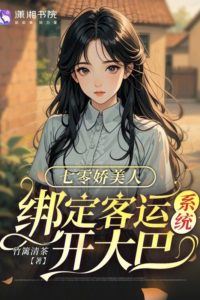
Song Jinzhao, a modern medical professional, transmigrates into the body of a fourteen-year-old girl in an ancient rural village. Upon waking, she discovers that her original host has just survived a poisonous snake bite, only for her mother to die in childbirth and her father to return home dead. The Song family is left with four orphaned children: Jinzhao, her ten-year-old brother Song Qiming, ten-year-old sister Song Shixue, and a premature infant named Anhao. With no parents to support them and a grandfather who is pressured by his other sons, the family faces immediate separation. The eldest and second uncles, along with their wives, attempt to force Jinzhao to give up the sickly infant to a wealthy, childless man named Master Zhao for adoption and send Shixue to become a child bride for a ritual to ward off bad luck. Jinzhao firmly refuses, arguing that selling her siblings is unfilial and dangerous, and successfully convinces her grandfather to let the four children stay together.With no income and a small amount of debt to repay, Jinzhao takes on the role of head of the household. Despite being rejected by every medical clinic in the city due to her gender, she leverages her survival skills from her past life to hunt game in the mountains. She sells pheasants and hares to local restaurants, generating enough copper coins to support her siblings. When the premature infant cannot digest rice paste and a neighbor refuses to sell breast milk, Jinzhao discovers a trapped wild goat and skillfully catches its mother at night to provide goat's milk for the baby. Her competence begins to change the family's dynamic, earning her grandfather's reluctant respect and providing basic necessities for her younger siblings.The narrative shifts when Jinzhao and Qiming venture deeper into the mountains to gather valuable termitomyces mushrooms. During their return, Qiming is nearly bitten by a short-tailed pit viper, but Jinzhao kills the snake with her hatchet before it can strike. Later, while pursuing the mother goat to milk her for Anhao, Jinzhao encounters a leopard attacking the captured kid. Despite the terrifying danger, she charges at the predator with her axe, and her uncle Oldest Song collapses in fear. The story concludes with Jinzhao facing the leopard alone, demonstrating her courage and determination to protect her family against all odds.
Latest Release
DateGroupRelease
2026-09-26akknovel c469
2026-09-26akknovel c468
2026-09-26akknovel c467
2026-09-26akknovel c466
2026-09-26akknovel c465
2026-09-26akknovel c464
2026-09-26akknovel c463
2026-09-26akknovel c462
2026-09-26akknovel c461
2026-09-26akknovel c460
2026-09-26akknovel c459
2026-09-26akknovel c458

Community Reviews

Rating(0 / 5.0, 50votes)
5 stars
0(0%)
4 stars
0(0%)
3 stars
0(0%)
2 stars
0(0%)
1 stars
0(0%)

Popular reviews

... Read More
Look, the children's dialogue is functional. 'Elder Sister, I don't know what's wrong.' 'We fed him rice soup just half an hour ago.' Qiming pointing and saying 'Just go forward a bit from Grandfather's house.' It's clear, it's age-appropriate, it's not trying to be cute or wise. Good. I don't need my seven-year-old to sound like a philosopher. But the VILLAGE section? Old Man Song fanning himself with a palm-leaf fan under the eaves while his wife sews inside and they're doing quiet arithmetic about how many coppers a day the orphan kids can spend? THAT'S my comfort dialogue. 'In a while, when the crops in the field are harvested, Jinzhao and the kids won't be able to eat that much and will surely sell some.' The phrasing! 'Won't be able to eat that much.' As if the children's hunger is a nuisance to be managed in the village's ledger. And Old Lady Song's mood 'sinking' while she sews. She's not being cruel. She's being realistic and sad at the same time and the dialogue doesn't tell you which, it just shows her 'feeling her mood sink' and going back to the needle. That's great writing economy. Then Lahuang's wife at midnight: 'If we don't go ask for it now, once they've spent all the money, we won't get a single coin back.' Spoken fast, spoken angry, spoken to her husband in the dark with the IOU literally on the table between them. And Lahuang: 'Going to their door to demand repayment now is no different from pushing those children to their death. What would the villagers think of us!' The exclamation mark. He's not subtle. He's a man who just lost his son TWO DAYS AGO and is performing a public face in front of his wife. The dialogue is doing double work—revealing his character (he's not a monster, he's scared of reputation) while also revealing her character (she's not evil, she's panicked about security). Nobody's the villain. The debt is the villain. And the IOU on the table is just sitting there, not speaking, just existing, and it's louder than all of them. The transmigration voice (Jinzhao thinking 'how was it so different from the original host's straight stitches?') is handled almost like an internal ASMR. No 'I'm from the future / modern world, remember?' Just a puzzled internal note and she moves on. The author trusts the reader to not need the explanation repeated every page. I love that restraint. Almost makes the dialogue feel like we're eavesdropping on a very private conversation nobody's meant to have.
... Read More
Okay so let me just say this right now — the part where Song Qiming sees that bright red mushroom and his sister literally yells at him to throw it away? That was such a sharp little moment. Because it felt like the entire story was whispering to us, you know? Like, don't trust what looks good on the surface. And then immediately after, BAM, another deceptively attractive thing tries to eat his face — the snake. Not just any snake, a short-tailed pit viper, which apparently has fangs AND speed. I love how the plot here is essentially building this rhythm of danger lurking beneath something ordinary. The mushroom gathering trip seems simple — okay, climb mountain, pick fungus, sell for cash, problem solved — but no, nothing in this world is that straightforward. And I'm also obsessed with the way Song Jinzhao takes over the narrative entirely after the snake incident. She doesn't panic. She doesn't even flinch much. Just kicks the severed head away and immediately checks whether her brother is okay. Then she decides her own sachet has insufficient scent protection and redecorates him with hers. That's not just plot progression — that's character in action. The trap subplot is interesting too. They set it, they go about their business, they come back and there's a kid goat with a wounded leg. What happens next with that goat? I'm already three chapters deep and I need to know.
... Read More
Let me just be upfront — the snake scene had me physically tense. Not metaphorically tense. My shoulders went up to my ears and I found myself holding my breath. Because here's the thing: Song Qiming was alone for approximately one second when that snake shot out of the grass. ONE SECOND. And in that second, his sister wasn't there. The sachet was on his waist but its scent had already diffused enough that the viper didn't smell it in time. Song Jinzhao had to literally fly a hatchet through the air to save him. And I kept thinking — what if she hadn't been behind him? What if she'd been ten paces ahead like she usually is? What if the hatchet had missed? What if the snake had bitten before she could react? The stakes here aren't abstract. They're not some grand political conspiracy or a war about to break out. They're immediate and intimate and terrifying. A ten-year-old boy. A poisonous snake. A sister with a hatchet and a heartbeat. And the beautiful, awful thing is that this is just... Tuesday for these kids. They're out here gathering food for their family, trying to earn enough money to survive, and every step could be their last. But get this — after nearly being eaten by a viper, Song Qiming shakes his head and says he wants to keep gathering. THAT is stakes. That is conflict. Not external enemies, but the relentless pressure of poverty pressing down on children who refuse to sit still. The author doesn't need explosions or armies. Just a mountain, a basket, and a kid who's too brave for his own good.
... Read More
Okay so I keep wanting to skip ahead to the big dramatic confrontations but this section keeps pulling me back into the mundane logistics and I respect it. Like, the breast milk arrangement? Sounds tiny, right? Two coppers a day, bring the kid over four or five times. But read it again and it's actually doing SO much structural work. It establishes a recurring off-screen connection to another household, creates a reason for Shixue to be in public (making clothes for Tudan's mom visit), and sets up this running count of two-copper coins that the village elders are already doing math on. Old Man Song under the eaves calculating how long one tael of silver lasts while Jinzhao is out on the mountain hunting—two parallel scenes cutting between the family and the village's judgment of them. That's not filler, that's the author building a pressure chamber where everyone outside the courtyard knows exactly how many days they have before things go south. And the debt subplot! Lahuang's wife showing up two households away at midnight going 'we better ask NOW before the money runs out' while Lahuang himself is like 'they just lost their parents, you absolute vulture.' The IOU sitting on the table is this physical MacGuffin that hasn't even been used yet but I can FEEL it about to detonate. The timing is cruel in the best way—two days after the funeral. The author isn't just throwing one problem at us, it's stacking them: the baby's digestive issues, the locust-plague-ruined grain reserves, the crop tax exemption that only helps next autumn, the debt that's due... when? We don't know yet. That uncertainty is doing more than any cliffhanger chapter could. What I'll give credit for: the transmigration mechanic (original host memories) is handled quietly here. She 'remembers' how to sew, follows the method, and immediately fails because her hands are steadied by mountain-hunting not fine motor work. No exposition dump, just 'the stitches are crooked' and move on. Smart. The plot isn't pausing to explain the rules, it's letting the rules reveal themselves through failure. And Qiming being left squatting by the water vat washing diapers because he can't contribute anything practical? That's not a character beat, that's a PLOT beat. He's idle, he's watching, and the next time we see him he's probably gonna do something that shifts the board. I'm bracing for it.
... Read More
Let me talk about the sensory details in this chapter because they do SO much heavy lifting. First, the setting — we're in a Song family ancestral home, the old house where the main hall is now filled with strangers. The atmosphere is suffocating. Old Man Song sitting there, Old Lady Song silent nearby, the extended family closing in like vultures who've smelled weakness. The whole scene plays out like a siege. But what really stuck with me is the contrast between the two families. Master Zhao arrives dressed in silk, puffing out his chest, offering twenty taels of silver like it's nothing. Meanwhile, Song Jinzhao is feeding her infant brother rice soup from a chipped clay bowl. The wealth gap isn't just stated — it's shown through objects. Twenty taels vs. one tael. Silk vs. chipped clay. A fortune-teller's prediction vs. a midwife's prognosis. The imagery of the newborn itself is devastating. Already weak, without mother's milk, being passed from arms to arms like a commodity. The midwife's warning hangs over every scene like a dark cloud — this child was never promised a long life, and now the adults are treating his survival as someone else's problem to solve. I also loved the visual of Song Jinzhao walking with her grandmother, carrying the baby, watching Old Lady Song secretly wipe tears. The composition of that scene — the old woman trying to hide her grief, the young girl noticing everything, the baby who can't even understand why his life is being bartered — it's cinematic. You could frame it like a painting. The chapter ends with Jinzhao telling Shixue to watch the door and wait. The image of a ten-year-old girl standing guard at a doorway while the adults dismantle her family is one I won't forget.
... Read More
Here's what got me about this passage—the stakes are simultaneously the smallest things imaginable and the most fundamental things possible. Song Jinzhao has seventy-eight coins. The baby hasn't been named yet. There's rice soup for two more days. These are tiny, everyday concerns. And yet the entire story hangs on them. The external conflict is straightforward: a fourteen-year-old girl needs to feed three younger siblings and find work in a society that won't let her apprentice as a healer. But what makes it work is that the author never lets us forget what happens if she fails. Not in a dramatic, world-ending way. In a quiet, domestic, absolutely devastating way. Two days of rice soup. That's the countdown. Not a ticking bomb, but an empty cupboard. Internally, Song Jinzhao faces a different kind of conflict. She transmigrated into this body—does she belong here? Is she really their sister now? The text says she felt a sense of belonging, as if truly their biological elder sister. But that's not resolution, that's temporary truce. She's still an imposter in someone else's life, wearing someone else's face, making decisions for people who loved the original Song Jinzhao. That internal conflict doesn't go away because she names the baby correctly. The clinic scene raises the stakes brilliantly because Doctor He isn't a villain. He's reasonable. He offers genuine solutions—just not ones that work for her. His objection isn't malice, it's structure. The system itself is the antagonist, and that's infinitely more frustrating because there's no single person to defeat. You can't argue your way out of centuries of tradition with one conversation. What I found most tense wasn't an action scene—it was the naming scene. Song Shixue saying Mother gave our names, and the implication that without a mother, without a proper naming ceremony, this baby exists in a social limbo. In this world, an unnamed child is an unprotected child. The stakes of that moment are civilization-level, disguised as a family conversation. Old Lady Song's visit is another masterclass in quiet tension. She brings porridge, gives mild warnings about not being extravagant. She doesn't fully understand why Song Jinzhao is in charge, but she accepts it because she sees the children are warm. The conflict here is generational authority versus practical necessity, and the author resolves it without anyone winning or losing—just adapting. The medicine boy's casual sexism is the most dangerous conflict in the passage precisely because it's so casual. He's not threatening her. He's just... stating reality as he knows it. And that's the trap Song Jinzhao is walking into. The world doesn't hate her. The world simply doesn't see her. That's harder to fight than hatred. By the end of this passage, the stakes are crystallized: Song Jinzhao will either find a way to practice medicine and save her family, or she will watch her siblings suffer because a building full of medicine cabinets says she's not allowed to touch them. The conflict isn't going to be solved by a grand revelation or a hidden power. It's going to be solved the way all real oppression is solved—one impossible door at a time. And honestly? That's what makes me want to keep reading. Not because I think she'll become a legendary doctor overnight, but because I know she won't stop knocking.

See all reviews

Custom lists

See all custom Lists