Summary

... Read More

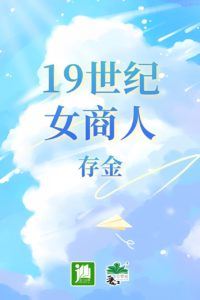
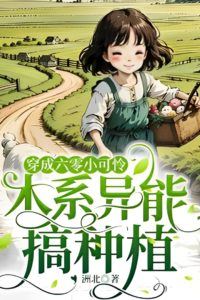
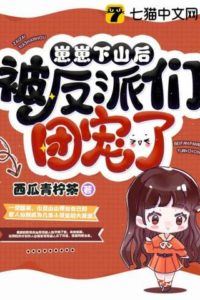
Lin Qi is a soul from a post-apocalyptic future who transmigrates into the body of a sixteen-year-old girl in 1970s China. The original host was considered simple-minded and mute, living in poverty with her parents and three older siblings. After a year of inhabiting this body, Lin Qi has learned to cook, speak in a halting manner, and cultivate plants using a mysterious wood-type ability that allows her to accelerate plant growth. Her family struggles to survive in the aftermath of recent famines, relying on wild vegetables and homemade ketchup to stay fed.

The central conflict arises when Lin Qi’s second sister, Lin Miaomiao, orchestrates her removal from the household. Lin Miaomiao believes Lin Qi’s perceived mental deficiency is ruining the marriage prospects of their eldest brother, Lin Mo, who has been rejected six times because potential brides refuse to share a home with a dependent sister. Despite Lin Mo’s refusal to accept this condition, Miaomiao secretly registers Lin Qi as an educated youth to be sent to the countryside. Lin Qi, aware that her presence is a burden and valuing her bond with Lin Mo, accepts her fate without resistance, taking only a small tomato seedling and the savings her brother secretly gave her.

During the train journey to Yao County, Lin Qi faces hostility from fellow educated youths who discover her background. Zhao Haiyan, a rival of Miaomiao, exposes Lin Qi as a fool, inciting the other passengers to demand her removal. However, the train cannot stop mid-journey, and her paperwork is valid, so she is allowed to remain. Lin Qi uses her ability to grow large, high-quality tomatoes and trades them for food with two boys, Sun Zhigao and Ming Kangjian, establishing a tentative, transactional relationship with her peers.

Upon arrival at Jiahe Commune, Lin Qi is assigned to the Anliang Brigade alongside Ming Kangjian, Ma Guizhi, and others. The locals are skeptical of the city youths, and Ma Guizhi openly labels Lin Qi a burden. On their first morning, a boy named Xu Hexiao, the son of a landlord and an outcast in the village, rescues Ming Kangjian and others who are trapped by underwater weeds while trying to save a drowning child. Lin Qi retrieves the broken rescue rope from the river, an act that saves the group but goes largely unnoticed by her peers, who continue to underestimate her.

Lin Qi is assigned to gather pig grass with a group of children, led by a girl named San Ya. Using her ability, she harvests more than the required amount and gifts wild vegetables to San Ya, earning the child’s friendship and protection. She also encounters an elderly man, Old Xu, who is near death, hinting at deeper connections to the village’s outcasts. As she adapts to rural life, Lin Qi hides her true intelligence and abilities, using her wood-type powers to sustain herself and slowly build a new life while navigating the rigid class structures and social hierarchies of the commune.

Latest Release
DateGroupRelease
2026-08-11shanghai fantasy c116
2026-08-11shanghai fantasy c115
2026-08-11shanghai fantasy c114
2026-08-11shanghai fantasy c113
2026-08-11shanghai fantasy c112
2026-08-11shanghai fantasy c111
2026-08-11shanghai fantasy c110
2026-08-11shanghai fantasy c109
2026-08-11shanghai fantasy c108
2026-08-11shanghai fantasy c107
2026-08-11shanghai fantasy c106
2026-08-11shanghai fantasy c105

Community Reviews

Rating(3.8 / 5.0, 6votes)
5 stars
1(17%)
4 stars
3(50%)
3 stars
2(33%)
2 stars
0(0%)
1 stars
0(0%)

Popular reviews

... Read More
Let me just start with this line and say it changed how I see the whole batch: "Catching shrimp. Tiring." That's it. Two words plus a participle. Lin Qi could have explained herself, apologized, made excuses. Instead she just states the fact and goes to eat. The simplicity of it is so perfectly Lin Qi. She's not trying to win arguments. She's not performing. She just... says what is. And then Zhao Yi's complete reversal is hilarious in its honesty. "If you said there was fish and shrimp earlier, fetching water every day wouldn't be a problem." You can hear the grease in his voice. He goes from furious to cooperative in one sentence because there's food involved. This is not a villainous trait—it's human. The author doesn't judge him for it, and that's why it works. Gan Tian's voice is completely different. "They sent you off to the countryside, and you're still sending things back to them?" This is the voice of someone who has made peace with their situation and can't understand someone who hasn't. It's not malicious—it's genuinely confused. And then "You're so stubborn"—that's a sibling tone, not an enemy tone. Gan Tian cares, she's just frustrated. Ma Guizhi is the sharpest voice in the group. "We worked all day, bending over the whole time. Aren't we more tired than you? After a full day of work, we still have to fetch water. Don't you have any conscience?" This is performative anger. She's building a case, using rhetoric, appealing to fairness. It's the voice of someone who's good at arguments and knows how to use them. Xu Hexiao's dialogue is interesting because it's so... normal. "Don't be afraid, it's not poisonous." "There might be other snakes here. You should try another spot." He's not being dramatic or mysterious. He's just talking to someone he thinks is scared. The gap between how he sees her (fragile, frightened) and how she actually is (annoyed, hungry for snake meat) is where all the comedy lives. San Ya's voice is warm and direct. She doesn't mince words. "No, I don't mind. She's not stupid. Just a bit slow... Besides, she's pretty." Envy and honesty in the same breath. This is someone who trusts you enough to be unfiltered. The narrative voice itself is worth mentioning too. It's close third person, staying almost entirely with Lin Qi's perspective. But it doesn't over-explain her thoughts. We get her feelings through her actions and brief internal reactions rather than long monologues. The author trusts the reader to understand what's happening without being told everything.
... Read More
I read this batch in one sitting and I cannot lie—the pacing is what kept me going. Let me break down why. The opening scene with Lin Qi catching shrimp is deliberately slow. She's tired, her stamina is limited, she's thinking through methods. This slowness is intentional because it makes us feel her exhaustion and the value of what she's doing. When she finally infuses her wood-type power and the creatures start coming, the pace quickens. 'Less than two minutes'—that's the payoff. The reward for the buildup. Then the Xu Hexiao snake scene is a perfect tempo shift. It's brief, sharp, almost comedic. It gives you a breath before the next sequence. And then the dinner scene—the conflict with the boys over water, the fish pancake distribution, Gan Tian's lecture about sending food home—this is where the pacing gets interesting. It moves from physical action (catching shrimp) to social tension (sharing food, fetching water) to emotional weight (Lin Qi's family). Each beat builds on the last. The transition to the next day's pigweed cutting and then the river scene with the big catch is where I think the author really shows their skill. The setup—San Ya explaining why they rotate spots, the bamboo basket borrowing, San Ya's family story—this is all quiet, almost mundane. But it's building something. And then Lin Qi finds the deep mud tributary, and the pace accelerates again. One catch, two catches, three catches—each one bigger than the last. The carp, the black fish, the two colorful fish. The bucket fills up. By the time she's walking back with plants covering the top to hide her haul, my heart was racing. The chapter ends on a note of quiet triumph. No cliffhanger, no dramatic reveal. Just Lin Qi carrying a basin of fish toward San Ya's house, thinking about what she can't share and why. It's the kind of ending that makes you immediately open the next chapter because you need to know what happens next, even though nothing explosive just occurred. That's masterful pacing—creating urgency through anticipation rather than action.
... Read More
On the surface, this batch is about catching fish. You read it and think: okay, girl gets food, shares food, boys are hungry, done. But that's like saying a volcano is just a hill with warm air coming out of it. The real conflict here is about information control. Lin Qi has a supernatural ability that could get her killed or at least severely punished in this setting. Every scene where she catches fish is also a scene where she risks exposure. She chooses remote tributaries. She covers her catch with plants. She can't explain the big carp to San Ya. The stakes of her secret being discovered are always present, even when they're not stated outright. Then there's the conflict with the other educated youth, which operates on two levels. Surface level: who fetches water, who gets more food, who does more work. Deeper level: they are a community of people who were sent to the countryside against their will, and they're figuring out how to survive together without killing each other. The water-fetching argument could have escalated into something much worse. The fact that it resolved over fish pancakes is both funny and kind of heartbreaking—these are people so hungry that a single meal can buy peace. Lin Qi's internal conflict about her family is the quietest but probably the most important one. Gan Tian calls it 'sending an incapable fool to the countryside,' but Lin Qi insists 'didn't send.' Who is right? We don't know yet. But this disagreement is a fault line that could split the group or deepen Lin Qi's isolation. The fact that she wants to send food back to parents and a brother who may have abandoned her—that's emotional complexity that the author is planting carefully. And Xu Hexiao. Oh, Xu Hexiao. He's the wildcard in every scene he's in. He noticed her catch was impossibly large. He's watching her. He took her snake but also advised her to move spots. Is he an ally or a threat? The ambiguity itself is the conflict generator. Every interaction with him raises the stakes because we don't know where he stands. The drought mentioned in passing—'due to the drought years ago'—adds another layer. This isn't just a personal survival story. It's set against a backdrop of environmental scarcity that makes every fish, every shrimp, every blade of pigweed matter more than it would in normal circumstances. The world itself is an antagonist. What I love most is that the author never lets us forget that these are young people—some of them teenagers—trying to survive in a world that gave them almost nothing. The stakes feel immediate and real because the writing makes us feel the hunger, the exhaustion, the sunburn, the deep mud, the constant calculation of risk versus reward. You're not just reading about people catching fish. You're reading about people fighting to stay alive, and the fish are just the tip of the iceberg.
... Read More
"She's not stupid. Just a bit slow in talking and walking, otherwise she's no different from a normal person. Besides, she's pretty." San Ya saying this about Lin Qi while openly admitting she's jealous of her skin? This is such a complex, real friendship moment. Most novels would have the rural girl be either purely jealous or purely supportive. But San Ya is NEITHER. She's honest about her envy, still shares her dustpan, still brings Lin Qi to good spots, still refuses her wild vegetables because she doesn't want charity. The detail about San Ya's family hit me hard. Three older brothers, two older sisters, the oldest being nineteen, parents collecting stones to build a house so he can get married. Marriage depends on having a house even in the village. And San Ya is just... sharing all this with Lin Qi like it's normal conversation. She doesn't wait for questions, she just offers it. That's trust. Then there's the dynamic with the boys—Ming Kangjian, Zhao Yi, Ma Guizhi, Jian Tongyi. The water-fetching conflict when Lin Qi showers is such a great scene. They're angry about having to fetch water, but the SECOND they smell fish pancakes, their entire attitude flips. 'With fish and shrimp, I can go fetch water.' The transactional nature of these relationships is so sharp and honest. Lin Qi's relationship with Xu Hexiao is its own complicated thing. He took her snake, she's annoyed, she doesn't even want to talk to him. But there's this undercurrent where he's clearly watching her, noticing things about her. 'This little fool sure had some luck'—he's suspicious but also intrigued. I can't tell if this is romantic tension or just the start of him figuring out her secret. Either way, it's delicious. Hong Mei is the one character I'm still trying to place. She's jealous of San Ya's catch, she has opinions about Lin Qi's pale skin, she's... present. Not fully developed yet but I have a feeling she's going to be important.
... Read More
Okay so let me just say this: the water snake scene is the single most delicious moment in this entire batch. Lin Qi finds a plump water snake, gets excited because it's FOOD, and then Xu Hexiao literally steals it from under her nose. She's standing there frozen, trying to decide whether to act like a normal city girl who's scared of snakes or just snatch it back and eat it. The internal conflict is so funny. And then Xu Hexiao, completely oblivious, thinks she's terrified and tries to comfort her. The dramatic irony is thick enough to cut with a knife. But what really struck me is how this tiny moment connects to the larger plot. Lin Qi is building something here—her secret supernatural ability, her food supply, her independence from the other educated youth. Every time she goes to the river alone, she's gathering resources not just for survival but for something bigger. The dried fish and shrimp she's saving? She mentions wanting to send some home to her parents and brother. That's a whole emotional subplot simmering underneath the survival narrative. And then there's the chicken soup moment where Gan Tian tries to guilt her about sending food back, calling it 'sending an incapable fool to the countryside.' That's the kind of line that sticks with you—it reveals everything about Gan Tian's worldview and sets up future conflict. Lin Qi's quiet defiance of just repeating 'didn't send' is such a small but powerful character beat. The plot is weaving these threads together so smoothly. I just keep coming back to the question of what Lin Qi is really planning. She's too smart to be just surviving—she's building something. What happens when the other educated youth figure out her secret?
... Read More
I need to talk about the sensory details in this batch because they are EVERYTHING. The scene where Lin Qi is waiting by the bamboo basket in the shade, nearly dozing off under the blazing sun, and then the splash of water wakes her up—that is a movie moment. You can literally see it. The golden carp, three to four jin, scales glittering in sunlight. I swear I could smell the river. But the most atmospheric scene is probably the deep mud tributary. Lin Qi pulling up that bamboo pole and discovering nearly two meters of it embedded in soft, rotting black mud. The strong earthy stench coming through the water. This is how you establish that a place is dangerous without showing a single threat. The mud itself is the antagonist here. No wonder no children play near this stretch. The description makes you feel the suction, the smell, the danger. And then there's the quiet of that tributary. 'Just after three in the afternoon. Adults had gone to work, children were either helping out or playing around the village.' This sense of time and rhythm in the brigade—when everyone works, when it's safe to move around, when the village is半empty—it creates this lived-in feeling. The world has its own heartbeat. The educated youth station itself is starting to take shape too. Wooden boards for sleeping, no straw mat, a kitchen area where they cook shrimp pancakes on an iron plate, a clothesline for towels, four buckets for carrying water. These details accumulate into a space that feels real and cramped and temporary. It's not home, but it's where they are. I also love how the author uses food as atmosphere. The fishy smell on Lin Qi's skin, the coarse grain shrimp cakes, the wild vegetable soup, the roasting fish on the iron plate. Food is everywhere in this novel and it's never just about hunger—it's about warmth, scarcity, sharing, and the small pleasures of a world where most things are hard to come by.
See all reviews

Characters

See all characters

Custom lists

See all custom Lists