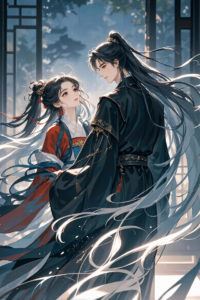
There's something deeply meta about this story that goes beyond the simple transmigration premise. Ding Li isn't just reading a novel - she's reading a novel that her community of readers has collectively condemned. The opening establishes this strange relationship between readers and the text: they hate the author, they hate the story, but they can't stop reading. "Why does everyone agree that the novel is ridiculous, and the author is ridiculous, yet they persistently keep reading? Probably because everyone is curious just how melodramatic, trope-laden, and boring this story can get."
This is a commentary on consumption itself. We consume stories we know are bad. We stay for the trainwreck. And then Ding Li becomes part of that trainwreck. She doesn't just read the novel - she IS the novel's worst element. The green tea villainess. The character who exists to cause suffering. The embodiment of everything readers complained about.
The system represents fate, narrative determinism, the idea that certain roles are assigned and cannot be escaped. Ding Li's attempt to declare herself as "Ding Li" rather than "Su Xiangqing" is a rebellion against this determinism. She wants to be herself, not the character the story demands she be. The system's immediate rejection of this - "Character binding completed. Cannot be changed." - is devastating. It says: you are what the story says you are, and there is no negotiation.
But there's also hope in Ding Li's refusal to accept her role passively. She's annoyed, yes. She's terrified, yes. But she's also strategizing. She's looking for loopholes. She's trying to survive within a story that wants her dead. This is the core theme - agency within constraint. Can you be yourself when the narrative demands you be someone else?
The symbol of the flying sword is interesting too. Chu Zilan flies with effortless grace. Ding Li has to cling to her, literally holding on for dear life. It's a visual representation of Ding Li's position in this world - she's not a natural part of this xianxia setting. She's an outsider, clinging to survival, unable to fly on her own terms.
And then there's the empty city at the end - doors shut, windows barred, screams in the distance. The world itself seems to be closing in, reflecting Ding Li's trapped state. She's not just trapped in a character role - she's trapped in a story that's spiraling toward disaster, and she's the villain who's supposed to cause it.