Transmigrated into a Farmer’s Little Lucky Baby with Billions in Resources - Reviews

Transmigrated into a Farmer’s Little Lucky Baby with Billions in Resources
+Add to Custom List
Sort
Add review
... Read More
I need to talk about how this author controls pacing because it's genuinely impressive. The chapter starts light—Su family finding mushrooms and ginseng, Old Man Su being dramatic about keeping it secret. It's almost comedic. Then you cut to Su Muyao outside, villagers swarming her, and it's warm and funny. The village chief scene is breezy and optimistic. Everyone's happy, things are going well. And then—BAM. Chapter 17 pivots hard into the Liu family, and the tone shifts so violently it almost gives you whiplash. One minute you're smiling at Su Muyao defending her grandpa, the next you're reading about a father trying to suffocate his newborn twins. The contrast is jarring, and that's exactly the point. The author doesn't warn you. You just get dropped into the horror. Then it cuts back to Su Muyao going fishing, and the relief is almost physical. But even there, the pacing keeps things moving—those fish are too big, the net is too small, Su Sanlang gets frustrated and storms off. The chapter ends on a note of unresolved tension. What I love is how the author uses Su Muyao as an anchor. No matter how dark things get in the Liu household, we always come back to her—sweet, clever, completely unaware that her entire identity might be a lie. That structural choice keeps the reader emotionally grounded while the plot spirals outward in multiple directions. The cliffhanger with the Liu family potentially discovering the truth, combined with the villagers gathering at the river, means there are at least three threads about to collide. I can't wait.
... Read More
Okay so I have to talk about this wolf scene because it completely blew my mind. A literal wolf king brings them SALT-LINGZHI like it's a housewarming gift?? I mean, I get that this is a transmigration/fairy tale setup, but the author really committed to the bit here. The way Old Madam Su's reaction goes from 'holy shit we're rich' to 'maybe we shouldn't sell it, what if it saves lives' to 'wait, does it help have sons? no wait, nevermind' is genuinely hilarious. She's cycling through every possible angle in like three seconds. And then Fu Bao just casually drops that 'even a piece the size of a little finger can be exchanged for a gold ingot' and Old Madam Su nearly faints. The plot is moving FAST—chapter 14 they're identifying herbs, chapter 15 a wolf delivers premium medicinal treasure, chapter 16 they're already selling for 160 taels and running into plot threads about a bullied orphan boy. That's a lot of ground covered in three chapters. What I love is how the plot rewards the family's kindness. Old Man Su sees a kid getting beaten up and instead of walking away (which would be the realistic choice for a poor farmer), he intervenes. And the text literally says: 'For her sake, he decided he should be kinder.' The story is building this moral universe where good deeds literally come back to you. The rescued boy gripping that silver and thinking 'If I ever have the ability in future, I will repay this great kindness' is clearly setting up a future payoff. I'm betting that kid becomes important later. But here's my question—how long can the herb luck last before the plot introduces some kind of pushback? Every time a story piles on fortune like this, I feel like the author is setting up a fall. Are we going to see greedy relatives, corrupt officials, or someone who catches wind of the family's sudden wealth? Because right now the Su family is sitting on enough treasure to make anyone in this county lose sleep.
... Read More
I need to talk about how this story layers its conflicts because honestly it's kind of brilliant. On the surface, you've got this cute story about a baby who talks to wolves. But underneath? The village chief just announced that taxes are going up by twenty percent, grain prices are skyrocketing, and there's WAR at the borders. Like, the world is literally falling apart around this family and their adorable wolf friends. "With war at the borders, if none of us go, then who will fight the invaders?" — this line hit me hard. It's not just background noise; it's a looming threat that could shatter everything the Su family has worked so hard to build. The drought already destroyed their crops, now the court is squeezing them harder? What kind of world is this? And yet, the wolves show up with a four-to-five-hundred-pound wild boar like, "Here, we brought you dinner." The stakes shift so suddenly from desperate survival to overwhelming abundance that it's almost dizzying. One moment the villagers are terrified, the next they're being passed around like a celebrity because this blessed child made friends with wolves. But what really got me was Liu Wen. This sneaky troublemaker peeking through their yard like some kind of village villain. He showed up uninvited, acting all friendly, but you just KNOW he's up to something. The author dropped him in at the end of this chapter and I immediately got suspicious. What does he want? Is he connected to the larger conflict? Will he become a real threat? The internal conflict of Su Muyao too — she's a modern person reincarnated as a baby, dealing with siblings who have zero concept of personal boundaries ("But I saw her when she was taking a bath before!"). Her internal screaming about her dignity being ruined is both funny and genuinely stressful. She's trapped in this body with no control, and the stakes of her secret identity being discovered feel real.
... Read More
Okay, can we just talk about how genuinely warm this family dynamic is? Like, it's not some grand romantic love story or anything, but the way these people treat each other hits different. Su Sanlang carrying his daughter in his arms, rushing to the village chief — that moment where he scoops her up and says 'hold her carefully' and she's just sitting there with her book like nothing's happening? That's the kind of detail that makes you go 'aww' without even meaning to. And then there's the money division scene. Old Madam Su giving 50 wen to each family, including a special share for their 'little treasure,' and the two elder brothers feeling so embarrassed they hand over 10 wen each for sweets. That's not just plot — that's a whole ecosystem of love and shame and gratitude operating at once. Su Sanlang teasing his wife, calling her 'honey' and sneaking up behind her, and she's all flustered because their daughter is literally right there — these tiny domestic moments are what make the book feel lived-in. The father-daughter bond between Su Sanlang and Fu Bao is the real emotional core though. He literally calls her 'my precious daughter' and credits everything to her. When he says 'without our little treasure, we wouldn't even catch a single shrimp' — that's not just gratitude, that's a man who has found something miraculous in his life and knows it. And Fu Bao, this tiny kid who's basically running the whole operation from her books, just sits there taking it all in like 'yeah, I know, Dad.' Pure gold.
... Read More
Let me just say—the river scene in Chapter 18 is one of the most vividly written sequences I've read in a while. You've got the misty river edge with a thin layer of ice forming, the cold atmosphere, the children running ahead shouting about catching fish. It feels like a movie scene. The author paints it without overdoing it, just enough detail to drop you right into it. And then there's the Liu family's house, which the author barely describes but somehow makes feel suffocating. You don't need to know what color the walls are when the father is throwing babies on the floor and two little girls are crouching by the window, one clamping the other's mouth shut. The horror is in what you DON'T see. The village chief's house is another great detail—bricks and tiles, a proper courtyard, clearly the richest home in the village. It immediately tells you about social hierarchy without any exposition dump. The chief's younger daughter-in-law bringing roasted peanuts for Su Muyao, the chief himself rushing out to greet them—these small gestures build a living, breathing community. I also loved the lunch scene—stir-fried wild boar meat, egg drop soup, and Su Muyao getting her own individual steamed egg. It's a small detail but it shows how much the family is treating her like royalty, and it contrasts sharply with the poverty that clearly exists in this village before their luck turned. The author has a gift for using food and domestic details to ground the story. Every meal, every hat, every fishing net feels real.
... Read More
I keep going back to the mountain sequence and honestly it's one of the most vivid scenes in this whole batch. Let me paint it for you: Old Madam Su carrying her granddaughter in a small basket, bouncing along toward the foothills. The text says 'Fu Bao bounced happily in the basket, her little legs kicking with joy' and I just— I can see this. It's got this warm, almost storybook quality to it that contrasts sharply with the harsh reality of their village life. The author does something really smart with the setting. They establish early that the shallow mountains are safe (wolves won't harm Fu Bao apparently) but the deeper mountains have 'other dangerous predators.' This worldbuilding detail does double duty—it explains why they don't go too deep while also keeping tension alive. We know danger exists just beyond the edge of the scene. And then the wolf appears. 'A white wolf dashed out from the deep mountains.' Old Madam Su's instinct is to grab Fu Bao and run, which is completely natural. But then the wolf drops these two massive salt-lingzhi at their feet like it's leaving a package at your doorstep. The visual of a giant white wolf carefully placing precious medicinal herbs and then waiting expectantly for spirit spring water is absurdly cinematic. I swear I could see this as a film scene—golden mountain light, the wolf's white fur, the purple lingzhi glistening. The spirit spring water detail is also worth noting. Fu Bao pulls out a whole plastic barrel of it, which is such a jarring modern-anachronistic object in this ancient setting. It's a quiet reminder that she's not actually a normal child. The wolf drinking it and feeling its 'bones and meridians feel stronger and more powerful' is a nice touch too—this isn't just a pet, it's becoming something more. The pack is going to become 'rulers of the mountains' apparently. The world is bigger than we think. I also love the contrast between the magical mountain scenes and the gritty village reality. Those gossiping women on the path back, the thug scene in the alley, the family huddled around baskets of goods in their main hall—all of it grounds the fantasy elements in a tangible, lived-in world.
... Read More
Let me just say — this author knows how to pace a chapter. We go from catching giant fish, to selling them at market, to dividing the money, to the next plot hook about herbs, and somehow it all flows without feeling rushed or dragged out. The fish-catching scene opens with mystery (why do the fish leave?), builds to the payoff (five giant fish!), then immediately pivots to the social reward (villagers celebrating, clan head coming over). No lingering, no padding. Chapter 20 hits the market scene with the same energy — Su Sanlang haggling, the tax collectors showing up as a mini-conflict, the resolution where he outsmarts them by paying up strategically. Each beat serves the story. What I love most is how the author uses the money-counting scene as both a reward and a transition. We get to savor the 475 wen like it's real money (because it is to these characters), feel the family's joy, and then immediately — drums and gongs outside, village chief calling everyone — the next plot engine kicks in. No breathing room wasted. The Fu Bao book-reading detail at the end is a perfect structural note. She's 'immersed in reading her books' about time-traveling to ancient times and using recipes to build wealth — which is literally what she's doing. The author is winking at us while setting up the next arc. Tight, efficient, satisfying.
... Read More
Okay so let me just say this—the author is playing 4D chess with the plot and I am HERE for it. The lingzhi sale arc is satisfying on its own, but then BAM, the guy who abandoned Su Muyao shows up. Like, literally strolls into the story right after they sell the herb, and the reader is just sitting there going WHAT. The way the plot threads connect is honestly impressive. You've got the Su family's financial turnaround, the village's changing attitude (those villagers bringing gifts!), the building of a new house as a symbol of their rising status, and then this one guy who threw the baby away is now overhearing everything. The narrative is setting up a conflict that's going to explode. And the best part? The villain has no idea who he's dealing with. He thinks he can just waltz back in and claim what he thinks is his. Meanwhile, Su Muyao has literally never met him and is happily buying fabric. The dramatic irony is THICK. Also, the subplot with the two pharmacies is a nice touch—the first one lowballing them at twenty wen versus the second offering nine gold taels per liang. That contrast really shows how much the Su family is about to gain, and how close they came to being scammed. It makes the payoff so much sweeter. But honestly, what really got me was the ending of this section. The man storming off, calculating how much money he lost, planning to discuss with his mother what to do next. That's not just a cliffhanger—that's a ticking time bomb. What happens when he finds out the truth? What happens when he comes after the family? I need to know.
... Read More
I need to talk about Su Sanlang's dialogue because honestly, he's the funniest character in this entire novel and I'm not even being dramatic. When he sells the fish at nine wen instead of the agreed six and his brothers are just standing there losing their minds — 'Third brother, didn't you say even six wen per catty was expensive?' And he just casually explains his whole pricing strategy like he's been running a business his whole life. The man is a natural salesman and the author writes him with such distinct voice. Then there's the scene with his wife Tao Xiu where he sneaks up and says 'Hey, honey' and she jumps and threatens him about scaring the little treasure. His response? 'Come on, I didn't! Our little girl saw me as soon as I came in.' The shamelessness is immaculate. And when she calls him out for wanting her money — 'You're so stingy' — he just rolls his eyes and leaves. This man has zero filter and I love him for it. Old Madam Su's voice is equally distinct. 'You brat, what do you know?' snapping at her son about pricing, then immediately pivoting to 'You got your cleverness from me' while glancing at her husband. The matriarch energy is real. And Su Dalang, the honest slow brother who just wishes he could bury his head in the ground when his younger brother haggles — his silence speaks louder than most people's dialogue. The author gives every character a recognizable voice. You could read a line and know exactly who said it without any tags.
... Read More
'We don't even know you, and you want to hold my daughter? What are you up to? You're not a child trafficker, are you?' — Su Sanlang, protecting his kid with zero filter. I need this man's energy. His dialogue is absolutely fantastic because it's so distinctly HIM. He's not some polished, eloquent character. He's a farmer who's smart, protective, and completely unafraid to say exactly what he's thinking. The scene where he's pretending to be a shrewd businessman at the pharmacy? 'What valuable goods do you have? Tell me.' He's just... going for it. And it works because the narration supports him. Su Muyao watching him and thinking 'anyone who didn't know him would probably assume he was some kind of cunning schemer' is such a perfect moment of father-daughter dynamic. Then there's Old Master Su, who barely says much but when he does, it's always grounded and practical. 'No, no—that's too big!' 'That won't be necessary!' His dialogue is full of that elderly Chinese father energy—concerned, slightly flustered, but deeply loving. And Old Madam Su? She's the comic relief and the heart of the family all in one. Her lines are hilarious but they also reveal something real about her character. She's not just funny—she's practical in her own way, worried about the toilet distance because she's thinking about the daily reality of living in a big house. The dialogue between Su Muyao and her parents is also really well done. There's a warmth to it that doesn't feel forced. When Su Sanlang says 'I didn't raise you for nothing! The first thing you think of after getting money is your father!' and Su Muyao internally wipes off his saliva with visible disgust? That's such a natural, funny, loving exchange. The author's voice in the narration is also great—wry, observant, never over-explaining. It lets the dialogue carry the emotion instead of telling us how to feel.
... Read More
The pacing in these chapters is honestly masterful. Let me break down why I couldn't put this down. Chapter 9 opens with tension — loud bangs, something large running outside, villagers shouting. You're immediately on edge. Is it another wolf attack? Are people going to get hurt? Then the white wolf appears, and the tension deflates into something almost comedic. The wolf king is more concerned about his water delivery than causing chaos. This whiplash from danger to humor is exactly what keeps you turning pages. The transition from the wolf scene to the family processing the meat is smooth but effective. We get this quiet moment of the Su family working late into the night, smoking meat by lamplight, and it gives the story a breathing room after the excitement. "By then, the younger boys in the house had also gathered around. They had been strictly forbidden by their grandmother to come out earlier, but now that everything was safe, they finally dared to sneak out of their rooms." This small detail tells us so much about the family dynamics. Then Chapter 10 hits us with the birthday preparations, and the pacing shifts again to something slower, more domestic. But the author doesn't let us get too comfortable. Liu Wen appears, peeking through the yard, and suddenly there's a threat on the horizon. The chapter ends with this lingering sense of unease — the birthday is happening, the family is happy, but something is coming. And Chapter 11? It starts with the birthday feast in full swing, all the warmth and celebration, but then drops us into this hilariously awkward sibling moment with Su Mingxuan's butt obsession. The pacing here is perfect — it gives us the celebration we've been building toward, but also shows us the chaotic, messy reality of a large family. What I love most is how the author balances these tonal shifts. One moment you're worried about war and taxes, the next you're laughing at a baby's internal monologue about being called chubby. The story never lets you settle into one emotion, and that's what makes it so engaging.
... Read More
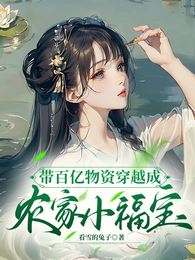
There's something really interesting happening with the symbolism in this section, and I think the author is building a whole thematic framework around the idea of what makes a child "lucky." The ginseng keeps appearing—first they sell one, then they find another, and it's tied directly to the Su family's sudden prosperity. But ginseng in Chinese culture isn't just a valuable herb; it's a symbol of longevity, vitality, and sometimes, the soul of the earth. The fact that wolves—wild, dangerous creatures—bring the family medicinal herbs is itself symbolic. Nature is aligning with them. Then there's the golden lotus birthmark. A lotus is one of the most loaded symbols in Chinese literature—it represents purity, enlightenment, and spiritual awakening, growing out of mud but remaining unstained. A GOLDEN lotus mark on a baby girl who was thrown into a mass grave? That's not just a plot device. That's the author telling you this child was always meant to rise above her circumstances. The lotus doesn't care where it's planted—it blooms anyway. And the wolves. Su Muyao can apparently command them. Wolves are typically symbols of danger, wildness, loneliness—but here they're bringing gifts. They're protectors. This flips the whole traditional symbolism on its head. The theme that's emerging for me is about value and perception. The Liu family sees a daughter as worthless. The villagers see Su Muyao as a lucky charm to be exploited. But the child herself—she's just a kid who wants to catch fish and play. The world projects meaning onto her, but her essence is untouched by it. That's the lotus.

Leave a comment

You must be logged in to leave comments. or
