Summary

... Read More
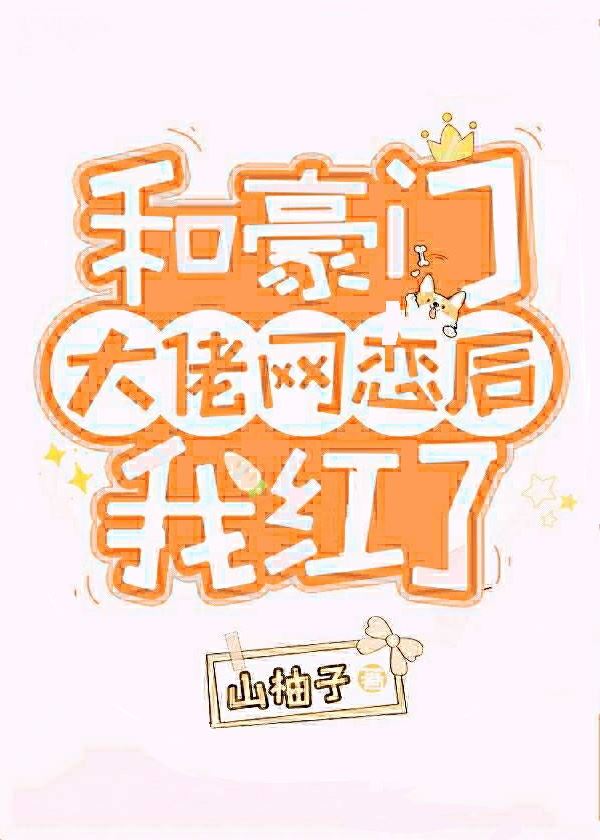
Shen Ran, a twenty-four-year-old man who died saving a woman and child on a bus, transmigrates into the body of a fictional cannon fodder character from the novel "Diary of Influential Big Shots in H City." The original Shen Ran was a wealthy but foolish young master, the husband of Min Xingchuan, the patriarch of the powerful Min family. In the novel, this Shen Ran bullied others, committed adultery with an internet celebrity named Qiao Qiyun, caused his eldest brother Shen Jue— a rising film star—to fall into drug addiction, ruined the Shen family business, and ultimately died of a miscarriage on a stormy night after being abandoned by Min Xingchuan.Upon awakening in a university restroom after being bullied by classmates, Shen Ran learns he has been chosen by the "Super Super Super Jack Su System," represented by a customer service entity named Su Su. His goal is to reach the pinnacle of life, achieving maximum economic and spiritual freedom. However, he must do so while staying in character as the original Shen Ran to avoid OOC penalties that increase task difficulty. The system presents him with a first-level task: starting a business with only 10,000 yuan in startup capital, generating 100,000 yuan in sales within three months.Shen Ran immediately begins planning his survival strategy. He refuses Min Xingchuan's offer to send him to Northern Europe for half a year, recognizing that leaving would jeopardize his business plans. Instead, he maintains the persona of a devoted husband to avoid system penalties, despite his internal revulsion. He rents a small storefront in an old residential area near H University for 1,400 yuan per month and names his company Xinran Technology Development Co., Ltd.His first hire is Chi Haoyu, a poor but exceptionally talented computer science student whom Shen Ran recognizes from class. Chi Haoyu, facing financial desperation after his family cuts off his living expenses, accepts a position with a monthly internship salary of 2,000 yuan. Under Shen Ran's direction, Chi Haoyu begins developing a web interactive chat box program designed for customer service systems.Meanwhile, Shen Ran confronts Qin Ke, the second young master of the rival Qin family and the novel's second male lead. Qin Ke had orchestrated the campus violence against Shen Ran as revenge for bullying his boyfriend, Qi Xiaoyang. Shen Ran calmly negotiates a truce, warning Qin Ke that his family's disapproval and his father's interference are the true threats to his relationship with Qi Xiaoyang. This encounter reveals Shen Ran's growing strategic acumen and his determination to avoid the disastrous conflicts that destroyed the original character's family.The story establishes the central tension between Shen Ran's desire to escape his tragic fate and the constraints imposed by the system and his marriage to Min Xingchuan, whose hatred stems from traumatic childhood experiences with his licentious father. Shen Ran must navigate business challenges, family dynamics, and romantic complications while gradually changing the destinies of those around him.

Latest Release
DateGroupRelease
2026-09-26knoxt c44
2026-09-26knoxt c43
2026-09-26knoxt c42
2026-09-26knoxt c41
2026-09-26knoxt c40
2026-09-26knoxt c39
2026-09-26knoxt c38
2026-09-26knoxt c37
2026-09-26knoxt c36
2026-09-26knoxt c35
2026-09-26knoxt c34
2026-09-26knoxt c33

Community Reviews

Rating(4 / 5.0, 275votes)
5 stars
83(30%)
4 stars
99(36%)
3 stars
93(34%)
2 stars
0(0%)
1 stars
0(0%)

Popular reviews

... Read More
The setting in this passage is absolutely delicious. A banquet in H City high society where everyone is performing, everyone is playing their part, and everyone is secretly judging everyone else. The author gives us just enough detail to paint the picture without overloading us — the middle-aged man of status, the formal seating arrangements, the WeChat group chat with red envelopes, all of it feeling incredibly contemporary and specific. I loved the contrast between the polished surface and the rot underneath. On one hand you have the Young Entrepreneurs Summit talk, the polite exchanges, the carefully curated image of success and power. On the other hand you have Min Hongru walking in with both a male and a female companion like he owns the place, like this is completely normal behavior. The gap between how these people present themselves and what they actually do is where the real worldbuilding happens. This is not a world of secret scandals whispered behind fans — this is a world where scandal walks through the front door wearing designer clothes and expecting applause. The visual detail of Min Hongru was particularly striking. Described as looking more like a street thug than a respectable businessman, yet carrying himself with the authority of someone who has never been told no. The author uses physical description to do so much heavy lifting here — his appearance alone tells us everything we need to know about the Min family values. Success matters more than dignity. Power matters more than respectability. Appearances matter more than truth. I also appreciated how the author used spatial arrangement to create tension. Shen Ran and Ruan Letian are seated at a table deliberately positioned far from Old Master Min, which makes their whispering feel dangerous and slightly embarrassing. The woman of high status muttering disapprovingly about Tia adds another layer to this social ecosystem. Everyone is watching everyone else, and everyone is being watched. The scene feels like a chessboard where every piece is conscious of its position and its vulnerabilities. The banquet hall itself becomes a character — a space where family secrets are displayed like exhibits and social status is performed with the precision of a professional actor. I found myself imagining this setting in cinematic detail, with the soft lighting, the clinking of glasses, the carefully controlled laughter masking genuine contempt. It is a world both glamorous and suffocating, and I could not look away.
... Read More
The business negotiation dialogue in this chapter is actually really well done — not that I expected anything less from an author who can make a group chat feel like a screenplay. Let me break down why this exchange works: Manager Fenli opens with excessive politeness ('specially found a very stylish teahouse'), Shen Ran immediately deflects ('you don't need to do that'), and then the manager pivots to hard numbers. The rhythm is perfect — it mirrors real high-stakes negotiation where everyone performs courtesy before cutting to the chase. But the real voice moment comes from Qi Xiaoyang when he says 'No, I can't participate. If I, as a member of management, participate in this event, it will affect the fairness of the competition.' That line is SO him — thorough, principled, slightly awkward in a way that makes you trust him. And Shen Ran's response 'Then after class tomorrow, will you come with me to choose a venue?' is delightfully casual after all that tension. The author knows how to let dialogue breathe instead of over-explaining. My only gripe? I wish we got more of the actual streamer voices. Tia and Anchor Sasha are entertaining but they fade fast. Give me more group chat chaos any day.
... Read More
Can we talk about how the environment in this book makes me feel like I'm actually THERE? Not in a cheesy way — in a way where I put the book down and looked around my own room wondering how the author made me experience that forest scene so vividly. There's this passage where the protagonist walks through what's basically a dead landscape — withered trees, gray sky, that particular quality of light you only see in late winter when nothing is growing and everything feels suspended. But then... you know. The change starts. Not dramatically. Just a hint of green. A whisper of warmth. The kind of transformation that happens so slowly you almost miss it if you're not paying attention. "The world didn't announce its renewal. It simply began, quietly, the way all true comebacks do." I think the author is using the setting as a mirror for the internal journey. Every external detail maps onto something emotional happening underneath. That's craft. That's the good stuff. I also noticed the author keeps coming back to water imagery — melting ice, thawing ground, that first thin stream of runoff. Water as transition. Water as life returning. It's subtle but consistent, and it builds this atmosphere that wraps around you like a blanket.
... Read More
I need to talk about Shen Ran and Min Xingchuan because this dropped on me like a ton of bricks. The system just warned Shen Ran that his character compatibility has fallen to 55%, and suddenly he realized he hasn't visited Min Xingchuan even once since moving into the dormitory. The text says the former Shen Ran would go crazy if he didn't see Min Xingchuan for more than three days — unless Min Xingchuan was on a business trip, he'd run to him every day to brush up on his presence. Now we're past a week and Shen Ran hasn't even thought about it? That's not a minor detail, that's a character crack forming. It shows how much the project has consumed him, but also how fragile these connections are when ambition takes over. The comparison between who Shen Ran was and who he's becoming is terrifying. And then there's Su Su, appearing after days of silence just to remind him of this. Is she genuinely concerned or is there something else going on? The dry laugh, the reminder about personal settings — Su Su seems to know things about Shen Ran that he's actively avoiding. Their dynamic feels like someone holding a mirror while you're running toward something. And Chi Haoyu! The kid asks for half a month salary in advance because he only has ten yuan left. Shen Ran immediately transfers two thousand. The power dynamic there is interesting — Shen Ran has the money and the authority, but he also recognizes that Chi Haoyu wouldn't have asked if he wasn't desperate. The line about Shen Ran taking up a big advantage because Chi Haoyu hasn't graduated yet hits different. It's gratitude mixed with self-awareness that he's exploiting youth and availability. These relationships are all tangled up in this moment of success.
... Read More
I need to talk about the dialogue in these chapters becauseHonestly I think the author might be secretly a comedy writer. Let me start with the best exchange in the entire passage: Shen Ran: 'How much does Brother Hong sell in a day?' Hong Chen: 'Xiao Hong, Xiao Hong, Master Shen, please don't call me that.' Shen Ran: 'Xiao Hong sounds like a girl's name, how about this! I'll call you Chen Chen!' Hong Chen: ...... I am DEAD. This is absolutely hilarious. The way Hong Chen goes from 'Xiao Hong' (which apparently sounds feminine to him) to 'Chen Chen' (which is even more ridiculous for a grown man) - the author is playing with us and I'm here for it. But seriously, the dialogue throughout these chapters has such distinct voices. Hong Chen speaks with this energetic, slightly nervous energy - especially when he realizes he's talking to the actual young master of the Shen family. His immediate pivot from casual banter with Xiao Xu to full-on panic mode is so authentic. Xiao Xu has this whole different cadence. When he introduces Hong Chen, it's all casual and familiar - 'Hong Chen!' with that exclamation point that screams 'we're bros here.' But then when he has to explain to Hong Chen that 'It's our young master who wants to see you,' there's this awkward pause where you can feel the tension shift. Shen Ran's dialogue is the most controlled of the three. He's always polite, always direct, never condescending. Even when he's making a business proposition, it comes across as genuinely curious rather than demanding. 'I just saw you selling small home appliances. It's really amazing. I want to talk to you about cooperation.' That's it. No 'do you know who I am?' energy. Just straightforward appreciation. The humor peaks during the restaurant scene where Hong Chen is clearly overwhelmed by the casual atmosphere. Shen Ran picks up skewers and immediately offers them to Hong Chen - this small gesture says more than any formal business pitch ever could. The fact that they're eating in a roadside BBQ joint and Shen Ran is casually asking about daily sales volume while eating... it's perfect. One thing I notice is how the author uses dialogue to reveal character without exposition. We learn that Hong Chen changes malls every three days, that his bonus gets swallowed by his boss, that he's already bought a house in H City - all through Xiao Xu's offhand commentary and Hong Chen's own humble-bragging about his sales figures.
... Read More
Let's talk about that one message. 'It's marital property, don't worry about it.' That's it. That's the entire message. No emoji, no elaboration, no 'babe' or 'honey' or any of the performative affection that would've made it feel fake. Just a flat, factual statement delivered between work hours. And yet — and YET — it made Shen Ran pause and feel like Min Xingchuan was 'not so fake anymore.' I think that's the most romantic thing in this entire chapter. Not a grand gesture. Not a confession. Just a man who barely knows how to express anything sharing a mundane financial detail as if it matters. As if their money is their money. As if they're a team. The irony is almost painful. Shen Ran spent the chapter before this internally labeling Min Xingchuan a 'wooden husband' — someone emotionally unavailable, alienated, indifferent. And then one text message shatters that entire categorization. Not because it's deeply romantic, but because it's deeply ordinary. It's the kind of thing real couples say to each other without thinking. And Min Xingchuan, who struggles to express anything at all, said it unprompted. Then Min Min shows up with her photo and her poison, trying to make Shen Ran feel small. 'What about you?' she asks, as if his worth is comparative. As if he needs to measure himself against Teacher Cheng's international career or Min Xingchuan's wealth. And Shen Ran's response isn't to compete — it's to affirm. 'My husband is very excellent.' He's not defending himself; he's choosing his side. That's intimacy. That's commitment. That's the emotional core the author is building toward. The children in the photo — I can't stop thinking about who that little one is and what their presence means. Min Xingchuan holding a child at twelve or thirteen years old, before his illness started. What does that memory represent? Tenderness? Responsibility? A version of himself he hasn't accessed since? The author cuts off right as we're about to learn more about PTSD triggers, and I am NOT OK with that cliffhanger. Give me more.
See all reviews

Custom lists

See all custom Lists