Transmigrated into a 70s Novel: The Research Bigshot Begs Me to Get a Marriage Certificate - Reviews

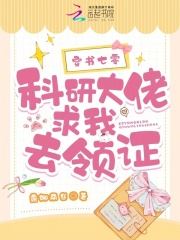
Transmigrated into a 70s Novel: The Research Bigshot Begs Me to Get a Marriage Certificate
+Add to Custom List
Sort
Add review
... Read More
What I love about this story is that the stakes aren't abstract. Yiran isn't trying to save the world or win some grand battle. She's trying to survive. That's it. And that makes it infinitely more relatable. Let me break down what she's actually up against here: First, there's the original plot itself—a narrative force that wants her to die in a foreign land, her brothers to destroy themselves looking for her. That's a pretty aggressive fate to fight against, especially when you're a background character with no special powers or knowledge of the future. Then there's Jiang Lanru, who is literally a reborn person with foreknowledge. She's not just some rival; she's an opponent who knows how the story is supposed to go and is actively trying to steal the male lead. That's a genuinely threatening antagonist because she has information Yiran doesn't. And underneath all of that is the family threat. Auntie Zeng's son is going to do something to Yiran's eldest brother in the original story. Yiran remembers this. She says explicitly: "This time, she would protect him." That's not just a throwaway line—that's a personal stake. Her brother's safety is on the line, and she's the only one who knows what's coming. The scarf incident in Chapter 2 is a perfect microcosm of all this. Jiang Lanru fakes falling, tries to make a scene, and Yiran just... sees through it immediately. The confrontation that follows isn't dramatic or violent, but it's significant. Yiran is refusing to play along with the script. She's choosing to speak up, to call out the performance, to disrupt the narrative that wants her to stay silent and die. The tension here is sustained really well because every conflict is layered. It's not just Yiran vs. Jiang Lanru—it's Yiran vs. the plot, Yiran vs. her own powerlessness, Yiran vs. a world that expects her to be a background character. And she's armed with nothing but awareness and a sharp tongue. I'm already invested in whether she can actually pull this off.
... Read More
Okay so I have to talk about the plot structure here because this chapter is doing some really clever stuff. On the surface it's just daily village life—picking fruit, working in the fields, delivering meals—but underneath, there are so many threads being woven simultaneously and I love it. The main plot thread is obviously the tension between Jiang Lanru and Zhuang Wenting over Xiao Ziyi. But what's interesting is that the author doesn't make it a simple love triangle. Jiang Lanru is clearly a reborn character too—she's calculating, she's playing the long game, and she's not above using Zhuang Wenting as a pawn. Meanwhile, Xiao Ziyi sees right through her. The line where he thinks about how she looked at him on the train like she already knew them? That's a huge red flag and I'm fascinated by how he's choosing to play along instead of exposing her. Then there's the subplot with Lin Yiran's second brother Lin Weimin. He's investigating his uncle Jianshan, who's a gambler. The way the author reveals this through casual conversations at the factory—Uncle Chen, Huang Tonghai's brother in the disciplinary office—it feels so natural. No dramatic announcements, just quiet information gathering. And then BAM, Jianshan gets arrested. The pacing here is perfect because it builds slowly and then delivers. The wild fruit picking scene with Lin Yiran and Xiao Ziyi is both a romantic beat and a plot device. She's testing him, seeing if he's really the cold distant male lead she expects. He's not—he's warm, he catches the fruit, he offers to explain his book. And she's genuinely surprised. This scene establishes their dynamic in a way that feels fresh. What I appreciate most is how the author handles multiple storylines without any of them feeling neglected. The village loudspeaker calling everyone to work, the competition between the two girls in the fields, Lin Yiran's family dynamics with her uncle—the plot is layered but never cluttered.
... Read More
I need to talk about Zhuang Wenting because this girl is a walking disaster and I cannot look away. "Comrade Zhuang, then what gives you the right to slander me like this?" — Lin Yiran's line right here is iconic. She doesn't even raise her voice. She just lays it out: I came to thank him, I did it openly, you're the one acting crazy. And the best part? Everyone in the compound KNOWS she's right. They all know Xiao Ziyi doesn't like her. And still Zhuang Wenting charges forward like a bull. But here's what actually broke me—Xiao Ziyi's reaction. He doesn't just ignore her. He looks at her with DISAPPOINTMENT. Like, he's genuinely sad that she's become this person. And then he says the line: "I am absolutely certain I will never like you. This is the last time I'll say it." That's not just rejection. That's a man drawing a boundary so hard it could cut glass. And Zhuang Wenting? She cries but she doesn't follow. She LIKES him but she also FEARS him. That last line hit me like a truck. This isn't some cute unrequited love thing—this is obsession meeting a wall, and the wall is winning. Meanwhile Lin Yiran's entire arc in these chapters is her learning to NOT shrink. She steps up to defend herself. She tells her brother she won't tolerate the family drama this time. She's becoming someone who fights back instead of just taking it. And Xiao Ziyi watching her do it? His face darkening when she avoids him? Yeah, he's completely gone. Chen Tai even notices and pats his shoulder like "bro, you're in deep." The sibling dynamic between Lin Yiran and Lin Weimin is also chef's kiss. He's protective but he LISTENS to her. She wants to give the jam? He goes with her. He complains about Xiao Ziyi on the way home but he's clearly just worried. That's good brother energy.
... Read More
I'll be honest with you—I didn't expect to be this invested in a transmigration story this early. But the family dynamics in these chapters are genuinely touching, and they're the emotional core that makes everything else land. Yiran's relationship with her nephews is adorable. She's clearly the fun aunt—the one with the candy, the one who lets them get away with things, the one they run to when they want something. But it's not just fluffy content. When she collapses and the eldest nephew runs out the door for help, that moment hits hard because we've already seen how much they care about her. The children staying quiet instead of running around because "Auntie wasn't feeling well"—that's the kind of detail that makes you feel the warmth of this family. And her parents. Wang Fang stepping in front of Yiran when Auntie Zeng lunges at her, Lin Jianguo being worried about his daughter's health, the brothers immediately planning to buy her milk and medicine—these aren't background details. They're the emotional stakes that make Yiran's fight for survival matter. She's not just trying to avoid a miserable death; she's trying to stay for these people who clearly love her. The scene where she wakes up and her mother is crying beside her, pressing medicine into her hand and then immediately giving her candy, is one of those small moments that does so much emotional work. It tells us everything about Wang Fang—protective, loving, practical—all in three actions. Then there's the romantic tension, which is barely simmering but definitely there. Xiao Ziyi noticing Yiran, feeling that "pluck of heartstrings" moment, and then being disappointed when she looks away—it's classic but effective. The fact that she's already aware of the plot and is deliberately ignoring him adds a layer of irony that's delicious. I can't wait to see what happens when he starts paying more attention to her.
... Read More
I have to talk about the dialogue in this chapter because it's genuinely impressive how natural it all sounds. Let me start with Lin Yiran and her second sister-in-law. The conversation about opening a clothing shop feels like something that would actually happen between two women in 1970s rural China. The sister-in-law says, "How could that be? Clothing shops are all state-run, and you need ration coupons for fabric." This isn't exposition dumped on the reader—it's a natural response that reveals the economic reality of the time. And Lin Yiran's reply, "Maybe you'll have the chance one day," shows her forward-thinking nature without making her seem anachronistic. The dialogue between Xiao Ziyi and Lin Yiran under the tree is also spot-on. She asks if he wants fruit, he says yes, she tosses it down, he catches it. The exchange is minimal but it reveals everything about their dynamic. She's polite but not overly formal. He's warm but not effusive. When she says "Thank you… I can't understand it at all. You're amazing," the hesitation in her speech feels real—she's genuinely impressed but also slightly embarrassed that she can't comprehend his advanced text. But the dialogue that stood out most to me was from Jiang Lanru. When she says to Xiao Ziyi, "Brother Xiao, I love reading as well. Could you lend me your book?" and he replies, "You wouldn't understand it," the power dynamic is crystal clear. She's performing interest in reading to get closer to him. He's rejecting her politely but firmly. And then Liu Qinggang's response—"Brother Xiao's books really are difficult to understand. He's just too brilliant"—is comedy gold because he has no idea what's actually happening. The author also does something really clever with the narrative voice. When Lin Yiran is with her family, the narration is warm and grounded. When we're in Xiao Ziyi's head, it's more analytical and restrained. This difference in voice helps us understand each character's inner world without needing long internal monologues. Even the minor characters have distinct voices. Uncle Chen at the factory sounds like a friendly but gossipy older man. Huang Tonghai sounds like a young worker sharing inside information with a friend. The village loudspeaker calling everyone to work—that single detail establishes the collective nature of village life without a word of exposition. The dialogue never feels like it's serving the plot. It feels like these are real people having real conversations, and the plot emerges naturally from their interactions.
... Read More
There's something deeply symbolic about the egg that runs through these chapters like a quiet thread. An egg is fragile. It can break with too much pressure. It contains potential life but is vulnerable on the outside. And in a village where a woman's reputation is treated as the most valuable thing she owns — where Aunt Wu can destroy someone's life with gossip and then demand compensation — the egg becomes this tiny, perfect symbol of everything Yiran is risking and everything Xiao Ziyi is protecting. She gives him an egg. He treats it like it could shatter. And in that moment, he's not just holding an egg — he's holding her trust, her vulnerability, her attempt to connect without appearing desperate. The fact that he eats it slowly, savoring it, makes me think he understands exactly what he's been given. Then there's the bicycle. In this rural setting, a bicycle represents mobility, independence, the ability to move through the world on your own terms. Yiran rides on the back of her brother's bike — she's being carried, protected, but also dependent. Xiao Ziyi watches her and thinks about buying his own bicycle. He wants to be able to move through her world freely, to show up where she is without needing permission or arrangement. It's a small thought but it speaks volumes about class and belonging. And the rumors themselves — they're another kind of symbol. Gossip in this village is a weapon, but it's also a reflection of collective anxiety. The villagers aren't just mean for no reason; they're scared. Scared of women who help too much and get talked about. Scared of outsiders. Scared of change. When Yiran stands up to Aunt Wu and the village turns against the rumor-monger instead, it's not just a personal victory — it's a small triumph of community over fear. The story keeps asking: who gets to tell a woman's story, and what happens when she tells it herself?
... Read More
I just finished this batch and I am SHOOK. The pacing is absolutely masterful. Let me break down why this works so well. The first section — the confrontation at the grandmother's house — it STARTS in media res. No setup, no 'previously on.' We're dropped right into 'How could you call her such names?' and we figure out the dynamics as we go. That's confident writing. The argument escalates naturally: grandmother demands money → reveals the pawned jade pendant → suggests marrying off Yiran → Wang Fang finally snaps. Each beat raises the stakes and by the time Grandmother calls Wang Fang a 'curse,' you're absolutely fuming. Then — cut to home. Lin Jianguo cooking noodles. The family exhaling. Yiran napping. This is the author letting you BREATHE after the emotional rollercoaster. Smart. Then the Weijun farewell scene — sweet, tender, a moment of warmth before the next storm hits. 'I'm not going very far. I'll be back in half a month.' You know that's not going to be the last time you see him, right? The author is playing 4D chess with your emotions. And then — BAM — Auntie Yang bursts in with news of the wolfdog. The transition from peaceful afternoon to danger is so sudden it gives you whiplash (in the best way). Lin Yiran fastening the baton at her waist before she even leaves the house — that detail! She KNEW this was coming. The pacing from 'let me go take a stroll' to 'the wolfdog lunged' to Xiao Ziyi appearing like a deus ex machina — it's tight, it's breathless, and it ends on this perfect note of Xiao Ziyi watching her walk away with her brother while he can only stand there frustrated. The chapter structure here is doing SO much work.
... Read More
There's a scene in here that I keep coming back to and I think it's one of the most quietly beautiful moments in the entire book. Xiao Ziyi doesn't go home after helping Lin Yiran. He goes to a NEARBY TEAHOUSE and sits there, watching the bookstore entrance, until he sees her come out safely with her brother. Only then does he relax and leave. That's it. That's the whole scene. No dialogue. No grand gesture. Just a man who cares enough to wait in the shadows making sure she gets home okay. The fact that the author doesn't even comment on it—just states it matter-of-factly—makes it hit so much harder. This is a scientist, a man of logic, and his logic is apparently "I will sit in a teahouse until my crush is safely home." The farming season ending scene is also gorgeous. Early July, getting hotter, work finally done, everyone can rest. Wang Fang packing things to visit her parents. The eldest brother preparing for his long-distance transport job. The nephews clinging to him. These tiny domestic details make the world feel REAL. You can smell the cooked jam, feel the July heat, hear the children running ahead. And then—the walk to the grandmother's house. Three kilometers, an hour on foot. The Lin family all together, brothers carrying packages, sisters-in-law watching the kids, Lin Yiran getting tired and her second brother pulling her along by the hand. It's such a warm, lived-in family portrait. And then they arrive at the grandmother's house and the warmth just... evaporates. The grandfather smoking without looking up. The aunt spoon-feeding her favorite son. The cousins snatching gifts. The grandmother's sharp, sarcastic tone. The contrast between the Lin family's warmth and the Wang family's coldness is almost painful. The author builds atmosphere through contrast and I am obsessed with it.
... Read More
There are symbols running through this text that hit way harder than I expected on first read. The jade pendant. Grandmother 'had been forced to sell her treasured jade pendant' to pay the uncle's gambling debts. This object represents everything wrong with this family system — the mother's side is being systematically drained to feed the father's side, and even the grandmother's most precious possession wasn't spared. But here's the thing: the grandmother herself is both victim and perpetrator. She pawned the jade, yes, but she's also the one demanding more from Wang Fang. She's trapped in the same patriarchal logic that destroyed her, and now she's enforcing it on her daughter. That's the tragedy — it's not just one bad person, it's a system that eats everyone. The wolfdog is equally loaded. Lin Jianshan — fresh out of detention, no shame, strutting around with a vicious animal — the dog is literally an extension of him. 'He showed no shame about having just gotten out of detention, and even smugly called out to her to look at his new dog.' A man who uses a predator to intimidate women, who thinks fear is a language people should understand. And then Xiao Ziyi breaks the dog's head onto the ground. This isn't just action — it's thematic. The old world's violence (the gambling, the favoritism, the predatory behavior) being physically subdued by someone from outside the system. And the baton! Lin Yiran carrying a weapon — 'fastened the baton at her waist' — this is her claiming agency in a world that keeps telling her she's worthless. Her brother made it smaller for her, tailored to her strength. 'Your first priority is always to run' — he wants her safe, but he also knows she needs to be able to fight. The baton is both shield and statement. Zhuang Wenting's nightmare at the end — 'a huge wolfdog lunged at her, trying to devour her whole' — trauma doesn't care that the danger is over. The story understands that.

Leave a comment

You must be logged in to leave comments. or
