Transmigrated into a 1980s Novel: The Cold-Faced Military Man Knocks on My Door Every Night
Novel Info

Summary

... Read More
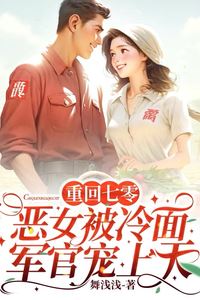
In 1980, a modern woman named Wen Nian transmigrates into the body of a supporting female character from a novel titled "Back to the '80s: Marrying a Military Officer." The original character shared her name and was destined to marry an abusive man named Zheng Jiahe, only to be beaten to death while still defending him. Wen Nian wakes up in Shanghe Village, a dilapidated rural setting, where she is immediately confronted by her adoptive father Wen Jiancheng, stepmother Chen Qiuwei, and stepsister Wen Xue. The family has been scheming to swap identities: Wen Xue will impersonate Wen Nian to marry into the prestigious Lu family, while the real Wen Nian is forced to marry Zheng Jiahe. Wen Nian fights back against their abuse, threatening to expose their schemes if they harm her, and manages to turn the tables by spreading rumors that Lu Hanzheng, the intended Lu family groom, has a sexual defect. This causes Wen Xue to refuse the marriage, forcing the family to reconsider their plans. Meanwhile, Lu Hanzheng, the regiment commander of the 18th Regiment and son of Capital Military District Commander Lu Binghuai, has been searching for nineteen years for the daughter of his fallen comrade, Wen Qingguo, who saved his life in battle. Unaware that the child he seeks is the girl he rescued from a river, Lu Hanzheng encounters Wen Nian when he comes to her family home to retrieve his uniform. Wen Nian, recognizing him as the handsome man she briefly saw, decides to use this opportunity to stay within the Lu family rather than face the Zheng marriage. She claims to be Lu Hanzheng's girlfriend, fabricating a romantic backstory involving a summer meeting in Shanghe Village. Despite his amnesia from a recent mission injury, Lu Hanzheng agrees to let her stay temporarily to care for him, though he remains suspicious and distant. Wen Nian moves into the Lu family compound, where she impresses the household with her exceptional cooking skills, enhanced by a mysterious spirit milk from a jade pendant space she possesses. She navigates the complex dynamics of the Lu household, including the stern but caring Lin Siyun, the authoritative Lu Binghuai, and the shy adopted sister Jiang Xixi. As she cares for the recovering Lu Hanzheng, she continues to pursue him romantically, attempting to deepen their connection while gathering information about his past. Lu Hanzheng, though initially cold and guarded, begins to notice her genuine kindness and culinary talents. He investigates her background and discovers inconsistencies in her story but finds no evidence of espionage or malicious intent. The story follows Wen Nian's efforts to secure her place in the Lu family, avoid the tragic fate of the original character, and uncover the truth about her own identity while navigating the political and social landscape of 1980s China.
Latest Release
DateGroupRelease
2026-08-11shanghai fantasy c112
2026-08-11shanghai fantasy c111
2026-08-11shanghai fantasy c110
2026-08-11shanghai fantasy c109
2026-08-11shanghai fantasy c108
2026-08-11shanghai fantasy c107
2026-08-11shanghai fantasy c106
2026-08-11shanghai fantasy c105
2026-08-11shanghai fantasy c104
2026-08-11shanghai fantasy c103
2026-08-11shanghai fantasy c102
2026-08-11shanghai fantasy c101

Community Reviews

Rating(4.4 / 5.0, 9votes)
5 stars
6(67%)
4 stars
1(11%)
3 stars
2(22%)
2 stars
0(0%)
1 stars
0(0%)

Popular reviews

... Read More
The dialogue in this novel is genuinely exceptional, and I need to talk about why. First, let's address the elephant in the room: Lu Hanzheng's voice is perfectly distinct. He speaks in short, clipped sentences. 'No need.' 'I have something to do tomorrow.' 'Whether I marry or not is my personal business.' He doesn't elaborate. He doesn't soften his words. Even when he's confused or affected, his dialogue stays rigid and formal. 'Comrade Wen, please show some respect.' The use of 'comrade' is brilliant—it's both a period-appropriate form of address and a deliberate emotional barrier. He's creating distance through language, and it's both funny and heartbreaking. Wen Nian's voice is completely different. She's warm, playful, occasionally sarcastic (especially in her internal monologue), but her spoken dialogue is gentle and deliberate. 'Little cutie, help sister taste it and see if it's good.' 'Eating more greens will make you more beautiful!' She code-switches between her bold, seductive exterior and her genuinely caring interior, and the dialogue reflects that duality. When she's being strategic, her words are sweet and soft. When she's being real—with Jiang Xixi, for instance—there's a warmth that feels unguarded. The supporting characters also have distinct voices. Lu Father is gruff but caring, his dialogue rough around the edges but his intentions clear. 'Little Wen, your cooking is quite good, but don't overwork yourself.' Lin Siyun is all polished hospitality—'Yes, Little Wen, don't be polite with us. If you want anything, just tell Auntie.' But you can feel the calculation underneath. Lu Binghuai is all authority and impatience, slamming teacups and barking orders. What's remarkable is how the dialogue reveals character without any narration needed. When Lu Hanzheng says 'I have something to do tomorrow. I won't be home' in response to his father's marriage pressure, you learn everything about their relationship in one line. He's not just refusing a plan—he's refusing his father's authority, his father's timeline, his father's entire framework for his life. The internal monologues are where the dialogue really shines. Wen Nian's thoughts are hilarious and sharp: 'These two men must have been enemies in a past life. They started quarreling as soon as they met.' 'She definitely wouldn't keep her distance.' 'What to do!' These interjections break up the dialogue beautifully and give us access to her true feelings without her having to say them out loud. The author also uses silence as dialogue. Lu Hanzheng's refusal to speak at dinner, his averted gaze, his physical withdrawal—all of these are communicated without words and they're more powerful than any speech could be. When he 'expressionlessly withdrew his probing look and continued eating,' that's a complete emotional statement. And the humor! 'Tsk tsk! Hard to imagine.' That's Wen Nian thinking about her father's appearance, and it's so casually funny. The author doesn't take herself too seriously, and that tone carries through the entire novel. Even the romantic tension has moments of genuine comedy—like when he pinches her arm and her whole limb goes numb. That's not just physical description; it's slapstick romance at its finest. The narrative voice itself is worth discussing. It's third-person limited, mostly following Wen Nian's perspective, but it dips into Lu Hanzheng's thoughts at key moments. This creates a delicious asymmetry—we know what she's thinking but we only occasionally get his, which makes those moments feel like gifts. When the narration tells us 'That confused him even more,' it's earned because we've been waiting for access to his head. Overall, the dialogue feels natural, period-appropriate without being archaic, and perfectly calibrated to each character's personality. Every line serves double duty—advancing the plot while revealing character. That's craft.
... Read More
I need to talk about the tension in these chapters because WOW. The author really understood the assignment. Let me paint the scene for you: Wen Nian throws herself into Lu Hanzheng's arms, starts reciting this elaborate fake love story, and Zhao Hua is standing outside the door like he's witnessing a crime scene. Meanwhile, inside the room, this man who doesn't remember her is being held by a woman who IS pretending to love him, and somehow both of them are experiencing things they can't explain. The most devastating line in all of this isn't even romantic—it's when Wen Nian thinks to herself that she needs to make him fall in love with her so that when the time comes to 'turn the tables,' he might go easy on her. She's planning her emotional betrayal before she's even allowed herself to feel anything real. That's not a romance protagonist; that's a spy who's already lost. But then—then the author gives us THIS moment. Wen Nian climbs off his lap, pretends to casually touch his chest, and the narration goes: 'Compared to the young studs at those clubs, this man was on a whole different level. Who would've thought Wen Nian would have a day where she could taste fine rice.' And I'm sitting here like—SHE'S NOT EVEN TRYING TO DENY IT ANYMORE. The slow burn here is masterful. Lu Hanzheng keeps saying 'explain clearly' and 'what exactly happened between us?' like he's conducting an interrogation, but the text keeps undermining him. His body betrays him every single time. When she says his lips were 'soft and moist, really kissable' and that he said she 'smelled good—especially nice—making you want to do bad things,' he chokes on his drink. The man cannot handle his own fabricated backstory. And the ending—'Wait.' Just one word. He stops her from leaving. After everything, after all the scrutiny and suspicion, he can't let her walk away. I'm not even mad about it. I'm just... invested.
... Read More
Okay so I need to talk about Wen Nian because this girl is operating on a whole other level. She transmigrated into a novel, found herself in danger, and immediately decided the smartest move was to cling to the male lead. But here's the thing—she wasn't just going through the motions. When she was hugging him, when she was inhaling his scent, when she was making up this whole dramatic backstory about Shanghe Village and the river... was any of it fake? Because the text literally says she found herself wanting to touch his Adam's apple and that she was thinking about how she could never afford to taste 'fine rice' like this in her previous life. That's not pure calculation. That's attraction bleeding through the performance. And Lu Hanzheng? This man is a walking contradiction right now. He has amnesia—he genuinely doesn't remember her—but his body remembers everything. The text describes his jaw tightening, his body stiffening, his veins bulging on his forehead. He keeps telling himself she's lying, that he'd never be the kind of man who abandons a woman, but he also can't bring himself to actually push her away. There's this moment where he chokes on his drink because her 'confession' gets too scandalous. The man is losing the battle between his brain and his instincts. Then there's Zhao Hua—honestly he's the funniest character in this entire scene. He's standing outside the door like a nervous sentry, watching his stoic commander get completely flustered by this girl. His entire image of the commander is collapsing in real time. I couldn't stop laughing at his internal panic. But also, he's the only witness to this whole performance, which makes him the most important person in the room despite having zero dialogue after the first few lines. And Lin Siyun—she's playing a long game. She brought Wen Nian here as a 'nutritionist' but really she's testing whether this girl can stay in the Lu family. The fact that she breathes a sigh of relief when Lu Hanzheng accepts the soup tells you everything about how difficult he was before his amnesia. She's not just trying to help her stepson; she's trying to survive him. That's a mother's love right there.
... Read More
Let me start by saying the pacing in these chapters is absolutely surgical. The author opens with Wen Nian in the kitchen, getting tested on her cooking skills, and within a few paragraphs we're already at the hospital. No filler. No unnecessary transition scenes. Just: you need to cook, you need to prove yourself, now go do it. The structure of the hospital scene is particularly brilliant. It moves through three distinct beats: first, the soup offering (tension—will he accept it?), second, the physical escalation (more tension—what is she doing?), and third, the verbal interrogation (the release—now we get answers, or at least the attempt at them). Each beat escalates the stakes while simultaneously revealing new information about both characters. What really impressed me is how the author uses Zhao Hua as a pacing device. Every time the scene gets too intense between the two leads, we cut to Zhao Hua outside the door, blushing and stammering and sneaking peeks. It's comic relief, yes, but it also gives the reader a moment to breathe before the next wave of tension hits. Without him, this scene would've been suffocating. The chapter titles also do heavy lifting here. 'I'm Your Girlfriend' is such a bold, declarative title that it immediately sets expectations—this is the moment of confrontation, the moment of truth. And 'Scrutiny' follows naturally, shifting the power dynamic from emotional performance to cold analysis. The titles themselves create a rhythm. One thing I will say: the ending feels slightly rushed. Wen Nian goes from 'I'm your girlfriend' to packing up the soup and walking away in what feels like two paragraphs. The emotional whiplash is real, but I wanted more time with her breaking point. Still, the single word 'Wait' as a cliffhanger is perfect. It's minimal, it's powerful, and it makes you immediately want to read the next chapter.
... Read More
Beneath the romantic comedy surface, this novel is wrestling with some genuinely interesting themes about identity, belonging, and the performances we maintain to survive. The military jacket is the central symbol, and it operates on multiple levels. On the surface, it's a romantic token—something intimate exchanged between two people, worn close to the body, carrying scent and memory. But it's also a symbol of protection and belonging. Wen Nian wears it because she's cold, yes, but also because wearing his uniform is a way of claiming connection to him, to the Lu family, to a place where she's wanted. And when he wraps it back around her, it's both rejection and care—pushing her away while simultaneously covering her. The hands motif is equally significant. Lu Hanzheng studies her hands and finds 'ten slender fingers, like fine mutton fat jade.' In a story about a girl pretending to be someone she's not, the hands are the truth-teller. They can't be disguised. They reveal her actual upbringing, her actual class background, her actual life. This ties into the larger theme of authenticity versus performance. Wen Nian has performed poverty, performed rural hardship, performed the role of the grateful orphan. But her hands keep betraying her true self. The house itself is a symbol. It's a Western-style two-story house belonging to a military family, filled with strict rules about cleanliness, food, and behavior. It represents order, tradition, military discipline—all the things Wen Nian, with her modern sensibilities and restaurant empire, doesn't naturally fit into. Yet she's making herself at home, learning the rhythms, cooking the meals, earning her place. The house is both a prison and a sanctuary, and her relationship to it mirrors her relationship to the Lu family and to Lu Hanzheng. The theme of inherited guilt and obligation runs through everything. Lu Binghuai took in Wen Nian out of respect for her father, Wen Jiancheng, who was his comrade. Jiang Xixi was taken in because her grandfather died covering Lu Binghuai's retreat. The Lu family's hospitality is built on debts to the dead. And Wen Nian is acutely aware of this: 'They were only harboring her out of respect for her father.' She can't just exist here—she has to earn her place through service, through cooking, through proving her worth. But the deepest theme here is about memory and identity. Lu Hanzheng has lost his memory, and the novel asks: who are you without your past? Is he still the man who abandoned Wen Nian? Is he still capable of kindness? His actions in the present—investigating her, protecting her, being confused by her—suggest that character is more than memory. Something fundamental about him persists even when he can't remember why. And for Wen Nian, the question is equally pressing. She's living a lie, playing a role, but her feelings are real. Does her performance invalidate her emotions? Or does the fact that she's choosing to be kind, to cook, to care for Jiang Xixi, prove that her core self is intact regardless of the facade? The spiritual nourishing lotion is a fascinating symbolic element too—this modern, almost magical substance that transforms ordinary food into something transcendent. It's her secret weapon, her connection to her past life, her way of contributing something extraordinary to an ordinary setting. It represents the hidden value she brings, the thing she has to offer that can't be seen on the surface. This is a story about people performing identities, about the gap between who we appear to be and who we actually are, and about whether genuine connection is possible when both people are hiding something. The romance is the vehicle, but the destination is much deeper.

... Read More
Okay so let me just say—Lu Hanzheng is simultaneously the most frustrating and endearing man in this entire novel. Like, he has amnesia, yes, but the way he goes about it is chef's kiss. He literally investigates Wen Nian from top to bottom, checks every detail of her past, and then stands there in his own apartment going, 'Was I really this despicable?' while she's literally in his arms trying to get answers. The dynamic between them is everything. He's this rigid, upright military man who can't even figure out how to hold someone without pinching their arm to create distance. 'Please show some respect, Comrade Wen.' COMRADE WEN. She's standing there in a barely-there nightgown wearing his jacket, and he's addressing her like they're at a battalion meeting. And yet—his body betrays him every single time. He wraps the jacket around her, bundles her up, doesn't push her away hard even though his mind is screaming to do exactly that. What I love is how the text reveals his internal conflict through observation. He studies her hands. Ten slender fingers, like fine mutton fat jade. No calluses. No marks of farm work. He's putting together the puzzle of who she really is, and every clue contradicts what he expects. She acts like a bold, seductive girl from the countryside, but her hands tell a completely different story. That's when it hits him—'That confused him even more.' And Wen Nian? She's playing this game with such delicious confidence. She knows he's confused. She knows he's investigating her. And she keeps pushing anyway, throwing herself into his arms like a 'limp, soft creature' while internally she's probably cackling. She called him an 'innocent big puppy' earlier and honestly? Same energy. She likes him even more now. What to do! The father-son tension is also wild. These two argue from the moment they see each other. Political views, marriage pressure, the whole thing. 'What could be more important than your marriage? You're not getting any younger.' Bro, you literally just got a concussion and you're already pressuring him to marry. And Lu Hanzheng's response is just cold indifference. No need to explain. No need to justify. He's been sleeping at the barracks for a reason and now we see why. But the real relationship gold is the Jiang Xixi subplot. This adopted sister, so timid and reclusive, hiding behind corners like a little hamster. Wen Nian feeding her brown sugar glutinous rice cakes and whispering 'eating more greens will make you more beautiful'—the girl turns red like a startled rabbit. This is the first time anyone's shown her genuine warmth, and you can feel it in every line. Also side note: Wen Nian's internal monologue about what it would be like if a man grew up looking like her father is genuinely the funniest thing I've read all week. 'Tsk tsk! Hard to imagine.' She's living with these people and already making jokes in her head. She's not just surviving this situation—she's enjoying it. The relationship web here is so rich. Every character has layers, motivations, history. Lu Binghuai's guilt over Wen Nian's father. Lin Siyun's cold calculation masked as hospitality. Jiang Xixi's quiet loneliness. And Lu Hanzheng—oh, Lu Hanzheng—is this man who's trying to reconcile a past he can't remember with a present that keeps pulling him toward someone he's convinced he wronged. The tension is unreal.
See all reviews

Characters

See all characters

Custom lists

See all custom Lists