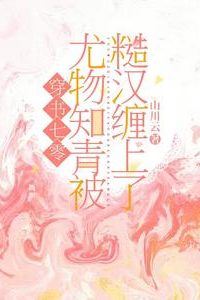
“Transmigrated into a 1970s Novel: The Stunning Educated Youth Gets Entangled with a Rough Man”
+Add to Custom List
Genres:
Novel Info

Summary

... Read More

Tang Wan transmigrates into a period novel, inhabiting the body of a cannon-fodder female supporting character who shares her name. The novel’s protagonist, Zhong Ling, is a reborn woman determined to alter her tragic past. In her previous life, Zhong Ling married a local man in the countryside, only to abandon him and their children after the reinstatement of college entrance exams. She married a city man who abused her, leading to a regretful death. Reborn, Zhong Ling resolves to secure a prosperous life with the male lead, Zhao Dong, thereby preventing the original timeline where she marries the local man. Tang Wan, aware of her role as the male lead’s former wife in the original plot, decides to avoid Zhong Ling and live quietly. However, she discovers a red pendant in her suitcase that grants her access to a spatial dimension containing a spiritual spring, fertile land, and storage capabilities. This space is identical to the cheat item originally belonging to Zhong Ling, creating an immediate conflict of interest.

The core conflict escalates when Tang Wan intervenes in a drowning incident at the river. Zhong Ling, having saved a boy to gain favor with his parents, deliberately kicks Tang Wan underwater to eliminate her as a rival for Zhao Dong’s attention. Tang Wan is rescued by Qin Zheng, a formidable and intimidating man in the village who has a reputation for violence and a mysterious past. Qin Zheng takes Tang Wan to his home, where she changes into a qipao and shares a meal with him and his grandmother, Grandma Bai. Tang Wan realizes Qin Zheng is a powerful figure in the novel’s later timeline, known for his business acumen and strength. Her encounter with him shifts her focus from avoiding trouble to building a strategic alliance, as she finds him physically attractive and morally reliable compared to the novel’s male lead.

Tang Wan’s survival depends on navigating the hostile environment of the educated youth camp and the village. She uses her spatial abilities to store food and supplies, allowing her to maintain a better quality of life than her peers. She befriends Sister Yan Hong and the local children, Luo Ying and Cuicui, gathering information about Qin Zheng’s background. The villagers whisper that Qin Zheng killed someone and beat his own uncle, but Tang Wan remains skeptical, trusting her own observations of his protective and honorable actions. She returns the favor for his help by bringing gifts to his home, including malted milk powder and beef jerky, which endears her to Grandma Bai. The grandmother, sharp-tongued and protective, approves of Tang Wan, further solidifying the bond between Tang Wan and the Qin family.

A key turning point occurs when Tang Wan goes mushroom picking in the back mountain. She encounters a wild boar, a dangerous animal that chases her until Qin Zheng and his hunting companion intervene. Qin Zheng kills the boar and carries Tang Wan back to his home, where Grandma Bai treats her injuries. Tang Wan sprains her ankle and sustains cuts, giving her a legitimate excuse to skip labor and stay with the Qin family for recovery. This event deepens her connection with Qin Zheng, who takes responsibility for her well-being and ensures she receives proper care. Meanwhile, Zhong Ling continues her schemes, attempting to manipulate social situations to isolate Tang Wan and secure Zhao Dong’s affection. Tang Wan counters these moves by exposing Zhong Ling’s hypocrisy regarding the acceptance of gifts from the boy’s parents.

The story direction moves toward Tang Wan establishing a secure position in the village while avoiding the fate of the original character. She leverages her spatial storage to manage resources, ensuring she is not dependent on the meager rations of the educated youth. Her relationship with Qin Zheng evolves from gratitude to mutual respect and potential romance, as he protects her from physical dangers and social intrigue. Tang Wan plans to use her knowledge of the novel’s plot to anticipate threats, particularly from Zhong Ling, who views her as an obstacle to her reborn goals. The narrative sets the stage for Tang Wan to carve out an independent life, supported by Qin Zheng and his grandmother, while navigating the political and social complexities of the rural setting during the educated youth era.

Latest Release
DateGroupRelease
2026-08-11shanghai fantasy c48
2026-08-11shanghai fantasy c47
2026-08-11shanghai fantasy c46
2026-08-11shanghai fantasy c45
2026-08-11shanghai fantasy c44
2026-08-11shanghai fantasy c43
2026-08-11shanghai fantasy c42
2026-08-11shanghai fantasy c41
2026-08-11shanghai fantasy c40
2026-08-11shanghai fantasy c39
2026-08-11shanghai fantasy c38
2026-08-11shanghai fantasy c37

Community Reviews

Rating(3.8 / 5.0, 5votes)
5 stars
1(20%)
4 stars
2(40%)
3 stars
2(40%)
2 stars
0(0%)
1 stars
0(0%)

Popular reviews

... Read More
Let's talk stakes because this story is quietly ratcheting them up and I didn't even notice until I was already sweating. On the surface, Tang Wan's stakes are simple: survive the countryside, recover from her injury, avoid Zhong Ling's schemes. But the author keeps adding layers. First there's the physical stake — her foot is badly sprained, she needs care, she's vulnerable in a place where female educated youth face real danger. The text doesn't shy away from this: "female educated youth had been humiliated by villagers multiple times, often ending with forced marriage, and those with strong spirits sometimes committed suicide." That's not subtle. That's the author slamming the door open and showing you the stakes in blood. Then there's the social stake — everyone knows she's living at Qin Zheng's house. Rumors are forming. In this setting, a rumor about a young woman living with a feared, unknown man is not just gossip, it's a threat to her reputation and safety. And then there's the personal stake — someone was in her belongings. Not to steal, but to search. For what? The pendant? The spiritual spring water? Whatever it is, someone knows she's different and they're investigating. "Was it for this?" Tang Wan touches the pendant mark on her chest. And she immediately moves her valuables back into her space. She's adapting. She's learning. But the question hangs there — who knows, and how much do they know? The movie night is coming. The male supporting character is coming. Zhong Ling is coming. And Tang Wan is sitting in a village house with a sprained foot, a mysterious protector, and a secret she can't tell anyone about. The stakes aren't rising — they're already at the ceiling and the author just keeps adding another floor.
... Read More
I need to talk about Qin Zheng because this man is doing the most with the least. Absolutely zero dialogue, just presence, and somehow that's more intimidating and more attractive than any spoken word could be. The way the author writes him — he notices Tang Wan's foot. He scans it. She feels uncomfortable. He doesn't look away. That's it. That's the entire scene and I'm shook. He's reading her like a book and she has no idea how to respond to someone who doesn't perform emotions but clearly observes everything. And then there's the dynamic with Grandma Bai, which is honestly the most wholesome thing in this whole chapter. She changes Tang Wan's dressing, she cooks wild boar meat, she even saves pork trotters for Tang Wan's recovery. But what I love is how she handles Zhong Ling and Sister Yanhong. She doesn't coddle them. She doesn't pretend to be sweet. She's blunt, practical, and then immediately tells Tang Wan: "Sometimes appearances matter more than actions. People like that can get things done." That's not just wisdom, that's survival advice. Grandma Bai has clearly been in this village long enough to know that being liked and being effective are two different things. "These two really know how to put on a show." — and Grandma Bai says this with a smile on her face, which means she's not angry, she's just amused. She sees through the performance and she's not even bothered by it. Meanwhile, Tang Wan is navigating this whole web of relationships — the fake friends who visit with concern, the villagers who gossip, the scary man who cooks and cleans and somehow makes her feel safe without saying a single word about it.
... Read More
I have to talk about how the pacing works in these chapters because it's doing something really clever. It starts slow — recovery, dressing changes, cooking, drying mushrooms. It feels almost slice-of-life. And then it doesn't. It just... pivots. Zhong Ling and Sister Yanhong show up and suddenly the whole dynamic changes. The conversation is polite on the surface but there's this undercurrent of investigation and suspicion. Tang Wan is reading Zhong Ling's intentions like a code, and the reader is reading Tang Wan's reading, and it's layered like that. Then we cut to the rumors spreading through the village. This could have been filler — just worldbuilding texture — but it's actually advancing the plot because it establishes that Tang Wan's presence at Qin Zheng's house is already creating a narrative, and narratives in this setting have consequences. The villagers think she saved Grandma Bai's life. She didn't. Grandma Bai saved her. But the rumor is more powerful than the truth, and that's a theme the author keeps coming back to. "In the countryside, there really were no secrets." — and this line is doing so much work. It's not just a statement about gossip, it's a statement about survival. In a place where everyone knows everyone's business, your reputation is your armor or your target. And then the box scene. The pacing just drops. Everything slows down. Tang Wan notices something small — the lock is facing the wrong direction. She opens the box. Everything looks fine. But nothing is fine. The chapter ends with Qin Zheng showing up to pick her up instead of Grandma Bai, and I was not ready for that energy shift. The author knows exactly when to speed up and when to make you slow down and stare at the details. That's craft.
... Read More
Okay so let me just say this plot is doing things and I'm here for it. The movie night setup is honestly genius because it's not just some random event — it's literally the turning point in the original timeline where the male supporting character swoops in and corrupts Zhong Ling. But Tang Wan knows this. She's sitting there recalculating everything, and instead of running from the conflict, she decides to let the misunderstanding fester. That's not passive, that's calculated. What really struck me is how the author layers the tension. On one level, you've got the physical danger — Tang Wan's foot is sprained, she's recovering, vulnerable. On another level, there's the social danger of living at Qin Zheng's house and everyone in the village knowing about it. And then there's the psychological danger of Zhong Ling coming to visit, pretending to care while secretly investigating. Three layers of threat, all happening simultaneously. The box scene though — that's where the plot really tightened for me. Tang Wan comes back, notices the lock is facing inward instead of outward, opens it, and everything's untouched. But someone was in her stuff. Who? Why? The author doesn't answer, and honestly that's the best way to handle it. It creates this lingering unease that follows Tang Wan (and the reader) through the rest of the chapter. "Someone must have touched her box but hadn't taken anything." That line hit me like a cold shower. Because it means this person wasn't looking for money or valuables. They were looking for something specific. And Tang Wan immediately connects it to the pendant mark on her chest. The plot is connecting threads I didn't even realize were there.
... Read More
I'm obsessed with how the author builds this world without ever stopping to explain it. You just absorb it through scenes and details and suddenly you're living in 1970s rural China and you don't even realize it happened. Let me start with the mushroom scene — Grandma Bai is drying mushrooms in the yard with a special rake, and the whole thing feels so leisurely, so refined for a village setting. Tang Wan thinks: "how nice this life was." And then immediately they're eating wild boar meat that's been stewed until tender, and the whole yard smells wonderful. The contrast between the quiet domesticity and the raw survival element is what makes this world feel alive. The movie screening detail is perfect worldbuilding. It's not just a plot device — it's a cultural moment. Nearby villages come back, educated youth who came from the city still show up for the liveliness. It paints a picture of a community that doesn't get much entertainment and treasures these rare events. And then there's the fear of Qin Zheng. The children go silent. Adults change direction to avoid him. This isn't described through exposition — it's shown through Tang Wan's experience walking beside him. "Even before the two reached the children, the kids spotted Qin Zheng and immediately went silent, as if the fire had been snuffed out." That metaphor — the fire snuffed out — that's the kind of line that makes the world feel tangible. You can feel the energy shift. You can feel why everyone in this village is afraid of him, and you can feel why Tang Wan is starting to understand that fear isn't the whole story.
See all reviews

Characters

See all characters

Custom lists

See all custom Lists