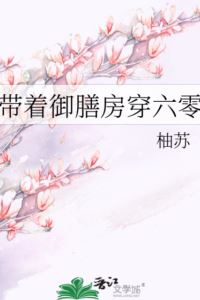
Transmigrated to the 1960s with the Imperial Kitchen
+Add to Custom List
Genres:
Novel Info
  • Author:
  • 柚苏
  • Status:Ongoing

Summary

... Read More

Yin Xiaoman, a former Head Maid of the Imperial Kitchen, dies after eighteen years of service only to awaken in the body of a woman with the same name in 1964 China. She finds herself in a dilapidated house in Shuanggui Village, responsible for two young children: Da Bao, a five-year-old boy who has become mute from trauma, and Erniu, a toddler who calls her mother. The original owner of this body had been married to Shen Qingyun, a military officer, but was forced out of her in-laws' home by his eldest sister-in-law, Liu Chunxia, who seized her dowry and property. Now destitute and starving, Yin Xiaoman must navigate the harsh realities of rural life while protecting the two children who fear her.

Upon realizing her situation, Yin Xiaoman discovers she can teleport to a preserved room in her former palace residence, which contains valuable food supplies and silver. This ability becomes her lifeline, allowing her to provide better nutrition for the children and improve their living conditions. She uses palace recipes to make steamed buns and noodle soup, transforming the children's health and demeanor. Da Bao begins to speak again, shedding the muteness that had plagued him, while Erniu gains trust and affection for her new stepmother. Yin Xiaoman's culinary skills and dignified bearing contrast sharply with the original owner's reputation as a difficult woman, slowly winning over her skeptical in-laws, particularly her elderly father-in-law Shen Mancheng and sickly mother-in-law Zhang Jinfeng.

The core conflict arises from the Shen family's internal dynamics. Liu Chunxia, the dominant eldest daughter-in-law, views Yin Xiaoman as a threat to her authority and resources. She initially refuses to return the house assigned to Yin Xiaoman's branch, even locking it and moving her own children inside. Yin Xiaoman counters this by inviting two Educated Youth girls to stay, using their political status to pressure the Shen family. The confrontation escalates until Shen Mancheng, fearing scandal and social disgrace, forces Liu Chunxia to yield. He provides Yin Xiaoman with flour and money, marking a shift in the family power structure.

A pivotal turning point occurs when Gao Chong, a subordinate of Shen Qingyun, arrives with an invitation for Yin Xiaoman and the children to join him at the remote military unit near the coast. Unlike the original owner, who refused due to fear of war and unfamiliarity, Yin Xiaoman accepts immediately. She recognizes that the military unit offers food security and a fresh start, far from the village's hostility. She prepares for the journey by gathering supplies from her palace room, including salted duck eggs and other preserved foods, while also securing train tickets through Gao Chong's assistance.

As Yin Xiaoman plans her departure, she learns that Shen Qingyun is scheduled to die in a combat mission within six months. Determined to alter this fate, she resolves to reach the military unit before the tragedy occurs. Her goal is not only to save her own life and that of the children but also to prevent the cascade of misfortunes that befell the original owner, including Da Bao's death and her own suicide. The story follows her strategic preparation, her growing bond with the children, and her confrontation with the hostile elements in her new environment, all while leveraging her unique ability to access resources from another time period to secure a future for her family.

Latest Release
DateGroupRelease
2026-08-11shanghai fantasy c33
2026-08-11shanghai fantasy c32
2026-08-11shanghai fantasy c31
2026-08-11shanghai fantasy c30
2026-08-11shanghai fantasy c29
2026-08-11shanghai fantasy c28
2026-08-11shanghai fantasy c27
2026-08-11shanghai fantasy c26
2026-08-11shanghai fantasy c25
2026-08-11shanghai fantasy c24
2026-08-11shanghai fantasy c23
2026-08-11shanghai fantasy c22

Community Reviews

Rating(3.8 / 5.0, 30votes)
5 stars
8(27%)
4 stars
10(33%)
3 stars
9(30%)
2 stars
3(10%)
1 stars
0(0%)

Popular reviews

... Read More
I keep coming back to this one detail: Yin Xiaoman's household registration. It's not just a plot device — it's the entire thesis of the story compressed into a bureaucratic detail. In this world, your right to exist, to eat, to survive, is determined by a piece of paper that says where you belong. And she doesn't belong anywhere. Her registration is at a closed school. The kids' registrations are with a military unit that isn't there. They are ghosts in the system. 'When I married into this family, I brought fifty yuan with me, but it was all taken by my sister-in-law.' Fifty yuan. That's not just money — that's her severance from her own family, her dowry, her safety net, all absorbed into the Shen family's economy. She entered this marriage with nothing and left with less than nothing. The house itself is the biggest symbol here. It's not just shelter — it's the last tangible thing Yin Xiaoman has to trade for food. 'I lent them the house, and in return, they gave me five yuan a month to help me buy food.' She's renting back her own home from strangers because her family stole her ability to live in it. And when the father takes it away too, he's not just taking a building — he's removing the last thread connecting her to autonomy. But here's what I think the book is really saying: weakness is not virtue. Yin Xiaoman could have stayed silent, kept her head down, let the Shen family consume her. Instead, she performs her desperation so perfectly that even the oppressor's mother breaks down and cries. The system that was designed to keep her invisible becomes the stage where she forces everyone to see her. 'You gave me face today, but what about tomorrow?' That question isn't just about food — it's about the social contract. And she's demanding a renegotiation.
... Read More
The opening image of this dilapidated old house is just so visceral. "The thin cotton mattress on the earthen bed made her back ache." That's it. Two sentences and I'm feeling the hardness of that bed, the cold seeping through, the yellowed brittle paper on the windows. The author doesn't overdescribe but every detail lands like a punch. This isn't some romanticized historical setting—this is real, grinding poverty where a half-eaten sweet potato on the floor is a luxury event. And the village gossip scene! Those neighbors loudly discussing Yin Xiaoman outside her window, making sure she can hear them: "I'm telling you Da Bao, don't count on your stepmother." The cruelty of performative concern, of people who would rather watch a woman and two children starve than help them. It paints this whole world where survival is everyone for themselves and the weak get devoured. The food descriptions are almost unbearable in their specificity. That dark coarse grain bun with its "faint sour taste" that makes even an Imperial Kitchen head maid lose her appetite. The two rough flatbreads still slightly warm, covered with a clean white cloth like they're precious. The cornmeal barely covering the bottom of the rice jar. These details make the world feel so alive and so brutal. You can taste the hunger through the prose.
... Read More
I need to talk about how Yin Xiaoman speaks—or rather, how she doesn't. This woman spent years as Head Maid of the Imperial Kitchen, surrounded by servants who anticipated her every need, and now she's in a body where she has almost nothing to say and everything to do. Her dialogue is sparse but it hits like a hammer every time. "Go wash your hands." That's it. Four words to a five-year-old who's been surviving on fear and coarse grain, and it's the most parental thing ever written. "Come up and eat." "Watch over your sister." These aren't requests, they're commands from someone who's used to giving orders in the kitchen, but they're also the first time these kids are hearing kindness wrapped in authority instead of abuse wrapped in cruelty. And the kid dialogue! Erniu translating for her brother, "Mother, Brother said that you should eat the flatbread"—this three-year-old is basically the family interpreter because Da Bao can't speak. The voice distinction between the kids is so sharp. Erniu is tentative but warm, already calling her "Mom" like it's the most natural thing. Da Bao is all gesture and frustration, pounding his chest to show he's an adult, eyes red with unspoken words. You can hear their voices even when they can't speak. The village gossip voices are also distinct—those loud, judgmental women whose dialogue is all performative concern masking pure malice. "Oh dear, this poor thing" while making absolutely sure Yin Xiaoman hears every word. The author's voice throughout is this perfect blend of warmth and brutality, never sentimental but always deeply feeling.
... Read More
Let me just talk about one specific scene because the atmosphere in this book is INSANE and I need to highlight it. The whole confrontation happens with a thin wooden door separating the screaming match in the East Room from the rest of the courtyard. And the author uses that door like a film director uses a cutaway — we hear the noise, we feel the vibration through the walls, but we don't see what's happening inside. It's terrifying. 'Even though the door separated them, the noise from the East Room was still clearly audible, mixed with the cries of the two children.' That detail about the children's cries混ing with the adults' shouting — it turns the whole house into a pressure cooker. You can feel the walls closing in. And the yard itself — Shen Mancheng, his wife, the two Educated Youth girls, the three women, all standing around like an audience at a trial. The spatial arrangement matters: Yin Xiaoman is center stage with the kids, Shen Mancheng approaches her like a prosecutor, and the girls are positioned as both witnesses and potential jury. When Liang Xiaoyu and Li Fang move toward the door to go to the village office, Shen Mancheng 'suddenly panicked' — because their physical movement toward the exit is a threat to his control of the narrative. The visual of Zhang Jinfeng 'abruptly turned and quickly walked toward the house on the east side' while wailing about starving herself — it's almost theatrical, almost too much, except the setting is so grounded and specific that it feels real. The flour jar, the handkerchief bundle, the fifty yuan that was taken. These objects anchor the scene in a material world where food and money aren't abstract concepts but survival. The world feels lived-in because every prop has weight.
... Read More
Can we just appreciate the breakfast scene for a moment? Because the author described it in a way that made me genuinely feel hungry and sad at the same time. "Each of them held a large bowl, inside of which was a thin cornmeal porridge so clear that they could see the bottom of the bowl." I read that sentence three times. You can see the bottom of the bowl. That's not a description of food—that's a description of barely surviving. And then the wicker basket with steamed sweet potatoes, just enough for each person to have one. One. Not two. One. The detail about drinking water to trick your stomach is the kind of thing that makes you realize how real this world is. This isn't a generic historical setting—this is a specific time, a specific place, a specific kind of poverty that the author clearly researched or experienced. And the house itself! The west room with the unfolded bedding on the kang, the scattered items showing someone has been living there secretly. You can picture it. The darkening sky that Shen Mancheng looks out at and predicts snow. The atmosphere shifts from the cramped, tense dining room to the cold, uncertain weather outside. It all builds this feeling of hardship and resilience. The contrast between the Shen family's poverty and their relative wealth in the village is also a nice touch. They're not the poorest, but they're struggling. And Liu Chunxia's stinginess despite having enough money if she chose to spend it—that's a character detail that also worldbuilds. It tells us about rural family dynamics, about how money and power work in this community. Every scene feels lived-in. That's rare.
... Read More
Everything in this story revolves around food and it's not even subtle about it. The sweet potato dropped on the floor. The two warm flatbreads. The dark sour bun. The nearly empty rice jar. These aren't just details—they're the language through which this story expresses love, betrayal, survival, and hope. That dark corn bun is the central symbol and it breaks my heart every time I think about it. Yin Xiaoman, who once tasted royal feasts, chokes it down because a five-year-old made it for her. She could throw it away, she could refuse, but she doesn't. She eats it and feels the burning pain in her throat and keeps going. That's not just about survival—that's about refusing to let that child's effort go to waste. It's about dignity in the face of degradation. And the flatbreads Da Bao steamed before dawn—covered with a clean white cloth like they're offerings. This kid who can barely speak communicates his love through food because that's all he has. The original Yin Xiaoman saw them as burdens; the new one sees them as acts of devotion. The transformation of this story isn't about getting rich or revenge—it's about learning to see love in the things that are actually available, the warm flatbreads and the crumbled half-pieces of bread that a three-year-old offers. The cliff she jumps from in the dream? That's the old Yin Xiaoman choosing death over poverty. The new one chooses to live in it and make it bearable. That's the real theme here—not escaping suffering but transforming how you meet it.
See all reviews

Characters

See all characters

Custom lists

See all custom Lists