Summary

... Read More

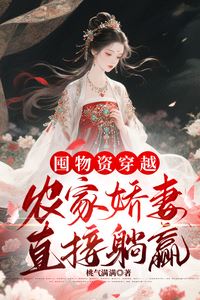
Su Nian, a modern woman, wakes up in 1972 after transmigration into a novel she previously abandoned. She inhabits the body of a cannon fodder character with the same name, who was originally destined to die after discovering her fiancé, Fu Mingjun, in bed with her stepsister, Su Yue. Instead of succumbing to despair, Su Nian leverages her knowledge of the plot to rewrite her fate. She discovers she has inherited a mystical space containing fertile land and healing spring water, activated by her blood through a lotus bracelet previously belonging to Su Yue. This cheat code becomes the foundation of her new life, allowing her to heal the poisoning her stepmother, Yao Xiaojun, had been administering to ruin her complexion.

Upon regaining consciousness, Su Nian immediately confronts her abusive stepfamily. She exposes their mistreatment in front of neighbors and her father, Su Daqiang, a low-level official seeking promotion. By manipulating his desire for career advancement and social reputation, she forces him to evict Yao Xiaojun, Su Yue, and Su Gang from her family home. She reclaims her inheritance, including a hidden stash of gold bars left by her biological mother, Wen Wan, and recovers over three thousand yuan that Yao Xiaojun had embezzled. Su Nian also severs her engagement to Fu Mingjun, extracting a thousand yuan in compensation from his father, Professor Fu, while simultaneously selling her reserved job position at a sugar factory to a deputy director for another thousand yuan.

As the original protagonist of the novel, Su Yue had been destined to meet the male lead, Han Zheng, and live a pampered life. Su Nian systematically dismantles this path by ensuring Su Yue and Fu Mingjun are sent to the countryside together. She registers Su Yue at the Youth Relocation Office, securing a placement in the Heilongjiang Agricultural Corps alongside Fu Mingjun. This move strips Su Yue of her job and her proximity to the male lead, redirecting her fate toward hardship. Su Nian also registers herself for the same location, turning a potential punishment into a strategic relocation to be closer to Fu Tingchuan, the original novel's second male lead and a high-ranking military officer who had once been her childhood fiancé.

During the journey to Heilongjiang, Su Nian faces hostility from former classmates, particularly Qiao Qiqi, who harbors unrequited feelings for Fu Tingchuan. Su Nian uses her sharp tongue to publicly humiliate Su Yue, revealing her role as a homewrecker and damaging her social standing among the other sent-down youth. Upon arrival at the corps, Fu Tingchuan personally greets the group. He acknowledges Su Nian with a formal but distant demeanor, referring to her as his niece-in-law due to her marriage to Fu Mingjun's uncle, though Su Nian clarifies her actual engagement status. The story concludes with Su Nian establishing herself in the remote northern region, armed with wealth, a healing space, and the support of her father and half-brother, while her enemies face the harsh realities of rural labor.

Latest Release
DateGroupRelease
2026-08-11shanghai fantasy c42
2026-08-11shanghai fantasy c41
2026-08-11shanghai fantasy c40
2026-08-11shanghai fantasy c39
2026-08-11shanghai fantasy c38
2026-08-11shanghai fantasy c37
2026-08-11shanghai fantasy c36
2026-08-11shanghai fantasy c35
2026-08-11shanghai fantasy c34
2026-08-11shanghai fantasy c33
2026-08-11shanghai fantasy c32
2026-08-11shanghai fantasy c31

Community Reviews

Rating(4.2 / 5.0, 5votes)
5 stars
2(40%)
4 stars
2(40%)
3 stars
1(20%)
2 stars
0(0%)
1 stars
0(0%)

Popular reviews

... Read More
The stakes in this batch are layered in a way that keeps me genuinely anxious. Let me count them: Tian Li is facing twenty years minimum, possibly death in labor reform. His family's property is confiscated. His father just died. His wife is divorcing him. He has zero escape routes. But here's the thing—the author makes it clear this isn't just about Tian Li. His uncle is a problem. The uncle has enemies in the Revolutionary Committee. Fu Tingchuan sending him there could be interpreted as personal retaliation. That means the conflict isn't over just because Tian Li is gone. The uncle is still out there. Then there's Su Nian's own stakes, which are way more personal and way harder to see. She's hiding her identity as a transmigrator. She knows things she can't share. She's married into a military family where one wrong word could get her labeled as a spy or a counter-revolutionary. And she's trying to change the future—specifically, she wants to prevent whatever kills Fu Tingchuan in 1977. But every time she tries to gather information (asking about Han Zheng, mentioning Hangzhou), she has to walk this razor's edge between sounding like someone who knows too much and someone who's just a normal girl missing home. Shen Mo adds another layer of conflict. He's Su Nian's cousin, which means family ties, but he's also suspicious of Fu Tingchuan. His promise to "test" him is basically a loaded gun pointed at the marriage. And Xu Zhaodi, who seems to have feelings for Shen Mo, is caught in the middle of all of this too. The general's arrival tomorrow raises the stakes one more notch. Su Nian needs to perform—taking photos, making a good impression—while hiding the fact that she's essentially an imposter in her own life. Every scene is a tightrope walk. That's why I can't stop reading. Not because anything explosive is happening, but because everything is about to blow up and nobody knows when.
... Read More
I keep coming back to Su Nian's secret space and what it represents. On the surface, it's a transmigration trope—the magical inventory that makes the protagonist powerful. But I think the author is doing something more interesting with it. The space is everything Su Nian can't be in the outside world: abundant instead of scarce, free instead of constrained, hers instead of something she has to hide. The detail about the crabapple is what got me. She remembers the one she didn't get to eat and decides to plant fruit trees. This small moment of regret from her past life—this tiny, almost trivial thing—becomes something she can fix in her space. It's about agency. In the outside world, she's a transmigrator pretending to be someone else, married to a man whose future she's trying to change, navigating a political landscape where one wrong move could destroy everything. But in the space? She's a goddess. Crops grow instantly. She has food that doesn't exist in this era. She can create something beautiful from nothing. Then there's the marriage itself as a kind of space. Fu Tingchuan offers her a courtyard, freedom from work, the ability to sleep in. But Su Nian immediately pushes back—she needs her own income, her own skills. The marriage is supposed to be her sanctuary, but she refuses to be dependent. That tension between protection and autonomy is the core theme here. What does it mean to be safe in a world that isn't safe? What does it mean to be loved by someone who is also dangerous? And the number 1977 keeps appearing like a ghost. "What exactly would happen in 1977?" Su Nian wonders. It's not just a date—it's the horizon of her knowledge, the boundary between what she can prevent and what she can't. The space is her private rebellion. 1977 is the larger one she hasn't figured out yet.
... Read More
I need to talk about the sensory details in this batch because they're surprisingly rich for a novel that's mostly dialogue and plot. The one that got me was when Su Nian changes into her military uniform and layers on a Soviet-style overcoat. Just that one detail—Soviet-style—immediately tells me we're in a specific time period, a specific political context. You don't just throw that in randomly. It's a small worldbuilding choice that does a lot of heavy lifting. And the cold! The author keeps reminding us how freezing it is. By night, even a light cotton jacket isn't enough. That physical discomfort grounds the whole story in a bodily reality that a lot of transmigration novels skip over. These characters are *cold*. They're working in fields. They're dealing with ration coupons and scarcity. It makes the world feel lived-in rather than like a backdrop. The military compound itself is fascinating. Su Nian notes that she rarely ventures into restricted areas and discovers there are so many unfamiliar officers. The hierarchy is visible—generals arriving, volunteers with significant backgrounds, the way people position themselves. And then there's Su Nian's secret space, which is basically its own world within the world. She checks on her crops growing rapidly, remembers the crabapple she never got to eat, and decides to plant fruit trees because time moves differently inside. The contrast between the harsh, cold exterior world and this warm, abundant hidden space is really well done. It's not just a cheat mechanism—it's almost a psychological sanctuary for a character who has to hide her true identity. The scene where Qiao Qiqi's stuff gets thrown out of the dorm is also visually striking. Xu Zhaodi being polite but firm, Shen Mo's brutal honesty, Su Yue withdrawing her hand like she's afraid of contamination. You can see the whole social dynamics playing out in that single moment. The author doesn't need paragraphs of description—just the right details and the reader's imagination fills in the rest.
... Read More
I'm obsessed with how Fu Tingchuan speaks in this batch. He has this incredible duality in his voice—warm and tender with Su Nian, absolutely ruthless with everyone else, and the author never lets us forget which version we're getting. Take this exchange: "This is my bankbook, here's my salary booklet, and this envelope contains my saved-up pocket money and ration coupons. All for you to manage. From now on, you're in charge of our household. Honestly, I've got decent conditions." On the surface, this is sweet. A guy handing over his finances to his fiancée? Cute, right? But the narration immediately undercuts it: "the cunning fox didn't give her a chance to second-guess." This man is calculating every word. He's performing tenderness while executing a strategy. And Su Nian, bless her, she sees right through it but plays along anyway. Her response—"Alright then... from now on, no more of that. All household matters need to be discussed with me first."—is her establishing boundaries while pretending it's a negotiation. They're both performing for each other and neither is calling it out. Then there's Shen Mo, whose dialogue is completely different. Cold, direct, almost interrogative. "Are you really going to marry him? Have you thought this through?" No pleasantries. No softening. He's the voice of suspicion in a story full of people who are smiling while plotting. And Qiao Qiqi's entrance line—"I didn't think city girls would be so easy. She climbed into my bed before I even agreed to date her—so cheap!"—is so perfectly written as villain dialogue that I almost laughed out loud. It's cartoonishly evil, but that's the point. She's not meant to be nuanced. She's the id of the story, saying out loud all the disgusting things the other characters are thinking but pretending not to. The author gives each character a distinct voice, and more importantly, each character speaks differently depending on who they're talking to. That's skilled writing.
... Read More
Okay so I need to talk about Tian Li's downfall because honestly it was the most satisfying arc in this entire batch. Like, the author built this up so perfectly. We see him at his most disgusting—abusing his wife, cheating with Qiao Qiqi, throwing around his power—and then Fu Tingchuan just... dismantles him. Piece by piece. The scene where he lays out the divorce agreement, the property division, the twenty-year minimum sentence? That's not just justice, that's *art*. What I love is how Fu Tingchuan planned everything in advance. He didn't react emotionally—he had a strategy. The Revolutionary Committee showing up right after Fang Zhiqing's exam results? That timing wasn't coincidence. These people had been tracking this. And then the tonal whiplash! One minute we're watching Tian Li get dragged away in handcuffs, and the next Fu Tingchuan is casually dropping the bomb that their marriage request has already been approved. Su Nian's reaction is everything—she literally didn't know. "Wedding? Whose wedding?" I literally yelled at my phone. The author is playing 4D chess here. Meanwhile, the Shen Mo subplot is simmering in the background. He reveals he's Su Nian's distant cousin and drops this ominous line about testing Fu Tingchuan. Like, what test? And why does Su Nian have a bad feeling about it? That's the hook that's going to keep me turning pages. Also—Wang Dahu and Xiaofang's subplot? I wasn't expecting to be invested in that, but it's genuinely sweet. He's been waiting years for her, and now that Tian Li is out of the picture, everything is falling into place. The author weaves these smaller character arcs into the main plot so naturally. Nothing feels filler-y. Every scene either advances the revenge plot, develops the romance, or sets up future conflict. Tight writing.
See all reviews

Characters

See all characters

Custom lists

See all custom Lists