Transmigrated as the Real Daughter: The One Who Defies the Plot!
+Add to Custom List
Genres:
Novel Info

Summary

... Read More

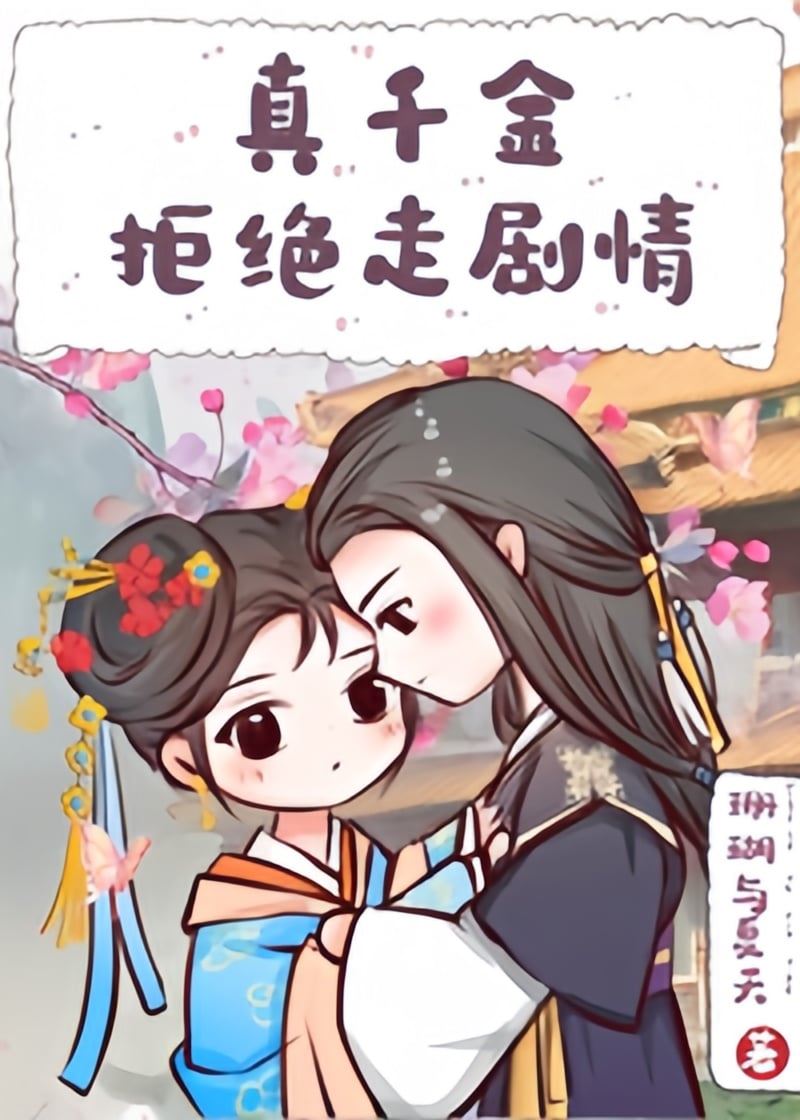
Tao Sheng, a woman who transmigrated into a fictional world ten years ago, lives a quiet life in Beijing with her aunt Su Jia after the death of her adoptive parents. Her peaceful existence is shattered when Shen Yu, the Marquis of Wenyuan, arrives at her residence with shocking news: she is not merely an orphan but the biological second daughter of the Wenyuan Marquis mansion, separated from her family as an infant due to a servant's error during a chaotic birth. The child raised within the mansion, Shen Ruojin, is actually the impostor who took Tao Sheng's place. While Tao Sheng is aware of her role as a minor character in the novel "A Life of Glory," destined to suffer and fade into obscurity compared to the favored Shen Ruojin, she resolves to avoid the tragic fate written for her.

Upon entering the Wenyuan Marquis mansion, Tao Sheng encounters a family deeply entrenched in political maneuvering and internal favoritism. The matriarch, Old Madam Shen, prioritizes the stability and reputation of the family over blood ties, having invested heavily in Shen Ruojin’s upbringing and social standing. Ruojin, aware that her position is precarious, displays a facade of warmth and humility while secretly fearing displacement. The Marquis, Shen Yu, is indecisive and swayed by his mother, while Tao Sheng’s biological mother, Luo Xin, is ill and emotionally conflicted. Tao Sheng quickly discerns that the family’s primary concern is not her welfare but the potential disruption her return could cause to Ruojin’s upcoming appointment as a companion to Princess Hui’an, a role that would secure the family’s influence in the royal court.

The core conflict intensifies as the family attempts to integrate Tao Sheng without altering Ruojin’s status. They propose a deceptive narrative that the two girls are twins, with Tao Sheng being the one lost and found, thereby preserving Ruojin’s legitimacy as the sole daughter. Tao Sheng, however, refuses to accept this arrangement. She understands that becoming a "twin" would still subject her to the manipulative dynamics of the mansion and the dismissive attitudes of her relatives. Her refusal stems from a desire to maintain her autonomy and her loyalty to her adoptive parents, whose memory she honors by refusing to sever ties with them through legal adoption or household registration changes.

A pivotal turning point occurs during a birthday banquet hosted to celebrate Tao Sheng’s return. The event is intended to publicly announce her identity and solidify her place in the family. However, Tao Sheng uses this opportunity to firmly reject the Marquis’s proposal. She cites legal precedents and clan laws regarding household registration, stating that she cannot change her family tree to honor her adoptive parents who raised her. Her calm and resolute stance surprises everyone, particularly Shen Ruojin, who had expected Tao Sheng to be a naive country girl easily manipulated. Tao Sheng’s refusal to play the role of the grateful, submissive sister disrupts the family’s carefully laid plans.

Following the banquet, Tao Sheng returns to her aunt’s residence, leaving the Marquis mansion in a state of uncertainty. The family is left to debate how to handle her stubbornness, with Luo Xin feeling guilt and sorrow, while Old Madam Shen and Shen Yu remain focused on protecting Ruojin’s interests. Tao Sheng’s decision to opt out of the family’s internal struggles marks a significant shift in the narrative. Instead of engaging in the typical "face-slapping" revenge plot common in such stories, she chooses independence, setting the stage for a different path where she must navigate her new reality without the protection or persecution of the noble household.

The story direction moves toward Tao Sheng establishing her own identity separate from the Shen family’s politics. While the mansion continues to prepare for Ruojin’s entry into the palace, Tao Sheng remains in the capital, maintaining a distance from her biological relatives. The tension between her desire for a quiet life and the inescapable pull of her true lineage creates an ongoing undercurrent of conflict. The narrative explores themes of identity, family loyalty, and the power of choice, as Tao Sheng defies the predetermined fate of her character in the novel. Her actions challenge the expectations of those around her, forcing the Shen family to reconsider their approach to her and revealing the complexities of their relationships.

As the plot progresses, the contrast between Tao Sheng’s contentment in her modest life and the opulent yet treacherous environment of the Marquis mansion becomes increasingly apparent. Tao Sheng’s refusal to be a pawn in the family’s schemes highlights her intelligence and resilience. The story sets the stage for future interactions where Tao Sheng’s independence may either isolate her or provide her with the strength to carve out a unique destiny, distinct from the tragic path of the original novel’s supporting character.

Latest Release
DateGroupRelease
2026-08-11shanghai fantasy c68
2026-08-11shanghai fantasy c67
2026-08-11shanghai fantasy c66
2026-08-11shanghai fantasy c65
2026-08-11shanghai fantasy c64
2026-08-11shanghai fantasy c63
2026-08-11shanghai fantasy c62
2026-08-11shanghai fantasy c61
2026-08-11shanghai fantasy c60
2026-08-11shanghai fantasy c59
2026-08-11shanghai fantasy c58
2026-08-11shanghai fantasy c57

Community Reviews

Rating(4.1 / 5.0, 17votes)
5 stars
6(35%)
4 stars
8(47%)
3 stars
2(12%)
2 stars
1(6%)
1 stars
0(0%)

Popular reviews

... Read More
Let me just say this: the author knows how to paint a picture and I am HERE for it. "She wore a scarlet gold-woven jacket with a lotus pattern, a crimson cloak with a peony pattern, and a delicate white rabbit fur trim. She looked fluffy." — I am not okay. This is cinematic. This is a painting. I can SEE this. And the contrast! The north hasn't had much snow that year, the ground's been bare, people felt like something was missing. Then BOOM — New Year's snow, heavy and beautiful, and Tao Sheng hasn't slept all night because she's so excited. The weather itself is participating in the mood. But the study room scene? Also chef's kiss. The bookshelf with her law books — the ONLY change she made to a house decorated for a 40-year-old woman. That one detail tells you everything about who she is versus who everyone else thinks she should be. She's surrounded by her aunt's tastes, her family's expectations, and she carved out this one shelf for herself. "Her fair neck slightly bent, forming a beautiful curve. She was quiet and serious, radiating a focused beauty. It was like a specially painted picture of a lady in winter." I'm not a literary person but even I can recognize when a scene is working this hard.
... Read More
Let me just say this out loud: Shen Ruojin is the most interesting character in this book and I haven't even finished the first few chapters. Here's a girl who has spent her entire life believing she's the legitimate daughter, who has been loved and praised by everyone, and suddenly someone comes along and tells her none of that is real. And what does she do? She paces around her room, drops her teacup, and lies to her brothers about why she's upset. That's not the reaction of a villain—that's the reaction of a scared human being who's about to lose everything she thought defined her. Meanwhile, Tao Sheng is this completely different creature. She's cold, detached, barely engaging with Shen Yu on the carriage ride back. She knows the plot, she knows how this family works, and she's already mentally preparing for war. But what got me was the moment with Old Madam Shen. She says these sweet words to Tao Sheng—"you won't have to live in a place without a fixed address"—but the narration makes it clear that Tao Sheng feels those words overshadowing everything her adoptive parents and aunt ever did for her. That's some subtle manipulation right there. The old lady is playing the long game, and Tao Sheng sees right through it. I'm already invested in this whole family dynamic. The brothers are fascinating too—Shen Yue is the responsible one trying to keep peace, Shen Ci is blunt and a little judgmental, and both of them clearly love Ruojin. But will they love Tao Sheng? That's the question hanging in the air.
... Read More
There's something really striking about how the cold keeps appearing in this section—not just as weather but as a structural element of the whole story. Shen Yue packing boxes of quilts and charcoal to send to Tongguang Lane. Tao Sheng having nothing to last through winter. The contrast between the Wenyuan Marquis's mansion with its heating pipes and icebergs in summer versus that alley where someone barely survives the season. It's not heavy-handed worldbuilding, it's just... there, woven into the actions of the characters. Every gift of warmth is also a statement of power and distance. And then the palace scenes—the Queen deciding to hold the poetry meeting after the first winter snow, Ruojin entering the Eastern Palace, the hours Old Madam Shen waited anxiously. The text describes Ning Garden as 'a beautiful sight on earth,' specially given by the Emperor, with additions from the Ministry of Works and Shanglin Garden. This is a world where geography equals status. Living in Tongguang Lane versus the inner city versus the palace grounds—each location carries its own social gravity. The Marquis's farms in the suburbs, the garden in Jinling, the poetry gatherings—these aren't just background details, they're the actual architecture of power in this story. What I found most vivid though was the Su residence in Tongguang Lane itself, with Mother Tang standing aside watching people move things in, quietly observing everything. That image of her—reserved, unnoticed, until Tao Sheng gave her a reason to speak—felt like the whole novel in one frame.
... Read More
I need to talk about Ji Yanming because THIS boy is complicated and I'm not ready. The original text supposedly paints him as this icy political machine, right? But watch what he does here. He shows up, sees her legal notes, and instead of just walking past, he sits down and CORRECTS HER WORK. Like a grumpy tutor who pretends he doesn't care but actually spent thirty minutes explaining clan household registration law in language a layperson can understand. "There are a few mistakes here." That's it. That's the whole sentence. And then he proceeds to write detailed notes. Of COURSE the future villain is also the future overachiever who can't stand sloppy work. And then — and this is the part that got me — he FORGOTS his original reason for visiting because he got so absorbed in teaching her. He turns back to tell her about tomorrow's plans and catches her reading, head bent, neck forming "a beautiful curve," and he just... doesn't disturb her. He decides the plan can wait. He had a dreamless night after this. I'm convinced that's not nothing. The snowman scene where he compares her to a sweet rice dessert? That's not the behavior of a boy who feels nothing. That's the behavior of a boy who's trying very hard to feel nothing and failing.
... Read More
This boy has exactly two words of dialogue in the study scene before launching into a thirty-minute lecture, and somehow it works perfectly for his character. "Have you been reading these books recently?" — cold, direct, no small talk. Classic Ji Yanming. He's not here to be nice, he's here because he noticed an error and his brain won't let it go. Tao Sheng's voice, on the other hand, is warm and self-aware. "Cousin understands these too?" — genuine surprise, a little deference, but also the confidence of someone who knows she's out of her depth and isn't embarrassed to admit it. That's a good combination for a protagonist. The Zhou family dialogue feels lived-in. Mrs. Zhou's desperation about her daughter's zither skills, the awkwardness of not having produced any decent music after six months of lessons — it's funny and human and totally believable for a scholarly family trying to maintain face. "There's no better master than Master Wei in the capital now." — Mrs. Zhou is basically begging at this point, and she's doing it through flattery. I love that the author doesn't shy away from the social performance happening beneath the surface. And Tao Sheng's internal monologue about her past life? That's where the voice really shines. She's a modern classical music composer trapped in a historical setting, and she thinks about it with this mix of nostalgia and professional pride that feels authentic.
... Read More
Okay so here's the thing that genuinely surprised me about this section — Tao Sheng isn't just sitting around waiting for drama, she's actually STUDYING LAW. Like, full-on pulling up clan household registration dispute codes at 15 years old. That's not background flavor, that's plot armor being forged in real time. The Shen brothers showing up at Zhou's house at the same time was a nice touch too — two worlds colliding without even knowing it yet. Mr. Zhou sensing 'subtle tension' between the groups? Yeah, the author is absolutely setting something up and I'm here for it. But what really got me was how the zither scene functioned as a plot device. Tao Sheng's past-life expertise suddenly becomes her social currency in this world. She walks in, plays a piece, fixes Zhou Xiaomei's technique in one-on-one time, and leaves with more silver than she brought. That's not just character showcase — that's her building a safety net, one social connection at a time. The chapter ends on this weird hallucination moment where she sees a face that 'resembled Ji Yanming' but wasn't him. I don't know whether to laugh or panic. Is she sleep-deprived? Is this foreshadowing? Is someone about to impersonate him? My brain is already three chapters ahead.
See all reviews

Characters

See all characters

Custom lists

See all custom Lists