Summary

... Read More

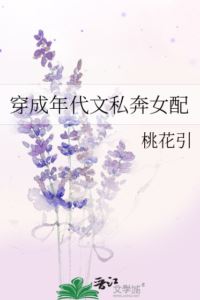
Ye Rou transmigrates into the body of a supporting female character in a novel, finding herself in the middle of an elopement with a man named Jiang Jun. The original plot dictated that she would run away, become pregnant with her resentful husband's child, and suffer a tragic life while her husband raised their son alone. Determined to avoid this fate, Ye Rou rejects Jiang Jun’s proposal, pointing out that she is already married. She returns home to confront her husband, Zhou Huai, a man she had never truly known before their arranged marriage. Upon her return, Zhou Huai reveals he has already agreed to the divorce she sought, showing no desire to keep her. However, the situation shifts dramatically when Ye Rou announces she is over three months pregnant with his child.

Zhou Huai is stunned by the revelation, but instead of rejecting the pregnancy, he agrees to take responsibility. The couple, who had been essentially strangers living under the same roof, must now navigate the complexities of an unexpected family. Ye Rou, accustomed to a pampered life, has little confidence in her ability to raise a child alone and decides to rely on Zhou Huai’s future success and resources. She sets out to manage their domestic life with a mix of demands and pragmatism, testing Zhou Huai’s patience while he grapples with his new role as a father-to-be.

As the story progresses, Zhou Huai transitions from a reluctant partner to a devoted caretaker. He learns about pregnancy care, buys silk bedding and high-quality toiletries for Ye Rou, and adjusts his business schedule to accommodate her needs. Ye Rou, meanwhile, struggles with morning sickness and dietary restrictions, often complaining about her discomfort but also finding moments of humor in their interactions. Their relationship evolves from cold indifference to a tentative partnership, with Zhou Huai proving himself to be capable and attentive despite his initial reluctance.

The narrative also explores Ye Rou’s integration into Zhou Huai’s social circle. His friends, including Zhang Ji and Zhang Liu, are initially skeptical of Ye Rou but gradually come to respect her as she becomes a central figure in Zhou Huai’s life. Zhou Huai’s business ventures, which involve trading goods from Yangcheng, continue to flourish, providing the financial stability that Ye Rou expects. The couple’s dynamic is characterized by playful banter and mutual adjustment, as they learn to coexist and support each other through the challenges of pregnancy and impending parenthood.

Key turning points include Ye Rou’s decision to continue working at the garment factory despite her pregnancy, and Zhou Huai’s efforts to make her work environment more comfortable. Their interactions reveal a growing affection and understanding, contrasting with the original novel’s tragic ending for these characters. The story moves toward a future where Ye Rou and Zhou Huai raise their child together, with Ye Rou planning to start her own business after giving birth. The narrative concludes with the couple navigating the early stages of their new life, hinting at a more hopeful and stable future than the one depicted in the original novel.

Latest Release
DateGroupRelease
2026-08-11shanghai fantasy c76
2026-08-11shanghai fantasy c75
2026-08-11shanghai fantasy c74
2026-08-11shanghai fantasy c73
2026-08-11shanghai fantasy c72
2026-08-11shanghai fantasy c71
2026-08-11shanghai fantasy c70
2026-08-11shanghai fantasy c69
2026-08-11shanghai fantasy c68
2026-08-11shanghai fantasy c67
2026-08-11shanghai fantasy c66
2026-08-11shanghai fantasy c65

Community Reviews

Rating(3.8 / 5.0, 5votes)
5 stars
1(20%)
4 stars
2(40%)
3 stars
2(40%)
2 stars
0(0%)
1 stars
0(0%)

Popular reviews

... Read More
Let's talk about the title of Chapter 10, because it's the thesis statement for their entire dynamic: "Is he a male nanny?" Zhou Huai is fully aware that this is what he's become, and Ye Rou is fully aware that he's aware, and neither of them corrects it. That's not a relationship problem—that's a relationship achievement. The way they bicker is the language they speak fluently. When Ye Rou tugs his sleeve and he pulls away and their fingers brush and he reacts a beat slower, that half-second delay is the entire novel right there. He's not resisting her. He's recalibrating. And when he finally says "If you don't let go, how are we supposed to go get them?"—that's the moment the power dynamic shifts. She wanted rice noodles. He wanted her to stop pulling his sleeve. They both got what they wanted, and neither would admit it. The breakfast scene is even better. He forgot money. She could have let it go. Instead she tugs his sleeve and whispers "let's go, let's go" while her stomach growls, and he does something he's never done in his life: he tells the boss lady to let her eat first while he runs home for cash. And the boss lady watches them walk away shoulder to shoulder and mutters "looks like they're in the middle of a sweet romance." Sweet romance. Not "weird arrangement." Not "colleagues." Sweet romance. She heard it. We heard it. Zhou Huai probably heard it too and chose to ignore it, which is its own form of confession. The iron palm excuse he gives Zhang Ji when asked where Ye Rou is—that's protective. He's not lying to hide her. He's lying to give her a reason to exist in his world that doesn't require explanation.
... Read More
Okay so this whole batch is basically a single plot arc disguised as slice-of-life chaos. Ye Rou has a dream about rice noodles, which triggers a chain of events that could have been resolved in five minutes but instead balloons into a full-blown midnight kitchen expedition, a culinary disaster, a breakfast run, and somehow—somehow—iron palm training. The structure here is deceptively simple: desire, pursuit, failure, recovery, new desire. It's the plot skeleton of a thousand rom-coms, but what makes it work is how every beat reveals character. The rice noodles aren't just noodles. They're the MacGuffin that forces Zhou Huai out of his stoic routine and into a white shirt with rolled-up sleeves, standing in a kitchen at midnight holding a soup ladle like it's a foreign object. When he declares "So I'm the one walking in the desert, huh" after making the noodles too salty, that's not just a punchline—that's the plot pivoting from physical comedy into emotional territory. He's annoyed, yes, but he's also performing care in the only language he knows. The subplot of the diary notebook at the end is brilliant misdirection. We think it's about writing, but it's actually about Ye Rou wanting permanence in a relationship that feels temporary. She wants to lock something away, to preserve a moment. And Zhou Huai's response—a padlock with three keys—tells us everything about how he thinks: practical, generous, slightly missing the emotional point. Three keys means she can give one to someone else. He doesn't say it, but the subtext is there.
... Read More
The pacing here is what I would call aggressively leisurely, and it's brilliant. The author could have resolved the rice noodle craving in one paragraph. Instead we get seven chapters of it—seven chapters of tugging sleeves, of rejected oranges, of kitchen expeditions, of salt disasters, of water-fetching negotiations, of breakfast runs, of iron palm lies, of diary purchases, of padlocks. Each beat is short, each scene is contained, and each scene ends on a note that propels us forward without screaming for attention. The midnight rice noodle run is the first act—pure physical comedy, high energy, rapid dialogue. The salt disaster is the second act—slower, more intimate, the comedy giving way to something warmer. The breakfast run is the third act—public, observed, the relationship now visible to strangers. The iron palm excuse is the denouement—quiet, domestic, the conflict resolved not by grand gesture but by mundane cover story. And then the diary subplot hits us like a ton of bricks, completely shifting the emotional register without warning. That's the pacing move that catches you off guard. The chapter titles themselves do heavy lifting: "Is he a male nanny?" "Truly, what an iron-palm training at home!" "Little Notebook, Holding Grudges!" Each one is a question or an exclamation that promises something bigger than the chapter delivers, and the gap between promise and delivery is where the humor lives. The transition from Chapter 11 to 12 is particularly sharp—going from the physical comedy of Ye Rou fainting dramatically on the bed to the quiet domesticity of her tearing pages off a calendar. It's like the author is saying: we've had our fun, now let's see what these people actually want when no one's watching.
... Read More
"A gentleman's revenge can wait ten years. Just you wait!" Ye Rou says this three times in as many minutes, each time more dramatically, each time less convincingly. The first time she's actually annoyed. The second time she's performing annoyance. The third time she's just saying it because it sounds good and she wants to hear herself say it. This is the emotional core of everything: Ye Rou doesn't actually want revenge. She wants to be noticed. She wants Zhou Huai to chase after her, to insist she stay, to tell her she doesn't need to leave. Instead he asks "are you sleeping here or going home?" and she interprets that as indifference when it's actually the closest he'll come to asking her to stay. The soy milk and tea eggs scene is where it all lands. She carries the soy milk. He carries the eggs. She makes him peel them for her because she "didn't bring a handkerchief"—a lie, because she brought nothing and knew she'd need something to wipe her hands. She's testing him. And when he says "when you say one each, is this going to be like last time—half each?" she realizes he's been keeping track of their food-sharing history. He remembers. He catalogs. He files it away. That's not a man who sees her as an accessory. That's a man who has been quietly building a database of everything about her and has no idea she knows. The diary moment at the end—"I just want to wait till tomorrow to start writing"—is the most vulnerable thing in this entire batch. She's not lazy. She's afraid that if she writes it down, it becomes real. That if she preserves this moment, she'll lose the spontaneity of it. Zhou Huai gives her a lock with three keys. She writes one entry and calls him a bastard. But she wrote it. She started.
... Read More
What do Ye Rou and Zhou Huai stand to lose in this batch? Nothing. Absolutely nothing. There's no external threat, no rival suitor, no family opposition, no career crisis. The conflict is entirely internal and interpersonal: she wants rice noodles, he wants her to stop bothering him at midnight. She wants to write a diary, he wants her to have privacy. He wants to do his job, she wants him to pay attention. The stakes are so low they're practically negative. And yet—the salt in those noodles feels like betrayal. The three keys on that padlock feel like a decision that could alter the trajectory of their entire relationship. This is the genius of domestic fiction: when there's no earthquake, the tremor matters more. Ye Rou's hunger isn't about hunger. It's about control in a situation where she has very little. She can't go online. She can't post updates. She can't leave the siheyuan freely. But she can demand rice noodles at midnight, and when Zhou Huai makes them and they're too salty, she can declare war and call it a gentleman's revenge. The conflict isn't whether she gets the noodles. The conflict is whether he cares enough to try. And he does—he tries, he fails, he tries again with the water, he runs home for cash, he peels her tea eggs. Every act of service is a victory. Every rejection of her drama is a loss. When Zhang Ji asks where she is and Zhou Huai invents iron palm training, that's the highest stakes moment in the entire batch. He's protecting her from gossip, from questions, from the possibility that someone might ask why she's always there. The threat isn't real. The protection is.
See all reviews

Characters

See all characters

Custom lists

See all custom Lists