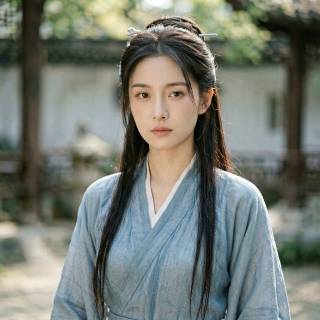
“Transmigrated as the Commander's Awful Fat Wife, Loved by Everyone in the Family Compound”
+Add to Custom List
Genres:
Novel Info

Summary

... Read More

Li Qingtian, a dedicated medical student and surgeon, dies from exhaustion after pulling an all-nighter to finish her thesis. Upon waking, she finds herself in an unfamiliar, dilapidated rural setting that resembles 1970s China. Initially believing she has been trafficked, she panics when she discovers a man sleeping beside her. The man, Zhou Cisheng, is annoyed by her screaming, leading to a chaotic confrontation. Li Qingtian soon realizes she has transmigrated into the body of a fat, village girl who is also named Li Qingtian. Through flooding memories, she learns she has inhabited the body of the original female antagonist in a novel she previously read. The original owner was a greedy, lazy woman who drugged Zhou Cisheng to force a marriage, a union that would eventually lead to her imprisonment and death after Zhou Cisheng faked his death on a mission and she squandered his compensation money.

Fearing the tragic fate awaiting the original character, Li Qingtian resolves to change her destiny. She immediately begins a rigorous transformation regimen, utilizing a secret spatial dimension that accompanies her. This space contains a modern villa, a spring with healing properties, and a fully equipped hospital. She uses the spring water and specialized medicines to lose weight, clear her skin, and improve her health. Simultaneously, she alters her behavior within the Zhou family. She stops being lazy and demanding, instead taking on household chores, cooking, and showing respect to her in-laws. Her sudden change confuses Zhou Cisheng and his family, particularly his sister Zhou Yu’er, who remains suspicious of her motives. However, Li Qingtian’s consistent efforts and genuine kindness, such as buying a water jug for her parents-in-law, gradually soften their attitudes toward her.

As Li Qingtian prepares to accompany Zhou Cisheng to his military base, she sets a new goal: becoming a military doctor. She understands that this career path is essential for her survival and independence in the military compound. Zhou Cisheng agrees to help her train, recognizing her determination. Their relationship shifts from one of reluctant cohabitation to a partnership, with Zhou Cisheng providing physical training guidance and Li Qingtian improving her fitness through daily exercise and diet. Despite the skepticism of those around her, including Zhou Yu’er, Li Qingtian remains focused on her objectives. She packs their belongings and prepares for the journey, maintaining a disciplined routine that includes yoga and running.

The couple departs for the train station, leaving the Zhou family behind. During the journey, Li Qingtian experiences the crowded and uncomfortable conditions of train travel in this era. She relies on Zhou Cisheng for protection and guidance, noting his vigilance against pickpockets. The trip is marked by small interactions that highlight the changing dynamics between them. Li Qingtian’s practical nature and consideration, such as sharing food and managing their provisions, further distinguish her from the original antagonist. The story follows their arrival at the military base, where Li Qingtian must navigate the complex social hierarchy of the military family compound while continuing her physical and professional transformation. Her ultimate aim is to secure a position as a military doctor, ensuring she can survive the impending crisis of Zhou Cisheng’s secret mission and avoid the fate of the original character.

Latest Release
DateGroupRelease
2026-08-11shanghai fantasy c20
2026-08-11shanghai fantasy c19
2026-08-11shanghai fantasy c18
2026-08-11shanghai fantasy c17
2026-08-11shanghai fantasy c16
2026-08-11shanghai fantasy c15
2026-08-11shanghai fantasy c14
2026-08-11shanghai fantasy c13
2026-08-11shanghai fantasy c12
2026-08-11shanghai fantasy c11
2026-08-11shanghai fantasy c10
2026-08-11shanghai fantasy c9

Community Reviews

Rating(5 / 5.0, 5votes)
5 stars
5(100%)
4 stars
0(0%)
3 stars
0(0%)
2 stars
0(0%)
1 stars
0(0%)

Popular reviews

... Read More
Let me be honest with you — on paper, these chapters are about as exciting as it gets. Wake up, eat breakfast, buy groceries, cook, go to the clinic, register for an exam, go home, do research. That's it. And yet I couldn't stop reading. Here's why I think that works. The author understands that the tension doesn't have to come from plot explosions. It comes from the gap between where Li Qingtian is and where she wants to be. Every mundane action — buying tickets, carrying rice, washing dishes — is charged with meaning because we know she's playing a long game. She's building a life from scratch in a world that doesn't know she's a transmigrator. The pacing has this beautiful domestic rhythm. Morning exercises, medicine, breakfast at the cafeteria, market runs, cooking, Zhou coming home, dinner, dishes, then her secret nighttime routine in the space. It's cyclical, almost meditative. But within that cycle, there's forward momentum. She registers for the exam. She gets the admission slip. She researches past papers. Each scene adds a brick to the foundation she's laying. What I appreciate most is how the author controls the reveal of information. We don't get a big exposition dump about her transmigration or her master's degree. We learn about her medical background the way she learns about this era — through action. She searches online in her space, finds exam papers, and the text tells us "these questions were nothing difficult" because she has a master's. That's one sentence doing a lot of work. The chapter transitions are smooth too. Each section ends on a natural beat — finishing breakfast, Zhou carrying rice home, stepping out of the Health Bureau into weaker sunlight — and picks up where the last left off. There's no jarring shift, no forced cliffhanger. The story breathes. If I had one note, it's that the market gossip scene with the two army wives feels slightly underdeveloped. Their whispering about her weight is a great worldbuilding moment, but we never see the aftermath. Does this affect her? Does she hear about it later? A quick callback would've tied it in better.
... Read More
I want to talk about stakes because on the surface, nothing huge is happening here. No villains, no life-or-death situations, no dramatic confrontations. And yet I care deeply about what Li Qingtian is trying to do. Here's why. The central conflict is internal and societal, not external. Li Qingtian wants to become a military doctor. That's it. But the text makes it clear how impossible this sounds to everyone around her. The clinic doctor literally mocks her: "Being a doctor is hard enough — she wants to be a military doctor?" He tells her to just take the normal certification and find an ordinary job. Don't look for trouble. This is the world telling her she's aiming too high, that her gender and her situation make this ambition unreasonable. What makes this conflict work is that the author never lets us forget what's at stake. Li Qingtian isn't just chasing a career for fun. She's a transmigrator with a master's degree in medicine, trapped in a body that's weak and sick, married to a man who barely acknowledges her. If she doesn't establish herself, she has nothing. No income, no independence, no purpose beyond existing in someone else's life. The medical qualification exam is the first concrete step she's taking toward survival. The fact that she researches past papers in her space, compares the question formats, and realizes the surgical content differs from what she knows — this is her assessing the gap between her knowledge and this world's reality. She's not overconfident. She's preparing. The stakes are raised subtly throughout these chapters. Every interaction with other characters reinforces how isolated she is. The army wives gossip about her. The doctor dismisses her. Even Zhou's surprise at her diligence suggests he didn't expect her to try. Nobody believes in her except her future self. And that's what makes the ending of these chapters so powerful. She walks out of the Health Bureau with her admission slip in her bag, the sun has weakened, she takes a deep breath of fresh air. She hasn't passed the exam yet. She doesn't know if she'll succeed. But she's done the hardest part — she started.
... Read More
I keep coming back to the sensory details in these chapters because the author is building this 1980s Chinese military compound world with such specific, grounded details that I can literally smell the braised pork and feel the morning sun. Let me walk through some of my favorite scenes. First, the cafeteria. "The options looked simple but reasonably appealing." The aunt serving food calls out warmly — "Comrade, what do you want? Want some buns? Only two left!" This is such a small moment but it establishes the whole texture of the place. It's not a restaurant, it's a community canteen where the staff knows regulars and the food runs out by nine even though it stays open till ten. The detail about buying meal tickets at the door before entering — Song Ya warns Li Qingtian about this because she made the same mistake once — this is worldbuilding through lived experience, not exposition dumps. Then the market scene. The vendors aren't professional sellers — they're army wives. Prices are fixed, no bargaining. Li Qingtian buying a whole pound of pork while everyone else buys two liang makes her stand out visually. The market feels alive because of these small social dynamics, not because of elaborate description. The clinic scene is different in tone entirely. The doctor doesn't even look up at first. "You don't feel well? What's wrong?" His dismissal of her ambition — "Being a doctor isn't easy. With your situation, just take the normal medical certification" — this isn't just character interaction, it's the world pushing back against her dreams. The Health Bureau with its corner office and stamping machine feels bureaucratic and real. I love that the woman helping her is already holding a thick stack of application forms, which tells us this isn't a one-person thing — there's a whole system, a whole community of people trying to become doctors. And her space — the medicinal face mask, the study with books and a computer connected to the internet. This is where the transmigration element becomes visible. The space is her secret advantage, her modern knowledge repository in a pre-internet world.
... Read More
I need to talk about food in these chapters because I think it's the central metaphor and the author is using it brilliantly without being heavy-handed about it. Li Qingtian's cooking is her first act of true agency in this world. She arrives, she's displaced, she's navigating a stranger's life and a stranger's marriage. But in the kitchen, she is competent. She knows exactly how to cut the pork, fry it to release the fat, prepare the braising sauce, time the potatoes. The text says "when it comes to food, she really knew her stuff" and that she never liked takeout and spent most of her time tinkering in the kitchen. This isn't just a character detail — it's her anchor. The braised pork scene is the emotional climax of these chapters, and it's not because of romance or drama. It's because Zhou Zisheng comes home to this rich, meaty fragrance and something shifts. He tastes it and says "I didn't expect your cooking to be this good." That sentence carries so much weight — it's acknowledgment, it's surprise, it's the first time he's genuinely surprised by her in a positive way. But there's also the contrast with the cafeteria food. The military canteen serves "big-pot meals" that most army wives find lacking. Li Qingtian eats there once, finds it decent but basic, and decides to cook for herself and Zhou instead. She's choosing to create rather than consume, to invest rather than just survive. Even her grocery shopping reflects this — she buys a clay pot specifically for decocting medicinal herbs. She's planning ahead, investing in tools for her future self. The meat purchase at the market is another symbol. In a world where everyone buys two liang, she buys a whole pound. This isn't gluttony — it's abundance. She's claiming space for herself in a environment that expects her to be modest, to blend in, to want less. The army wives' gossip about her weight is the world punishing her for wanting more. And yet she keeps buying, keeps cooking, keeps building. Her medicine is the other food-related symbol. She warms it up and drinks it in "a few gulps" every night. This is the body she inherited — weak, sick, needing treatment. But she's also nurturing her body with real food, with care. The medicine and the meal are two sides of the same coin: survival and thriving.
... Read More
Okay so I need to talk about Zhou Zisheng because something is happening here and it's subtle but I caught it. When Li Qingtian cooks him braised pork and he comes home to this aroma — the text literally says he was "inwardly shocked" and wonders "since when did Li Qingtian become so diligent?" — and then he smiles? He helps carry the dishes to the table? This man has been cold toward her for what, chapters? And now he's doing domestic stuff like washing dishes and mopping the floor without being asked. That's not nothing. That's a whole character arc happening in real time. What's interesting is how the author shows this through action, not dialogue. Zhou barely says anything emotional. He just... does things. Carries the rice on his shoulder, tells her to guard the stuff while he makes trips back and forth, wipes sweat from his forehead. The physical labor is his love language apparently. And Li Qingtian notices — she feels bad making him carry everything alone and offers to help, which shows she's starting to see him as a person, not just a hostile presence she needs to navigate. But here's what gets me — the two army wives at the market gossiping about her buying a whole pound of meat. One of them gestures at Li Qingtian's waist and laughs. This is background noise that tells us everything about the social world Li Qingtian has entered. She's already being judged, already an outsider. And yet Zhou is the one who steps up to carry the heavy stuff. The contrast isn't accidental. I also want to mention Song Ya because she's the only character who actually talks to Li Qingtian like a human being. "Qingtian! Come in, sit down. How did you sleep last night? Getting used to it?" This warmth is so foreign to Li Qingtian's experience that the text says her face was "stiff from smiling" afterward. She's not used to kindness. That hit me harder than any dramatic scene could have.
See all reviews

Characters

See all characters

Custom lists

See all custom Lists