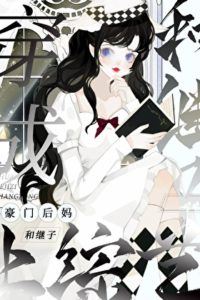
Transmigrated as a Wealthy Family's Stepmother and Going on a Variety Show with My Stepson
Novel Info

Summary

... Read More

Yu Lan, a 21st-century university student and fashion design major, transmigrates into a novel as the malicious ex-wife of Gu Yi, a wealthy billionaire. She inhabits the body of Yu Lan, a nouveau riche woman who married Gu Yi out of obsession, only to be neglected and driven to torment his illegitimate son, Gu Sui’an. The original character’s abuse leads to her eventual imprisonment and death. Bound by a “sheep-shearing system” that forces her to extract money from the wealthy to donate to orphans or face forced plot progression, Yu Lan initially attempts to live a lazy, luxurious life while completing tasks through cunning means. She avoids the original plot’s cruelty toward Gu Sui’an, instead treating him with a pragmatic detachment that confuses the reborn teenager.

Gu Sui’an, who has also transmigrated back to his thirteenth year, expects the familiar abuse but encounters a stepmother who demands only three hundred yuan for a broken perfume bottle and later forces him to carry shopping bags. This unexpected shift disrupts his trauma responses, leading him to observe her with growing curiosity. Yu Lan’s actions, such as buying him clothes and picking him up from school, deviate from the original narrative, causing ripples in the Gu family dynamics. The Gu family elders, particularly the Old Madam, view Yu Lan with suspicion due to her lack of social standing and perceived incompatibility with the family’s traditions, while Gu Yi remains distant and indifferent.

A key turning point occurs during the Old Madam’s birthday banquet when Yu Lan learns that in the original story, Gu Sui’an was locked in a cabinet by the protagonist. Realizing the original Yu Lan did not commit this act, she becomes determined to prevent the tragedy. The system issues a new task requiring her to extract one thousand yuan within twenty-four hours. Desperate to complete the task without resorting to the original plot’s abuse, Yu Lan searches for Gu Sui’an, only to discover he has gone missing. Drawing on her knowledge of the novel, she deduces he is trapped in the storage room cabinet, suffering from claustrophobia.

Yu Lan rushes to the storage room and rescues Gu Sui’an, an act that defies the system’s warnings against breaking character. This intervention alters the timeline, sparing Gu Sui’an from the psychological damage that defined his previous life. The system acknowledges the deviation but allows the task to proceed as Yu Lan finds alternative ways to meet the financial requirements. Her relationship with Gu Sui’an begins to shift from hostility to a tentative, unspoken understanding, while Gu Yi remains unaware of the changes unfolding in his household. The story moves toward a new trajectory where Yu Lan navigates the constraints of the system and the Gu family’s expectations while protecting the boy who once despised her.

Latest Release
DateGroupRelease
2026-08-11shanghai fantasy c85
2026-08-11shanghai fantasy c84
2026-08-11shanghai fantasy c83
2026-08-11shanghai fantasy c82
2026-08-11shanghai fantasy c81
2026-08-11shanghai fantasy c80
2026-08-11shanghai fantasy c79
2026-08-11shanghai fantasy c78
2026-08-11shanghai fantasy c77
2026-08-11shanghai fantasy c76
2026-08-11shanghai fantasy c75
2026-08-11shanghai fantasy c74

Community Reviews

Rating(4 / 5.0, 12votes)
5 stars
4(33%)
4 stars
4(33%)
3 stars
4(33%)
2 stars
0(0%)
1 stars
0(0%)

Popular reviews

... Read More
The worldbuilding in this novel is doing something really clever—it's using extreme opulence as both backdrop and comedy. Let me just start with the most random detail: the weeding workers cost FIVE HUNDRED YUAN A DAY. Yu Lan's internal reaction—"Back then, I only earned one thousand designing stage costumes!"—is the funniest wealth-gap commentary I've read. She's a transmigrated college student who worked herself to the bone, now looking at gardeners earning more per day than her entire lifetime of labor. The villa itself is described with this lazy, almost bored precision. Three chefs. A black card. Sea cucumber, abalone, Buddha Jumps Over the Wall, drunken crab, crayfish. The text doesn't try to make this sound glamorous—it sounds exhausting, in a good way. Yu Lan treats the chefs like concubines she "flips cards" for, which is such a specific, vivid image that I can just see it. But the most cinematic scene has to be the car arrival. Sunlight through the tree-lined path, cicadas buzzing with summer heat, and then this thin boy in a Western-style school uniform sitting in the blind spot like a ghost. The driver's perspective—watching the rearview mirror, clicking his tongue, feeling sorry for the "unfavored young master"—creates this entire world from a single man's limited viewpoint. We learn about the secret illegitimate son, the father's hands-off attitude, the new wife, the boy being forced to move out to school. All through one guy's car ride. And then the contrast: the rose garden where Yu Lan supposedly plants flowers for two hours but actually only plants two, while servants do the rest. The butler handing her a damp towel like she's earned it. The wind blowing past her outstretched hand and making her palm feel "ice cold"—that detail, right when she realizes she's going to get nothing for her performance, is perfect atmospheric writing.
... Read More
I need to talk about Yu Lan's dialogue because honestly it's one of my favorite things about this book. The way she talks is so distinctly her - casual, slightly sarcastic, completely unbothered. When Gu Sui'an calls her 'Mom' at the school gate and she gets mad, her internal monologue is just 'Ahhhh, she decided she would never speak to him again!' which is such a kid reaction from someone who's technically an adult woman. But then the best line has to be when she's explaining why the dog likes going to the park: 'Quail Egg is a total slave to beauty.' I laughed out loud. That's not something everyone would say. That's Yu Lan specifically. And her exchange with Xu Zonglei is also great - she corrects him immediately when he calls her 'Madam Gu' and just says 'Just call me Yu Lan.' She's not playing into the wealthy wife role at all. Even her banter with the system is funny: 'How am I lazy? Shopping, eating, and walking the dog every day, don't those things require physical effort too?!' The author has given each character a really distinct voice. Gu Sui'an barely speaks but when he does it's measured and careful. Gu Yi is all business - 'Contact the PR department. Find a way to delete all these posts.' No emotion, just action. And Xu Zonglei? He's smooth, calculating, always smiling. You can hear the difference between them just from how they talk.
... Read More
There's a recurring motif here that I can't stop thinking about: the idea of exploitation, and who gets to exploit whom. The system calls it "shearing wool from the wealthy family"—a pastoral, almost cute metaphor for what is essentially theft. But Yu Lan's version of shearing is so mundane (weeding, planting flowers) that it becomes this absurd commentary on class. She's a transmigrated college student who used to earn a thousand yuan for stage costume design, now trying to justify charging five hundred yuan a day to pull weeds in a mansion. The wealth gap isn't just a setting detail—it's the entire premise. Yu Lan transmigrated because the system picked her, and the system's entire economy runs on "exploiting the rich." The orphanage donation is framed as a moral task, but it's really just a cover for the host to extract money from the wealthy household. Who is the real villain here? The original owner who tormented a child? Or the system that forces people to steal from rich families as a game mechanic? Then there's Gu Sui'an himself as a symbol. He's the illegitimate son, the unfavored child, the boy who was locked in a cabinet for a day and night. His very existence in this house is a reminder of the old man's moral failings, and the original owner's cruelty toward him is the ultimate expression of displaced resentment—she can't attack the man she married, so she attacks the child he ignores. The red mole on Yu Lan's collarbone that the text specifically mentions during the rose-planting scene is interesting too. It's described as "adding a touch of allure," and the young male servants blush at the sight of it. But it's also a mark—something physical and permanent on her body, just like the scars Gu Sui'an will later have on his wrists. Bodies as records of experience. Bodies that suffer. Bodies that are controlled.
... Read More
I need to talk about Gu Sui'an for a minute because THIS CHARACTER. Thirteen years old, probably, but he carries himself like someone who's already lived seventeen years of hell. The text says his voice is "hoarse" the first time he speaks, like "an old, rusted machine groaning to life." That's not a kid who's been silenced by bullying—that's a kid who's been silenced by trauma. And the driver! Oh my god, the driver is my favorite accidental witness. This guy has no idea what's going on in this house, but he's clearly a good person—he sees the report card with the bright red 100 and immediately thinks, "If my kid scored that, I'd be overjoyed!" Meanwhile he's sitting three feet from a boy who has every reason to be terrified of the woman who just got out of the car. The most devastating moment in these chapters isn't some big dramatic confrontation. It's when Yu Lan—controlled by the system—calls him "little mute" in front of the driver, and then Gu Sui'an just... lowers his head. No reaction. No defiance. Because "this was how he usually behaved, no one found it strange." The normalization of abuse is so much more terrifying than any explosion. But then—THEN—he raises his head after she leaves, and the text says: "Beneath his long bangs that covered his eyelashes, a pair of eyes filled with disgust was revealed." Disgust. Not fear. Not sadness. DISGUST. This boy has already survived the worst version of this story, and he's looking at her like she's something he scraped off his shoe. I am SO ready for the moment he realizes she's not the same person anymore. The stepmother-stepson dynamic here has so much potential. The original owner tortured him. The current Yu Lan couldn't care less about him. And Gu Sui'an, having died in that original timeline, has no reason to trust anyone. The tension of him not knowing whether she's faking or genuinely changed? That's going to be incredible.
... Read More
Okay so this part with Gu Sui'an is genuinely one of the cutest things I've read in a while and I'm not even being ironic. The boy is sitting there looking like he's solving some super hard math problem but his search history is literally 'How to coax an angry girl' and 'How to get along with a stepson or stepmother.' Like bro you really went full Olympiad mode on this?? And then he's trying to defend Yu Lan online under a random anonymous account and his comment gets buried and people think he's being sarcastic. I literally wanted to shake the phone when I read that. The fact that he cares enough to do all this but stays completely silent in person is such a good character detail. It shows he's not some bratty stepson trope - he's actually observing and trying. And then Yu Lan catches a glimpse of his phone and her suspicion deepens?? The dramatic irony here is killing me because we know exactly what he was searching but she doesn't. Also the scene where he applies her medicine - he's getting skilled at it now, just a few minutes. That's a whole arc of him learning to care for someone without saying a word about it. Little moments like that are what make the relationship feel real instead of forced.
... Read More
Okay so let me just say this right away—this system-forced-plot-progression thing is the single best narrative device I've seen in a transmigration novel. Like, instead of the usual lazy "she has to follow the plot or die" trope, we get something way more interesting: her body gets hijacked for TEN MINUTES at a time. Ten minutes of her watching herself do things she absolutely does not want to do, like calling a thirteen-year-old boy a "little mute" and then strutting off to demand Brazilian steak. That's not even dramatic punishment—that's humiliating punishment, and I love it. The structure here is so smart too. Chapter 1-7 establishes three parallel tensions: Yu Lan trying to be a lazy rich wife, the system constantly interrupting with increasingly annoying tasks, and Gu Sui'an's quiet arrival back at the villa. None of these threads intersect yet, but the author is clearly building toward a collision. And the worst part? The task failure consequence means every time Yu Lan tries to outsmart the system, she's one wrong move away from becoming a puppet again. That's genuine suspense. The original owner's backstory as a suicide-threatening gold-digger who ended up tormenting a child is dark, but the way the text handles it—through Yu Lan's detached, almost clinical reading of the novel—is perfect. She's not emotionally invested in fixing this mess, which makes her all the more relatable as a protagonist. She's just trying to survive the plot, and honestly? Same. The forced plot scene where she walks to the entrance and greets Gu Sui'an with that fake girlish infatuation before switching to cold disdain the moment she realizes it's not Gu Yi—that was chilling. The author doesn't even need to describe Yu Lan's internal horror; the physical comedy of it (the driver's blind spot reveal, the sudden expression switch) does all the work.
See all reviews

Characters

See all characters

Custom lists

See all custom Lists