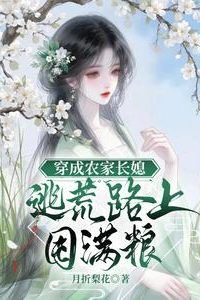
Transmigrated as a Farmer’s Eldest Daughter-in-Law: Stockpiling Food on the Road to Exile
Novel Info

Summary

... Read More

Shen Yihuan, a twenty-first-century livestream sales influencer, dies unexpectedly and transmigrates into the body of a fifteen-year-old girl in the fictional Great Chu dynasty. The original Shen Yihuan was the neglected daughter of a wealthy merchant family. Her stepmother, Madam Li, deliberately suppressed her for ten years, molding her into a timid and unremarkable girl. When her father saw that she had not inherited her late wife's beauty, he lost all interest and arranged for her to marry a distant relative of Madam Li. The original owner resisted, escaped, and jumped into a river to avoid the match. She was rescued by Jiang Changfeng, an eighteen-year-old hunter. Because an unmarried man and woman had physical contact, Madam Li was forced by public opinion to negotiate a hasty marriage between Shen Yihuan and Jiang Changfeng. The wedding took place in less than three days, and the original owner died of a fever on her wedding night.

Upon waking in her new body, Shen Yihuan discovers she has brought her old family home from the modern world as a portable space. This space functions as a sanctuary containing running water, electricity, and natural gas, along with vast stocks of food, household supplies, and promotional products from her previous life. She can mentally store and retrieve items without physically entering the space. Her first priority is survival and reclaiming her dignity. She inspects her dowry, which her stepmother had filled with worthless junk, keeping only one hundred taels of silver and gold-plated copper jewelry. She stores the silver in her space and resolves to recover her mother's original dowry, which was worth thousands of taels.

Shen Yihuan marries into the Jiang family, a household of scholars and farmers led by her father-in-law Jiang Chunsheng and mother Liu Guiying. The family is warm and harmonious, consisting of three sons and a daughter. Jiang Changfeng is protective and kind, having fallen in love with her at first sight. However, tension exists with Jiang Lanxin, the younger sister, who resents Shen Yihuan due to misinformation spread by Ye Qinghe, a neighbor who harbors unrequited feelings for Jiang Changfeng. Ye Qinghe attempts to undermine Shen Yihuan but is firmly rebuffed. Shen Yihuan uses her modern knowledge and the resources in her space to navigate family dynamics, eventually winning over her mother-in-law while keeping her space a secret.

The turning point occurs during Shen Yihuan's return visit to her natal home. She uses a prank stink spray from her space to humiliate her half-sister Shen Mingzhu and expose the cruelty of her stepmother. Taking advantage of the chaos, she breaks into the family storerooms and empties them of gold, silver, jade, silk, and food supplies into her portable space. She also sprays foul odors around her stepmother's and half-brother's courtyards as further retribution. When Madam Li attempts to have her servants attack the couple, Jiang Changfeng effortlessly repels them with his superior strength. Shen Yihuan and Jiang Changfeng leave the Shen residence permanently, severing ties with her abusive family.

Back in Xinghua Village, Shen Yihuan uses her stolen wealth to improve the Jiang family's living standards, purchasing polished rice, flour, and daily necessities. She begins farming in her space, growing crops that supplement their diet. However, strange animal behavior—chickens refusing to roost, dogs barking, and fish leaping from the water—leads Shen Yihuan to conclude that a major earthquake is imminent. She warns her family, but they are skeptical. The story ends with Shen Yihuan preparing for the disaster, relying on her space's abundant supplies while the Jiang family remains unaware of the true scale of the danger she foresees.

Novel Items

More
Cheat Ability
Shen Yihuan's transmigration cheat — her old 2.5-story family home from the 21st century that accompanied her. It has running water, electricity, natural gas, no internet, and fully functional appliances. The courtyard has flourishing crops, 20 chickens, and 15 ducks. The second floor contains sacks of rice (50 catties each), flour (20-catty bags), sweet potatoes, potatoes, taro, and mung beans. The living room is stocked with toilet paper, tissues, sanitary pads, diapers, and infant formula. The first floor has food, toys, household goods, and promotional samples. She can mentally store and retrieve items without physically entering.
Item
Luo Zhen's enormous dowry carried into the Pei residence in a long procession. The sandalwood chests were trimmed with gold, with one chest worth more than half of Madam Zhou's entire dowry. The procession of box carriers was so long that Luo Zhen had already traveled a considerable distance before they finished exiting the Luo residence.
Materials
One hundred taels of silver found in Shen Yihuan's dowry chests, which she stored inside her portable space.
Treasure
A set of gold-plated copper jewelry included in the dowry chests, meant only to make the wedding appear respectable. Noted as having no real value.
Medicine
A bitter herbal brew Cheng Youyou made to promote circulation and reduce bruising from her injured ankle. She had gathered plenty of herbs recently with Mu Yu's help washing them clean. She drank it despite the bitter taste.
Food
A bottle of fresh milk that Huo Shengbai secretly placed in Wen Zhili's backpack along with other snacks.
Latest Release
DateGroupRelease
2026-08-11shanghai fantasy c13
2026-08-11shanghai fantasy c12
2026-08-11shanghai fantasy c11
2026-08-11shanghai fantasy c10
2026-08-11shanghai fantasy c9
2026-08-11shanghai fantasy c8
2026-08-11shanghai fantasy c7
2026-08-11shanghai fantasy c6
2026-08-11shanghai fantasy c5
2026-08-11shanghai fantasy c4
2026-08-11shanghai fantasy c3
2026-08-11shanghai fantasy c2

Community Reviews

Rating(3.8 / 5.0, 16votes)
5 stars
4(25%)
4 stars
5(31%)
3 stars
7(44%)
2 stars
0(0%)
1 stars
0(0%)

Popular reviews

... Read More
I keep thinking about that stink spray moment and how much meaning the author packed into it. On the surface, it's just a satisfying revenge prank — Shen Yihuan sprays Shen Mingzhu's skirt while everyone thinks she's the smelly one. But dig a little deeper and it's about so much more. The whole Shen family has been treating Shen Yihuan like she's worthless, like she's dirty, like she doesn't belong. Shen Mingzhu literally says the manor smells strange and points at her. And then Shen Yihuan turns that accusation back on them in the most poetic way possible. The stink spray is physical proof that the 'stench' was never on her — it was on them all along. And what about the embroidered sachet? That mandarin duck motif on the dark teal fabric — it's a symbol of devoted love, of two birds together for life. Ye Qinghe is embroidering it for a man who is already married. Her brother calls it shameless. But the real shame is on the Shen family, who raised a daughter to be cruel to her own sister. And the peach blossom cakes — Ye Qinghe brings them as a 'wedding gift' claiming they're Jiang Changfeng's favorite, when he literally tells Shen Yihuan he doesn't even like them. These objects carry so much meaning. The author is weaving a story about what true worth looks like versus what society says should have worth. Shen Yihuan may have come from a cold, wealthy family, but she has real value — kindness, intelligence, courage. The Shens have money and status but no conscience. I love how the symbolism reinforces the theme without being heavy-handed.
... Read More
I need to sit with this section for a moment because there's so much happening beneath the surface. Let me start with the most obvious symbol: the smell. On the surface, it's a prank. But think about what it represents. Shen Mingzhu accused Shen Yihuan of having a foul odor—of being dirty, unworthy, disgusting. And what happens? The smell comes from Shen Mingzhu herself. This is poetic justice in its purest form. The accusation rebounds onto the accuser, and the entire household is forced to witness the truth: the person who was supposed to be pristine and proper is literally rotting from the inside out. The servants' reaction is crucial here. They don't just vomit; they GAG. Their eyes widen. They're forced to confront something so repulsive that it bypasses all social decorum. And their conclusion—that Shen Mingzhu "really used the toilet this morning... and forgot to wipe herself"—is the ultimate humiliation. It's not just that she smells; it's that she's so careless, so neglectful of basic hygiene, that even the most vulgar accusation turns out to be an understatement. But the deeper symbolism is in what Shen Yihuan takes from the manor. The camphorwood chests full of silver. The nanmu wood furniture. The jade ornaments. The silk, the herbs, the furs. These aren't just valuables; they're SYMBOLS of the Shen family's wealth and status—wealth that was built, in part, on the suffering of the original Shen Yihuan. By taking it, she's not just getting even; she's reclaiming what was never hers to begin with. The text explicitly asks: "Why did the original Shen Yihuan have to suffer such humiliation and injustice?" This isn't theft; it's RESTITUTION. The spatial ability itself is symbolic. Food doesn't spoil inside it. Time preserves everything. In a world where the original Shen Yihuan was left to rot—ignored, abused, forgotten—this ability represents the opposite: preservation, abundance, care. She's building something that will last, something that won't decay. And she's doing it for Jiang Changfeng's family, not her own. The silver ingot scene is another layer. When Shen Yihuan tries to pay with ten taels and Jiang Changfeng refuses, it's not about money. It's about the symbolism of who provides, who protects, who maintains dignity. But when she insists and he finally accepts, tucking it into his robe, it's a silent agreement: she will contribute, he will protect, and together they will survive. The ingot becomes a token of their partnership, not just currency. And the ending—walking through the marketplace, buying snacks for "everyone at home"—is the ultimate symbol of transformation. The woman who was once starved, neglected, and powerless is now the one providing. She's not just surviving; she's thriving. And she's doing it with someone who sees her, protects her, and is quietly, completely smitten. This story isn't just about revenge. It's about what happens when a woman who was treated as worthless finally realizes her own worth—and decides to take everything that was denied to her.
... Read More
Let's talk about dialogue because THIS is where the writing truly shines. Shen Yihuan's voice is instantly recognizable and I love it. From the very first lines, she's theatrical, sharp, and unapologetically vulgar when it serves her purpose. "Don't tell me you went to the bathroom this morning and forgot to wipe yourself properly?" This isn't just an insult; it's PERFORMANCE. The text explicitly notes her "exaggerated expression and sharp, theatrical tone" and how it "immediately attracted the attention of servants throughout the courtyard." She's not just speaking; she's staging an event. Every word is calculated to maximize damage while maximizing audience. And the reactions! The servants' dialogue is perfectly pitched: "How dare you!", "What filthy nonsense are you spouting!", "Such vulgar language! Second Miss, don't listen to her—you'll dirty your ears!" Each line reveals character. The personal maid is defensive, the elderly servants are concerned about propriety, and they're all using dialogue to try to reassert control over a situation that's already spiraling. The contrast between their formal, restrained speech and Shen Yihuan's brazen vulgarity is what makes the scene work. But the real dialogue gem comes later, during the confrontation with Madam Li. Shen Yihuan's response to "Where do you think you're going?" is pure gold: "What, are you inviting me to stay for dinner?" She's poking her head out from behind Jiang Changfeng like a little terrier, and the image is so vivid I laughed out loud. And then her final declaration: "Fine by me! You think I care about going back? You're all birds of a feather, and the whole place stinks to high heaven! Even if you begged me to return, I wouldn't!" This is the voice of a woman who has completely shed her old self. The original Shen Yihuan would never have spoken like this. The dialogue here isn't just clever; it's CHARACTER EVOLUTION made audible. Jiang Changfeng's dialogue is deliberately sparse, which is a brilliant choice. He speaks less, but when he does, it matters. His speech to Madam Li is formal, measured, and carries the weight of someone who chooses his words carefully. "Yihuan is now my wife. She is a member of the Jiang family." Simple. Direct. Unshakeable. And the contrast with Shen Yihuan's rapid-fire, emotionally charged dialogue creates a perfect balance. She's fire; he's stone. Together they're unstoppable. The shopkeeper's dialogue is another example of the author's skill with voice. "Miss, are you buying rice or flour? We've just received a fresh batch of polished rice. It's forty-five copper coins per dou." This is functional, transactional, and completely authentic. It grounds the scene in reality without distracting from the main characters. What's remarkable is how the dialogue reveals power dynamics. Shen Yihuan's verbal aggression against the Shen family, Jiang Changfeng's calm authority against Madam Li, the shopkeeper's deference to what he perceives as wealth—every conversation is a negotiation of power. And Shen Yihuan keeps winning.
... Read More
I have to talk about the Shen family visit because honestly, this is where the plot really tightened its grip on me. Up until now, the story had been building this slow-burn domestic tension with the Ye Qinghe situation and the Jiang family dynamics, but then BAM — they go to the Shen manor and everything explodes in the most satisfying way. The author sets up this incredible contrast: the Jiangs bring generous gifts (two slabs of cured pork, pheasants, rabbits!) while the Shen family can barely muster basic courtesy. And Shen Mingzhu — oh my god, that little monster. She literally covers her nose with a handkerchief and calls her sister smelly. The scene where Shen Yihuan sprays her with that prank stink spray behind the back? I literally laughed out loud. But here's what I love about the plot structure: the author doesn't just give us a simple revenge moment. Jiang Changfeng is right there, fists clenched, about to step in, and Shen Yihuan grabs his hand and says 'Easy. Leave this to me.' That's a pivotal character moment wrapped into the plot. It shows she's not just some passive victim — she's strategic, she's clever, and she's protecting her husband's feelings while handling her own business. The subplot with Ye Qinghe and her brother also ties in nicely. Ye Mingchuan finding out about the sachet and confronting his sister adds another layer — it's not just about the romantic rivalry, it's about family honor and consequences. The plot is weaving multiple threads together and I'm here for it. Will the Shen family face real consequences for their treatment of Shen Yihuan? Is Ye Qinghe going to keep causing trouble? I need to know what happens next.
... Read More
The ending of this chapter is absolutely chilling. One minute you're watching domestic drama unfold—sister-in-law shoving, fake fainting, mung bean cakes as peace offerings—and the next, the author drops this: chickens refusing to return to their coops, dogs barking throughout the village, swallows darting wildly, a rat running across someone's foot, and fish jumping out of the river. These aren't just random animal behaviors. Any reader who's ever watched an earthquake documentary or read about seismic animal behavior knows exactly what's happening. The animals sense it before humans do. And Shen Yihuan—being the modern woman she is—connects the dots immediately. The tension in that dinner scene is palpable. Liu Guiying serving polished white rice specifically for Shen Yihuan while everyone else eats coarse brown rice. Jiang Lanxin's eyes full of dissatisfaction. Then Shen Yihuan deciding to eat the same food as everyone else to avoid resentment. The family dynamics are so carefully observed—the mother secretly planning to cook polished rice every few days anyway, the son understanding his wife's concern for harmony, the daughter still fuming about not getting snacks from the county trip. And then the earthquake signs hit. The way Shen Yihuan's expression changes "again and again" while she tries to process this information. The old passage her grandfather quotes—"The rivers dry up, Mount Qi collapses, dogs howl in the marketplace, and cattle and horses cry through the night"—that's straight out of classical Chinese literature. The author is weaving together folk wisdom, modern scientific knowledge, and literary tradition into one terrifying moment.
... Read More
"Let's eat noodles." That's it. That's the entire romance arc right there. Two people who just got married, standing at a crowded stall, and he orders her the expensive shredded pork noodles while he gets the cheapest plain scallion noodles. She knows he's trying to save money. She wants to tell him not to. But she also knows she's not really in a position to lecture him. And then he quietly eats her leftovers. I'm not crying, you're crying. The way the author writes Jiang Changfeng's devotion is so understated it hurts. He doesn't make grand speeches or dramatic gestures. He just... cares. He helps her down from the carriage. He rushes to her side when she falls. He carries grain into the kitchen by himself. He knocks on her door like his heart is in his throat because he's worried she might have fainted. And Shen Yihuan? She's over here thinking about how the original body had a tiny appetite and how she wanted to finish everything but couldn't. There's this whole layer of grief for the original owner woven into her everyday observations. She's not just living this life—she's mourning the person who lived it before her. The most emotionally devastating moment though? Jiang Lanxin's reaction when her brother says he loves Shen Yihuan. "She felt both envious and heartbroken." That's not just jealousy—that's the death of a dream she'd been nurturing for years. Ye Qinghe told her they were childhood sweethearts secretly promised to marry. All that hope, shattered in one conversation.
See all reviews

Characters

See all characters

Custom lists

Oops…There is nothing here.