Transmigrated as a Farm Girl: Starting with a Secret Space to Cut Ties and Take Revenge
Novel Info

Summary

... Read More

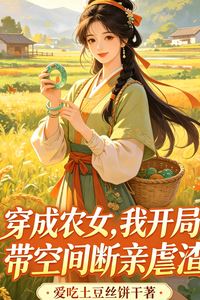
Night Shadow, the modern world's top assassin, dies in a massive explosion only to awaken in the body of Lin Wan, a sixteen-year-old farm girl in the Great Xia Dynasty. The original Lin Wan was an abused orphan raised by a spineless father, a vicious stepmother, and a greedy grandmother. Just before her death, her family had sold her to Master Qian, a fifty-year-old widower notorious for beating his previous wives to death, to pay the bride price for her lazy cousin, Lin Daqiang. When the stepmother shoved Lin Wan into a stone mill during the transaction, the assassin's consciousness took over. Lying in a pool of blood, she assessed her weak, malnourished body and waited for the perfect moment to strike.

As Master Qian reached for her, Lin Wan opened her eyes, revealing the cold, emotionless gaze of a killer. She swiftly incapacitated her stepmother with brutal efficiency and threatened her father with a hidden woodcutting knife. Using the threat of death and the legal code of the Great Xia Dynasty, she forced the village chief to witness the signing of a family separation document. She left with nothing but her ten-year-old brother, Lin Yulong, who was suffering from a high fever and malnutrition. The villagers mocked their fate, predicting they would freeze or starve within days, but Lin Wan remained unmoved.

Seeking shelter, the siblings retreated to a ruined Mountain God Temple at the foot of Wolong Mountain. Yulong’s condition worsened rapidly, and with no money for medicine or water, Lin Wan faced a desperate situation. In her moment of highest stress, she accidentally entered a mystical dimension known as the Divine Farmer Space. Inside, she found a Spirit Spring whose water possessed miraculous healing properties. After testing it on herself and finding it restored her strength and healed her wounds, she used it to save her brother. The space also provided a beginner’s gift containing high-yield crop seeds and five taels of silver.

With Yulong stabilized, Lin Wan ventured into the dangerous Wolong Mountain to hunt for food. Utilizing her assassin skills, she set snares and caught rabbits and a pheasant. During her hunt, she sensed a resonance from a rare medicinal herb growing on a precarious cliff face. Risking her life, she climbed the slippery rock face and harvested a sixty-year-old wild Fo-ti root, a valuable commodity worth a fortune. She returned to the temple with both food and the herb, planning to sell it in town to secure a stable income and a proper home for her brother.

Lin Wan’s journey marks a complete transformation from a victim of familial abuse to an independent survivor. Armed with modern combat expertise, a mysterious cheat ability, and an unyielding will, she begins to build a new life. Her primary focus remains protecting her brother and ensuring they never face starvation or exploitation again. The story follows her initial steps toward establishing herself in this feudal society, leveraging her unique advantages to overcome the poverty and danger that threaten her new existence.

Novel Items

More
Equipment
Dropped as equipment with decent but inferior stats compared to vine armor. Cheng Shijia gave it to Moke Moke, suggesting she sell it at her stall if she doesn't need it.
Materials
The bride price money paid by Master Qian for Lin Wan, reduced from ten taels to eight taels. Madam Zhang eagerly snatched it, bit a piece with her yellow teeth to verify it was real silver, and celebrated that Daqiang could finally get married.
Item
A pouch tied to Zhao Jingqing's waist containing a little over a hundred to nearly two hundred coins. He gives it to Li Changju as an initial payment for his father's medicine.
Tool
Located near the eaves of the Yuan family courtyard, used for grinding. Beside it were bamboo strips for weaving.
Tool
Qiao Huan wanted to buy a pipe to tie to the kitchen tap for watering the vegetable garden without carrying water.
Weapons
Chen Qing carried a woodcutting knife when going out. She told He Yuxiang it was her weapon but not meant for hurting people.
Latest Release
DateGroupRelease
2026-08-11shanghai fantasy c19
2026-08-11shanghai fantasy c18
2026-08-11shanghai fantasy c17
2026-08-11shanghai fantasy c16
2026-08-11shanghai fantasy c15
2026-08-11shanghai fantasy c14
2026-08-11shanghai fantasy c13
2026-08-11shanghai fantasy c12
2026-08-11shanghai fantasy c11
2026-08-11shanghai fantasy c10
2026-08-11shanghai fantasy c9
2026-08-11shanghai fantasy c8

Community Reviews

Rating(3.9 / 5.0, 21votes)
5 stars
7(33%)
4 stars
5(24%)
3 stars
9(43%)
2 stars
0(0%)
1 stars
0(0%)

Popular reviews

... Read More
There's a line in this text that I keep coming back to: "The final heavy chain left behind by the original owner shattered completely." This isn't just a plot point—this is the thematic core of everything that's happening. Lin Wan leaves the Lin family with nothing material. No money, no property, not even a blanket. But she takes something far more valuable: her autonomy. The family separation document isn't just a legal form—it's a birth certificate for a new person. The symbolism of the bloodstained knife is layered and deliberate. It's the instrument of her threat, yes, but it's also the tool of her former life—woodcutting, labor, survival. She uses it to threaten her father, then flicks it away and buries it in the doorframe. The gesture is almost ritualistic. She's done with violence as a solution, or at least, she's done with it in this context. The knife stays behind in the house she's leaving. And then there's the half bun from Aunt Wang. This small detail carries enormous thematic weight. In a world where everyone is cruel or indifferent—Old Madam Liu spitting seeds and predicting death, the villagers gossiping about frozen corpses—Aunt Wang's quiet act of kindness stands out like a flame in darkness. She doesn't make a scene. She doesn't preach. She just pulls Lin Wan behind a tree and presses cold bread into her hand. The story is telling us that humanity survives not through grand heroism but through these tiny, unrecorded acts of decency. The brother and sister leaving with nothing, walking toward Wolong Mountain—that's the image that stays with me. They're literally walking into the wilderness, into uncertainty, but their backs are straight. The mountain represents both danger and possibility, and the fact that they choose it over a life of abuse says everything about what the story values.
... Read More
The pacing in these three chapters is absolutely ruthless and I am here for it. Chapter 17 starts with atmosphere—the smell of blood and medicinal herbs, the silent approach like a wildcat, the reveal of this terrifying figure half-dead in the forest. The author takes their time here, letting us feel the weight of Lin Wan's decision. She's not rushing. She's calculating. And the chapter ends with her dragging this massive unconscious man through the mountains in the dark, which is both physically exhausting to read about and oddly mesmerizing. Then Chapter 18 shifts gears completely. We're now in the ruined temple, the lamp is lit, and the pacing becomes methodical and tense. Cleaning wounds, cutting away blood-soaked clothes, discovering the scars, realizing he has a fever. The author slows down here intentionally—you can feel every second ticking by as Lin Wan fights to keep him alive through the night. 'Tonight would determine whether he lived or died.' That line sits in your chest like a stone. And then Chapter 19 opens with birdsong. Morning. Sunlight. And then—BAM. He's awake and his hand is on her throat. The transition from the slow, quiet vigil of the night to this explosive confrontation is jarring in the best possible way. It's like the book was holding its breath for an entire chapter and then finally exhaled. What really impressed me is how the author uses physical exhaustion as a pacing tool. Lin Wan is dragged to her limits—carrying him, treating him, staying awake all night—and just when you think she can collapse, the man she saved tries to kill her. The pacing mirrors her physical state: slow and laborious, then sudden and sharp. The chapter breaks are also doing heavy lifting. Each one ends on a note that demands continuation. Chapter 17 ends with 'Our little ruined temple isn't going to have a peaceful night.' Chapter 18 ends with him waking up and grabbing her. Chapter 19 cuts off mid-tension. This is web novel pacing at its most effective—every break is a hook.
... Read More
Can we talk about how good the dialogue is in this book because some of these lines are absolutely iconic. The first one that made me laugh out loud: Lin Wan flicking her brother's forehead and saying 'Even the King of Hell thinks we're too poor to bother collecting.' That is DARK HUMOR at its finest. She just woke up from nearly dying, her brother thinks they're in Heaven, and her immediate response is a joke about being too broke for death itself. This is a character who uses humor as armor, and it tells us everything about her personality. Then there's the exchange about the food. Lin Yulong: 'Big Sister, you eat. I already drank that sweet water. My stomach feels full. I'm not hungry at all.' His stomach growls immediately after. The dialogue is so natural, so painfully realistic for a abused child who's been conditioned to never eat first. And Lin Wan's response—'When I tell you to eat, then eat. Stop arguing.'—is perfect. Short. Authoritative. No nonsense. This is someone who's used to giving orders, and it fits her assassin background without being overdone. The narration also has a fantastic voice. Phrases like 'A bloodthirsty gleam belonging to a true apex predator flashed through her eyes' and 'It's still uncertain who's going to eat whom' give us this dark, predatory energy that's completely different from the usual protagonist voice. She's not a hero. She's a survivor who happens to be good at killing things. And the simplest line that works perfectly: 'When has your sister ever lied to you?' After he stares at the meat in disbelief, she doesn't gloat or explain. She just reminds him that she keeps her promises. Three words that carry so much weight. The author's narrative voice balances action, humor, and emotion without ever feeling forced. Every line serves the scene.
... Read More
I need to process what I just read because the emotional core of these chapters is absolutely devastating in the best way. The moment that wrecked me: Lin Wan crumbling the cold, hard cornbread into a bowl, mixing it with Spirit Spring water, and feeding it to her brother like he's a baby bird. 'She held the bowl to Lin Yulong's mouth.' This is a girl who just escaped abuse herself, who spent two days starving, who should be the one desperate for food—and yet she's the one feeding him. That reversal of roles, that instinctive self-sacrifice, hits different. And his response—pushing the bowl back, lying about being full, his stomach betraying him with a growl—this is the kind of detail that makes you want to scream. This child has been so conditioned to scarcity that even when food is RIGHT THERE, his first instinct is to deny himself. Lin Wan's eyes getting 'slightly moist' at this is such a small detail but it carries so much emotion. She sees herself in him. She knows exactly what he's been through. The scene where she tells him 'We're going to live well. One day I'll let you eat the finest food and drink the best wine. We'll make the Lin family repay everything they owe us—with interest'—this is a vow. Not just to him, but to her past self. The girl who was also abused, also hungry, also powerless. She's promising that neither of them will ever be powerless again. And the ending—her coming back at dawn with meat AND a valuable herb, telling him 'We're going to sell it. And then... we're going to buy ourselves a real house'—this is hope. Real, tangible hope. Not some vague 'things will get better' sentiment, but a concrete plan. A house. A future. The emotional payoff of all that tension and danger is absolutely worth it. This sibling relationship is the heart of the story, and it's written with such authenticity and warmth that I'm completely invested in their survival.
... Read More
"Come on, Yulong. Starting today... We're going to build the grandest house in the entire village." I read that line and I literally had to put the book down for a second. That's it. That's the whole emotional core of this story right there. Two siblings who've been thrown out, given nothing, and instead of breaking, they're looking at rocky wasteland and dreaming big. The sibling bond between Lin Wan and Lin Yulong is what keeps me coming back. It's not flashy. It's not dramatic. It's in the small moments — him carrying small rocks behind her, her ruffling his hair, telling him to stay close in the forest. When he sees those giant radishes and yells "Has this radish become a spirit?" — I swear I laughed out loud. That boy is pure joy in human form. But there's also this undercurrent of sadness, right? They were KICKED OUT of their family. Old Madam Liu even mentions it — "when you left the Lin family, you didn't even take a needle or a spool of thread." Who does that? Who throws out a young girl and a child with nothing? The fact that Lin Wan doesn't even mention her feelings about this — she just moves forward — that's what makes it hit so hard. They have each other. That's their whole world. And honestly, that's more powerful than any romance subplot ever could be.
... Read More
Okay, first of all—"Old Lin's voice cracked into a shrill squeal, like an old rooster with its neck being stepped on." I am not okay. This simile is so perfectly brutal and funny at the same time that I had to read it three times. The author has this incredible gift for dialogue that is both darkly comic and devastating. Old Lin isn't just scared—he's humiliatingly, viscerally terrified, and the writing makes you both wince and laugh. But then the tone shifts instantly and that's what makes this author's voice so distinctive. One moment you're reading about a man peeing himself in fear, and the next you're reading Lin Wan's cold, measured speech to Village Chief Li: "It's not that I, Lin Wan, refuse to be filial. It's the Lin family that refused to let me live." This is someone who has mastered the art of speaking truth in a language the powerful cannot ignore. She quotes the law. She references the Great Xia Dynasty's legal code. She's not just a desperate girl with a knife—she's a strategist. And Lin Yulong's dialogue—so sparse, so broken—carries more weight than any monologue could. "Big Sister... are we going to die?" "It doesn't matter if I die... but I don't want you to die." This is a child who has been conditioned to believe his existence is a mistake, and the fact that he says it so quietly, so matter-of-factly, is absolutely devastating. The villagers' dialogue is equally sharp. Old Madam Liu cracking sunflower seeds while predicting the siblings' deaths is such a perfect character moment in three lines. These people aren't just background noise—they're a whole ecosystem of cruelty and indifference, and the author gives each one a voice that's instantly recognizable.
See all reviews

Characters

See all characters

Custom lists

Oops…There is nothing here.