Transmigrated as a Cannon Fodder Female Supporting Character and Still Expected to Seduce the Enemy - Reviews

Transmigrated as a Cannon Fodder Female Supporting Character and Still Expected to Seduce the Enemy
+Add to Custom List
Sort
Add review
... Read More
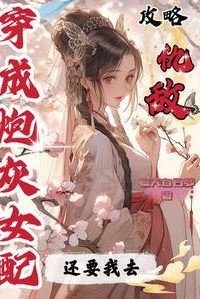
Okay so the Tingyun Mountain Hunt is basically the big event that everything is building toward, and honestly it's such a clever setup by the author. It's called a hunt but it's really a matchmaking banquet, which means all these characters are about to be thrown into a pressure cooker of social dynamics. Leng Yaoda knows this from her memories of the original story, and you can tell she's trying to navigate it carefully. The plot structure here is really satisfying because it's not just one big event — it's layered. You've got the gift-returning subplot that leads to the encounter with Lu Shixiu, which then gets interrupted by Lu Zhiyou, and all of it funnels toward the hunt. The pacing feels natural too. The author doesn't rush anything. We spend time at dinner, then the next day with Leng Yaoda's morning routine, then the visit to the Chancellor's mansion, and THEN we get to the hunt itself. It's like the story is breathing, letting us settle into each moment before the next one hits. And that line about her never following the original story's path? That's the thesis statement for the whole novel, really. She's actively fighting against fate, and the hunt is going to be where that conflict really comes to a head.
... Read More
There are two scenes in these chapters that I keep coming back to, and they're not the dramatic ones. They're the quiet ones. The ones that make the world feel real. The first is the meal at Victorious Spring Court. Twelve dishes. Five people. Past noon. The chefs are praised almost in passing, and Su Luo'an eating the most because he's a growing military officer with a "bottomless pit" stomach—these tiny details build a world that feels lived-in. You can picture the table, the lingering food, the casual idle chatter. It's not described with flowery language, but it's vivid because it's specific. The Victorious Spring Court isn't just a restaurant—it's a place where the Regent takes dinner with noble families, where bills are settled without discussion, where power dynamics play out over food. The second scene is the fan. Oh, the fan. Leng Yaoda pulling out this jade-white Ice Silk fan embroidered with fish playing among lotus flowers, a gift from the Grand Tutor Wen family's eldest daughter two years ago. The text lingers on it—on the jade handle, on the relationship it represents, on the original host's beauty described as "a clear mountain spring or a fawn in the forest." This is worldbuilding through objects. The fan tells us about political alliances (the Wen family connection), about social customs (gift-giving between noble ladies), about the original Leng Yaoda's personality (willful but talented, doted on but strict). Every prop is doing double duty. And then there's Huarong Lane itself—the first-rank ministers' quarter, the Leng family's century-old residence, the Lu family's more recent arrival, the Chancellor's Mansion on the crossing street. The geography matters. The fact that they have to pass the Lu mansion to get home, that Lu Shixiu just happens to step out at that exact moment—it's all carefully staged. The world has weight and history and it presses in on every scene.
... Read More
I need to sit down because the emotional dynamics in these chapters are absolutely wrecking me and I'm not ready. Let's talk about Lu Shixiu first. The guy is OBVIOUSLY into Leng Yaoda and he is so bad at hiding it. Every time she appears, his face flushes, his eyes sparkle, he can't even hear what anyone's saying because he's just replaying the moment she declared her "admiration" for him in the palace. And then she immediately gets in the carriage and won't come back out? Oof. The rejection is so gentle but so complete. He's standing there looking infatuated while she's literally hiding behind a curtain like a tortoise. I love him but I also want to shake him. But then—THEN—Lu Zhiyou. Oh my god. Lu Zhiyou breaking that brush. Let me just say this: the man spent an entire chapter being perfectly composed, perfectly calm, pretending the palace declaration didn't affect him at all. And then alone in his room, he sneers, calls her an actress, and SNAPS a thousands-of-taels sandalwood wolf-hair brush in half with his bare hands. That is not a calm person. That is a person holding onto something by a thread and the thread is snapping. "Only today did I discover she's quite the actress, with some skill to boot." That line hit me like a truck. Is he angry? Hurt? Both? The text says he "despised his own emotional exposure"—he's mad at himself for caring, which means he cares way more than he wants to admit. And the calligraphy detail? His hand trembling, every stroke carrying traces of emotion? The author is painting a portrait of a man who prides himself on control and is losing it. Meanwhile Leng Yaoda is over there like "perhaps even unknowingly falling in love with Lu Zhiyou due to the original body's circumstances" and I'm just sitting here screaming because the emotional triangle is forming in real time and none of them know how to navigate it. The CP energy between Lu Zhiyou and Leng Yaoda is doing THAT thing where both people are pretending they don't care while absolutely everything about them screams the opposite.
... Read More
I need to talk about the pacing of Chapter 18 because it is a masterclass in controlled tension and I'm still recovering. The chapter opens with Leng Yaoda already exhausted, dragging herself through a carriage ride home. She's pretending to sleep. She doesn't want to face the Lu family. The author could have just had them drive past in silence and moved on—but no. The gate opens. Lu Shixiu steps out. And suddenly everything that was simmering underneath explodes into the open. What's brilliant about the pacing here is that the author refuses to give us a clean scene. Leng Yaoda lifts the curtain, exchanges two lines of polite dialogue, and immediately retreats back into the carriage. Lu Shixiu is left standing there blushing and confused. Leng Lin tries to explain. The conversation continues outside while Leng Yaoda hides inside. We never get the interior monologue of what she's feeling in that moment—we only get the external behavior, which makes it infinitely more tense. Every beat is stretched: the dismounting, the greeting, the flushed face, the fading smile, the retreat. Then the chapter pivots hard to Lu Zhiyou alone in his room, and the pacing shifts from social awkwardness to internal turmoil. The brush-snapping moment is the chapter's emotional climax, and it comes completely alone—no audience, no performance, just a man losing control in private. That contrast is everything. And then—Chapter 19 opens with several days passing, summer heat, a fan, boredom—and the pace slows to a crawl. Leng Yaoda stays home. Nothing happens. And yet the "Memory Review" scene at the end creates this quiet dread that pulls you into the next chapter. The author knows exactly when to speed up and when to let the reader breathe, and the breaths always come right before something big.
... Read More
Okay can we just take a moment for the jade pendant scene because this is where the emotional complexity of this story really shines? Leng Yaoda finds this double-heart knot attached to the jade and her immediate reaction is — this is too ambiguous, I can't give this to him. So she unties it and reworks it into a peace knot. Think about what that means. She's actively choosing to defuse romantic tension instead of leaning into it. She's saying, I see what this could be, and I'm choosing a different path. And then Lu Zhiyou receives it, notices the tassel was personally made by her, and hangs it on his waist. That's not nothing. That's a guy who claims "matters of love and affection are exhausting and troublesome" literally wearing something she made on his person for everyone to see. The contrast between his words and his actions is delicious. And then Qing Ping, his servant, has this whole internal monologue about whether his young master might have fallen for Miss Leng, only to dismiss it and convince himself it's just about avoiding trouble. But the reader knows better. We see the truth that even the characters can't admit to. The emotional undercurrents in this story are so rich — it's not just about who ends up with whom, it's about all these people trying to navigate feelings they don't want to feel or can't afford to feel. Leng Yaoda trying to maintain boundaries, Lu Zhiyou pretending indifference, Lu Shixiu hiding his pain. It's a web of unspoken emotions and I'm obsessed.
... Read More
Let me just say this upfront: the stakes in this novel are not what you'd expect from a typical transmigration romance, and that's what makes them so terrifying. On the surface, the conflicts are standard fare: political intrigue, arranged marriages, romantic triangles, a cold Regent who's watching everything. But the real stakes—the ones that keep me up at night—are internal and existential. Leng Yaoda is literally afraid of forgetting. Not forgetting where she left her keys, but forgetting that she's from another world. Forgetting her mission. Forgetting that Lu Zhiyou is supposed to be her enemy or her duty or whatever the plot demands. The text says it plainly: "even forgetting that I am not from this world, perhaps even unknowingly falling in love with Lu Zhiyou." That's not a romantic concern—that's a survival concern. If she forgets, she's trapped. She becomes the original Leng Yaoda permanently, with all the political dangers that body is walking into. The palace declaration about "admiring" Lu Shixiu instead of her actual fiancé? That's not just awkward—it's potentially dangerous in a world where noble families are watching everything. And Zhou Yingkui? He's the wildcard. He noticed the allergy reaction. He noticed she's "oddly different." He's smart enough to connect dots that nobody else sees. The tension of having someone that perceptive around you while you're pretending to be someone you're not—that's a stakes engine that never stops running. The mosquito bite scene is a perfect microcosm of all of this: a tiny, almost comedic moment that carries enormous dramatic weight because everyone at the table is reading it differently. Zhou Yingkui sees something. Su Luo'an worries. The Leng brothers are confused. Leng Yaoda is terrified. And it's all about a bug bite. The author knows exactly how to make you care about outcomes when the stakes are this personal. I'm not just worried about whether she'll survive the plot—I'm worried she'll forget why she needs to survive.
... Read More
Okay so let me just say this whole arc is genuinely brilliant plot weaving and I need to talk about it. On the surface, it's a mosquito bite. Just a mosquito bite. Leng Yaoda gets itched, Zhou Yingkui grabs her wrist, and it turns out to be nothing. But the layers here are insane. The original Leng Yaoda had allergies—this body shouldn't have them—but she still gets this reaction. Is it really just a mosquito? Or is it something else? The text literally says "could it be that even in a different body, she would still have allergies?!" and then immediately undercuts it with the mosquito reveal. That's not sloppy writing—that's misdirection. The author wants us (and the other characters) to think it's something bigger, something connected to her transmigration, and then slaps us with "it's just a bug." But here's what really got me: Zhou Yingkui noticing. He's the Regent. He's cold, calculating, barely tolerates people. And yet he spots a faint red swelling on her wrist and immediately goes, "Let me take a look." Not because he cares—well, maybe because he cares, but he'd never admit it. He covers it with "I studied medicine for two years" like that's a normal thing to just drop in conversation. Masterful character work. Then there's the subplot thread with Leng Yaoda writing down "Memory Review" because she's afraid she'll forget the original plot. That's not just a cute detail—that's the central tension of the entire novel sitting right there on the page. She's building a safety net for her own sanity. If she forgets who she is, she loses everything. And the fact that the original body's memories are already growing fuzzy? That's a ticking clock the author is setting up. I'm genuinely worried she's going to miss something important because she forgot to write it down. Also the Su Luo'an observation at the end—"she's become oddly different, though I can't quite pinpoint what exactly is off"—is such a perfect plot device. Everyone around her is noticing the changes but nobody can name them. That's dramatic irony at its finest, and it's going to create SO many problems for her later.
... Read More
The dialogue in this passage is actually incredible because it's mostly about what people DON'T say. Let me give you an example — when Lu Zhiyou appears behind Leng Yaoda and Lu Shixiu and asks why she's come so suddenly, he's clearly heard part of their conversation. But he doesn't call her out on it. He just plays it cool and says she's thoughtful for returning a gift. And Leng Yaoda? She deflects with this line about Daji and Brother Zhiyou's relationship changing, which is basically her way of drawing a boundary without actually saying anything personal. The author writes dialogue like a chess game where everyone's making moves but nobody's saying what they really mean. Even the narration has this wonderful voice — it's observant and slightly ironic without being mean about it. Like when it describes Leng Yaoda's figure: "A conservative estimate would put her at a C-cup even at sixteen." That's such a modern, casual observation dropped into an otherwise classical setting, and it fits perfectly with the transmigrated protagonist premise. And then there's the internal monologue of Qing Ping, the servant, wondering if his master is in love — that's basically the author letting us in on the joke. The narrative voice shifts between different perspectives smoothly, and each character has a distinct way of speaking. Lu Zhiyou is measured and controlled, Lu Shixiu is gentle and hesitant, Leng Yaoda is sharp and strategic. You can tell who's talking just from their dialogue patterns.
... Read More
I need to talk about Lu Shixiu because this boy is going to break my heart and I can feel it already. The moment he sees Leng Yaoda giving a gift to his elder brother and that quiet devastation on his face? Chilling. The author doesn't even need to spell it out — we get it. His own portraits are "forgotten in dark corners," just like his feelings. That comparison is so sharp it hurts. And then Leng Yaoda tries to be nice to him, saying he's outstanding too, and she's happy to talk with him, and you can almost see him trying not to show hope because he's been hurt before. But here's the thing that really got me — Leng Yaoda herself notices something is wrong. She has this premonition that she shouldn't interact too much with either brother, and then she feels guilty because she still thinks highly of Lu Shixiu and doesn't want to hurt him. That's actually really mature of her, considering she's a transmigrated soul who could just ghost him. Instead she's like, I need to find an opportunity to explain things properly. The dynamic between all three of them is so tense and complicated. Lu Zhiyou is this cold, calculating guy who pretends not to care about anything, but then he hangs that jade pendant on his waist and we know he cares more than he lets on. Meanwhile Lu Shixiu is the gentle one who's been quietly pining, and now he's watching the person he likes interact with his own brother. This is a recipe for disaster and I am HERE for it.
... Read More
There are so many layers of meaning packed into this chapter that I want to unpack. The most obvious one is fate versus free will — that opening line about Leng Yaoda never following the original story's path sets the tone for everything. She's a transmigrated soul who knows how the story is supposed to go, and she's actively rewriting it. But the symbolism goes deeper than that. The portrait Lu Zhiyou painted of her — she looks at it and sees a peerless beauty who isn't her. It's like she's looking at her own fate, this idealized version of herself that was painted for her, and she's deciding whether to step into that role or not. Then there's the knot. The double-heart knot represents the romantic fate that was supposedly written for her — two hearts tied together. But she unties it and makes a peace knot instead. She's literally untying the fate that was woven for her and reweaving it into something different. And the Tingyun Mountain Hunt itself is symbolic — it's a grand matchmaking event, a place where social fate is decided, where young people are paired off according to family status and expectation. But Leng Yaoda is going into that event with her eyes open, knowing the original script and choosing to deviate from it. The whole chapter is about the tension between what was written and what can be chosen.
... Read More
There's a recurring symbol in these chapters that I can't stop thinking about: the brush. Lu Zhiyou breaks one. He picks up another. He resumes calligraphy. But his hand is still trembling. The brush represents control—literally, the control of a steady hand on the page, and metaphorically, the control Lu Zhiyou tries to maintain over his emotions, his life, his fiancée. But Leng Yaoda's brush is different. She picks up a brush not to write characters but to write a survival guide. "Memory Review"—she's documenting the plot because she's afraid of losing herself. The brush becomes a tool of self-preservation, not self-expression. And her fear is specific: "perhaps even unknowingly falling in love with Lu Zhiyou due to the original body's circumstances." That's the core thematic tension right there. Is she still herself if her body's memories and emotions are rewriting who she is? The transmigration premise isn't just a plot device—it's an existential question dressed up as a romance novel. The fan works the same way. On the surface it's just a hot summer object. But it's a gift from another noble family, a symbol of the original Leng Yaoda's social world, a prop that Leng Yaoda the transmigrator has to learn to use in a body that knew exactly how to hold it. Muscle memory versus conscious action—that's the whole novel in miniature. And the allergy/mosquito bite? That's the body betraying the mind. The original host's physical reactions persisting in a new consciousness. Her body remembers things her mind has forgotten. Every itch, every flush, every trembling hand is the original Leng Yaoda still fighting for space in a body that isn't hers anymore. The novel is asking: when your body has its own memories, its own loves, its own reactions—where does "you" begin and the original host end?

Leave a comment

You must be logged in to leave comments. or
