Tian Ci’s Voice, The Whole Internet Begs Me to Write Good Songs
+Add to Custom List
Genres:
Novel Info

Summary

... Read More

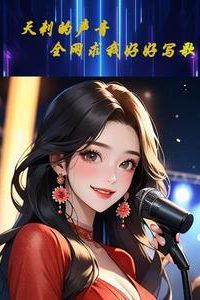
Luo Qingxu, a tone-deaf woman from modern Earth, is struck by a vehicle and transmigrates into the body of a penniless, disgraced singer in a parallel world called Huaxia. In this world, music and art are revered as the highest forms of cultural power, having been revitalized after a century-long global war. The original host, Luo Qingxu, was born into the prestigious Luo family, a dynasty of musical and artistic legends, yet she possessed no talent whatsoever. She was known as a useless heiress who wasted her family’s resources to pursue a singing career she was fundamentally unsuited for. She was manipulated by her so-called best friend, Bai Xuanlu, and her boyfriend, idol You Lirong, who exploited her wealth and status for their own career advancement. After discovering their betrayal and being publicly humiliated, the original host wagered her late grandfather’s priceless painting, "The Thoughts and Longings of the Mountain," in a competition called the National Style Grand Prize. When the real Luo Qingxu wakes up, she finds herself kicked out of her family home with nothing but debt and a public reputation in tatters.

Upon integrating her memories, Luo Qingxu realizes she is in grave danger. Not only is she financially ruined and socially ostracized, but she also discovers she is bound to an artificial intelligence assistant named Xiao Bi. This system imposes a brutal penalty: if her "Star Power Value," a metric based on public favorability, drops below zero, she is subjected to daily lightning strikes that, while not physically damaging, cause excruciating pain. Initially, her Star Power Value is deeply negative due to the scandals orchestrated by You Lirong and Bai Xuanlu. To survive, Luo Qingxu must rapidly accumulate positive public recognition. She immediately cuts ties with her exploitative boyfriend and friend, blocking them decisively. However, she faces a critical professional obstacle: she is a gifted music composer, having graduated top of her class in composition, but she is catastrophically tone-deaf and cannot sing. The competition requires a performance, and she has only days to prepare.

Luo Qingxu leverages her compositional skills to write a new song, "Divination," which blends traditional Chinese cultural elements with modern pop sensibilities. She recruits two unknown talents: Zhen Chang, a trainee with a suitable voice, and Tang Shijing, a highly skilled dancer. While the entertainment industry insiders dismiss her as a wealthy amateur relying on family connections, Luo Qingxu’s meticulous choreography and composition prove to be exceptional. She endures daily lightning punishments while rehearsing obsessively, driven by the need to save her grandfather’s painting and restore her family’s honor. Her agent, Fei Jiajun, initially frustrated by the host’s past recklessness, becomes a key ally, helping to manage the crisis and protect Luo Qingxu from media traps set by her enemies.

The core conflict intensifies during the National Style Grand Prize. Luo Qingxu’s rival, Bai Xinyao, is a multi-talented heir from a competing media empire and the sister of the original host’s betrayer. Their rivalry is personal and historical, stemming from childhood animosity. During the July preliminary round, Bai Xinyao delivers a flawless sword dance performance that captivates the audience and judges. Luo Qingxu’s team follows with "Divination." The performance is a striking contrast: Zhen Chang’s emotive singing and Tang Shijing’s elegant dance create a breathtaking visual and auditory experience. However, in a moment of misguided confidence, Luo Qingxu attempts to sing a cappella on stage, resulting in a hilariously terrible performance that shocks the audience and judges. Despite this comedic blunder, the overall production quality and the unique artistic vision of the song win over the crowd. The audience, amused and impressed by her eccentricity and the song’s beauty, votes heavily in her favor. Luo Qingxu wins the first episode, securing a temporary reprieve from the lightning strikes and gaining a foothold in the cutthroat entertainment world. She sets her sights on winning the entire competition to retrieve the painting and prove her worth not as a wealthy heiress, but as a legitimate creative force.

Novel Items

More
Item
A masterpiece painting by Luo Qingxu's late grandfather. It was wagered in a bet against Bai Xinyao on the National Style Grand Prize program. Luo Qingxu privately entrusted it to a trust agency without notifying her family. The Luo family ordered her to retrieve it as a condition for returning home.
Event
A trending program focused on the creative process of music, aiming to discover and nurture a new generation of creative talents. Composers do not need to perform themselves and can enlist external vocalists. Luo Qingxu signed up for it and wagered her grandfather's painting against Bai Xinyao. Recording was scheduled to begin in five days.
Arcane Treasures
Fu You's innate talent used to predict the disaster's duration and future events. It drains energy and turns the user's eyes white temporarily.
Event
An agreement reached after eighty-one days of discussion among world leaders following a century-long war. It centered on economic development and the promotion of soft culture, becoming a new starting point for conflict resolution and leading to unprecedented prosperity in art, music, film, and sports.
Manuals
A top-tier song written by Luo Qingxu with innovative concept, beautiful lyrics and melody, and unique Eastern charm. Producer Chen was deeply impressed and agreed to produce the accompaniment, completing it the next day. The song was intended for the National Style Grand Prize competition.
Item
An electric scooter that Lu HuaiChuan rode to the market to buy eggs while staying at Shen Simo's home in Meilong Village.
Latest Release
DateGroupRelease
2026-08-11shanghai fantasy c10
2026-08-11shanghai fantasy c9
2026-08-11shanghai fantasy c8
2026-08-11shanghai fantasy c7
2026-08-11shanghai fantasy c6
2026-08-11shanghai fantasy c5
2026-08-11shanghai fantasy c4
2026-08-11shanghai fantasy c3
2026-08-11shanghai fantasy c2
2026-08-11shanghai fantasy c1

Community Reviews

Rating(3.7 / 5.0, 10votes)
5 stars
2(20%)
4 stars
3(30%)
3 stars
5(50%)
2 stars
0(0%)
1 stars
0(0%)

Popular reviews

... Read More
I'm still not over this ending. After the entire chapter building up this mysterious handsome guy who catches the bully's wrist, delivers a sharp 'Helping others without self-awareness is a foolish act,' and then drops a cold warning before leaving—Luo Qingxu's response is 'Hey, handsome~ Want to add me on WeChat?' I literally laughed out loud. The tonal whiplash is incredible. But honestly, the dialogue throughout this chapter is so natural and character-specific. Luo Qingxu's voice is unmistakable—she switches between sweet and sycophantic ('Teacher Xie, this song belongs to no one but you') and bratty and defiant ('Well, do you know who I am? I'm your grandma!') depending on what the situation demands. Xie Jiayin's dialogue is more measured and authoritative, which makes sense for someone of her status. 'Isn't it just bullying the kids?'—that line perfectly captures her internal conflict between wanting to sing the song and not wanting to crush younger artists. And Nan Nan's internal monologue is pure comedic gold: 'Adults these days are so hard to deal with.' The author has a great ear for different voices. Even the bullies' dialogue feels authentic—threatening but ultimately cowardly, the kind of empty aggression that collapses when challenged. The banter between Luo Qingxu and the bullies before the handsome guy appears is genuinely funny. 'Stay away from me, your spit is about to hit my face'—she pretended to dodge imaginary spit. This kid has zero filter and it's wonderful.
... Read More
The dialogue in these chapters is genuinely funny and Fei Jiajun's voice is so distinct I can hear her in my head now. 'You ungrateful little thing, you're the one who gives me the most trouble!' — said with zero actual anger, maximum affection. That's the kind of line that makes a character feel real. And Luo Qingxu's response, 'I'm just a small-time nobody—why would a top-tier agent like you need to follow me every day? People might think my older brother has exiled you.' She's deflecting, being modest, but also clearly aware of how ridiculous the situation is. The banter between them has this natural rhythm where one person is fussing and the other is trying to be independent but secretly appreciating it. Then there's the internal monologue stuff—'Chosen beast of burden! The phrase echoed repeatedly in Luo Qingxu's mind. No, no, no—she couldn't get addicted to work.' That's such a specific, funny voice. The author isn't taking herself too seriously here. And the social media comments scattered throughout—'I wronged Sun Xilai. The more I listen to this song, the more I feel it!' 'Is this the strength of newcomers? Truly terrifying.'—they feel like actual internet speech, not author-insert commentary. The humor lands because it's observational rather than forced. Even Zhou Yicheng's internal calculation about securing Luo Qingxu's future goodwill reads as natural character motivation rather than exposition. Everyone sounds like themselves. That's rare.
... Read More
Let's talk about Luo Qingxu for a second because this girl is something else. She's a bronze-level rookie who walks into a meeting with a national first-class vocalist and basically bullies her into participating with nothing but flattery and sheer audacity. 'Aunt Jun, why could Teacher Qu Guangqing participate, but Teacher Xie can't?'—she widens her innocent eyes and Fei Jiajun just plays along like 'yeah sure, totally my fault.' This kid is sharp as a tack and she knows exactly how to play people. But here's what I love: she's not being manipulative in a dark way. She genuinely believes her own hype. When she says 'Suppressing newcomers isn't good for either of us' and launches into this whole speech about how seniors should set examples and the industry should 'pass on and surpass itself,' I literally screamed. She's weaponizing corporate speak to get what she wants and she's so good at it. Then there's her dynamic with Nan Nan—this six-year-old who's clearly the smartest person in the room. He watches her cheat at chess, take back moves, and still lose every single game, and his internal monologue about her being 'addicted to something she wasn't good at' is peak comedic observation. Their relationship is so wholesome and funny. And Fei Jiajun? She's clearly the exhausted auntie who owes Luo Qingxu something in a past life, but she also genuinely cares about her. The family dinner scene with Zhong Jinghe in the kitchen wearing an apron was such a warm contrast to the cutthroat music industry scenes.
... Read More
Okay so can we just talk about how genuinely heartwarming the Luo family dynamics are here? I know this is supposed to be a showbiz novel but the sibling interactions hit different. Luo Qingxu gets these red envelopes from her brothers and sisters after the first episode—ten thousand from the eldest brother, five thousand from the sister, five hundred each from the twin boys—and instead of her just being some rich girl flexing, the narrative immediately undercuts it by reminding us she's basically broke because the Luo family is strict about allowances. She gets two thousand a month, loses it at eighteen, and was genuinely worried about starving when she first arrived. That contrast between having powerful siblings who care about her and still being financially precarious as a teenager? That's the kind of detail that makes you feel something. And then there's Fei Jiajun—she's not just an agent, she's this 'old mother' figure who can't rest easy because her 'daughter' is now grown up. The line 'You ungrateful little thing, you're the one who gives me the most trouble!' while she's squeezing time out of her busy schedule to accompany Luo Qingxu? That's not dialogue, that's love language. I'm not even a person who gets emotional over fictional family bonds but this had me soft. The whole dynamic of Luo Qingxu being self-sufficient, not needing company, yet still being surrounded by people who clearly care—whether it's the family sending money or Fei Jiajun showing up at the studio—it creates this undercurrent of warmth that makes the showbiz competition setting feel less cutthroat and more like a found-family story in disguise. Who else is here for the slow-burn familial tenderness?
... Read More
The claw machine scene is actually one of the most vividly rendered moments I've read in this novel and I need to talk about why. 'Gently maneuvering the joystick, her gaze fixed intently on the large-eyed pink frog doll inside. Gently maneuvering the joystick, she adjusted the angle and pressed the button. The machine whirred to life, the claw firmly grasping the frog doll before slowly moving toward the exit.' The author doesn't just tell us she's good at claw machines—they make us WATCH her do it. The whirring, the grasping, the slow movement toward the exit. It's cinematic. And then the crowd builds around her. A mother and her child. Other children calling her 'big sister.' Adults shyly asking for help too. The image of Luo Qingxu smiling and asking everyone to line up, patiently fulfilling requests one by one, while her basket of tokens empties and then gets refilled by grateful strangers—that's a whole mood. It transforms a shopping mall arcade into this tiny community moment. The author also nails the contrast between the neon-lit arcade world and the classical elegance of the dance performance descriptions earlier. Wu Xiaochen's perspective on Tang Shijing's dance—'arms slowly rising like willow branches gently swaying in the breeze, fingertips trembling slightly as if whispering endless tenderness; her steps were light as a swallow, dancing as if gliding over water'—that's not just description, that's painting. Two completely different worlds in the same novel and both feel alive. The shopping mall, the studio, the stage—each space has its own texture.
... Read More
I need to talk about this one scene because it's so vividly rendered. Luo Qingxu riding her 'little e-bike' through what she calls S City's 'peak-hour death road'—1.3 kilometers that takes half an hour by car but only 10 minutes on her electric scooter. This tiny detail tells us so much about the world. We're in a modern Chinese city where traffic is brutal, where a young artist can't afford a driver but doesn't need one because she's smarter about navigating the city. The contrast between Fei Jiajun's household—husband as photographer, stay-at-home dad, DINKs who eventually had a child—and Luo Qingxu's tiny nest at Bihai Bay really establishes a class spectrum within the entertainment industry. And then there's the scene where she encounters the bullies. The description of the trash can, the dyed-bang leader, the lackeys stepping forward menacingly—it reads like a film scene. 'Backing him against a trash can, leaving him with no way out.' The imagery is stark and cinematic. What I appreciated most was how the author didn't over-describe the environment but let the action and dialogue carry the atmosphere. The warm kitchen scene with Fei Jiajun's family, Zhong Jinghe emerging from the kitchen in an apron, Nan Nan's serious chess face—it all felt lived-in and real. This world has texture.
See all reviews

Characters

See all characters

Custom lists

Oops…There is nothing here.