Summary

... Read More

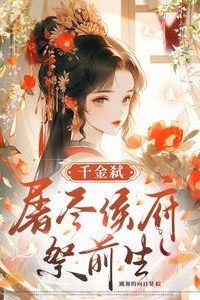
Qu Ling was the legitimate eldest daughter of the Dingxiang Marquis, but her life was defined by tragedy and betrayal. After her mother died giving birth to her, she was sent away to Jiangzhou by her father and stepmother, Lady Song Shi, who had poisoned her with a madness-inducing drug called Furong Xiao. Six years later, Qu Ling returned to the capital under the protection of the Hengshan Grand Princess, her mother's close friend. In her previous life, she had been manipulated by her wet nurse, Mama Zhou, into hating her family and relying on the Princess, only to be abandoned and executed for murdering her entire household. Reborn with memories of her past, Qu Ling resolved to take revenge on those who wronged her while navigating the treacherous political landscape of the capital.

Upon her return, Qu Ling immediately asserted her authority, demanding respect from the servants sent to fetch her and exposing the corruption within the Hou Manor. She discovered that Mama Zhou had been bribed by Lady Song Shi to poison her and incite her hatred. Qu Ling killed Mama Zhou and framed the envoy, Mama Fang, for the murder, using the incident to gain leverage against the manor. She also revealed that she had been poisoned for seven years, forcing the Princess to intervene and search the Hou Manor. The search uncovered evidence of Lady Song Shi's guilt, leading to the arrest of her loyal servant, Granny Cao, who was executed by Qu Ling herself.

Qu Ling's return disrupted the power dynamics within the Dingxiang Marquis Manor. The Old Madam, who had long been suppressed by Lady Song Shi, saw an opportunity to regain control and allied with Qu Ling. Qu Ling reclaimed Nuanshan Residence, which had been given to her by her late mother, and forced her stepsister, Qu Lianzhi, to move out. She also confronted her stepmother, stabbing her arm in retribution for the false accusation of self-injury that had led to her exile six years prior. The Princess supported Qu Ling's actions, using her political influence to protect her from retaliation.

Qu Ling also targeted the two sons of Lady Song Shi, Qu Heng and Qu Yi. She manipulated Qu Yi by exploiting his resentment towards his elder brother, offering to help him seize the position of heir in exchange for his loyalty. This created a rift between the brothers, weakening the male lineage of the Hou Manor. Meanwhile, Qu Ling maintained a careful distance from her father, the Marquis, recognizing his indifference and complicity in her suffering. She refused his attempts at reconciliation, focusing instead on dismantling the family that had destroyed her.

The story follows Qu Ling's strategic maneuvers as she consolidates her power within the Hou Manor and the capital. She uses the Princess's authority to shield herself from attacks while systematically eliminating her enemies. The political rivalry between the Hengshan Grand Princess and the Crown Prince's faction, backed by the Song family, adds a layer of complexity to her personal vendetta. Qu Ling must balance her desire for revenge with the need to survive in a court where betrayal is commonplace. Her journey is one of transformation from a victim of circumstance to a calculated strategist who controls her own destiny.

As Qu Ling settles into her new role, she faces new challenges from within the manor and from the political sphere. The Old Madam's alliance with her is fragile, and Lady Song Shi remains a dangerous adversary. Qu Ling's actions have not gone unnoticed by the imperial court, where the Crown Prince views the Princess's growing influence as a threat. The narrative sets the stage for further conflicts as Qu Ling continues to exact her revenge while navigating the intricate web of family loyalty and political ambition.

Latest Release
DateGroupRelease
2026-08-11shanghai fantasy c200
2026-08-11shanghai fantasy c199
2026-08-11shanghai fantasy c198
2026-08-11shanghai fantasy c197
2026-08-11shanghai fantasy c196
2026-08-11shanghai fantasy c195
2026-08-11shanghai fantasy c194
2026-08-11shanghai fantasy c193
2026-08-11shanghai fantasy c192
2026-08-11shanghai fantasy c191
2026-08-11shanghai fantasy c190
2026-08-11shanghai fantasy c189

Community Reviews

Rating(4.1 / 5.0, 10votes)
5 stars
4(40%)
4 stars
3(30%)
3 stars
3(30%)
2 stars
0(0%)
1 stars
0(0%)

Popular reviews

... Read More
I need to talk about Chi Yuan for a second because this section absolutely destroyed me. We've been getting these quiet glimpses into his backstory, but this chapter? This chapter pulls the bandage off. The scene where Huaisu Dashi brings up his mother and Chi Yuan's expression just... darkens. That's when we get the full explanation of how he was taken from his mother as a baby, how she knelt outside the door until she fainted, how she was told he'd be "excessively spoiled" if she raised him herself. The most painful detail for me was: "Two years later, she conceived again and gave birth to Chi Yuan's younger brother, Chi Che. All her affection was poured into Chi Che." And then: "When Chi Che was young, she would seize everything Chi Yuan had and give it to Chi Che." This is not just neglect. This is active, deliberate preference. A mother choosing one child over another isn't unusual in these stories, but the author makes it hurt by showing how Chi Yuan just accepted it. He didn't fight. He adapted. He became invisible so he wouldn't be a burden. That's the kind of wound that shapes a person's entire personality. And Huaisu Dashi sees it immediately. "You seem rather concerned about her?" when talking about Qu Ling. "You and he share some similarities." The author is setting up this beautiful parallel between Chi Yuan and Qu Ling—both children who were discarded, both carrying obsessions that define them, both finding someone who truly sees them. The chess scene with Qu Ling and Huaisu Dashi is also incredibly revealing about their dynamic. When he says her moves "lack some ease" because she harbors attachments, and she throws the pieces across the board—that's not just a temper tantrum. That's someone who has spent six years being told to let go, and is absolutely done with that narrative. Her response, "Whether one can let go, or whether one should let go—only oneself truly understands," is one of the most powerful lines in this entire section. Qu Ling's relationship with the Princess is also fascinating. The Princess calls her "A'Ling" and defends her against Old Madam Song's death sentence. That single word "Aunt" that Qu Ling uses when approaching the Princess—it's not just a title, it's a declaration of belonging. For a girl who's been told she has no family, having someone publicly claim her like that must mean everything.
... Read More
Let me just say it straight: this story is about poison in every sense of the word. There's the literal poison — the bird's nest soup that kills Mama Qi. But there's also the metaphorical poison that runs through every relationship in this manor. The Old Madam's affection is poisoned by conditionality. Qu Cheng's fatherly love is poisoned by years of neglect. Song Shi's marriage is poisoned by paranoia. And Qu Ling's grief is poisoned by the knowledge that her mother was forgotten the moment she became inconvenient. The porcelain vial and gold and silver jewelry found in Mama Qi's quarters — these are symbols of the manor's economy of betrayal. Things have value only when they can be used against someone. The jewelry wasn't a reward; it was evidence. Mama Qi wasn't a loyal servant; she was a pawn. And the Old Madam planted the evidence herself, proving that in this world, truth is whatever you can make stick. "See? There's no such thing as genuine fondness. It all depends on usefulness." Qu Ling's internal monologue here is the thesis statement of the entire novel. Every relationship is transactional. Every alliance is temporary. The Old Madam missed Xu Zhaoyue only after Song Shi became a threat. Song Shi only valued Qu Ling as long as she was harmless. Qu Cheng only shows affection to Qu Ling now that she's useful again. The crown prince and princess subplot adds another layer of symbolic meaning. Qu Ling tells her father: "Whether it's the Crown Prince or the Princess who wins in the end, our family will only rise higher." But then she reveals her true allegiance — she's been supporting the Princess all along. The political struggle mirrors the household struggle: it's not about loyalty, it's about positioning. The manor and the empire are the same machine. And that line Qu Ling repeats from her previous life: "No matter how much the Princess dotes on me, she is not my blood relative. Otherwise, she would have petitioned for me to be granted the title of Princess of the Commandery." Blood doesn't protect you. Titles don't protect you. Only strategy protects you. The Princess's favoritism is a gift that can be revoked — and Qu Ling knows this better than anyone. The recurring image of doors closing — Song Shi behind closed doors, Qu Ling told to close the gates of her residence — symbolizes the isolation that comes with survival. Every door you close keeps danger out, but it also keeps you in. Alone. Counting the dead. Smiling at your father under cold moonlight.
... Read More
The setting in this section is doing so much heavy lifting and I'm here for it. Nanchan Temple isn't just a backdrop—it's practically a character. The author keeps reminding us of the sacredness of the space, which makes every bit of conflict that happens there feel even more transgressive. When Old Madam Song starts ordering guards to drag Qu Ling out and beat her, the text specifically notes: "This is a sacred Buddhist sanctuary. What is the meaning of this clamorous disturbance?" The Princess's voice "cracked like ice shattering jade." That imagery is so precise. The chess scene is one of my favorite set pieces. Huaisu Dashi and Qu Ling sitting across from each other, black and white pieces moving across the board like a silent contest. The author writes: "They went back and forth, black and white intertwining across the board like a silent contest." There's something deeply cinematic about this—two people who barely know each other, communicating through strategy and silence, while Chi Yuan watches from the sidelines. The visual of scattered pieces after Qu Ling throws them in frustration is almost violent in its simplicity. And then there's the contrast between the temple's serenity and the venom being spat in the main hall. Old Madam Song sitting upright with her phoenix hairpin "shining brilliantly among it—though it violated sumptuary regulations." This tiny detail tells us everything about the Song family: they have power, they flaunt it, and they don't care about rules. The fact that the Princess immediately plucks that hairpin from her head and watches it shatter? That's not just revenge. That's the author visually representing the shattering of Old Madam Song's false authority. The koi pond detail is also brilliant. After Qu Ling storms off, Huaisu Dashi says: "The killing intent about her is too heavy. It startled the koi in my pond." This single image connects the spiritual world with the human drama—Qu Ling's inner turmoil is so intense it disturbs even the peaceful creatures in a Buddhist temple. The author doesn't need to write pages of internal monologue. One sentence about startled fish tells us everything. I also love how the temple setting forces these characters into proximity. The scripture lecture is approaching, people are gathering, the Princess arrives with her entourage. It's a pressure cooker of social hierarchy where everyone has to perform their roles—and Qu Ling refuses to play by the script.
... Read More
I need to talk about Qu Cheng and Qu Ling because this relationship is the emotional backbone of everything happening here, and it's so beautifully messed up. Qu Cheng has wronged his daughter *again and again*. The text literally says: "Again and again, he had wronged his own daughter." He believed Song Shi's accusation that Qu Ling tried to poison the Old Madam. He waited to settle accounts with her. And when the truth comes out, what does he do? He feels guilty. He offers her clothes. He says he'll compensate her for missed years. Compensate her. Like she's a debt. Like six years of abandonment can be paid back in fabric. But here's what gets me — Qu Ling *knows* this. She's playing him. Every sweet word, every "Thank you, Father," every innocent smile is calculated. She wants his pity. She wants his attention. And she wants the Dingxiang Marquis Manor destroyed from the inside. The most chilling moment is when she says: "What does she want? She wants the Dingxiang Marquis Manor to be utterly destroyed." And she says it while making her father feel like he's bonding with her. The duality is terrifying. But I also see the humanity in Qu Cheng. When he walks Qu Ling back under the cold moonlight and asks if she was frightened — that's genuine. When he feels a pang of heartache for this daughter he neglected — that's real too. He's not a cartoon villain. He's a man who failed his family and is now trying to make amends in the shallowest ways possible, while his daughter uses those amends as weapons. And Song Shi! Oh, Song Shi. When she screams "Wasn't she driven to her death by your own hands!" at Qu Cheng about Xu Zhaoyue — that's the moment everything cracks. She sees Qu Cheng's flicker of emotion about his first wife and it destroys her. Not because she cares about Xu Zhaoyue, but because she can't bear to lose her hold on this man's attention, even in ruin. The relationship between Qu Ling and the Old Madam is also fascinating. The Old Madam is warm to Qu Ling now because she's useful. But Qu Ling remembers: "Six years ago, when she had injured Song Shi and Qu Cheng wanted to beat her to death, the Old Madam had been the one applauding." She knows this affection is conditional. She's playing along because it serves her, but inwardly she's sneering. There's no genuine grandmother-daughter bond here — just two calculators warming each other for mutual benefit.
... Read More
Okay so let me just say—this section had me absolutely gripping my phone. The way the plot pivots from that quiet, almost meditative scene at Nanchan Temple straight into a full-blown family annihilation is chef's kiss. The temple confrontation is where everything comes crashing together. Qu Ling walks back into that hall and immediately gets ambushed by Song Yujin. Six years of this family trying to destroy her, and she just... stands there. And then she drops the bomb: "Because she tried to poison my grandmother—her own mother-in-law." The hall erupted in murmurs. I literally gasped out loud. But what I loved most about the structure here is how the author layers the reveals. First Song Yujin accuses Qu Ling of stabbing her mother. Then Qu Ling flips it—she wasn't the one who stabbed, she was the one who was poisoned. Then she reveals the real crime: attempted poisoning of her grandmother. Each revelation peels back another layer of the Song family's rot, and by the time the Princess shows up, I was on the edge of my seat. The Princess's entrance is the perfect climax. She doesn't just save Qu Ling—she completely dismantles Old Madam Song's authority in front of everyone. The line about the Song family tradition of slaughtering one's own kin? That's the kind of dialogue that makes you want to scream with satisfaction. What really impressed me though is how the author connects the Chi Yuan subplot to the main conflict. His backstory about being raised by his grandmother while his mother poured all her love into Chi Che—it mirrors Qu Ling's own family trauma in this really deliberate way. Huaisu Dashi points it out directly: "You and Miss Qu are both trapped by your obsessions—she by family grudges, you by maternal estrangement." That parallel isn't accidental. It's the author telling us these two characters are meant to understand each other because they speak the same language of pain. The pacing here is relentless. One moment you're watching Qu Ling play chess with a monk, the next you're in a full courtroom-style confrontation. And the cliffhanger ending—"You know perfectly well what she did, yet yo"—left me absolutely feral. I had to immediately open the next chapter.
... Read More
This section is fundamentally about what it means to hold on and whether letting go is always the right answer. Huaisu Dashi represents the Buddhist ideal of detachment. He tells Qu Ling: "Deep attachments easily give birth to inner demons. Why must Shimei cling to past grievances? Only by letting go can one find liberation." This is the voice of tradition, of religion, of everyone who has ever told a victim to "move on." And Qu Ling's response—throwing the chess pieces across the board—is one of the most powerful acts of defiance I've read. Her line, "Whether one can let go, or whether one should let go—only oneself truly understands," is the thematic thesis of the entire novel. The author is asking: who are you to tell me I should forgive? Who decided my pain is something I should simply release? The chess game itself is a perfect symbol. Huaisu Dashi says: "Chess is like life—once you place a piece, there's no regret." But Qu Ling's pieces are steady yet constrained, just like her life. She's been playing by other people's rules for six years, and the board is rigged against her. When she throws the pieces, she's not just losing a game—she's rejecting the entire framework that says she should be grateful for whatever scraps of justice she's given. The beads from the monk are another potent symbol. They were meant to "calm and focus the spirit," but Huaisu Dashi returns them to Qu Ling and says receiving them makes her his nominal disciple. The object meant to suppress her turmoil becomes a symbol of connection—to the temple, to Chi Yuan (who is also connected through Magistrate Chi), and to a larger karmic web she didn't ask to be part of. And then there's the mother-son theme running through Chi Yuan's subplot. His mother chose Chi Che over him, and now he's drawn to Qu Ling, another person shaped by maternal rejection. Huaisu Dashi sees this: "You and Miss Qu are both trapped by your obsessions—she by family grudges, you by maternal estrangement." The author is building a world where the past isn't past. It lives in the body, in the moves on a chessboard, in the way someone flinches when someone mentions their mother. The Princess's intervention is also deeply symbolic. She tears off Old Madam Song's hairpin—the symbol of her status and authority—and watches it shatter. Power that was built on lies and cruelty cannot hold its shape. But the Princess also says something chilling: "Doesn't the Song family bloodline flow with the tradition of slaughtering one's own kin? Tell me... if I kill you today, wouldn't that be continuing your family legacy?" She's holding up a mirror to the Song family's violence and showing them that their own logic could be turned against them. The cycle of abuse doesn't discriminate.
See all reviews

Characters

See all characters

Custom lists

See all custom Lists