This Quick Transmigration Experience Is a Bit Sweet - Reviews

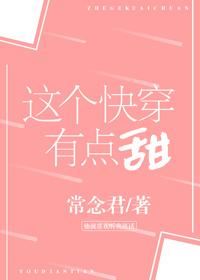
This Quick Transmigration Experience Is a Bit Sweet
+Add to Custom List
Sort
Add review
... Read More
Okay can we just talk about how complicated Zong Yuan's internal thoughts are in this chapter alone? Because the author gave us this gorgeous little window into his brain and I am obsessed. So he initially ruled Qi Hanguang completely off the market—three wives, two sons, no chance, move along—and then proceeds to spend the ENTIRE rest of the chapter thinking about him instead. The cognitive dissonance is beautiful. That physical contact moment is EVERYTHING. Zong Yuan catches Qi Hanguang, hands end up on his backside, and his first thought isn't romantic panic—it's an actual evaluative assessment. 'Soft and elastic. That's a good butt.' And then it pivots to this weird déjà vu feeling like the sensation is familiar somehow? I've read this far and I still don't know what that connects to and it's driving me insane. Qi Hanguang though—oh my god. The man is FLUSTERED. His ears are bright red, he can barely form words, he's trying to maintain general composure and failing miserably. But here's what I love: he doesn't actually pull away. He stammers, he deflects, he changes the subject to breakfast like a normal person would, but he stays. And Zong Yuan just... keeps pushing. 'How about you take a bite of me to test?' What even IS that sentence?! That's not even a coherent thought, that's pure chaos energy, and Qi Hanguang just can't handle it. Their dynamic is basically predator and very flustered prey who secretly doesn't want to run. And the soldiers! They went from mocking Zong Yuan to crying at his patriotism in approximately thirty seconds. These are the same people who were making jokes about him hurting a ger, and now they're begging the general to let him join the battlefield. Loyalty swings harder than a spear.
... Read More
This chapter is a masterclass in tonal whiplash and I am HERE for it. Let me break down why the pacing works so well here. It opens with a comedic beat—Jiang Shengyan's fake phone call to the police station, Uncle Zhang's panic, the whole 'you can't do this it's illegal' moment. It's funny, it's light. Then Zong Yuan takes over and shifts into this calm, almost sinister negotiation mode. The tone gets quieter, more controlled. Then we cut to the walk back and suddenly it's rom-com energy with the mint smell and the wrist-grabbing. Then Zong Xiaomo interrupts and the mood dips again. Then the water-splashing scene at Chen Hongmei's house is chaotic comedy. Then the DARK ROOM scene where everything becomes heavy and sexual tension fills the air. Then CUT TO: Chen Hongmei asking her daughter about feelings. Then Jiang Shengyan investigating Aunt Lin. Then the study room, the safe, the surveillance camera reveal, and finally Zong Yuan arriving at midnight in slippers asking to 'borrow your bathroom for a shower' which is clearly code for 'let's talk.' This chapter hits eight different emotional registers and somehow none of it feels jarring. The author trusts the reader to keep up.
... Read More
I need to talk about the intimacy between these two because WOW. "Your waist was sore, and his thighs were a bit painful." That's it. That's the whole horror. Zhuang Feiyu, composed businessman, reduced to pitifully turning his head because his BODY is remembering what happened. And Zong Yuan, lying there completely refreshed, touching his head like "Good afternoon, baby" — the audacity, the sheer unbothered ENERGY. But what gets me is the dialogue after. Zhuang Feiyu calling him a "beast" and Zong Yuan literally saying "Last night, you were asking for more, faster... and now I'm a beast?" This is a couple that communicates SO well about their physical relationship and it's honestly refreshing. No shame, no awkwardness, just mutual desire acknowledged openly. And then Zhuang Feiyu, still glowing and sore, casually drops: "As long as we can make it today, I can wear a thong for you tonight." Bro. BRO. He's planning his marriage day outfit AND promising sexual favors in the same breath. This man has priorities and they are CORRECT. The author doesn't describe anything explicit but the implications are everywhere — the red and purple marks, the soreness, the fragrance in the room that Guan Haoyu imagines. It's all there without being gratuitous. Masterful restraint.
... Read More
Can we just take a moment to appreciate that 0046 exists? Because this entity is carrying this entire novel on its back with commentary that is absolutely unhinged and I love it. When Zong Yuan is watching Fu Xin cook, 0046 drools and says "It smells so good" and Zong Yuan tells it to get lost so it doesn't disturb his observation. That's such a specific, weird detail that makes the whole scene feel alive. And then later at the barbershop when Fu Xin tells Zong Yuan to smoke less, 0046 says "I'm starting to doubt that after you save your brother, you'll probably die faster than him." That is the funniest line in this entire batch and it reveals SO much about 0046's relationship with both characters. But what's really impressive about the dialogue here is how distinct each character sounds. Fu Xin speaks in short, hesitant sentences — "Wh-what's wrong?" "Is that a bad thing?" — which perfectly captures his anxious, people-pleasing personality. Zong Yuan is all confident, almost lazy in his delivery. "Get lost." "Delicious." "Then you'd better take good care of me." He says less but means more, and the dialogue reflects that perfectly. The narration also has a distinct voice — it's observant without being clinical, emotional without being sentimental. Lines like "Fu Xin's face showed disappointment" followed immediately by Zong Yuan's follow-up "but it's somewhat captured my stomach" show how the author uses brief narrative beats to land jokes and emotional reversals. The author isn't trying to sound literary here; they're trying to sound like someone telling you a story about their favorite characters and they can't stop talking about them.
... Read More
Okay so let me just start by saying the plot threading in these chapters is actually really smart when you step back and look at it. On the surface it's all school romance stuff—love letters being dumped, a pretty girl confessing, Zong Yuan being effortlessly popular. But then you've got Fu Xin's home life hitting differently. His drunk father rummaging through their apartment like a predator looking for prey, and Fu Xin basically having to fight to protect that sketchbook like it's the last thing keeping him sane. And that sketchbook—the circle drawn in cigarette ash that Zong Yuan made? That detail connects everything. It's not random decoration; it's a physical artifact of their bond surviving even when Fu Xin is alone in a wrecked apartment. The way the plot pivots from classroom drama to domestic tension without any warning was genuinely effective. One moment he's watching Zong Yuan reject some girl, the next he's home facing down his own father, and the sketchbook is basically his only sanctuary. Also the 0046 thing at the end where Zong Yuan suddenly wakes up like he felt something—that's a minor detail but it's teasing something bigger, right? Like there's a connection between them that transcends just being physically together. The plot isn't just A leads to B; it's layering these emotional beats so when the quiet moments hit, they actually carry weight.
... Read More
Let's talk about how absolutely hilarious Jiang Shengyan's dialogue is in this chapter because wow. The man goes from standing silently like a statue in the courtyard to suddenly grabbing his mother's hand and declaring 'Mom, let me support you for a lifetime!' with zero chill. Zong Yuan's reaction of 'Support my ass!' and 'You take care of the son; I'll take care of the mom!' is peak comedy gold. I literally laughed out loud. And then the morning after scene? Absolute perfection. Jiang Shengyan waking up and just staring at Zong Yuan's 'prized possession' like 'a wolf-dog that hadn't eaten for days staring at a delicious piece of meat' — the narration is so vivid and funny. His dialogue shifts from tough-guy act in the beginning to complete sycophant by the end: 'Brother Yuan, you're amazing! Absolutely incredible! The best man in the world!' And then immediately pivoting to 'Can we do it more than once tonight?' The man has zero subtlety and I respect it so much. The rule-setting conversation between Zong Yuan and Jiang Shengyan is also brilliant. 'From Monday to Friday, once a night for two hours; on Saturday night, twice; and Sunday, a rest day' said completely seriously. These two have built such a distinct dynamic where Zong Yuan is the responsible one and Jiang Shengyan is effortlessly chaotic.
... Read More
There's something quietly interesting happening beneath all the romantic comedy surface energy here and I think it's worth flagging. This entire sequence takes place in an old ancestral home — a space built to display family prestige and lineage, full of inherited decorations and carefully maintained appearances. But underneath that polished surface, there are秘密 cameras, people watching without being watched, and secrets that have nothing to do with romance. The surveillance theme connects to something bigger than just plot mechanics. Jiang Shengyan was initially worried about being seen in a bathrobe — vulnerable, exposed, compromised — but the real violation is the hidden camera, the someone watching him without consent, the someone who has keys to his home and knows exactly where to hide a lens. The contrast between the OPENSURFACE intimacy of Zong Yuan teasing him and the CLOSEDSECRET of the pinhole camera is striking. One is consensual and playful; the other is invasive and menacing. "Even if the previous camera had nothing to do with Lin and Wang, this new camera is definitely related." Related to what? The author is building toward something and the house itself — with its old wealth and newer threats — feels like the perfect vessel for it.
... Read More
The stakes in this passage are deceptively low-key until they violently aren't. On the surface, nothing 'major' happens—two guys eat lunch in a field. But the internal stakes are massive, and the author makes you feel that through micro-tensions rather than explosions. Every moment before the Fu Xin reveal is loaded with what-could-go-wrong energy. Jiang Shengyan following Zong Yuan to the stream. Standing too close. The fish scare that forces Zong Yuan to run directly in front of him. Each beat is a step closer to a line neither of them wants to cross. And then Zong Yuan crosses it by accident, or maybe not so accidentally—he mentions his first love with this 'fond, concealed longing' and suddenly the ground opens up. The conflict here is triple-layered. External: the family dynamics pushing Zong Yuan toward certain people and away from others. Interpersonal: the unspoken tension between these two that's been building since chapter one. Internal: Jiang Shengyan fighting something he can't articulate and punishing Zong Yuan for it. What are they risking? Everything, honestly. If this explodes wrong, the whole fragile architecture of their relationship could collapse. And the terrifying part is that it already might have. That silence after 'I find it disgusting'—that's not a pause, that's a fault line. The chapter ends without resolution, which is both the bravest and most frustrating choice an author can make. Because now we're both invested in whether they can survive this, and whether either of them even knows what they're actually angry about.
... Read More
The structural genius of this passage is that it moves through FOUR distinct zones of tension and never once lets up: Zone 1: The Pool. Casual. Daniel the chatty midlife man giving Zong Yuan match-making advice. Almost comedic. Zong Yuan drops his 'I'm gay' line and we think we're reading a rom-com. WRONG. Zone 2: The Eavesdropping Device. The tone SHIFTS. He flicks a surveillance device into the ocean. Okay, fine, this is a spy thriller. Still manageable. Still controlled. Zone 3: The Banquet. Full sensory overload. Band playing, colorful skirts, drinks, laughter. And then—Zong Yuan looks up and LOCKS EYES with the assassin on the second floor. The moment the text says 'his gaze met a pair of eyes brimming with killing intent'—the entire mood inverts. The party doesn't stop but suddenly everything about it is a cover. Daniel is still YAPPING about romance while two killers are sizing each other up thirty feet away. Zone 4: The Dance. This is where it all COLLAPSES into one continuous tension spring. Chi Xu approaches. Zong Yuan swaps partners. Hands on waists, fingers near guns, legs about to kick. The prose gets shorter, punchier. Exclamation marks everywhere. "Kill him! Kill him! Kill him!!!" internal monologue breaking into three lines. Then the kick—missed by inches—and the chapter cuts off mid-action with Zong Yuan wiping cold sweat. That cliffhanger though. The author just... leaves us there? With a half-kicked assassin and our guy sweating? I had to immediately open the next chapter. Not even curious—NECESSARILY.
... Read More
I keep coming back to how Zong Yuan speaks because his dialogue is layered in a way that rewards re-reading. When he tells the confessing girl I don't like girls like you, that line does triple work—it's a rejection, it's a power move, and it's subtly communicating to Fu Xin who he actually cares about. Then he follows up with little sister focus on your studies which is dismissive and ageist and perfect for shutting someone down. But the way he switches gears with Fu Xin is what makes his voice so distinctive. Pay attention to the lesson—that's gentle correction. Was I too harsh in rejecting her? That's genuine vulnerability disguised as casual curiosity. Good boy—that's affection with an edge of dominance that fits their dynamic perfectly. His dialogue always has this effortless confidence, but the moments where he drops the performance are what make him feel real. And Fu Xin's voice is this great counterpoint—minimal, reactive, barely above a whisper most of the time. Don't play favorites. Not harsh. Get lost. That's it. Fu Xin speaks in survival mode, and it makes every word count. The teacher's line What are you doing? Come here and answer this question feels so mundanely authentic it grounds the whole scene. And that neighbor's voice from outside Is someone in there? Keep it down—this tiny detail says everything about how normal this violence is in their building, how nobody really cares. The dialogue here never feels written; it feels overheard.
... Read More
So the novel pivots HARD in the second half and I was NOT prepared for this tonal whiplash. One minute we're in a gothic vampire mansion with moonlight kisses and blood bags, and the next we're in some kind of Chinese historical setting with storytellers, Taoist priests, and a family drama that feels like it's from an entirely different book. The transition is jarring but honestly? It works. The Zhou Mansion scenes are atmospheric as hell. You've got servants whispering in corners at a storytelling venue, discussing rumors about the Li family's sudden demise—assassin or demonic activity?—while this guy from Madam Wang's residence is trying to play it cool and not get fired. The worldbuilding here is done through EAVESDROPPING, which is such a clever technique. We're learning about this wealthy household's secrets through eavesdropped gossip. Then the scene cuts to the Zhou Mansion itself—bustling and bright as day, which is already a little ominous—and a Taoist priest performing a ritual in the courtyard. Mr. Zhou is FURIOUS, slapping tables, calling someone 'shallow-minded,' worried about the family's reputation in Xinan County. His eldest son tries to defend the mother, his second son asks about Zhou Ning, and the mood is thick with unspoken family secrets. What I love is how the two storylines feel connected despite being in completely different worlds. The vampire section is intimate, enclosed, sensual. The Zhou Mansion section is sprawling, political, claustrophobic in a different way. Both deal with power dynamics, hidden desires, and families on the brink. The author isn't just dumping worldbuilding on us—they're making us feel the difference between these two atmospheres viscerally.
... Read More
"Because we are connected." "We," he pointed at Fu Xin's heart, grinning wickedly. "Are connected." I need a minute. Just a minute. Zong Yuan says this after showing up like a tornado to save Fu Xin from a group of thugs, and he says it while pointing directly at Fu Xin's chest like he's physically locating whatever invisible thread ties them together. And the narration says "The spot Zong Yuan touched seemed to come alive. Fu Xin's heart started beating faster as if it wanted to leap out of his chest and meet the one who had tapped it." That is not subtle. That is the author just laying the entire romantic foundation on the table and painting it gold. But what made me actually pause mid-reading wasn't even that line — it was the moment Zong Yuan says "You can't tell anyone about this" after the fish incident. This guy who just admitted to having a fear, who let someone see him at his most ridiculous, and then immediately tries to cover it with a threat. And Fu Xin just nods obediently. Not because he's scared — I don't think he's scared of Zong Yuan at all — but because he's keeping a secret for him. That is intimacy in its smallest, most honest form. And the ending of this sequence, where Zong Yuan says "Everything I like is what you like. After all, we're in sync" — that's not just a pickup line. That's someone admitting, in their own bizarre roundabout way, that their lives are already intertwined. Fu Xin's cheeks flush and he hurries his steps. He's not immune to this either. They're both just really bad at saying what they actually mean.

Leave a comment

You must be logged in to leave comments. or
