Summary

... Read More
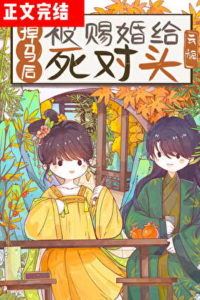
Ling Long is an ancient dragon who resides in the Guixu, a bottomless valley in the desolate sea. For centuries, she has fed on human souls, but this sustenance only satisfies her hunger temporarily. To achieve true satiation, she requires pure, wholehearted love. After emerging from a long slumber, she transmigrates into the body of the Yong'an Marquis's wife, a woman known for her gentle and naive nature. The original owner had treated her childhood maid, Chu Zhi, like a sister, but Chu Zhi exploited this kindness to secretly conspire with the Marquis. Together, they schemed to poison the original owner and marry, leaving the Marquis to mourn publicly while secretly indulging in his affair. Ling Long consumes the original owner's soul to digest it properly and immediately assumes control of the household with a cold, calculating demeanor.Upon waking, Ling Long discovers the extent of the betrayal through the original owner's memories. She recognizes that both the Marquis and Chu Zhi are deceitful and repulsive. Rather than confronting them directly with rage, she decides to dismantle their plans methodically. When Chu Zhi accidentally spills hot tea, Ling Long punishes her by forcing her to kneel in the freezing snow for hours, a stark contrast to the original owner's indulgence. The Yong'an Marquis returns and expresses concern for Chu Zhi, revealing his lingering affection. Ling Long feigns jealousy and hurt, manipulating the Marquis into believing she is deeply in love with him while privately mocking his fickleness. She publicly shames Chu Zhi by revealing the stolen jade pendant, which the Marquis had intended for Chu Zhi, and destroys it in front of everyone, humiliating the maid and asserting her authority.Ling Long continues her psychological torment of Chu Zhi, cutting her off from the Marquis and stripping her of her privileged status. Chu Zhi is demoted from head maid to a lowly servant, living in cramped quarters and enduring the scorn of other staff who once flattered her. Her physical appearance deteriorates due to neglect and malnutrition, losing the beauty that once captivated the Marquis. When Chu Zhi attempts to beg for mercy, claiming she knows her mistakes, Ling Long pretends to soften but instead forces her to perform menial labor, such as painting her nails, while publicly displaying affection toward the Marquis to provoke Chu Zhi's jealousy. The Marquis, enchanted by Ling Long's sudden change in personality from timid to seductive, becomes increasingly devoted to his wife, unaware that he is merely a source of entertainment and potential sustenance for the dragon.As the story progresses, Ling Long orchestrates Chu Zhi's downfall further by arranging her marriage to a steward who also harbors illicit feelings for her. However, the Marquis ensures the steward is incapacitated in an accident, rendering him unable to provide for Chu Zhi. Banished from the mansion, Chu Zhi is left to suffer in poverty with her disabled husband, a fate far worse than death for someone accustomed to luxury. Throughout these events, Ling Long maintains a facade of a loving wife, enjoying the Marquis's attentions while plotting to extract more love from him to satisfy her hunger. The narrative highlights the reversal of fortunes for the original victims and the ruthless efficiency of a being who views humans as mere food sources.

Latest Release
DateGroupRelease
2026-09-26knoxt c11
2026-09-26knoxt c10
2026-09-26knoxt c9
2026-09-26knoxt c8
2026-09-26knoxt c7
2026-09-26knoxt c6
2026-09-26knoxt c5
2026-09-26knoxt c4
2026-09-26knoxt c3
2026-09-26knoxt c2
2026-09-26knoxt c1

Community Reviews

Rating(4 / 5.0, 43votes)
5 stars
17(40%)
4 stars
10(23%)
3 stars
16(37%)
2 stars
0(0%)
1 stars
0(0%)

Popular reviews

... Read More
The dialogue in this passage operates on two completely separate frequencies, and the friction between them is where the entire story lives. On the surface, every line sounds like something out of a sentimental historical drama. “Marquis is back? Would you like to eat it?” “Does Madam want a child?” “I am also very happy, Madam, there will be only you and me in the future.” These are stock phrases, gentle and domestic, and they work perfectly as camouflage. The Marquis speaks like a man trying desperately to be tender. Ling Long speaks like a woman mastering the art of softness. But beneath that surface, the subtext is a predator calibrating its approach. When Ling Long says “If I tell the truth, husband, don't get angry,” she's setting a trap. She knows he'll interpret vulnerability as intimacy. She knows he'll lower his guard. Every question she asks, every careful phrase, is designed to make him feel safe enough to confess his deepest shame. And he does. The Marquis's voice cracks in a way that's almost physical to read: “My heart wanted it but my abilities limit me.” He can't even say the clinical terms without flinching. He tells her everything, and she receives it like a gift. The final exchange is where the author earns every word. “I love you,” he whispers. “If you love me, let me… eat you, okay?” she replies. The ellipsis is doing so much work. It's hesitation, it's calculation, it's the drag of something too terrible to name directly. And that “okay?”—this isn't a monster roaring. This is a monster asking politely, the way a spider might ask a fly if it could come closer.
... Read More
I have to talk about the tea cup scene because it is genuinely one of the most satisfying power shifts I have read in a long time. Let me set the stage first. Chu Zhi spent the previous chapters being cruel to Ling Long, humiliating her, making her kneel in the snow, acting like she was still the master of this house. And then? One spilled tea cup. That is it. That is the pivot point. Ling Long misses it on purpose. The glazed cup shatters on the floor and suddenly the entire dynamic flips. You can feel the reader holding their breath. What makes this work so well is that the plot doesn't need a huge spectacle. It is a small, domestic moment that carries enormous weight. Ling Long uses the broken pieces as a weapon — literally. She makes Chu Zhi kneel on them. Think about that imagery. The same woman who was forced to kneel in snow and endure humiliation now has to kneel on ceramic shards. The plot is circling back on itself like a noose tightening. And then there is the escalation. Ling Long doesn't just punish Chu Zhi; she threatens to remove her from her side entirely. And that is when Chu Zhi breaks. She realizes that her entire scheme depends on staying close to the Madam because that is how she sees the Marquis. Strip her of that access and she loses everything. The plot here is brilliant because it reveals that Chu Zhi isn't powerful — she is parasitic. She has no power of her own. The backstory dump about the Marquis and Chu Zhi's conspiracy is also essential to the plot structure. We learn they plotted together, the original owner died suspiciously, and now Ling Long is dismantling them piece by piece. This isn't just revenge; it's an unraveling. And the best part is we are only at the beginning. I can already tell this arc is going to get so much darker before it gets better.
... Read More
This batch is a pacing joke. A brilliant, terrifying joke. The chapter opens with Chu Zhi kneeling, pleading, desperate. Ling Long laughs inwardly and thinks: 'No, this was her hell.' That's our first structural beat—immediate inversion. We expect relief; we get dread. The author drops us into a room where the air is thick with unspoken violence, and then… nail polish. Think about that transition. One moment it's life-or-death servitude; the next it's cosmetic domesticity. The shift isn't jarring; it's tactical. Ling Long controls the tempo. She lets Chu Zhi sweat, then offers a seemingly gracious reply: 'You, oh you are really, but since you are asking for this, it would be too unkind of me not to agree.' Polite. Empty. Perfect. Then the Marquis arrives. The pacing slows further—he's described in lavish detail, eight chi tall, face like jade, all that glory. But he's also 'docile as a small lamb,' sitting there while his wife paints pig heads on his nails. The contrast is comedic, yes, but the comedy is a pressure valve. The reader exhales, then realizes the exhale was part of the trap. Chu Zhi's subplot runs parallel, almost whisper-quiet. She ‘was full of expectations… but he still hadn't noticed her.' The author doesn't rush this. We linger in her panic, in her ‘small movements,' in Ling Long's cold observation: 'She just didn't take it seriously.' That indifference is the pacing key. The tension isn't in what happens; it's in what doesn't. And then—the ending. 'What kind of deep love and affection could Yong An Marquis have for her?' The question hangs. No answer. The chapter closes on speculation, not resolution. That's the author's signature move: stretch the rubber band until it snaps, but never let it snap in print. I stayed up too late reading this. Not because of action, but because of silence. The spaces between words are where the real story lives.
... Read More
I keep coming back to how the author uses physical space and sensory detail to map out the power structure of this story, and it's genuinely impressive. Let me break down what I'm seeing: The Marquis residence is divided into two worlds. Inside: warm like spring, luxurious, filled with silk and candlelight and the sound of Ling Long's laughter. Outside: cold, dark, where Chu Zhi is left kneeling. This isn't accidental environmental storytelling—the architecture itself is enforcing the hierarchy. You are where you are told to be, and the temperature around you reflects your status. Then there's the contrast between bodies. Ling Long's skin is described as jade-like, moisturized, clear-complexioned—she's literally glowing. Chu Zhi is aging visibly, growing haggard, described in terms of exhaustion and衰败. The text notes it directly: "Chu Zhi's speed at which she aged and grew haggard compared to that of the Madam becoming more beautiful was simply shocking." This is body horror disguised as description. Their physical states are barometers of their emotional and social conditions. The scene where Ling Long picks up the Marquis's hand and comments on his dyed nails is also brilliantly staged. It's intimate but menacing. She's touching him, yes, but she's also making a point—that he belongs to her domestic sphere, that even his appearance is under her supervision. The casual cruelty of "do you want to take it with you on business? Let other colleagues also have a look" is delivered with a smile. That's the world this story lives in: politeness as a weapon, beauty as armor, warmth as something only the powerful get to feel.
... Read More
There's a metaphor that haunts me: the original owner was described as 'a dodder flower with no assertiveness, rigid and dull.' Dodder is a parasitic plant—it clings to host vegetation and drains it dry. The original owner was both victim and parasite, surviving by attaching herself to the Marquis while contributing nothing that made him stay. Ling Long, meanwhile, is called a demon who 'absorbs people's essence.' But is absorption really so different from what dodder does? The novel seems to suggest that in this world, women either cling or consume, and there's no honorable third option. The pearl metaphor runs deeper too. '明珠蒙尘'—pearl covered in dust. The original owner was the pearl, trapped in the hands of someone who didn't know her value. But here's the thing: Ling Long knows exactly what the pearl is worth, and she's not letting it stay buried. She's polishing it, yes, but she's also using it as bait. The pearl becomes a tool of manipulation, a weapon, a lure for the Marquis's hunger. And then there's the Three Obediences and Four Virtues—the rigid moral code that shaped the original owner's passivity. Ling Long weaponizes this very framework by first appearing to obey it, then subverting it spectacularly. She becomes the perfect wife so thoroughly that her transformation shatters the Marquis's expectations. The 'perfect and pretentious' exterior cracking open to reveal enthusiasm and dominance is almost a theological statement: what if the product of patriarchal conditioning, when wielded consciously, becomes more dangerous than anything the system produced? The nail polish itself is a fascinating symbol—artificial beauty applied by the lover's hand, a mark of possession and taste. When Ling Long makes the Marquis remove it, she's asking him to undo his own claim on her. Every layer of paint he wipes away is a layer of his authority peeling back. By the time he's done, his hands are clean but his ego is scorched.
... Read More
The dialogue in these chapters is absolutely savage and I am here for every word. Ling Long's voice is instantly distinctive — she speaks with a calm, almost conversational cruelty that makes her threats infinitely more terrifying than any shouting match could be. When she says 'If it wasn't intentional, then it was deliberate,' that line just sits there and implicates Chu Zhi before the maid can even defend herself. It's conversational poison. The narrator's commentary is what really sets the voice apart though. Phrases like 'Being persistent for love, so touching' and 'Gee, it's really touching' are dripping with irony. The narrative voice feels like a friend leaning over your shoulder whispering sarcastic asides while watching a train wreck unfold. It's hilarious and horrifying at the same time. Chu Zhi's dialogue is equally telling. Her frantic repetitions — 'This slave dare not, this slave dare not' — show a woman whose entire identity is crumbling. She's used to being called 'Miss Chu Zhi' with respect, and now she's on her knees begging a woman she considered beneath her. The shift in her speech patterns from confident to desperate is subtle but devastating. The Marquis's brief appearances are also notable. He doesn't say much but when he does, every word reveals his cowardice. He wants pity but won't earn it. He wants Chu Zhi but won't fight for her. His silence in the face of Ling Long's confrontation says everything about his character. And that line from Ling Long about sticky fingers and toes —表面上是在批评 servant mistakes, but everyone reading understands what it really means. Chu Zhi stole the husband, the status, the life. The dialogue works on two levels constantly, and that double-layered communication is what makes every exchange so satisfying.
See all reviews

Custom lists

See all custom Lists