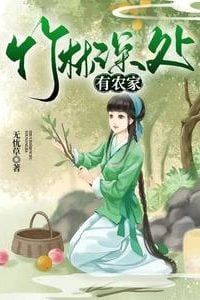
There are farmhouses deep in the bamboo forest
+Add to Custom List
Genres:
Novel Info

Summary

... Read More

Li Youyin is a poor, orphaned farmer in Peach Blossom Village who, despite being the second son of a wealthy family, was denied a fair inheritance due to his parents' favoritism toward his elder and younger brothers. He marries Shen, a virtuous woman with chronic health issues stemming from childbirth complications, and they raise three children: Li Guo, the capable eldest daughter; Li Xing, the middle daughter; and Li Wen, the youngest son. The family lives in poverty in three dilapidated adobe houses on the village edge, struggling to make ends meet while facing hostility from Li Youyin’s elder brother, Li Youjin, and his wife, Zhao, who frequently attempt to extort resources from them.

Li Guo emerges as the family’s strategic mind, driving efforts to improve their livelihood through innovation and hard work. When her younger brother Li Wen falls seriously ill with a fever, the family’s lack of resources is starkly highlighted, motivating Li Guo to seek sustainable income sources. She introduces a revolutionary rice transplanting method, growing seedlings in a nursery before moving them to the fields, which increases crop resilience and yield. This agricultural innovation draws curiosity and mockery from villagers but ultimately proves successful, establishing the Li family’s reputation for ingenuity.

Beyond farming, Li Guo identifies economic opportunities in wild resources. She leads her siblings into the mountains to gather wild vegetables such as shepherd’s purse, water bamboo, and fiddlehead ferns, which they sell at the town market for significant profit. The family also catches wild ducks, fish, and rabbits, diversifying their income. Li Youyin weaves durable bamboo baskets and fish traps, which attract the attention of Steward Qin, a servant of a wealthy town family, securing a large order that provides crucial capital. These ventures allow the family to accumulate savings, purchase better food, and improve their living conditions.

Conflict arises primarily from Zhao, Li Youyin’s sister-in-law, who resents the family’s success. After failing to steal their caught game, Zhao spreads rumors and encourages villagers to undercut prices by selling similar wild vegetables, threatening the Li family’s market dominance. Despite this competition, Li Guo maintains their edge through quality control and strategic pricing, while also expanding their rabbit farming operation, which breeds rapidly and provides additional meat and income.

Personal challenges also surface, including Li Guo’s broken engagement to Sun Wenjie, who abandoned her for a wealthier match. This event damages her social standing but frees her to focus on her family’s prosperity. Meanwhile, Shen’s health gradually improves with better nutrition and care, allowing her to support her husband and children emotionally. The story follows the Li family’s steady ascent from poverty to stability, highlighting Li Guo’s leadership, the family’s unity, and their resilience against external hostility and economic hardship.

As the narrative progresses, the family’s savings grow, enabling them to invest in tools, livestock, and future opportunities. Li Guo’s foresight in preserving wild vegetable seeds and maintaining sustainable hunting practices ensures long-term viability. The story concludes with the family enjoying relative comfort, their rice fields thriving, and their social standing improving, though tensions with Zhao and the broader village community remain unresolved, setting the stage for ongoing challenges in their rural life.

Latest Release
DateGroupRelease
2026-08-11shanghai fantasy c18
2026-08-11shanghai fantasy c17
2026-08-11shanghai fantasy c16
2026-08-11shanghai fantasy c15
2026-08-11shanghai fantasy c14
2026-08-11shanghai fantasy c13
2026-08-11shanghai fantasy c12
2026-08-11shanghai fantasy c11
2026-08-11shanghai fantasy c10
2026-08-11shanghai fantasy c9
2026-08-11shanghai fantasy c8
2026-08-11shanghai fantasy c7

Community Reviews

Rating(3.6 / 5.0, 35votes)
5 stars
8(23%)
4 stars
10(29%)
3 stars
11(31%)
2 stars
6(17%)
1 stars
0(0%)

Popular reviews

... Read More
Okay, so let me just say it straight: this plot is deliciously satisfying. The way Jia Qingshan goes from a nobody hunter to someone who can bring a full-grown elk as a betrothal gift? That's not just luck—that's earned. And the Li family's reaction shift from skepticism to full-on acceptance? Chef's kiss. The author really knows how to make a reader feel like the world is finally bending in the right direction. But here's what really got me—the Sun vs. Zhang private school subplot. On the surface, it's just about picking a school for Li Wen, but it's actually a brilliant setup. Mr. Sun is humble, skilled, runs a cheaper school with better results. Mr. Zhang is arrogant, holds a higher degree, but his students don't pass as well. This feels like the author is laying groundwork for a future conflict or revelation. Maybe Zhang's school isn't what it seems? Maybe there's more to Mr. Sun's story than we know? The engagement plot and the school subplot are woven together so naturally. Li Guo'er isn't just a romantic interest—she's actively involved in decision-making, asking her father about the schools, investigating on her own. That's a character who drives the plot forward, not just sits pretty. And Li Wen's admission to school? That's a whole new thread. A child prodigy in a classical education setting? The author is setting up so many potential arcs here. I also love how the author doesn't shy away from consequences. The engagement happens, the hunting succeeds, the school is chosen—but then Chapter 23 hits like a truck with Li Mei's jealousy. The plot just went from wholesome to dangerous in one chapter. That's tight storytelling. The author is playing 4D chess while most web novelists are still figuring out checkers. But I have to ask: what happens next? Li Mei is clearly unhinged now, and she just caused a miscarriage. The Li family is eating dinner like nothing happened. Where does this go? Does Li Qingsong's explosion at the dinner table lead to a family reckoning? Or does the author let this simmer? I need to know.
... Read More
Okay, can we just talk about Zhao for a second because this woman is genuinely unhinged and I love how the author doesn't even try to make her sympathetic. She sees Li Guo'er and her dad selling wild vegetables, gets her ass handed to her by some random woman at the market, and what does she do? She doesn't learn anything. She doesn't even just sulk. No, she goes home and spreads the secret that wild vegetables can be sold for money to EVERYONE in the village. That is some next-level petty energy. Like, she'd rather see her own family lose out than let the second branch succeed. The mania is real. And the worst part? Li Youyin's reaction tells you everything. He's trembling with rage, calling his sister-in-law out for bossing him around even before the family split. This isn't new behavior — this is decades of accumulated resentment from a woman who held power when she had no right to, and now that power is gone and she's lashing out like a cornered animal. But here's what actually got to me: Li Guo'er's response. She just... sighs. She says 'How much must they hate us to come up with such a terrible idea to get back at us?' There's no revenge plot brewing. No 'I'll show them.' Just exhaustion. She's tired of fighting people who refuse to leave her alone. That's the real tragedy here. The Li family is trying to build something good — a stall, a livelihood, a better life for their kids — and Zhao is out here treating it like a war. And the author keeps showing us that Zhao isn't some cartoon villain. She's a product of a system that told her she was superior because she had two sons, and now that system has shifted and she can't adapt. I keep waiting for her to come back with something worse. She won't stop. She can't stop.
... Read More
There are symbols everywhere in these chapters, and I think the author is building something deeper than just a story about engagement and school admissions. The elk is the most obvious symbol. Jia Qingshan hunting a mature male elk—a creature that 'only appeared deep in the mountains and was notoriously difficult to hunt'—isn't just a plot device. It's a symbol of his worth, his capability, his ability to provide. In a world where land and wealth determine social status, the elk is his currency. It's what makes him acceptable to the Li family despite having no land. The fact that Li Mei specifically fixates on the elk—calculating its value, resenting that it's going to Li Guo'er instead of her—shows how material symbols can corrupt even genuine affection. The thatched cottage is another powerful symbol. Jia Qingshan fixing it up with his own hands, making it 'look new' so his young wife won't suffer. This isn't just renovation—it's an act of love expressed through labor. The cottage represents the life he's building from nothing, the future he's constructing with calloused hands. And Li Guo'er's acceptance of it, of him, of this humble beginning, speaks volumes about what the author values: genuine effort over inherited privilege. But the deepest symbol might be the private school itself. Mr. Sun's school—cheaper, better results, run by a humble man who gave up the imperial examinations due to poverty—versus Mr. Zhang's school—expensive, poorer results, run by a self-important Juren. This isn't just world-building; it's commentary. The author is asking: what does real education value? Status and price, or actual learning and character? Mr. Sun's observation that Li Wen 'can memorize any book after reading it once' suggests that talent exists everywhere—it just needs the right nurturing. And then there's Li Wen studying until midnight. The lamp burning late into the night becomes a symbol of expectation—the weight his family has placed on his success, the pressure he puts on himself. Is this dedication, or is it something more dangerous? The author seems to be asking whether the pursuit of excellence can become self-harm when driven by fear of disappointment rather than love of learning. The miscarriage, meanwhile, symbolizes the destruction of potential—not just the lost baby, but the destruction of family harmony, the destruction of trust, the destruction of the domestic peace that the earlier chapters worked so hard to build. Li Mei's jealousy doesn't just hurt one person; it unravels the entire social fabric of the family. What is this story really about, beneath the surface? I think it's about worth—what makes a person valuable, what makes a life meaningful, and what happens when those values are challenged by jealousy, entitlement, and the arbitrary hierarchies of society.
... Read More
I need to talk about this one moment. Just one moment, and I'm going to sit with it for a while. Jia Qingshan finally gets a chance to talk to Li Guo'er after all that hunting and preparation. He's nervous, he's stuttering—and then she laughs. Not a mean laugh, not a dismissive laugh. She covers her mouth and laughs at his awkwardness, and her smile is so beautiful that he just stands there frozen. Captivated. That's it. That's the scene. Two sentences of description, and I'm completely wrecked. Because this is what real attraction looks like in fiction. It's not grand declarations or dramatic confessions. It's a man who has been working his tail off—fixing her cottage, hunting elk, planning their future—and the moment he sees her smile, all his careful composure just melts away. He becomes a boy again, stuttering and flustered, and she finds it endearing instead of annoying. The emotional arc here is so satisfying because it's built on genuine care. Jia Qingshan isn't trying to impress her with wealth or status. He's trying to give her a better life. He wants to 'fatten her up' because she's too thin. He brings the elk not to show off but because it's a gesture of provision and protection. These are the actions of someone who genuinely cares, and Li Guo'er sees it. The contrast with Li Mei's emotional state is almost cruel. She's consumed by jealousy, by a sense of entitlement, by the belief that she was robbed of something. Meanwhile, Li Guo'er is just... existing. Being kind. Laughing at the right moments. Letting Jia Qingshan be himself. And that's exactly why he chose her. I also can't ignore the family love in these chapters. Li Wen studying until midnight, not because he has to, but because he wants to honor his family's sacrifice. Li Youyin buying wine on the way home to celebrate his son's admission. The way the whole family rallies around Li Wen's education. This is warmth. This is the kind of family dynamic that makes you want to read more, even when the drama gets heavy. The miscarriage scene in Chapter 24? Yeah, that hit different. Li Qingsong holding his wife, telling her they can have another baby but all he cares about is that SHE survives. That's love. That's the emotional core that makes everything else—the jealousy, the drama, the school choices—feel like it matters because real people are at the center of it.
... Read More
I keep thinking about what the Li family is actually risking here, and it's not what you'd expect from a typical web novel. There's no empire to reclaim. No cultivation realm to ascend. No demon lord to defeat. The stakes are terrifyingly small and therefore terrifyingly real: they are trying to feed their children and keep their mother alive, and every single day someone or something is trying to take that away. Zhao is the most visible threat, but she's also the mildest one. She spreads a rumor. She undercuts prices by a penny. She's petty and malicious, yes, but she's not going to kill anyone. The real danger is more diffuse — it's the fact that the wild fish are disappearing because everyone in the village has realized they can make money from them. It's the fact that the rice fields barely produce enough after taxes. It's the fact that Shen was sick for years and the family has been scraping by on broken rice and coarse grains. The stakes aren't dramatic. They're existential. And that's what makes every conflict scene so tense. When Zhao gets into a physical fight with that woman at the market and loses, covered in dust with a bruised face, you feel it in your chest. Because you know this isn't the last time. You know Zhao will come back. You know she'll find another way to make their lives harder. And the Li family has no army, no allies, no resources to fight back with. They can only work harder, dig deeper, and hope that next time they're faster than the people trying to take what they've built. The author never lets you forget what's on the line. A bowl of dumplings isn't just a meal — it's a victory. A clean rabbit cage isn't just chore — it's dignity. The fact that Li Wen says 'we won't be starving' with such conviction tells you everything about how close to the edge this family has been living. They're not fighting for glory. They're fighting to survive. And honestly? That's the kind of conflict that makes you care more than any epic battle ever could.
... Read More
There's a passage early in this section that I keep coming back to, and I think it's one of the most quietly powerful pieces of imagery in the entire novel. When Li Youyin and Li Guo'er return home after a successful day at market, the text describes: 'A gentle fragrance of peach blossoms greeted them, and a soft breeze blew through, causing petals to fall to the ground, creating a picturesque scene! Taohua Village really was beautiful.' Beautiful. Yes. But then the very next sentence: 'Unfortunately, for some reason, the peaches on the village's peach trees were sour and astringent. In the end, no one picked them, and they all rotted on the ground.' What is this doing here? It's not just atmosphere. It's not just 'setting the mood.' This is the entire economic reality of Taohua Village compressed into two sentences. The village is picturesque. The flowers are fragrant. The view is cinematic. But the fruit is sour. Nothing that looks promising actually delivers. Everyone is surrounded by beauty they can't eat. I think about this every time the family goes to the market or the fields. The world this story lives in is one where beauty and utility are completely divorced. The peach blossoms don't feed anyone. The rice fields barely produce enough after taxes. The wild vegetables are abundant but someone always comes along to ruin it. And yet — and this is what the author does so well — the world still feels alive. The snails soaking in salted water overnight. The gray vegetable pancakes turning golden in the pan. The reed marsh where the siblings go fishing. These aren't backdrop details. They're the texture of a life being lived, moment by moment, meal by meal. The worldbuilding here isn't about magic systems or political intrigue. It's about the smell of lard hitting a hot pan and the sound of a child's satisfied 'Sssha!' when he bites into a hot dumpling. That's the world this story builds, and it's a world I never want to leave.
See all reviews

Characters

See all characters

Custom lists

See all custom Lists