The Youngest Saves the Family with a Key
+Add to Custom List
Genres:
Tags:
Novel Info
  • Author:
  • Status:Ongoing

Summary

... Read More

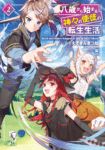
Liria von Roberg is the seven-year-old daughter of Classid, the youngest son of the formidable Grand Duke Vladimir von Roberg. Although she appears as a small child, her mind contains the memories of Kang Ye-na, a modern high school student who realized she had transmigrated into the world of a romance fantasy novel called "Isekai Saint." In this story, the Roberg family serves as the villainous faction that torments the male protagonist, Adrian, leading to the family's eventual destruction. Liria’s primary motivation is to save her father, who fell into a coma after a mysterious beast subjugation mission left him with an incurable mana heart disease, and to prevent the family from following its canonical path to ruin.

The central conflict arises from Liria’s knowledge of the future. She knows that her uncle Osdel, the eldest son of the Grand Duke, will eventually become the family head, kidnap Adrian, and subject him to brutal experiments to awaken his dormant powers. This act triggers Adrian’s berserk state, leading to the demise of the Roberg family. Additionally, Liria learns that her father’s coma is not merely a result of battle injuries but is linked to a pre-existing hole in his mana heart, a condition that will kill him within three years unless treated. To survive, Liria decides she must gain her grandfather’s trust, expose the treasonous deeds of Osdel and his siblings, and secure the magical artifacts necessary to heal her father and protect the family.

Liria’s first major action involves confronting Osdel in the mansion corridor. Osdel, aware of Liria’s intelligence, attempts to intimidate her with dark shadow magic. Liria feigns a severe allergic reaction or magical backlash to escape his attack without revealing her true capabilities. She then presents a compiled dossier of evidence detailing the financial embezzlement and illegal activities of three of her uncle and aunts to Grand Duke Vladimir. Impressed by her bravery and the authenticity of the documents, the Grand Duke grants her a private audience, marking the beginning of their alliance.

As part of her strategy, Liria prepares for the annual aptitude test, which determines the status and privileges of the heir children. Unlike other heirs who rely on standard guides, Liria suspects the available books are fakes planted by Osdel to mislead competitors. She successfully deduces this by noticing inconsistencies in authorship and publication dates, leading her to confess her suspicions to Suleiman, the library director and secret supervisor of the test. Suleiman, impressed by her perceptiveness, reveals the location of the genuine guide and aids her preparation.

During the aptitude test, Liria navigates a series of magical challenges, including a mana control trial and a search for a Golden Compass in the Spirit Forest. She encounters a ferret-like spirit named Kiki, who guards the compass. By using bait and displaying kindness, Liria befriends Kiki and secures the compass. In the final trial, instead of manifesting a traditional elemental attribute, Liria enters a spiritual domain where she meets the ghost of her grandmother, Lillian, an ancient Elf and former Spirit User.

Lillian reveals that Liria has the rare aptitude to become a Spirit User, capable of contracting with spirits and wielding powerful artifacts. She transfers the authority of the Magic Key to Liria, who wishes for the power to fulfill all her goals—saving her father, protecting the family, and securing her future. The contract grants Liria a key with reality-warping potential, surpassing the healing ability possessed by the novel’s heroine. After the contract, Liria collapses from mana exhaustion but wakes up to find Grand Duke Vladimir waiting for her, signaling a pivotal shift in her standing within the family as she begins her long-term plan to alter the fate of the Roberg lineage.

Latest Release
DateGroupRelease
2026-10-03dusk blossoms c80
2026-10-03dusk blossoms c79
2026-10-03dusk blossoms c78
2026-10-03dusk blossoms c77
2026-10-03dusk blossoms c76
2026-10-03dusk blossoms c75
2026-10-03dusk blossoms c74
2026-10-03dusk blossoms c73
2026-10-03dusk blossoms c72
2026-10-03dusk blossoms c71
2026-10-03dusk blossoms c70
2026-10-03dusk blossoms c69

Community Reviews

Rating(0 / 5.0, 48votes)
5 stars
0(0%)
4 stars
0(0%)
3 stars
0(0%)
2 stars
0(0%)
1 stars
0(0%)

Popular reviews

... Read More
The part about Liria's father coming home in a coma. That hit me so hard I had to pause. She'd been counting letters, waiting, writing reflections, biting other kids' arms out of frustration and fear, and then he finally returns—but he's not the same. The medical explanation of a “hole in the mana heart” is such a creative way to make a disease feel inevitable in a magical world. But emotionally, what wrecked me was her grief. She cried day and night, skipped meals, refused her favorite fairy tales. That level of childlike devastation felt so real. Then the nightmare where the whole family falls apart and she wakes up realizing this world is a book? That moment of dual terror—grief for her father AND fear of an apocalyptic future—collided perfectly. And yet. And yet she turns around and says “I must save Father first” while tears are still on her cheeks. That's the emotional core of this whole story: love driving action. Every decision she makes isn't just about survival—it's about protecting people she loves. The romance hasn't started yet (obviously, she's seven), but the family bonds feel rich and earned. And that final line about seeing his deathly pale face making her heart ache? I was there. That's the kind of image that sticks with you.
... Read More
I need to talk about Eugene because my heart is literally hurting for him and I didn't even know this character existed five chapters ago. Watch the moment he appears. Malcolm's raising his hand to hit Liria and the narration says 'Whoosh. As if a wind blew in from somewhere, Eugene suddenly appeared, pushing past Dimitri and grabbing Malcolm's arm.' Not walking. Not calling out. He MATERIALIZED. The physical description alone tells you everything — this isn't someone who hesitates when Liria is threatened. The line that wrecked me though was his whisper, the one he covered her ears for: '...bastards.' He was cursing under his breath and immediately lied about it. Of COURSE he heard. She's right there. He chose to protect her privacy even while furious. But then Benjamin shows up and the whole dynamic curdles. This man — Eugene's FATHER — looks at Liria with 'a somewhat displeased gaze. A look that said he didn't like her associating with his son.' And then he tells Eugene 'didn't I tell you not to associate with just anyone?' Casual. Dismissive. Like Liria is dirt on his shoe and Eugene is a pet that wandered into the wrong yard. The ending of that scene broke me. Eugene runs after his father but before he goes, he mouths something to Liria: 'Make sure to let me know when you change rooms!' That is not the behavior of a guy who's fine. That is the behavior of a guy who senses danger closing in and wants to make sure he can still reach her. He's trapped between loyalty to a toxic father and care for someone who actually sees him. I'm already planning my villain intervention for Benjamin and I haven't even finished reading.
... Read More
Can we talk about how good the dialogue writes itself in this batch? A few lines immediately stuck in my head. First, Liria's line to Suleiman: "If you don't know, isn't that neglecting your duties?" Said to a man who's clearly trying to play dumb, delivered with the cold precision of someone who's read this exact conversation in another life. And then Suleiman's response — bursting into laughter instead of getting angry. That's such a satisfying character moment because it shows he respects boldness, and it sets up their dynamic perfectly. He's not fooled; he's impressed. Then there's the breakfast scene where Yuphi casually drops that the main castle's dining hall chef is supposedly the best, and Liria's response is just pure unfiltered joy: "But I'm in heaven right now!" Pointing to her mouth. I absolutely made a noise at that. It's such a genuine childlike reaction that cuts through all the political maneuvering happening around her. And Eugene's voice is distinct too — that line "It's too much to say a man's smile is pretty" followed by him averting his gaze while his ears turn red is peak character-writing. You can hear exactly who this boy is through his dialogue alone: charming, slightly flustered, hiding behind politeness but unable to contain his actual reaction. Clara's dialogue is sharp and mean without being cartoonish — "What, Liria. Don't tell me you're going to take the aptitude test today?" The pause, the slight sneer in her tone, the passive-aggressive dress-spreading excuse. Every line tells you exactly what kind of person she is. The author clearly understands that good dialogue isn't about being witty; it's about revealing character through rhythm and word choice. And honestly, the mix of formal address ("Director Suleiman," "Lord Eugene") with casual intimacy ("oppa," "little sister") creates this really interesting texture in how characters relate to each other across different social contexts.
... Read More
There is something almost cinematic about the scene where Liria slips past the castle gate. Kiki the ferret doing that whole belly-flip routine to distract the soldier—it's funny but also so vividly visual that I could literally see it like a storyboard panel. The way the author describes the moment Liria steps outside and a lush forest opens up before her with warm sunlight and a stream... I felt that warmth on my face. It's her first time coming out of the castle alone and the world just EXPLODES with sensory detail. And then the wild strawberries. Oh my god the strawberries. "Luscious," "tangy juice bursting in her mouth," her bag getting plump and full. I swear I could taste them just reading this. There's this entire sequence where she's happily picking strawberries imagining strawberry jam and whipped cream and it's just so pure and simple and warm against everything else happening. It's a quiet moment that makes you appreciate how much she's been confined inside those walls. Then the forest floor becomes this scene of tension. A piece of clothing fluttering in the wind beside a large tree. Her counting to three like a scared child about to peek at a horror movie. The wooden sword pointed at her throat with red juice dripping—my heart stopped. The transition from that peaceful strawberry-picking to absolute terror in two seconds is masterful. The author understands how to make you feel safe and then yank the rug out from under you. Noah's appearance under that tree shade—his disheveled brown hair covering half his face, old clothes pitch black, small wounds on his thin body. The visual of this nearly invisible child who's been hiding in plain sight in the forest outside the castle gates. And then the wind blows and you get that first glimpse of his face, incredibly pretty, eyes closed, before he covers them with that white eye patch. The contrast between the bright sunny forest and this dark, bruised child hiding in the shadows is devastating imagery. Later, when he discovers his eyes are cold blue like a winter lake, it's such a striking visual metaphor—the beauty of his eyes versus the curse they carry. The color palette shifts from warm gold and green to icy blue and dark shadows and I felt every bit of it.
... Read More
This batch reads like four mini-movies strung together and honestly I'm impressed by how the author controls tension across such a compact word count. Scene one: the chocolate bribe. Light, funny, character-establishing. Emmett gets played and the reader gets to laugh. Low stakes, high charm. This is the calm before everything. Scene two: the library search and bully confrontation. Stakes climb immediately. We learn about the branch family's hostility, about Viscount Jade's political role, about Liria's sharpness. Then Eugene arrives — the rescue beats everything up a notch. But the relief is SHORT. Benjamin appears like a door slamming shut. The pacing here is surgical: confrontation → rescue → brief warmth → sudden dread. Three emotional beats in what amounts to two pages. Scene three: the eavesdropping moment with Marit and Ilina. This is the quietest scene but also the most structurally vital. It delivers exposition (the aptitude test happens TOMORROW) without feeling like exposition because it's disguised as overheard gossip. Liria hiding behind a wall, hearing what she needs to hear — the author trusts us to connect the dots. No narrator hand-holding. And then the Kiki reveal! She thought it was a doll and it BIT SOMEONE. COMEDY GOLD but also another layer of secret-keeping piling on. Scene four: the decision to go to the north forest. The chapter ends with Liria making a plan and stepping into the unknown. The 2-hour callback with Ralph is such a small detail but it shows the author is thinking ahead — she's building logistics, not just drama. Every scene either advances plot, deepens character, or raises stakes. There's not a single paragraph that's just sitting there taking up space. Also worth noting: the author doesn't resolve anything. No bully defeat, no test result, no father-son reconciliation, no secret exposure. Just mounting pressure. I NEED the next batch.
... Read More
I need to talk about how this section is paced because honestly, the author has some serious narrative engineering happening here. The whole sequence runs from the testing ceremony through the palace reveal and the Belita subplot, and it covers roughly what would be three to four chapters of a traditional novel. But it doesn't feel stretched at all. Here's why: Every scene ends with a turn. The Duke says 'it was a waste of time' — TURN: Liria proposes a deal. He agrees but with conditions — TURN: she reveals the grandmother dream. He grants everything — TURN: we cut to him locking his office and revealing he sensed something unbelievable about her mana. She moves into her palace and feels triumphant — TURN: we learn about the budget crisis and Belita's corruption. She feels grateful to Marit — TURN: the money arrives but the emotional reckoning is just beginning. This is the pacing of someone who knows exactly how long a reader will stay engaged before they need a new hook, and they're giving it to them right on schedule. The transition from the testing scene to the Duke's private office conversation is particularly sharp. One moment Liria is celebrating with her new privileges, and the next we're locked in a room with the Grand Magician and his advisor discussing whether this child might be something dangerous. The 'Lock spell' detail — 'Clank. The firmly locked door would now neither break nor open with any key' — is a wonderful structural beat. It signals to the reader: the real scene is about to happen, the performance is over. The Belita subplot arrives right when the Liria narrative could have settled into comfortable triumph. Instead, the author reminds us that Liria isn't safe, isn't untouchable, and isn't even fully trusted. She has enemies within her own family, and they're already moving against her financial resources. The chapter ends on a note that's almost deceptively light — Liria eating apple pie and thinking 'it was worth bribing the assistant uncle after all!' — but the reader knows the clock is ticking. She promised the Duke she'd achieve something new within a month. We haven't seen what that means yet, and that uncertainty is the engine that will carry us forward. This is how you pace a protagonist who's already three moves ahead: let the reader feel smart for understanding the strategy, then pull the rug out and make them realize there are more layers than they thought.
See all reviews

Custom lists

See all custom Lists