Summary

... Read More
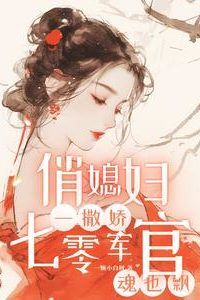
Zhu Maonian, the Grand Censor and the Emperor's most trusted official, commands fear and respect throughout the capital. His family life revolves around his stern exterior masking deep loyalty to the throne, his capable wife Lady Zhang, and his children. The eldest son, Zhu Changwang, rules from a wheelchair, serving as his father's strategic mind in court politics. The third daughter, Zhu Changmin, has married into the influential Wu family and manages her household with grace despite recent childbirth. The youngest daughter, Zhu Changle, is an anomaly in the rigid Zhu household. Having spent two years training under the formidable martial artist Zhong Ningmei on a remote island, she returns as the 'Little Witch' of the jianghu, irrepressible, tanned from the sun, and armed with skills that baffle her scholarly relatives.The narrative tension erupts abruptly when an imperial edict arrives, stripping Zhu Maonian of his first-rank position and demoting him to a seventh-rank county magistrate in the remote frontier of Yunbei. The accusation involves land seizures and local oppression, charges that serve as a political weapon against his faction. The Emperor orders the entire family to leave the capital immediately, banning any members from staying behind as hostages or leverage. Zhu Changwang realizes this is not merely a demotion but a deadly trap orchestrated by their political rivals, led by Prime Minister Zhu, who seeks to eliminate the Zhu family entirely during transit.Lady Zhang swiftly takes charge, liquidating assets and managing the family's exodus with pragmatic ruthlessness. She entrusts the family's hidden wealth and property management to her married daughter, Zhu Changmin, ensuring the family retains resources and influence even in exile. This decision causes friction with the pregnant second daughter-in-law, Xu Hanmei, who feels marginalized and inadequate compared to Changle's vibrant freedom. Despite these internal tensions, the family departs the capital under a veil of spring rain, heading toward an uncertain fate.During the journey, Zhu Changle proves her worth beyond her playful demeanor. She identifies that the family is being followed by ten escorts sent by the Emperor, skilled enough to form battle formations, indicating that her father remains protected at a distance. She also anticipates potential ambushes in the desolate mountain passes between counties. Her martial expertise becomes a critical asset; she handles threats with casual efficiency, such as sabotaging Gao Zhi, a smug envoy from Prime Minister Zhu, by tricking him into slipping on black pearls and arranging for a frightening encounter that leaves him bedridden with bone-deep pain.As the caravan travels deeper into the wilderness, physical hardships mount. Xu Hanmei's pregnancy deteriorates due to the rough conditions, causing Lady Zhang significant distress. The family relies on Zhu Changle's knowledge of herbs and her master's teachings to manage health crises. The journey tests the family's cohesion, highlighting the contrast between the refined, fragile members bound by court etiquette and Changle, who embodies the rugged resilience of the martial world. The story moves toward the dangerous borderlands, where the Zhu family must navigate both the physical perils of the road and the political machinations of those who wish them dead, relying on Changle's unconventional skills to survive what appears to be a death sentence disguised as exile.

Latest Release
DateGroupRelease
2026-09-26akknovel c70
2026-09-26akknovel c69
2026-09-26akknovel c68
2026-09-26akknovel c67
2026-09-26akknovel c66
2026-09-26akknovel c65
2026-09-26akknovel c64
2026-09-26akknovel c63
2026-09-26akknovel c62
2026-09-26akknovel c61
2026-09-26akknovel c60
2026-09-26akknovel c59

Community Reviews

Rating(3.8 / 5.0, 37votes)
5 stars
8(22%)
4 stars
15(41%)
3 stars
13(35%)
2 stars
1(3%)
1 stars
0(0%)

Popular reviews

... Read More
There's something haunting about the imagery of monkeys here. Changle spent two years on an island with nothing but wild monkeys for companionship, and her master called her a "little monkey." Then she returns and immediately starts talking to her horse, yelling at animals, beingcalled a monkey by her own family. Is this about training and transformation? About how survival shapes behavior? Or is it more subtly about how she's been shaped by isolation into someone who doesn't quite fit the world she's returning to? The Zhu family name itself is a symbol. Descendants of Mighty Generals, fallen through generations of weakness, then resurrected by one brilliant scholar who climbed the hardest path — the imperial examination route. The weight of that legacy, of being the one who restored the family's honor, hangs over every scene. Zhu Maonian's sternness isn't just personality; it's the burden of holding a falling house together. The wheelchair is another image I can't shake. Zhu Changwang, disabled, always laughing, always mediating — is he physically limited but politically sharper than anyone? The late emperor placed his trust in Zhu Maonian "clearly intending to keep him for the crown prince's use." Power, betrayal, succession — these aren't just themes; they're the actual bones of this story. The surface is a girl coming home; the skeleton is a political earthquake waiting to happen. And the fruit toss between Changle and the silent rider — so casual, so significant. Giving and receiving. Connection without words. What does that symbolize about the relationships forming around her?
... Read More
Zhu Changle's dialogue is a masterclass in character voice and I will die on this hill. Look at how she speaks versus everyone else. When she says "There's nothing I can't handle!" that's pure Changle energy — loud, performative, slightly ridiculous but absolutely genuine. And then the shoe negotiation: "I'll wear your shoes to walk later, okay? After fooling Mother, I'll return them to you." This is a grown woman negotiating with her wheelchair-bound brother like they're five years old again, and Zhu Changwang just smiles faintly without saying a word. The silence IS his voice. He doesn't need dialogue because his presence does the talking. And Wu He's entire arc in these chapters is conveyed through what he doesn't say — he's taken aback, he's cautious, he's surprised, he's delighted, and yet he barely gets more than three lines of actual dialogue. The author is using his silence to show how overwhelmed he is by the Zhu family's complexity. But Changle? She dissects their father's entire life strategy in one casual conversation and then asks about the travel itinerary like it's nothing. "How come I don't see Aunt Feng?" — casual, then three paragraphs later she's predicting ambush points. The voice consistency across characters is what makes this readable at all.
... Read More
The dialogue in these chapters is genuinely impressive because every character has a completely distinct voice and I can tell who's speaking without seeing the name tags. Zhu Changle: "Roger that!" — this girl sounds like she's twelve going on forty. Short sentences, exclamations, zero filter. When she says "Ahem!" holding back laughter while describing her sister riding off, or when she cracks the whip theatrically just to hear the sound, her dialogue is pure kinetic energy. She doesn't just speak—she performs. Lady Zhang: Her dialogue is always corrective. "Hurry up and take down those shoes of yours." "You'd only make more work with this kind of help." But the stage directions do the real work here—her taps to her forehead, her pressed lips, the "lingering smile" she can't suppress. Her dialogue is scolding wrapped in affection, and the narrative keeps reminding us that the scolding is mostly performative. Xu Hanmei: Her dialogue is the most carefully constructed of all. Almost everything she says is hedged, qualified, or immediately softened. "If I can't bear it anymore, I'll certainly ask for your help." That "certainly" is doing so much emotional labor—it's her trying to sound gracious while actually feeling wounded. Her refusal of the qi transfer isn't just practical; it's defensive. She's protecting herself from appearing weak, from having to accept kindness from someone she already feels inferior to. Zhu Changning: Minimal dialogue, maximum efficiency. "Changle just has a lively personality. She's much more open and easy to get along with compared to many other ladies." On the surface, this is factual. But as Xu Hanmei interprets it (and as we, the readers, immediately recognize), this "gentlemanly" explanation is actually cutting. He's using comparison to dismiss her feelings, and he doesn't even realize he's doing it. That's brilliant character writing—making a character unintentionally reveal their blind spot through seemingly innocent words. The author's narrative voice itself is wonderful too. There's this dry, knowing humor woven throughout—"This unrestrained nature of hers was truly... She couldn't say it was bad, but it was really quite troublesome. Sometimes she even envied it." Lady Zhang's internal monologue reads like a parenting advice column written by someone who loves their kid but has genuinely lost the battle.
... Read More
The pacing here is absolutely ruthless and I respect it. Chapter 7 ends with Changle plotting bone-loosening retribution — pure comedic victory lap energy — and then Chapter 8 opens with spring rain and a carriage that feels like it's carrying corpses. The tonal whiplash is intentional and it WORKS. The author doesn't let us enjoy the win for even one panel before pulling the rug out. We go from 'hehe I got him' to 'my parents are being exiled and my sister is having a breakdown' in the span of a chapter break. That's masterful structural control. The scene transitions are clean too — no lingering on the triumph, no extended exposition about the political situation. We get the pavilion, the rain, the carriage arriving, and then it's all character moments layered on top of each other. Zhu Maonian's calm greeting, Changmin's tears, Lady Zhang's box, Wu He's reassurance that's clearly performative. Each beat lands fast and hard, and by the time the chapter ends we're left with this heavy, unresolved feeling that's exactly right for where the story is. The author knows when to accelerate and when to strangle the momentum, and this passage proves it.
... Read More
I love how this story opens with such a deceptively warm scene — spring sun, bustling streets, a lively girl bouncing home — and then immediately undercuts it. Zhu Maonian and his eldest son are already talking about how "they will surely make a move in the coming days" and "we're running out of time." Right after Changle is hugging her dad and pulling his beard, we get this cold undercurrent of conspiracy. The author really knows how to build tension by contrasting the family warmth with political danger lurking just beneath. The structure here is smart too. We get the return as the hook, then drip-feed us information: Who is her mysterious master? Who is the man who brought her luggage without saying a word? What happened on that island with the monkeys? The narrative arc from Chapter 1 to 4 moves from her arrival → family reunion → hints of the political storm brewing → and that final image of the wheelchair-bound second brother. It's layered without being confusing. One thing that stood out — the whole "luggage lost" bit. She yells at her horse, then gets her stuff back from a silent rider who catches her thrown fruit. That's either comic relief or setup for something bigger. Given the political undertones, I'm betting it's both. The author is threading multiple plotlines together and I'm here for it. Can't wait to see how these pieces connect.
... Read More
This is what keeps me up at night. The absolute worst kind of foreshadowing — the kind that hides in plain sight during family scenes. Every time Changle is hugging her mother or making faces at her father, I'm reading it differently than the characters are. Because we know. The reader knows something the happy family doesn't fully grasp yet. The stakes are layered and escalating. On the surface: a girl returns home after two years. But underneath: the Zhu family is a political target. Zhu Maonian is the Grand Censor — the man who watches all officials. That makes him both powerful and dangerously exposed. The late emperor's intention to "keep him for the crown prince's use" suggests this whole arrangement was political chess, not genuine trust. When the late emperor is gone, what happens to that arrangement? "They will surely make a move in the coming days." WHO are "they"? Rivals? Enemies of the crown prince? People from Zhu Maonian's past? The text doesn't say, and that deliberate withholding is what makes the tension so effective. Changle herself is both protector and vulnerable. She trained for two years — on an island, with monkeys, under some mysterious master. What was she trained for? To protect her family? To be weaponized? The fact that her father complains about her being "ill-mannered" while simultaneously relying on whatever skills she gained suggests he knows more than he lets on. The silent rider with the luggage — is he friend or foe? A bodyguard? An assassin sent to check on her? Every unanswered question is a fuse burning down. And the wedding she missed, the brother who's about to become a father — these aren't just plot decorations. They're moments of normalcy that make the coming storm hurt more.
See all reviews

Custom lists

See all custom Lists