Summary

... Read More

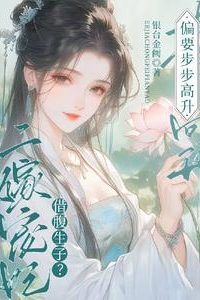
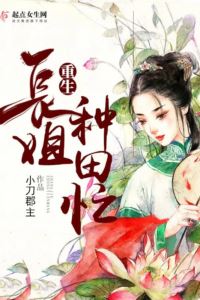
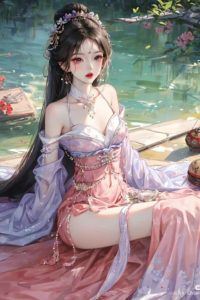
Jiang Shiyuan, a noblewoman of the Jiang family, wakes in her body after dying from neglect and illness in her previous life. She had been married to the Heir of Prince Chun, a man she once admired for his gentle reputation, only to discover his true nature as a cruel playboy who tormented her for her inability to conceive. In her past life, she suffered in silence until her death, but upon rebirth, she finds herself back at a dragon boat race, before the marriage was finalized. Her second cousin, Jiang Shijin, had stolen her fiancé in the previous timeline by fabricating a romantic encounter with the Heir. This time, Shiyuan remains aloof and indifferent, refusing to engage with the engagement or the scheming relatives who forced the swap. She relies on the support of her aunt, Madame Wang, and her close friend, Lady Xiang, who despise the Jiang family’s second branch for their greed and deceit.

The central conflict revolves around the stolen marriage and the hidden agendas of the Jiang family’s matriarchs. Jiang Shijin, now married to the Heir, attempts to assert dominance over Shiyuan during the festival, flaunting her status as the Consort of the Heir. However, Shiyuan counters her sister’s provocations with cold wit, exposing Shijin’s insecurity and lack of genuine affection from her husband. Meanwhile, the Heir himself becomes intrigued by Shiyuan after catching a glimpse of her beauty, realizing too late that he traded a virtuous wife for a scheming one. Shiyuan, however, remains unmoved by his attention, having seen through his facade in her past life.

A key turning point occurs when Pei Zisu, a brilliant young general and Shiyuan’s cousin, returns from the southern frontiers. In her previous life, Shiyuan knew he was destined to die young, a tragic figure mourned by the entire dynasty. This time, she watches him petition the Emperor for rare medicinal ingredients, realizing his request is tied to saving a loved one’s life. Their interactions reveal a growing mutual respect. Pei Zisu, known for his stern demeanor, shows a softer side around Shiyuan, while she finds comfort in his presence, contrasting sharply with the toxic environment of her natal home.

Shiyuan’s family dynamics further complicate her situation. Her father, Jiang Huaishan, is a loving but passive figure who fails to protect her from her grandmother’s and second aunt’s manipulations. Her third sister, Jiang Shishu, born to a concubine, suffers from neglect and low status within the household. Shiyuan reaches out to Shishu, offering kindness and protection, a stark contrast to the cruelty Shishu endures from the family’s matriarchs. This act of solidarity strengthens Shiyuan’s support network within the family, providing her with emotional allies as she navigates the treacherous social landscape of the capital.

The story moves toward Shiyuan’s determination to rewrite her fate. Rejecting the Prince Chun estate, she focuses on her health and relationships, particularly her bond with Pei Zisu. As the family banquet unfolds, tensions rise between the Wang and Pei families, highlighting the political and social stakes. Shiyuan’s grandmother, Old Madam Wang, fiercely defends her granddaughter, vowing to find a better match for her. The narrative sets the stage for Shiyuan to break free from the constraints of her past life, leveraging her rebirth knowledge to avoid past tragedies and forge a new path alongside those who truly value her.

Latest Release
DateGroupRelease
2026-08-11shanghai fantasy c71
2026-08-11shanghai fantasy c70
2026-08-11shanghai fantasy c69
2026-08-11shanghai fantasy c68
2026-08-11shanghai fantasy c67
2026-08-11shanghai fantasy c66
2026-08-11shanghai fantasy c65
2026-08-11shanghai fantasy c64
2026-08-11shanghai fantasy c63
2026-08-11shanghai fantasy c62
2026-08-11shanghai fantasy c61
2026-08-11shanghai fantasy c60

Community Reviews

Rating(4.2 / 5.0, 6votes)
5 stars
2(33%)
4 stars
3(50%)
3 stars
1(17%)
2 stars
0(0%)
1 stars
0(0%)

Popular reviews

... Read More
The Ningxiang Pills. Let me just sit with that symbol for a moment because it's absolutely perfect. On the surface, they're a plot device—a magical medicine that keeps Shiyuan alive. But the deeper meaning? They're a metaphor for Pei Zisu's love: invisible, consistent, essential, sent across impossible distances without any expectation of recognition. Ten years. Every six months. Never interrupted. And Shiyuan never knew. She took them, lived, grew stronger, and never connected them to the boy who followed her doctor to the Western Capital. The pills also connect to the theme of rebirth and second chances. In her previous life, when Pei Zisu died, the pills changed—"the taste was slightly different." She attributed it to her failing senses, but now she realizes: the medicine was tied to HIM. His death literally changed the formula. His love was literally keeping her alive. And now that he's back, reborn into this timeline, the pills continue. The cycle is about to break or transform. There's also the symbolism of distance—physical and emotional. Hanzhou is thousands of miles from the Western Capital. The Huai River, seven or eight days by boat, half a month by carriage. But Pei Zisu bridged that distance with something far more powerful than travel: consistent, quiet devotion. And now he's asking her to cross that same distance as his wife. The father's concern about distance is ironic—he's worried Shiyuan will be too far from family, but the real distance that matters is the one Pei Zisu already crossed, silently, for ten years.
... Read More
This is the kind of pacing that keeps you up until 3 AM and then you tell yourself you'll read just one more chapter. Let me break down why this works so well. Chapter 12 builds to the proposal like a pressure cooker—the drinking games, the wine, Pei Zisu's internal monologue about his previous life and his decision to stop waiting, the moment his eyes meet Shiyuan's and something shifts. Then chapter 13 explodes with the proposal itself, the father's immediate rejection, the family's panicked reactions, and ends with the father retreating to his study for a secret meeting. Chapter 14 delivers the emotional bomb about the Ningxiang Pills and Shiyuan's realization about her previous life. The author is a master of the cliffhanger. Each chapter ends on a note that demands you continue: the father's mysterious study session, Shiyuan's dawning horror and gratitude, the revelation that her entire survival depended on Pei Zisu's secret devotion. And the pacing isn't just fast—it's varied. The banquet scene moves at a frenetic pace with dialogue and action, then slows down for intimate moments like Shiyuan's internal realization, then speeds back up with the family meeting at Old Madame Wang's courtyard. The transition from the public scene (the banquet) to the private aftermath (the carriages, the courtyard discussions) creates this wonderful rhythm. We get the spectacle first, then the consequences. And that final image of the father alone in his study? Perfect. It's the narrative equivalent of a door closing, and you're left desperate to know what's on the other side.
... Read More
"I have admired you for a long time and have waited for many years. Shiyuan, would you be willing to have me as your husband?" That line. That single line. The way the author describes the room going from clinking cups and laughter to absolute dead silence—I could see it like a movie scene. The camera panning across every face at the table: Wang Kuan with his mouth open, Wang Hong realizing his joke became a prophecy, Aunt Pei's confused face, and Shiyuan's. But what I love most about this scene is how the world feels so lived-in. The Ningxiang Pills arriving from Hanzhou every six months through express courier—that's a whole logistical detail the author just drops casually, and it tells me so much about this world. There are couriers, there are reclusive doctors who refuse to leave their region, there's a Hanzhou that's both stable and war-torn, there's a Western Capital full of nobles who gossip. The Marquis of Wenyuan's manor versus the Pei family's actual power—the author doesn't info-dump, but you feel the hierarchy through the Wang family's hesitation to offend Pei Zisu despite their higher rank. And the carriage ride home! Just the father and daughter in silence, the heavy quiet between them, the father's instructions to Shishu to keep the secret. That image of the carriage moving through the night, the contrast between the lively entrance and the somber departure—it's so cinematic. The author builds atmosphere through what's NOT happening, through silence and glances and the weight of unspoken things.
... Read More
Let's talk about stakes because this section raises them to ABSOLUTE MAXIMUM. On the surface, the conflict is simple: a young general proposes, the father says no. But the layers beneath are terrifying. Shiyuan's health—she's been surviving on medicine for years. Her previous life ended in heart failure two years after Pei Zisu's death. Is she connected to him in ways she doesn't fully understand yet? The father knows she's frail, knows Hanzhou is a war zone, knows the journey could kill her. His rejection isn't petty—it's protective. But here's what makes the stakes so much higher: Pei Zisu knows about her previous life too. He remembers the palace banquet, remembers dying, remembers the rebellion that followed. He's not just a man proposing to a woman—he's a man who has already lost her once and is fighting to change fate itself. When he says "I have waited for many years," he means it literally across lifetimes. The family power dynamics add another layer. The Wang family has higher rank but less actual power than the Pei family. The Marquis of Wenyuan tries to mediate but can't override Old Madame Wang. Jiang Huaishan knows he can't win a direct confrontation with a young general. Everyone is maneuvering, and Shiyuan is the prize being contested. And the most personal stake of all: Shiyuan's realization that her survival depends on Pei Zisu's devotion. If she rejects him, what happens to the pills? To her health? To the fragile thread connecting her to this second chance at life? She's not just choosing a husband—she's choosing whether to survive. The stakes aren't just romantic, they're existential. And that's what makes this section absolutely devastating.
... Read More
The dialogue in this section is absolutely *chef's kiss* and I need to talk about how each character has such a distinct voice. Pei Zisu's proposal is the standout moment, obviously. "I have admired you for a long time and have waited for many years." It's direct, it's bold, it's everything you'd expect from a military man who doesn't mince words. But what I love is how his dialogue changes throughout—the playful banter at the drinking table ("Sister-in-law, just watch! Even if he drinks three or four more, Cousin Pei will be fine!") versus the solemn, resonant voice when he proposes. The same man, two completely different registers. Jiang Huaishan's dialogue is equally telling. "I do not agree!" — four words, maximum impact. His later speech about parental command and matchmaker's words feels performative, like he's reaching for tradition as a weapon. And then he immediately tries to pull Old Madame Wang into the fight because he can't handle Pei Zisu alone. That's character revelation through dialogue, people. Aunt Pei is the comedic relief with genuine warmth—her confused "Huh? I should have known?" when Pei Zisu says she should have known his feelings, followed by the rapid-fire realization about the Ningxiang Pills. Her voice is fast, practical, maternal. But the most powerful dialogue is the silence. Shiyuan doesn't speak a single word throughout this entire section. Not one line. And yet her silence is the loudest thing in the room. Everyone is talking AROUND her, ABOUT her, deciding her future—but she's just sitting there, processing the fact that the man who died in her previous life was keeping her alive this entire time.
... Read More
Okay, I need to talk about this proposal scene because HOLY. The way the author sets it up is genius. You have this whole family banquet going, everyone's drinking, Pei Zisu is outplaying everyone at drinking games, and then BAM—he just drops the most dramatic marriage proposal in the room. The silence that follows? I could feel it through the page. My jaw literally hit the floor. But what really gets me is how the plot threads connect. When Aunt Pei starts connecting the dots about the Ningxiang Pills, it's like watching a puzzle assemble itself in real time. The pills weren't just convenient plot device for keeping Shiyuan alive—they were Pei Zisu's silent declaration of love, sent across thousands of miles every six months for ten years. And then the revelation hits Shiyuan in chapter 14 that the pills were his doing all along, and that when he died in her previous life, her medicine supply changed and she died two years later. That's not just a plot twist—that's a gut punch. The father's rejection is also brilliantly written because it's not villainous. Jiang Huaishan isn't some cartoonish obstacle—he genuinely loves his daughter and his concerns are real. Distance, war, her fragile health. But the fact that he's a civil official facing a military man who can literally intimidate him with a glance? That power dynamic adds so much tension. The Wang family stepping in to escort the 'drunken' Pei Zisu out while pretending this wasn't a disaster—that's political maneuvering at its finest. And then the father's secret meeting in his study at the end? Who is he meeting with, and what is he plotting? I NEED to know.
See all reviews

Characters

See all characters

Custom lists

See all custom Lists