The Young Lady I Serve Has Become Strange
+Add to Custom List
Genres:
Novel Info
  • Author:
  • Status:Ongoing

Summary

... Read More

Layla is a low-born maid working in the servant quarters of Marquis Devon’s estate, a position she holds to support her ill father’s medical expenses. Her life is defined by invisibility; she is a commoner with no status, accustomed to being overlooked by both peers and superiors. One day, while helping with storage duties in the basement, she falls asleep in a secluded room and wakes up tangled with a mysterious man named Adrian. The encounter is intense and consumes her thoughts, leaving her with a complicated emotional attachment to a man whose true identity remains largely unknown to her beyond his name.

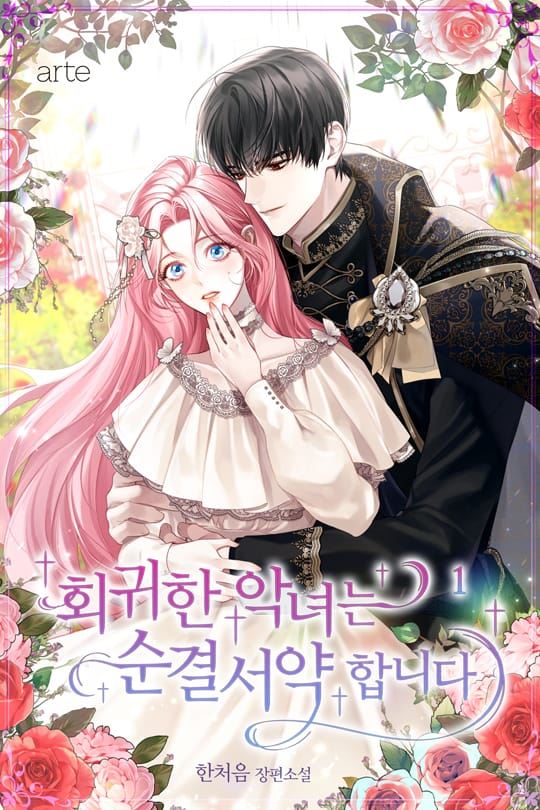
The narrative shifts focus to Helena Devon, the Marquis’s daughter, who has long been known for her vicious temper and cruelty toward the household staff. However, after fainting during a routine morning wake-up call, Helena awakens with partial memory loss and exhibits behavior that confuses everyone around her. She speaks in modern slang, references fictional concepts like "villainesses" and "male leads," and displays an uncanny ability to predict future events with eerie accuracy. The servants whisper that her soul has been swapped, and her previous abusive nature seems to have softened, though her actions remain increasingly erratic and demanding.

Helena appoints Layla as her personal maid, a role previously held by none due to the high turnover caused by Helena’s wrath. Helena tasks Layla with discreet surveillance of a new arrival at the estate: Eddie, the assistant to the gamekeeper Morris. Helena describes Eddie as the "male lead" and an extremely dangerous person, instructing Layla to monitor his movements without being detected. Layla reluctantly complies, traveling to the remote Devon forest where Eddie resides. Despite her efforts to remain hidden, Eddie possesses sharp senses and detects her presence immediately upon her first visit.

When confronted by Eddie, who correctly guesses she is spying for Helena, Layla panics and invents a false narrative that she has fallen deeply in love with him at first sight. Rather than rejecting her, Eddie continues to tolerate her presence, seemingly amused or indifferent. Meanwhile, Morris, the gamekeeper, misinterprets Layla’s visits as a romantic pursuit and attempts to set them up together, creating further awkwardness. Layla finds herself trapped between Helena’s suspicious commands and Eddie’s unsettling awareness, all while trying to maintain her employment to fund her father’s care.

Helena reveals her ultimate goal: she intends to marry the heir of the Velasco County, a powerful noble house on the western frontier. She believes that by leveraging her knowledge of future events and acting assertively, she can alter the trajectory of her life, which she seems to view through the lens of a story or novel. She sends Layla through a back-alley guild to deliver a secret letter to the Velasco household, demonstrating her access to underground networks and her determination to force a political alliance.

As Layla spends more time with Eddie, she discovers that he is not the monster Helena fears him to be. He is skilled, quiet, and protective, once shielding Layla from a startled stag in the forest. The dynamic between them shifts from predator and prey to uneasy companions, with Eddie occasionally allowing Layla to accompany him. Helena’s predictions continue to come true, reinforcing her belief in a predetermined fate that she is now trying to rewrite. The story moves toward a complex intersection of Layla’s financial struggles, her growing connection with Eddie, and Helena’s ambitious schemes to control her own destiny within a rigid noble hierarchy.

Latest Release
DateGroupRelease
2026-10-03dusk blossoms c25
2026-10-03dusk blossoms c24
2026-10-03dusk blossoms c23
2026-10-03dusk blossoms c22
2026-10-03dusk blossoms c21
2026-10-03dusk blossoms c20
2026-10-03dusk blossoms c19
2026-10-03dusk blossoms c18
2026-10-03dusk blossoms c17
2026-10-03dusk blossoms c16
2026-10-03dusk blossoms c15
2026-10-03dusk blossoms c14

Community Reviews

Rating(0 / 5.0, 31votes)
5 stars
0(0%)
4 stars
0(0%)
3 stars
0(0%)
2 stars
0(0%)
1 stars
0(0%)

Popular reviews

... Read More
I need to talk about the Helena dressing scene because this is one of those moments where the author shows us an entire social world in fifteen minutes of fabric descriptions. The way Layla helps Helena put on that green velvet dress with the purple earrings — you can feel the weight of nobility in every sentence. And then Helena says the most revealing line: 'When there's no female lead at a banquet, the villainess is always the most beautiful one there.' That's meta commentary that also tells us everything about how these people see themselves. The imperial banquet itself is looming over every chapter like a dark cloud, and we keep getting these little details about it — security tightness, the relaxed atmosphere that makes infiltration possible, the political theater of it all. The Devon estate, the guild, the forest where Layla first hid behind a tree half-concealed and Adrian just watched her being the worst spy ever — these places feel lived-in. Even the apothecary Elisha with golden hair being mentioned in passing adds another layer to this world. The author doesn't info-dump, they just let you inhabit the world and figure things out.
... Read More
This chapter is structured like two separate stories that happen to occupy the same page and the switch between them is masterful. We open in medias res with Helena and Caden — high tension, political stakes, a proposal that could make or break everything. The energy is sharp, urgent, controlled. Every line of dialogue crackles. Helena is calculating, Caden is suspicious, and the reader is leaning forward wondering what happens next. Then — * * * — and we're in Layla's POV, dusk settling, the pace immediately softening. The confrontation with Elisha becomes something quieter, almost domestic. They cook together. They talk. There's a meal. For a moment you think this story is about two girls becoming friends, and then Layla gets stranded in the forest. The escalation from there is brutal. It starts slow — walking home, thinking about plans — and then the atmosphere shifts. Night falls. The forest changes. Something is wrong. She trips. And suddenly it's pulse-pounding: injured man, bleeding, she needs to act NOW. The pacing compresses like a spring releasing. What I love is how both threads thematically mirror each other. Helena is making a dangerous gamble with her future. Layla is making a dangerous gamble walking into that forest. Both are women taking risks they didn't fully plan for. Both are navigating a world that wants to hurt them. The author cuts between these two storylines without ever letting them directly intersect yet — but you FEEL like they're converging. And the cliffhanger with Eddie bleeding on the forest floor is exactly the kind of moment that makes you immediately open the next chapter. The only thing I'd question is whether the Helena section runs slightly long before we get to Layla, but honestly the stakes were high enough that I didn't mind.
... Read More
"Stepping off the edge of the hunting grounds and into the forest felt like entering a different world entirely." That line hit me like a physical thing. The transition between spaces in this chapter is SO well done—the way the narrative shifts from the social clutter of the cottage (Morris teasing, the wolf, the awkward conversation) into the deep forest where it's just the two of them walking. The author paints this quiet, almost sacred space: "In the windless quiet, leafy branches swayed gently, and now and then an unknown bird let out a brief, soft cry." It's peaceful but tense at the same time, which is exactly the mood these two need to be in. And then the stag appears. Not as a threat, not as a hunting scene, but as this luminous, almost mystical moment—a creature that seems to exist outside the normal rules of this world, showing up right when the barrier between them is starting to dissolve. I also loved the detail about the old gamekeeper's quarters: "It was built at the founding." This sense of deep history in the landscape makes the whole Devon Marquisate feel alive, like the land itself has witnessed centuries of stories. The forest isn't just a backdrop; it's actively reshaping the dynamic between the characters. Every step deeper in makes the surveillance pretext harder to maintain and the actual connection harder to ignore. The environment IS the plot mechanism here.
... Read More
What I love most about these chapters is how distinct each character's voice is. Adrian's dialogue is dry, understated, always a few steps ahead — 'She doesn't seem trained.' Flat. Decisive. Caden sounds like a loyal soldier who's also genuinely worried, with that easy smile hiding real tension. Helena is the most fun: 'I think I'm going to lose my mind from nerves' and 'He was my absolute favorite, you know' — she sounds like a girl who's been waiting forever for this moment. And Layla's voice is this quiet observer thing, these small reactions and murmured responses that make you feel like you're inside her head the whole time. The conversation about beauty and danger — where Layla explains why she doesn't want to be pretty because 'most maids were of low standing' and beautiful ones got ruined — that dialogue is sharp and devastating and feels completely earned. Even the aside about names: 'In case you're wondering why it's not Adrian/Addy/Addie' — the author just winks at us and keeps going. The humor lands because it's not trying too hard.
... Read More
"Though in my mother's eyes, everything I did was special." I am not crying, you are crying. I said I wasn't going to emotional spiral over a novel and then THIS happened and I had to put the phone down for a full minute. Let me unpack why this wrecked me. Layla has deliberately kept herself from thinking about her childhood because it makes her sad. She's been carrying around this suppressed grief like a stone in her pocket, and Elisha — some girl she just met in a village apothecary — accidentally pulls it out by asking about a flower. And then Layla tells the story. Not just the story, but the SUBTEXT of the story. She's reminiscing about picnics with her parents, her father carrying her on his back through the dark forest, her mother naming the glowing flowers. This is not just backstory, this is a character actively remembering what love feels like before everything went wrong. And she delivers it with this self-deprecating little shrug like it's nothing. Elisha's response — "No. You are special, Layla" — is the kind of emotional beat that doesn't need romance to hit. This is human-to-human connection at its purest. A stranger validating someone's worth in a moment of vulnerability. The moonrost flower becomes this incredible metaphor: something beautiful that only certain people can see, hiding in plain sight, just like Layla herself. I keep thinking about how Layla needed to pretend to have a headache to stay in this house, and meanwhile the real ache she was running from had nothing to do with travel fatigue.
... Read More
I just — Elisha's dialogue is SO distinct I could pick it out of a lineup. From the moment she says "Oh? What brings you in?" with that warm curiosity, you know this is someone who greets strangers like they're old friends. Her speech pattern is open, unguarded, naturally friendly. Even when she's being apologetic about having to leave, it's earnest, not performative. "I'd love to say yes, but I'm afraid I have a problem." That's Elisha. Not defensive, not suspicious, just genuinely disappointed she can't host but also genuinely committed to her work. The way she explains the moonrost flower — casual, educational, like she's sharing trivia at a dinner party — tells us everything about her character without a single narrative description. Layla's voice is different. Hesitant. "Th, thank you." "Ah... I saw it a lot when I was little." She's constantly tripping over her own words because she's improvising a cover story while simultaneously being forced to remember things she'd rather forget. The stammering and the self-interruptions make her feel real in a way that polished dialogue never could. And Helena! Even though she barely appears in this batch, her few lines carry weight. "Think of it as saving someone's life. Because that's actually what it is." Short. Direct. No hedging. That's a noblewoman who's used to being obeyed, but choosing not to command — instead appealing to Layla's morality. The author gives each character a completely different relationship with language, and it shows.
See all reviews

Custom lists

See all custom Lists